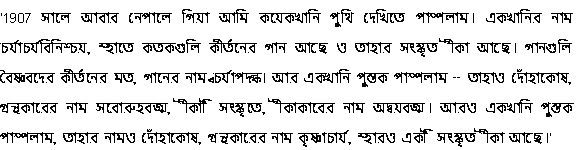
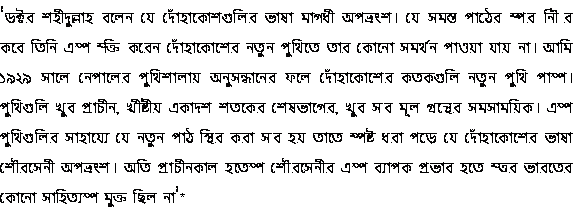
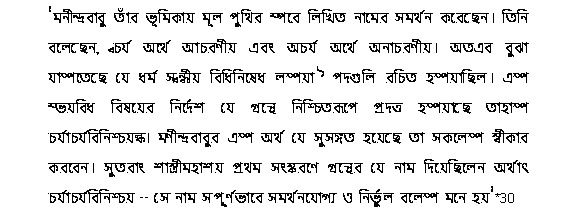
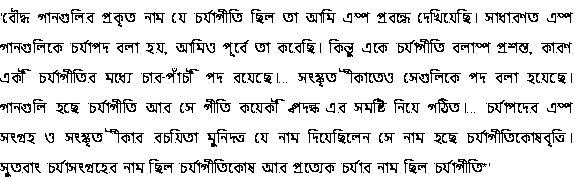
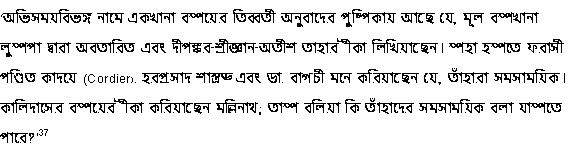
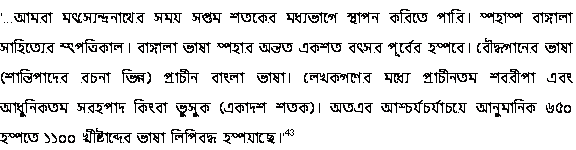
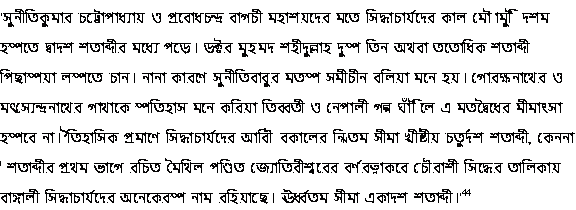
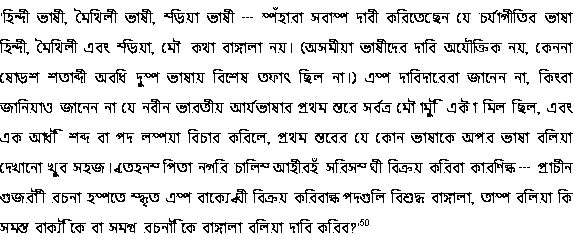
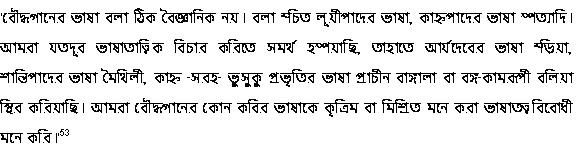
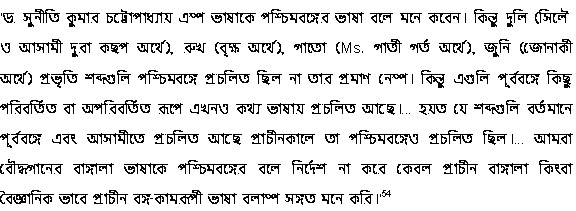
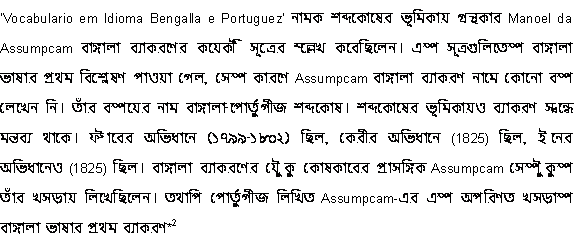
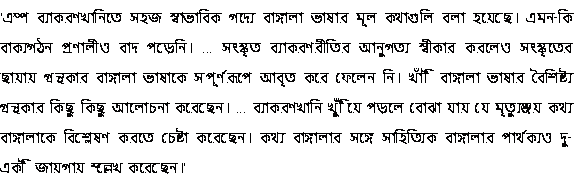
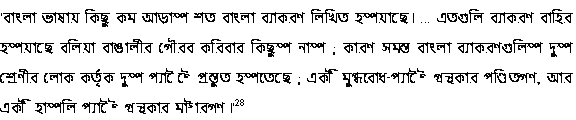
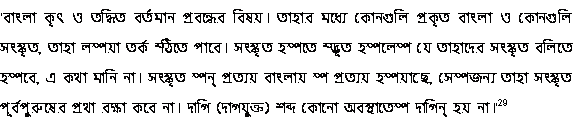
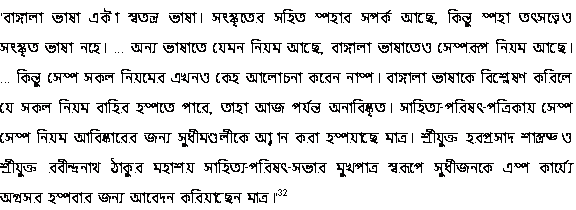
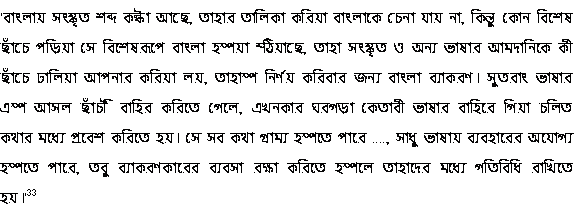
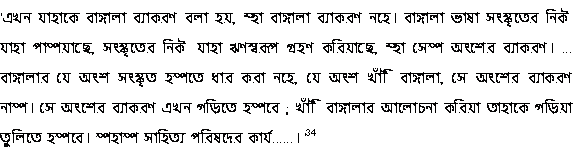
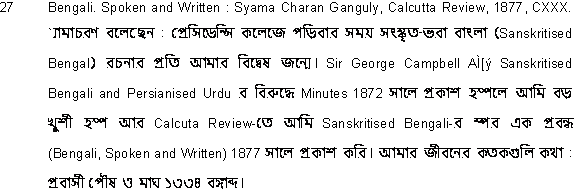
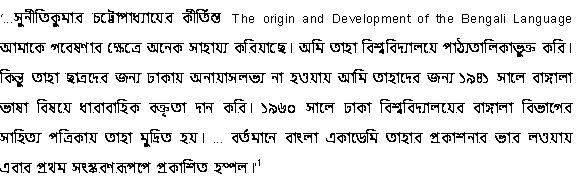
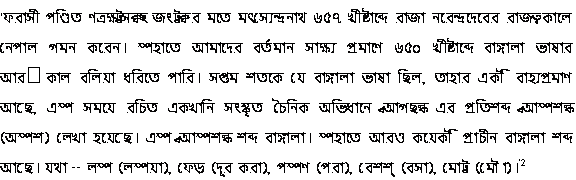
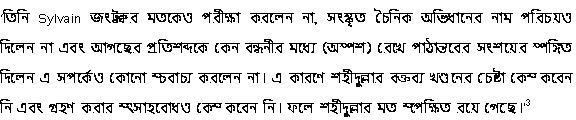
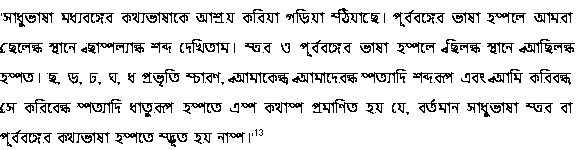
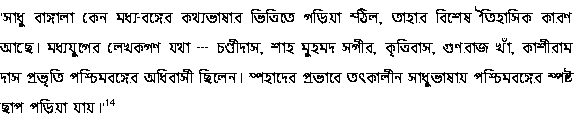
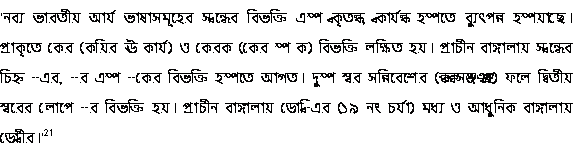
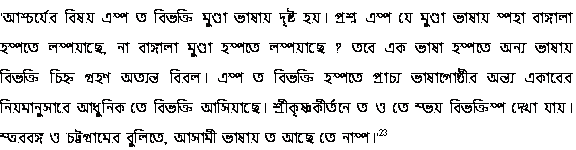
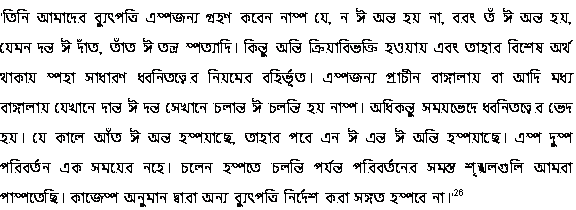
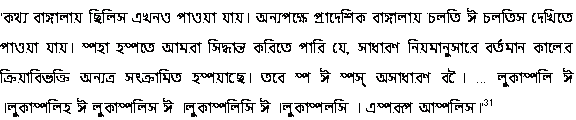
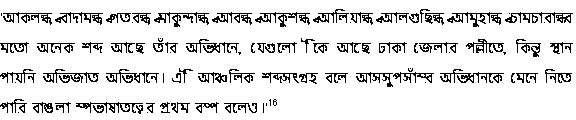
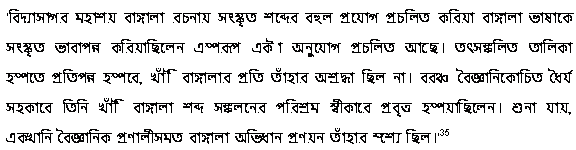
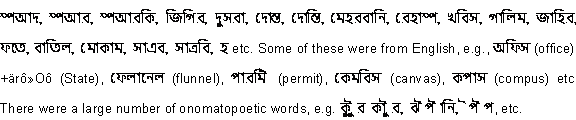
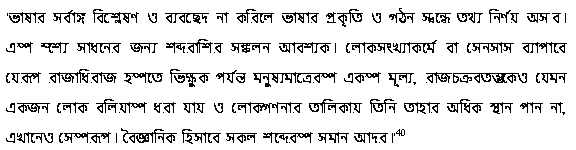
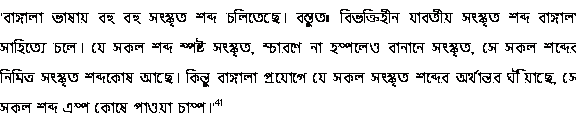
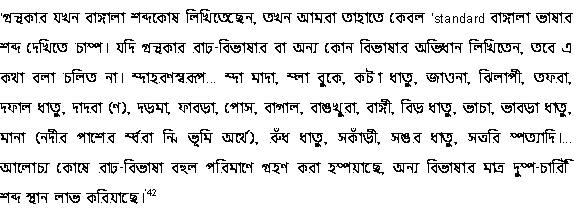
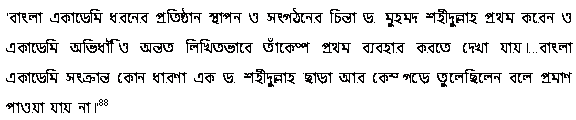
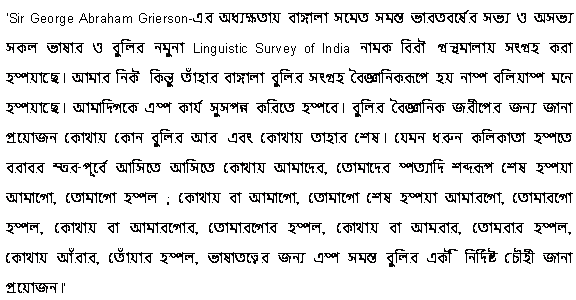
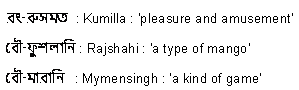
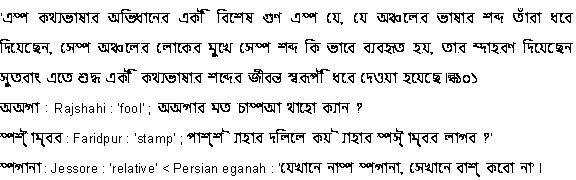
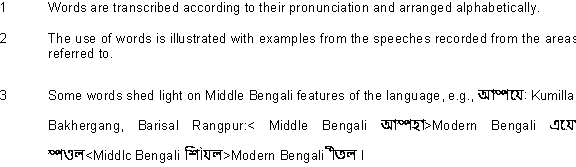
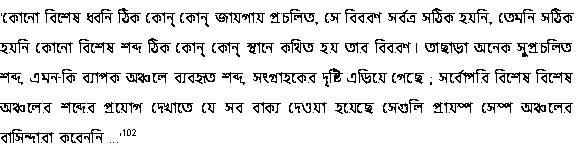
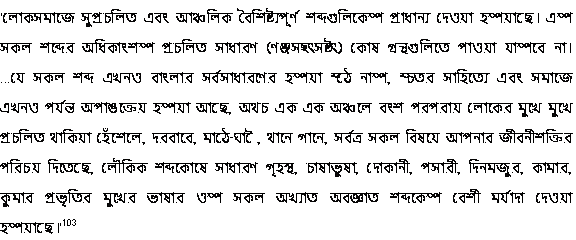
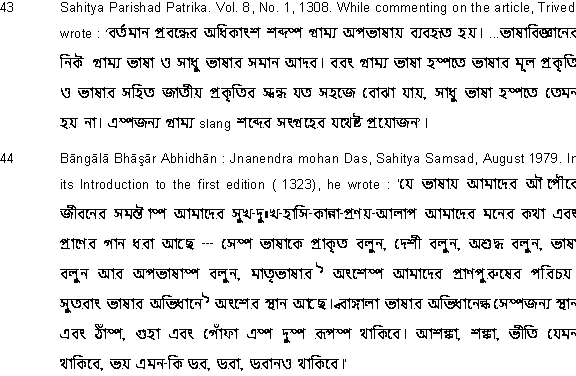
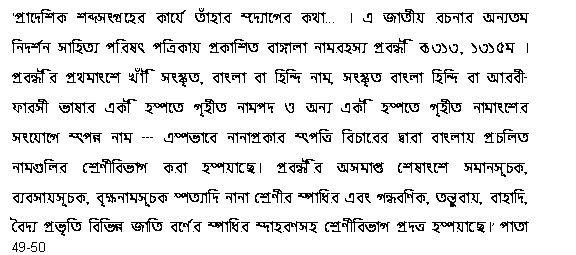
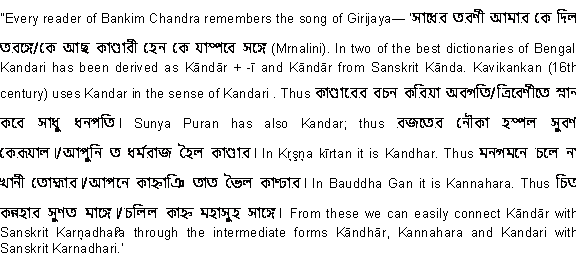
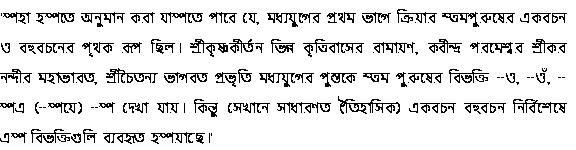
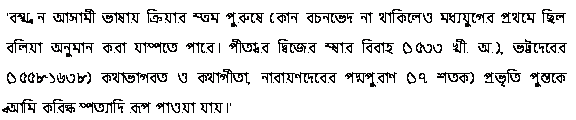
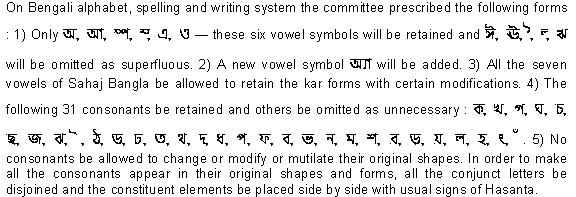
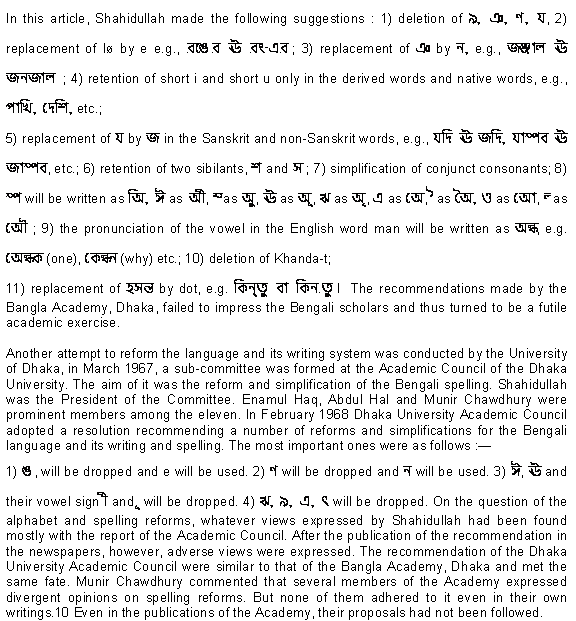
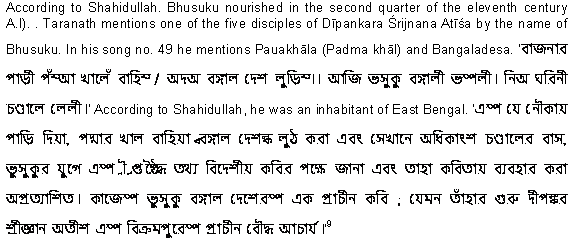
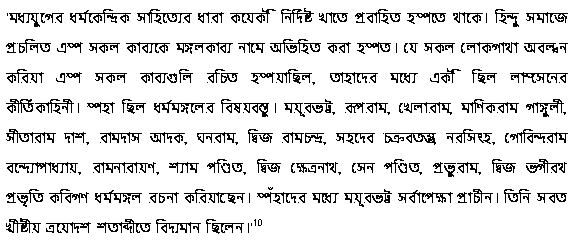
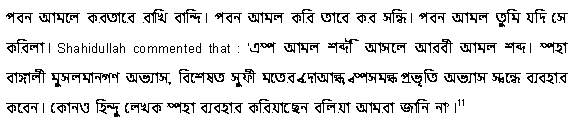
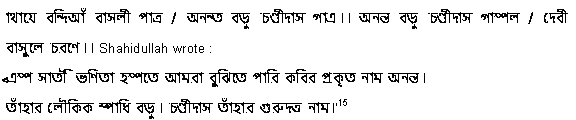
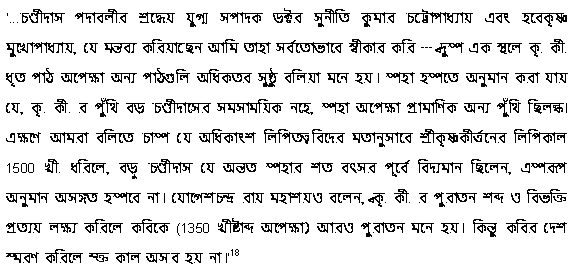
ÿþ<html> <head> <style> <!-- table.class1 {font-family: arial; font-size: 9pt; color: #000000} /* Font Definitions */ @font-face {font-family:Helvetica; panose-1:2 11 6 4 2 2 2 3 2 4; mso-font-charset:0; mso-generic-font-family:swiss; mso-font-format:other; mso-font-pitch:variable; mso-font-signature:3 0 0 0 1 0;} @font-face {font-family:Courier; panose-1:2 7 4 9 2 2 5 2 4 4; mso-font-charset:0; mso-generic-font-family:modern; mso-font-format:other; mso-font-pitch:fixed; mso-font-signature:3 0 0 0 1 0;} @font-face {font-family:"Tms Rmn"; panose-1:2 2 6 3 4 5 5 2 3 4; mso-font-charset:0; mso-generic-font-family:roman; mso-font-format:other; mso-font-pitch:variable; mso-font-signature:3 0 0 0 1 0;} @font-face {font-family:Helv; panose-1:2 11 6 4 2 2 2 3 2 4; mso-font-charset:0; mso-generic-font-family:swiss; mso-font-format:other; mso-font-pitch:variable; mso-font-signature:3 0 0 0 1 0;} @font-face {font-family:"New York"; panose-1:2 2 5 2 6 3 5 6 2 4; mso-font-charset:0; mso-generic-font-family:roman; mso-font-format:other; mso-font-pitch:variable; mso-font-signature:3 0 0 0 1 0;} @font-face {font-family:System; panose-1:0 0 0 0 0 0 0 0 0 0; mso-font-charset:0; mso-generic-font-family:swiss; mso-font-format:other; mso-font-pitch:variable; mso-font-signature:3 0 0 0 1 0;} @font-face {font-family:Wingdings; panose-1:5 0 0 0 0 0 0 0 0 0; mso-font-charset:2; mso-generic-font-family:auto; mso-font-pitch:variable; mso-font-signature:0 268435456 0 0 -2147483648 0;} @font-face {font-family:"MS Mincho"; panose-1:2 2 6 9 4 2 5 8 3 4; mso-font-alt:"\FF2D\FF33 \660E\671D"; mso-font-charset:128; mso-generic-font-family:roman; mso-font-format:other; mso-font-pitch:fixed; mso-font-signature:1 134676480 16 0 131072 0;} @font-face {font-family:Batang; panose-1:2 3 6 0 0 1 1 1 1 1; mso-font-alt:\BC14\D0D5; mso-font-charset:129; mso-generic-font-family:auto; mso-font-format:other; mso-font-pitch:fixed; mso-font-signature:1 151388160 16 0 524288 0;} @font-face {font-family:SimSun; panose-1:2 1 6 0 3 1 1 1 1 1; mso-font-alt:\5B8B\4F53; mso-font-charset:134; mso-generic-font-family:auto; mso-font-format:other; mso-font-pitch:variable; mso-font-signature:1 135135232 16 0 262144 0;} @font-face {font-family:PMingLiU; panose-1:2 2 3 0 0 0 0 0 0 0; mso-font-alt:\65B0\7D30\660E\9AD4; mso-font-charset:136; mso-generic-font-family:auto; mso-font-format:other; mso-font-pitch:variable; mso-font-signature:1 134742016 16 0 1048576 0;} @font-face {font-family:"MS Gothic"; panose-1:2 11 6 9 7 2 5 8 2 4; mso-font-alt:"\FF2D\FF33 \30B4\30B7\30C3\30AF"; mso-font-charset:128; mso-generic-font-family:modern; mso-font-format:other; mso-font-pitch:fixed; mso-font-signature:1 134676480 16 0 131072 0;} @font-face {font-family:Dotum; panose-1:2 11 6 0 0 1 1 1 1 1; mso-font-alt:\B3CB\C6C0; mso-font-charset:129; mso-generic-font-family:modern; mso-font-format:other; mso-font-pitch:fixed; mso-font-signature:1 151388160 16 0 524288 0;} @font-face {font-family:SimHei; panose-1:2 1 6 0 3 1 1 1 1 1; mso-font-alt:\9ED1\4F53; mso-font-charset:134; mso-generic-font-family:modern; mso-font-format:other; mso-font-pitch:fixed; mso-font-signature:1 135135232 16 0 262144 0;} @font-face {font-family:MingLiU; panose-1:2 2 3 9 0 0 0 0 0 0; mso-font-alt:\7D30\660E\9AD4; mso-font-charset:136; mso-generic-font-family:modern; mso-font-format:other; mso-font-pitch:fixed; mso-font-signature:1 134742016 16 0 1048576 0;} @font-face {font-family:Mincho; panose-1:2 2 6 9 4 3 5 8 3 5; mso-font-alt:\660E\671D; mso-font-charset:128; mso-generic-font-family:roman; mso-font-format:other; mso-font-pitch:fixed; mso-font-signature:1 134676480 16 0 131072 0;} @font-face {font-family:Gulim; panose-1:2 11 6 0 0 1 1 1 1 1; mso-font-alt:\AD74\B9BC; mso-font-charset:129; mso-generic-font-family:swiss; mso-font-pitch:variable; mso-font-signature:-1342176593 1775729915 48 0 524447 0;} @font-face {font-family:Century; panose-1:2 4 6 4 5 5 5 2 3 4; mso-font-charset:0; mso-generic-font-family:roman; mso-font-format:other; mso-font-pitch:variable; mso-font-signature:3 0 0 0 1 0;} @font-face {font-family:"Angsana New"; panose-1:2 2 6 3 5 4 5 2 3 4; mso-font-charset:222; mso-generic-font-family:roman; mso-font-format:other; mso-font-pitch:variable; mso-font-signature:16777217 0 0 0 65536 0;} @font-face {font-family:"Cordia New"; panose-1:2 11 3 4 2 2 2 2 2 4; mso-font-charset:222; mso-generic-font-family:roman; mso-font-format:other; mso-font-pitch:variable; mso-font-signature:16777217 0 0 0 65536 0;} @font-face {font-family:Mangal; panose-1:0 0 4 0 0 0 0 0 0 0; mso-font-charset:1; mso-generic-font-family:roman; mso-font-format:other; mso-font-pitch:variable; mso-font-signature:32768 0 0 0 0 0;} @font-face {font-family:Latha; panose-1:0 0 4 0 0 0 0 0 0 0; mso-font-charset:1; mso-generic-font-family:roman; mso-font-format:other; mso-font-pitch:variable; mso-font-signature:1048576 0 0 0 0 0;} @font-face {font-family:Sylfaen; panose-1:1 10 5 2 5 3 6 3 3 3; mso-font-charset:0; mso-generic-font-family:roman; mso-font-format:other; mso-font-pitch:variable; mso-font-signature:16778883 0 512 0 13 0;} @font-face {font-family:Vrinda; panose-1:0 0 4 0 0 0 0 0 0 0; mso-font-charset:1; mso-generic-font-family:roman; mso-font-format:other; mso-font-pitch:variable; mso-font-signature:0 0 0 0 0 0;} @font-face {font-family:Raavi; panose-1:0 0 4 0 0 0 0 0 0 0; mso-font-charset:1; mso-generic-font-family:roman; mso-font-format:other; mso-font-pitch:variable; mso-font-signature:0 0 0 0 0 0;} @font-face {font-family:Shruti; panose-1:0 0 4 0 0 0 0 0 0 0; mso-font-charset:1; mso-generic-font-family:roman; mso-font-format:other; mso-font-pitch:variable; mso-font-signature:0 0 0 0 0 0;} @font-face {font-family:Sendnya; panose-1:0 0 4 0 0 0 0 0 0 0; mso-font-charset:1; mso-generic-font-family:roman; mso-font-format:other; mso-font-pitch:variable; mso-font-signature:0 0 0 0 0 0;} @font-face {font-family:Gautami; panose-1:0 0 4 0 0 0 0 0 0 0; mso-font-charset:1; mso-generic-font-family:roman; mso-font-format:other; mso-font-pitch:variable; mso-font-signature:0 0 0 0 0 0;} @font-face {font-family:Tunga; panose-1:0 0 4 0 0 0 0 0 0 0; mso-font-charset:1; mso-generic-font-family:roman; mso-font-format:other; mso-font-pitch:variable; mso-font-signature:0 0 0 0 0 0;} @font-face {font-family:"Estrangella Edessa"; panose-1:0 0 0 0 0 0 0 0 0 0; mso-font-charset:1; mso-generic-font-family:roman; mso-font-format:other; mso-font-pitch:variable; mso-font-signature:0 0 0 0 0 0;} @font-face {font-family:"Arial Unicode MS"; panose-1:2 11 6 4 2 2 2 2 2 4; mso-font-charset:128; mso-generic-font-family:swiss; mso-font-pitch:variable; mso-font-signature:-1 -369098753 63 0 4129279 0;} @font-face {font-family:Tahoma; panose-1:2 11 6 4 3 5 4 4 2 4; mso-font-charset:0; mso-generic-font-family:swiss; mso-font-format:other; mso-font-pitch:auto; mso-font-signature:3 0 0 0 1 0;} @font-face {font-family:BNW-TTDurga; panose-1:4 0 0 0 0 0 0 0 0 0; mso-font-charset:0; mso-generic-font-family:decorative; mso-font-pitch:variable; mso-font-signature:3 0 0 0 1 0;} @font-face {font-family:"\@Gulim"; panose-1:2 11 6 0 0 1 1 1 1 1; mso-font-charset:129; mso-generic-font-family:swiss; mso-font-pitch:variable; mso-font-signature:-1342176593 1775729915 48 0 524447 0;} @font-face {font-family:"\@Arial Unicode MS"; panose-1:2 11 6 4 2 2 2 2 2 4; mso-font-charset:128; mso-generic-font-family:swiss; mso-font-pitch:variable; mso-font-signature:-1 -369098753 63 0 4129279 0;} /* Style Definitions */ p.MsoNormal, li.MsoNormal, div.MsoNormal {mso-style-parent:""; margin:0in; margin-bottom:.0001pt; mso-pagination:none; mso-layout-grid-align:none; text-autospace:none; font-size:10.0pt; font-family:Arial; mso-fareast-font-family:"Times New Roman"; font-weight:bold;} h1 {mso-style-next:Normal; margin:0in; margin-bottom:.0001pt; text-indent:192.0pt; line-height:21.1pt; mso-line-height-rule:exactly; mso-pagination:none; page-break-after:avoid; mso-outline-level:1; background:white; mso-layout-grid-align:none; text-autospace:none; font-size:20.5pt; font-family:Arial; color:black; letter-spacing:1.5pt; mso-font-width:83%; mso-font-kerning:0pt;} h2 {mso-style-next:Normal; margin-top:.95pt; margin-right:0in; margin-bottom:0in; margin-left:2.9pt; margin-bottom:.0001pt; text-align:center; line-height:12.95pt; mso-line-height-rule:exactly; mso-pagination:none; page-break-after:avoid; mso-outline-level:2; background:white; mso-layout-grid-align:none; text-autospace:none; font-size:11.0pt; font-family:Arial; color:black; letter-spacing:.1pt;} h3 {mso-style-next:Normal; margin:0in; margin-bottom:.0001pt; text-align:center; mso-pagination:widow-orphan; page-break-after:avoid; mso-outline-level:3; background:white; mso-layout-grid-align:none; text-autospace:none; font-size:13.5pt; font-family:Arial; color:black; text-decoration:underline; text-underline:single;} h4 {mso-style-next:Normal; margin-top:0in; margin-right:0in; margin-bottom:0in; margin-left:3.85pt; margin-bottom:.0001pt; text-align:right; line-height:12.95pt; mso-line-height-rule:exactly; mso-pagination:none; page-break-after:avoid; mso-outline-level:4; background:white; mso-layout-grid-align:none; text-autospace:none; font-size:12.0pt; font-family:Arial; color:black;} h5 {mso-style-next:Normal; margin:0in; margin-bottom:.0001pt; text-align:center; mso-pagination:widow-orphan; page-break-after:avoid; mso-outline-level:5; background:white; mso-layout-grid-align:none; text-autospace:none; font-size:14.5pt; font-family:Arial; color:black; text-decoration:underline; text-underline:single;} h6 {mso-style-next:Normal; margin:0in; margin-bottom:.0001pt; text-indent:.5in; mso-pagination:widow-orphan; page-break-after:avoid; mso-outline-level:6; background:white; mso-layout-grid-align:none; text-autospace:none; font-size:12.5pt; font-family:Arial; color:black; font-weight:normal;} p.MsoHeading7, li.MsoHeading7, div.MsoHeading7 {mso-style-next:Normal; margin:0in; margin-bottom:.0001pt; mso-pagination:widow-orphan; page-break-after:avoid; mso-outline-level:7; background:white; mso-layout-grid-align:none; text-autospace:none; font-size:12.0pt; font-family:Arial; mso-fareast-font-family:"Times New Roman"; color:black; font-weight:bold;} p.MsoHeading8, li.MsoHeading8, div.MsoHeading8 {mso-style-next:Normal; margin:0in; margin-bottom:.0001pt; text-align:justify; mso-pagination:widow-orphan; page-break-after:avoid; mso-outline-level:8; background:white; mso-layout-grid-align:none; text-autospace:none; font-size:12.5pt; font-family:Arial; mso-fareast-font-family:"Times New Roman"; color:black; font-weight:bold;} p.MsoHeading9, li.MsoHeading9, div.MsoHeading9 {mso-style-next:Normal; margin-top:0in; margin-right:0in; margin-bottom:0in; margin-left:3.85pt; margin-bottom:.0001pt; text-align:center; line-height:12.95pt; mso-line-height-rule:exactly; mso-pagination:none; page-break-after:avoid; mso-outline-level:9; background:white; mso-layout-grid-align:none; text-autospace:none; font-size:12.5pt; font-family:Arial; mso-fareast-font-family:"Times New Roman"; color:black; font-weight:bold;} p.MsoFooter, li.MsoFooter, div.MsoFooter {margin:0in; margin-bottom:.0001pt; mso-pagination:none; tab-stops:center 3.0in right 6.0in; mso-layout-grid-align:none; text-autospace:none; font-size:10.0pt; font-family:Arial; mso-fareast-font-family:"Times New Roman"; font-weight:bold;} p.MsoTitle, li.MsoTitle, div.MsoTitle {margin-top:0in; margin-right:1.45pt; margin-bottom:0in; margin-left:0in; margin-bottom:.0001pt; text-align:center; line-height:21.1pt; mso-line-height-rule:exactly; mso-pagination:none; background:white; mso-layout-grid-align:none; text-autospace:none; font-size:20.5pt; font-family:Arial; mso-fareast-font-family:"Times New Roman"; color:black; letter-spacing:.05pt; font-weight:bold;} p.MsoBodyText, li.MsoBodyText, div.MsoBodyText {margin:0in; margin-bottom:.0001pt; mso-pagination:widow-orphan; background:white; mso-layout-grid-align:none; text-autospace:none; font-size:12.5pt; font-family:Arial; mso-fareast-font-family:"Times New Roman"; color:black;} p.MsoBodyTextIndent, li.MsoBodyTextIndent, div.MsoBodyTextIndent {margin:0in; margin-bottom:.0001pt; text-align:justify; mso-pagination:widow-orphan; background:white; mso-layout-grid-align:none; text-autospace:none; font-size:12.5pt; font-family:Arial; mso-fareast-font-family:"Times New Roman"; color:black;} p.MsoBodyText2, li.MsoBodyText2, div.MsoBodyText2 {margin:0in; margin-bottom:.0001pt; text-align:justify; mso-pagination:widow-orphan; background:white; mso-layout-grid-align:none; text-autospace:none; font-size:12.5pt; font-family:"Times New Roman"; mso-fareast-font-family:"Times New Roman"; color:black;} p.MsoBodyText3, li.MsoBodyText3, div.MsoBodyText3 {margin:0in; margin-bottom:.0001pt; text-align:justify; mso-pagination:widow-orphan; background:white; mso-layout-grid-align:none; text-autospace:none; font-size:12.5pt; font-family:"Times New Roman"; mso-fareast-font-family:"Times New Roman"; color:black; font-weight:bold;} p.MsoBodyTextIndent2, li.MsoBodyTextIndent2, div.MsoBodyTextIndent2 {margin:0in; margin-bottom:.0001pt; text-align:justify; text-indent:.5in; mso-pagination:widow-orphan; background:white; mso-layout-grid-align:none; text-autospace:none; font-size:12.5pt; font-family:Arial; mso-fareast-font-family:"Times New Roman"; color:black;} p.MsoBodyTextIndent3, li.MsoBodyTextIndent3, div.MsoBodyTextIndent3 {margin-top:0in; margin-right:0in; margin-bottom:0in; margin-left:.05in; margin-bottom:.0001pt; text-align:justify; text-indent:.45in; line-height:14.0pt; mso-line-height-rule:exactly; mso-pagination:none; background:white; mso-layout-grid-align:none; text-autospace:none; font-size:12.5pt; font-family:Arial; mso-fareast-font-family:"Times New Roman"; color:black;} ins {mso-style-type:export-only; text-decoration:none;} span.msoIns {mso-style-type:export-only; mso-style-name:""; text-decoration:underline; text-underline:single;} span.msoDel {mso-style-type:export-only; mso-style-name:""; text-decoration:line-through; color:red;} @page Section1 {size:8.5in 11.0in; margin:1.0in 1.2in 58.3pt 1.3in; mso-header-margin:.5in; mso-footer-margin:.5in; mso-footer:url("chapter3_files/header.html") f1; mso-paper-source:0;} div.Section1 {page:Section1;} /* List Definitions */ @list l0 {mso-list-id:1647706698; mso-list-type:hybrid; mso-list-template-ids:1613551342 -726904926 67698713 67698715 67698703 67698713 67698715 67698703 67698713 67698715;} @list l0:level1 {mso-level-tab-stop:71.25pt; mso-level-number-position:left; margin-left:71.25pt; text-indent:-35.25pt;} @list l0:level2 {mso-level-tab-stop:1.0in; mso-level-number-position:left; text-indent:-.25in;} @list l0:level3 {mso-level-tab-stop:1.5in; mso-level-number-position:left; text-indent:-.25in;} @list l0:level4 {mso-level-tab-stop:2.0in; mso-level-number-position:left; text-indent:-.25in;} @list l0:level5 {mso-level-tab-stop:2.5in; mso-level-number-position:left; text-indent:-.25in;} @list l0:level6 {mso-level-tab-stop:3.0in; mso-level-number-position:left; text-indent:-.25in;} @list l0:level7 {mso-level-tab-stop:3.5in; mso-level-number-position:left; text-indent:-.25in;} @list l0:level8 {mso-level-tab-stop:4.0in; mso-level-number-position:left; text-indent:-.25in;} @list l0:level9 {mso-level-tab-stop:4.5in; mso-level-number-position:left; text-indent:-.25in;} ol {margin-bottom:0in;} ul {margin-bottom:0in;} --> </style> <!--[if gte mso 10]> <style> /* Style Definitions */ table.MsoNormalTable {mso-style-name:"Table Normal"; mso-tstyle-rowband-size:0; mso-tstyle-colband-size:0; mso-style-noshow:yes; mso-style-parent:""; mso-padding-alt:0in 5.4pt 0in 5.4pt; mso-para-margin:0in; mso-para-margin-bottom:.0001pt; mso-pagination:widow-orphan; font-size:10.0pt; font-family:"Times New Roman";} </style> <![endif]--><!--[if gte mso 9]><xml> <u1:shapedefaults u2:ext="edit" spidmax="4098"> <u1:colormru u2:ext="edit" colors="#f9dbd3,#fbeae5"/> <u1:colormenu u2:ext="edit" fillcolor="olive"/> </u1:shapedefaults> </xml><![endif]--><!--[if gte mso 9]><xml> <u3:shapelayout u4:ext="edit"> <u3:idmap u4:ext="edit" data="1"/> </u3:shapelayout> </xml><![endif]--><!--[if gte mso 9]><xml> <o:shapedefaults v:ext="edit" spidmax="3074"/> </xml><![endif]--><!--[if gte mso 9]><xml> <o:shapelayout v:ext="edit"> <o:idmap v:ext="edit" data="1"/> </o:shapelayout></xml><![endif]--> </head> <body bgcolor="#FBEAE5" lang=EN-US style='tab-interval:.5in'> <center> <center> <table width="100%" align="center"> <tr> <td bgcolor="#660066"> <div align="center"><b><font color="#000000" face="Arial, Helvetica, sans-serif" size="4"><font color="#FFFFFF"><a name="top"></a><br>Muhammad Shahidullah & His Contribution To Bengali Linguistics<br>&nbsp;</font></font></b></div></td></tr> <tr> <td bgcolor="#990066" nowrap> <div align="center"><font face="Arial, Helvetica, sans-serif" size="4" color="#FFFFFF"><b>Chapter 3 : Academic Activities</b></font></div></td></tr> <tr> <td valign="top" bgcolor="#FFFFFF"> <table width="100%" align="center"> <tr > <td bgcolor="#FBEAE5"> <div align="center"><font face="Arial, Helvetica, sans-serif" size="2" color="FFFFFF"><a href="chapter2.html">Prev</a></font></div></td><td bgcolor="#FBEAE5"> <div align="center"><font face="Arial, Helvetica, sans-serif" size="2"><a href="index.html">Home</a></font></div></td><td bgcolor="#FBEAE5"> <div align="center"><font face="Arial, Helvetica, sans-serif" size="2"><a href="chapter4.html">Next</a></font></div></td></tr> </table></table> <table class="class1" width="90%" align="center"><tr> <td bgcolor="#FBEAE5"> <a href="#1">LINGUISTIC WRITINGS, Dohkosas and Cary Songs </a></td><td> <a href="#2">Bengali Grammar </a></td></tr> <tr><td> <a href="#3">History of the Bengali Language</a></td><td> <a href="#4">Regional Dialect Dictionary of East Pakistan</a></td></tr> <tr><td> <a href="#5">Outlines of the Historical Grammar of the Bengali Language</a></td><td> <a href="#6">Etymologies of Kubh-, lagh-, eagh-, gevay and laghulo [in the Inscriptions of A[oka ] </a></td></tr> <tr><td> <a href="#7">Magadhi Prakrit and Bengali</a></td><td> <a href="#8">Les sons du Bengali </a></td></tr> <tr><td> <a href="#9">Munda Affinities of Bengali</a></td><td><a href="#10">Bngl O Thr Sahodar Bhsy Bartamn Kler Uitampurus</a></td></tr> <tr><td> <a href="#11">Philology and Indian Linguistics; Scientific Study of the Sanskrit Language</a></td><td> <a href="#12">Bengali Spelling and Its Problems </a></td></tr> <tr><td> <a href="#13"> Indo-Aryan Linguistics</a></td><td> <a href="#14">The Common Origin of Urdu and Bengali </a></td></tr> <tr><td> <a href="#15">Origin of the Sinhalese Language</a></td><td> <a href="#16">LITERARY WRITINGS; History of the Bengali Literature </a></td></tr> </table> <hr size="'2" color="#660066"> <div class=Section1> <p class=MsoNormal style='margin-top:0in;margin-right:.5in;margin-bottom:0in; margin-left:.5in;margin-bottom:.0001pt;text-align:justify'><span style='font-weight:normal;mso-bidi-font-weight:bold'>Shahidullah is primarily a linguist  a linguist of the first generation of the <st1:place><st1:PlaceName></span><st1:place><st1:PlaceName><span style='font-weight:normal;mso-bidi-font-weight:bold'>Calcutta</st1:PlaceName></span></st1:PlaceName><span style='font-weight:normal;mso-bidi-font-weight:bold'> <st1:PlaceType></span><st1:PlaceType><span style='font-weight:normal;mso-bidi-font-weight:bold'>School</st1:PlaceType></st1:place></span></st1:PlaceType></st1:place><span style='font-weight:normal;mso-bidi-font-weight:bold'> who eventually came to dominate till the sixth decade of the twentieth century. He wrote extensively on linguistics and literary subjects. Most of his seminal writings on the Bengali language and Bengali linguistics appeared on the pages of the leading Bengali journals of <st1:City><st1:place></span><st1:City><st1:place><span style='font-weight:normal;mso-bidi-font-weight:bold'>Calcutta</st1:place></st1:City></span></st1:place></st1:City><span style='font-weight:normal;mso-bidi-font-weight:bold'> and <st1:place></span><st1:place><span style='font-weight:normal;mso-bidi-font-weight:bold'>Dhaka</st1:place></span></st1:place><span style='font-weight:normal;mso-bidi-font-weight:bold'>. A good number of his critical and literary essays still remain scattered in reputed literary journals. Much of his work still remained unknown to the outer world beyond the Bengali speaking region. Some of his English articles are no longer easily available.<u5:p></u5:p></span><o:p></o:p></p> <p class=MsoNormal style='margin-top:0in;margin-right:.5in;margin-bottom:0in; margin-left:.5in;margin-bottom:.0001pt;text-align:justify'><span style='font-weight:normal;mso-bidi-font-weight:bold'><u5:p>&nbsp;</u5:p></span></p> <p class=MsoNormal style='margin-top:0in;margin-right:.5in;margin-bottom:0in; margin-left:.5in;margin-bottom:.0001pt;text-align:justify'><span style='font-weight:normal;mso-bidi-font-weight:bold'>His writings on various subjects can be grouped into the following broad categories : A) Linguistic writings and B) Literary writings. I propose to discuss the works of Shahidullah on linguistics, published in books. I have taken up later his various articles published from time to time in the major journals of the period.<u5:p></u5:p></span><o:p></o:p></p> <p class=MsoNormal style='margin-top:0in;margin-right:.5in;margin-bottom:0in; margin-left:.5in;margin-bottom:.0001pt;text-align:justify'><span style='font-weight:normal;mso-bidi-font-weight:bold'><u5:p>&nbsp;</u5:p></span></p> <blockquote> <hr color="#660066" size="5"> <div align="right"><font face="Arial, Helvetica, sans-serif" size="2"><a href="#top">Top</a></font></div></blockquote> <p class=MsoNormal style='margin-top:0in;margin-right:.5in;margin-bottom:0in; margin-left:.5in;margin-bottom:.0001pt;text-align:justify'><a name="1">LINGUISTIC WRITINGS </a><o:p></o:p></p> <p class=MsoNormal style='margin-top:0in;margin-right:.5in;margin-bottom:0in; margin-left:.5in;margin-bottom:.0001pt;text-align:justify'><u5:p>&nbsp;</u5:p></p> <p class=MsoNormal style='margin-top:0in;margin-right:.5in;margin-bottom:0in; margin-left:.5in;margin-bottom:.0001pt;text-align:justify'>DOH&#256;KO&#350;AS AND CAUY&#256; SONGS</p> <p class=MsoNormal style='margin-top:0in;margin-right:.5in;margin-bottom:0in; margin-left:.5in;margin-bottom:.0001pt;text-align:justify'><span style='font-weight:normal;mso-bidi-font-weight:bold'>Towards the close of the first millennium after Christ Eastern India witnessed the rise and growth of a new form of mysticism which has left its mark on the Bengali literature. This is the Sahajay&#257;na which represents a later phase of Mahay&#257;na Buddhism. The great teachers of this new form of mysticism were all known as Siddhas. The texts of the mystic songs composed by various Siddhas were discovered by Haraprasad Sastri in a manuscript incompletely preserved in Nepal Darbar Library (1907). Sastri published the text in 1916 under the title H&#257;j&#257;r Bacharer Pur&#257;&#326;a B&#257;ng&#257;l&#257; Bh&#257;&#351;&#257;y Bauddha C&#257;n O Doh&#257; which contained four separate books, viz., 1) Cary&#257;caryavini&#347;caya with Sanskrit commentary, 2) Doh&#257;ko&#351;a of Saroruhavajra with Sanskrit commentary, 3) Doh&#257;ko&#351;a of Krsnacaryapada with Sanskrit commentary and 4) a short tantra, entitled D<span style='mso-char-type:symbol;mso-symbol-font-family: Arial'><span style='mso-char-type:symbol;mso-symbol-font-family:Arial'>&#61479;</span></span>&#257;kar&#326;ava. In its introduction, Sastri wrote :<u5:p></u5:p></span><o:p></o:p></p> <p class=MsoNormal style='margin-top:0in;margin-right:.5in;margin-bottom:0in; margin-left:.5in;margin-bottom:.0001pt;text-align:justify'><span style='font-weight:normal;mso-bidi-font-weight:bold'><u5:p>&nbsp;</u5:p></span><o:p></o:p></p> <p class=MsoNormal align=center style='margin-top:0in;margin-right:.5in; margin-bottom:0in;margin-left:.5in;margin-bottom:.0001pt;text-align:center'><u6:shape id="_x0000_i1031" type="#_x0000_t75" style="width:6in;height:112.5pt"><u6:imagedata src="lak_files/image178.wmz" u5:title=""/></u6:shape><img width=576 height=150 id="_x0000_i1025" src="../benling/lak_files/image020.gif" u6:shapes="_x0000_i1031"><o:p></o:p></p> <p class=MsoNormal align=center style='margin-top:0in;margin-right:.5in; margin-bottom:0in;margin-left:.5in;margin-bottom:.0001pt;text-align:center'><span style='font-weight:normal;mso-bidi-font-weight:bold'><u5:p>&nbsp;</u5:p></span></p> <p class=MsoNormal style='margin-top:0in;margin-right:.5in;margin-bottom:0in; margin-left:.5in;margin-bottom:.0001pt;text-align:justify'><span style='font-weight:normal;mso-bidi-font-weight:bold'>Cary&#257;caryavini&#347;caya is the name of the manuscript that contains the songs called Caryagiti. The manuscript contains 46 complete songs and a fragment of one song. The manuscript consists of 69 folios, written on both sides. 5 folios were missing (fol. 35-38 and 66). The missing folios contain three complete songs (24, 25, 48) and the last four lines of a song (23).2 The name of the commentator, not mentioned in the text, is Munidatta, who wrote his expository treatise on the songs in Sanskrit prose.3<u5:p></u5:p></span><o:p></o:p></p> <p class=MsoNormal style='margin-top:0in;margin-right:.5in;margin-bottom:0in; margin-left:.5in;margin-bottom:.0001pt;text-align:justify'><span style='font-weight:normal;mso-bidi-font-weight:bold'><u5:p>&nbsp;</u5:p></span></p> <p class=MsoNormal style='margin-top:0in;margin-right:.5in;margin-bottom:0in; margin-left:.5in;margin-bottom:.0001pt;text-align:justify'><span style='font-weight:normal;mso-bidi-font-weight:bold'>The songs represent an early variety of the Bengali language which had just emerged from the Apabhramsa stage. It presents not only the first document of Bengali literature but is, at the same time, the oldest available specimen of a New Indian literature in general. Suniti Kumar Chatterji studied the language of the text and characterised it as old Bengali. He gave his reasons in detail in his book ODBL (1926). The most definite Bengali characteristics of the language are :<u5:p></u5:p></span><o:p></o:p></p> <p class=MsoNormal style='margin-top:0in;margin-right:.5in;margin-bottom:0in; margin-left:.5in;margin-bottom:.0001pt;text-align:justify'><span style='font-weight:normal;mso-bidi-font-weight:bold'><u5:p>&nbsp;</u5:p></span></p> <p class=MsoNormal style='margin-top:0in;margin-right:.5in;margin-bottom:0in; margin-left:.5in;margin-bottom:.0001pt;text-align:justify'><span style='font-weight:normal;mso-bidi-font-weight:bold'>'the genitive in -era, -ara; dative in-re; locative in-ta; postpositional words like majha, antara, sanga; past and future bases in  il -, - ib - and not<span style='mso-spacerun:yes'>  </span>-al-, -ab- of Bihari; present participle in -anta; conjunctive indeclinable in -ia; conjunctive conditional in-ile; passive in -ia; which is preserved as a relic in Middle Bengali; substantive roots ach- and thak-, not thik of Maithili or tha- of Oriya and a number of Bengali idioms'.4<u5:p></u5:p></span><o:p></o:p></p> <p class=MsoNormal style='margin-top:0in;margin-right:.5in;margin-bottom:0in; margin-left:.5in;margin-bottom:.0001pt;text-align:justify'><span style='font-weight:normal;mso-bidi-font-weight:bold'><u5:p>&nbsp;</u5:p></span></p> <p class=MsoNormal style='margin-top:0in;margin-right:.5in;margin-bottom:0in; margin-left:.5in;margin-bottom:.0001pt;text-align:justify'><span style='font-weight:normal;mso-bidi-font-weight:bold'>Sastri who did the pioneering role in publishing the Buddhist Dohas was unable to identify its language as Apabhramsa. The language of the Doh&#257;ko&#351;as (Doha Collections) is written in a Late or simplified form of Apabhram<span style='mso-char-type:symbol;mso-symbol-font-family:Arial'><span style='mso-char-type:symbol;mso-symbol-font-family:Arial'>&#61479;</span></span>&#347;a which according to the testimony of Advayavajra was known as Abhibhra&#351;t<span style='mso-char-type:symbol;mso-symbol-font-family:Arial'><span style='mso-char-type:symbol;mso-symbol-font-family:Arial'>&#61479;</span></span>a, i.e., Apabhra&#351;t<span style='mso-char-type:symbol;mso-symbol-font-family: Arial'><span style='mso-char-type:symbol;mso-symbol-font-family:Arial'>&#61479;</span></span>a ('fallen away'yoff standard). Advayavajra at the end of Saraha's Doh&#257;ko&#351;a-panjik&#257; says : '<st1:City><st1:place></span><st1:City><st1:place><span style='font-weight:normal;mso-bidi-font-weight:bold'>doh&#257;</st1:place></st1:City></span></st1:place></st1:City><span style='font-weight:normal;mso-bidi-font-weight:bold'> abhibhra&#351;t<span style='mso-char-type:symbol;mso-symbol-font-family:Arial'><span style='mso-char-type:symbol;mso-symbol-font-family:Arial'>&#61479;</span></span>a canasyeti.' 5 Abhibhra&#351;t<span style='mso-char-type:symbol;mso-symbol-font-family: Arial'><span style='mso-char-type:symbol;mso-symbol-font-family:Arial'>&#61479;</span></span>a is a synonym of MIA avahat<span style='mso-char-type:symbol;mso-symbol-font-family: Arial'><span style='mso-char-type:symbol;mso-symbol-font-family:Arial'>&#61479;</span></span>t<span style='mso-char-type:symbol;mso-symbol-font-family:Arial'><span style='mso-char-type:symbol;mso-symbol-font-family:Arial'>&#61479;</span></span>ha ('fallen down').6<span style='mso-spacerun:yes'>  </span>The doh&#257;s also preach the doctrine of Sahajayana.<u5:p></u5:p></span><o:p></o:p></p> <p class=MsoNormal style='margin-top:0in;margin-right:.5in;margin-bottom:0in; margin-left:.5in;margin-bottom:.0001pt;text-align:justify'><span style='font-weight:normal;mso-bidi-font-weight:bold'><u5:p>&nbsp;</u5:p></span></p> <p class=MsoNormal style='margin-top:0in;margin-right:.5in;margin-bottom:0in; margin-left:.5in;margin-bottom:.0001pt;text-align:justify'><span style='font-weight:normal;mso-bidi-font-weight:bold'>On the basis of the text published by Sastri in 1916 Shahidullah published his essay on Bauddha G&#257;n O Doh&#257; in the journal of the Bangiya Sahitya Parishad in 1920.7 In this article, he suggested several different renderings of his own. He wrote :<u5:p></u5:p></span><o:p></o:p></p> <p class=MsoNormal style='margin-top:0in;margin-right:.5in;margin-bottom:0in; margin-left:.5in;margin-bottom:.0001pt;text-align:justify'><span style='font-weight:normal;mso-bidi-font-weight:bold'><u5:p>&nbsp;</u5:p></span><o:p></o:p></p> <p class=MsoNormal align=center style='margin-top:0in;margin-right:.5in; margin-bottom:0in;margin-left:.5in;margin-bottom:.0001pt;text-align:center'><u6:shape id="_x0000_i1032" type="#_x0000_t75" style="width:6in;height:337.5pt"><u6:imagedata src="lak_files/image179.wmz" u5:title=""/></u6:shape><img width=576 height=450 id="_x0000_i1026" src="../benling/lak_files/image021.gif" u6:shapes="_x0000_i1032"><o:p></o:p></p> <p class=MsoNormal align=center style='margin-top:0in;margin-right:.5in; margin-bottom:0in;margin-left:.5in;margin-bottom:.0001pt;text-align:center'><span style='font-weight:normal;mso-bidi-font-weight:bold'><u5:p>&nbsp;</u5:p></span></p> <p class=MsoNormal style='margin-top:0in;margin-right:.5in;margin-bottom:0in; margin-left:.5in;margin-bottom:.0001pt;text-align:justify'><span style='font-weight:normal;mso-bidi-font-weight:bold'>I have different interpretations to offer in rendering the Carya songs. They are primarily for three reasons. Firstly, there were scribal errors. Secondly, there are printing errors in the text. Thirdly, errors are committed due to similarities of letters. Had there been an original text these errors would have been averted. I had to work it out mainly on inferences and guesswork .<u5:p></u5:p></span><o:p></o:p></p> <p class=MsoNormal style='margin-top:0in;margin-right:.5in;margin-bottom:0in; margin-left:.5in;margin-bottom:.0001pt;text-align:justify'><span style='font-weight:normal;mso-bidi-font-weight:bold'><u5:p>&nbsp;</u5:p></span></p> <p class=MsoNormal style='margin-top:0in;margin-right:.5in;margin-bottom:0in; margin-left:.5in;margin-bottom:.0001pt;text-align:justify'><span style='font-weight:normal;mso-bidi-font-weight:bold'>The article was appreciated by Chatterji and he mentioned U in his ODBL. He wrote :<u5:p></u5:p></span><o:p></o:p></p> <p class=MsoNormal style='margin-top:0in;margin-right:.5in;margin-bottom:0in; margin-left:.5in;margin-bottom:.0001pt;text-align:justify'><span style='font-weight:normal;mso-bidi-font-weight:bold'><u5:p>&nbsp;</u5:p></span></p> <p class=MsoNormal style='margin-top:0in;margin-right:.5in;margin-bottom:0in; margin-left:.5in;margin-bottom:.0001pt;text-align:justify'><span style='font-weight:normal;mso-bidi-font-weight:bold'>The importance of the Caryapadas has not been sufficiently appreciated in <st1:place></span><st1:place><span style='font-weight:normal;mso-bidi-font-weight:bold'>Bengal</st1:place></span></st1:place><span style='font-weight:normal;mso-bidi-font-weight:bold'> and only about half a dozen papers or notes on them have been published so far by Bengali scholars. The only valuable article is by Maulavi Md. Shahidullah, now of the Department of Sanskritic studies in the University of Dacca; his paper offers very satisfactory readings of some obscure passages, and on the whole is extremely helpful and suggestive.18<u5:p></u5:p></span><o:p></o:p></p> <p class=MsoNormal style='margin-top:0in;margin-right:.5in;margin-bottom:0in; margin-left:.5in;margin-bottom:.0001pt;text-align:justify'><span style='font-weight:normal;mso-bidi-font-weight:bold'><u5:p>&nbsp;</u5:p></span></p> <p class=MsoNormal style='margin-top:0in;margin-right:.5in;margin-bottom:0in; margin-left:.5in;margin-bottom:.0001pt;text-align:justify'><span style='font-weight:normal;mso-bidi-font-weight:bold'>The main thesis of Shahidullah was the study of the dohas where 'he had no occasion to pay special attention to the esoteric doctrines of the Caryas'.9 His thesis. Les Chants Mystiques de Kanha et de Saraha; Les Dohakosa et les Carya was the first full-length thorough study of the dohas of Kanha and Saraha. He edited Doh&#257;ko&#351;a on the basis of Sastri's published text with the help of two Tibetan versions and published it in his book Les Chants Mystiques (Paris. 1928). He wrote :<u5:p></u5:p></span><o:p></o:p></p> <p class=MsoNormal style='margin-top:0in;margin-right:.5in;margin-bottom:0in; margin-left:.5in;margin-bottom:.0001pt;text-align:justify'><span style='font-weight:normal;mso-bidi-font-weight:bold'><u5:p>&nbsp;</u5:p></span></p> <p class=MsoNormal style='margin-top:0in;margin-right:.5in;margin-bottom:0in; margin-left:.5in;margin-bottom:.0001pt;text-align:justify'><span style='font-weight:normal;mso-bidi-font-weight:bold'>'I edited the Dohakosa on the basis of Mahamahopadhyay Haraprasad Sastri's published text with the help of two Tibetan versions and published it in my book... with one Tibetan version and my French translation and notes.'10<u5:p></u5:p></span><o:p></o:p></p> <p class=MsoNormal style='margin-top:0in;margin-right:.5in;margin-bottom:0in; margin-left:.5in;margin-bottom:.0001pt;text-align:justify'><span style='font-weight:normal;mso-bidi-font-weight:bold'><u5:p>&nbsp;</u5:p></span></p> <p class=MsoNormal style='margin-top:0in;margin-right:.5in;margin-bottom:0in; margin-left:.5in;margin-bottom:.0001pt;text-align:justify'><span style='font-weight:normal;mso-bidi-font-weight:bold'><span style='mso-spacerun:yes'> </span>His work aptly illustrated the importance of employing Tibetan sources. In his Les Chants Mystiques, the Doh&#257;ko&#351;as were published in the original Apabhram<span style='mso-char-type:symbol; mso-symbol-font-family:Arial'><span style='mso-char-type:symbol;mso-symbol-font-family: Arial'>&#61479;</span></span>&#347;a together with the Tibetan translation. There is a chapter devoted to the religious ideas of the Doh&#257;ko&#351;a. The following chapter deals with the authors of the Doh&#257;ko&#351;a. The two chapters contain the phonology and grammar and the prosody and metre.&quot; The reviewer of the Bulletin of the <st1:place><st1:PlaceType></span><st1:place><st1:PlaceType><span style='font-weight:normal;mso-bidi-font-weight:bold'>School</st1:PlaceType></span></st1:PlaceType><span style='font-weight:normal;mso-bidi-font-weight:bold'> of <st1:PlaceName></span><st1:PlaceName><span style='font-weight:normal;mso-bidi-font-weight:bold'>Oriental Studies</st1:PlaceName></st1:place></span></st1:PlaceName></st1:place><span style='font-weight:normal;mso-bidi-font-weight:bold'>, R.L. Turner, wrote :<u5:p></u5:p></span><o:p></o:p></p> <p class=MsoNormal style='margin-top:0in;margin-right:.5in;margin-bottom:0in; margin-left:.5in;margin-bottom:.0001pt;text-align:justify'><span style='font-weight:normal;mso-bidi-font-weight:bold'><u5:p>&nbsp;</u5:p></span></p> <p class=MsoNormal style='margin-top:0in;margin-right:.5in;margin-bottom:0in; margin-left:.5in;margin-bottom:.0001pt;text-align:justify'><span style='font-weight:normal;mso-bidi-font-weight:bold'> These texts are of equal importance both for the history of later Buddhism in <st1:country-region><st1:place></span><st1:country-region><st1:place><span style='font-weight:normal;mso-bidi-font-weight:bold'>India</st1:place></st1:country-region></span></st1:place></st1:country-region><span style='font-weight:normal;mso-bidi-font-weight:bold'> and for the linguistic history of the eastern group of Indo-Aryan languages... The whole work is careful and thorough and informed with a just linguistic theory, as might be expected from one who was a pupil of Jules Bloch...'12<u5:p></u5:p></span><o:p></o:p></p> <p class=MsoNormal style='margin-top:0in;margin-right:.5in;margin-bottom:0in; margin-left:.5in;margin-bottom:.0001pt;text-align:justify'><span style='font-weight:normal;mso-bidi-font-weight:bold'><u5:p>&nbsp;</u5:p></span></p> <p class=MsoNormal style='margin-top:0in;margin-right:.5in;margin-bottom:0in; margin-left:.5in;margin-bottom:.0001pt;text-align:justify'><span style='font-weight:normal;mso-bidi-font-weight:bold'>In the appendix to his hook, Shahidullah re-edited the Caryas of Saraha and Kanha with their French translation. The following songs are treated : Kanha : Nos. 7. 9-13. 18. 19, 36, 40, 42, 45; Saraha : Nos. 22, 32, 38, 39. R.L. Turner wrote :<u5:p></u5:p></span><o:p></o:p></p> <p class=MsoNormal style='margin-top:0in;margin-right:.5in;margin-bottom:0in; margin-left:.5in;margin-bottom:.0001pt;text-align:justify'><span style='font-weight:normal;mso-bidi-font-weight:bold'><u5:p>&nbsp;</u5:p></span></p> <p class=MsoNormal style='margin-top:0in;margin-right:.5in;margin-bottom:0in; margin-left:.5in;margin-bottom:.0001pt;text-align:justify'><span style='font-weight:normal;mso-bidi-font-weight:bold'>'The Bengali Caryas are given in an Appendix and their language is not studied. It is to be hoped that Mr. Shahidullah will return to them.'13<u5:p></u5:p></span><o:p></o:p></p> <p class=MsoNormal style='margin-top:0in;margin-right:.5in;margin-bottom:0in; margin-left:.5in;margin-bottom:.0001pt;text-align:justify'><span style='font-weight:normal;mso-bidi-font-weight:bold'><u5:p>&nbsp;</u5:p></span></p> <p class=MsoNormal style='margin-top:0in;margin-right:.5in;margin-bottom:0in; margin-left:.5in;margin-bottom:.0001pt;text-align:justify'><span style='font-weight:normal;mso-bidi-font-weight:bold'>According to Chatterji, the dohas present a dialect 'which is a kind of western (&#346;auraseni) Apabhram<span style='mso-char-type:symbol;mso-symbol-font-family:Arial'><span style='mso-char-type:symbol;mso-symbol-font-family:Arial'>&#61479;</span></span>&#347;a, as its -u- nominatives, its -aha- genitives, its -ijja- passives and its general agreement in forms with the literary Western Apabhram<span style='mso-char-type:symbol;mso-symbol-font-family:Arial'><span style='mso-char-type:symbol;mso-symbol-font-family:Arial'>&#61479;</span></span>&#347;a amply indicate.'14 According to him, this dialect played the same rote, as the Brajabh&#257;kh&#257; did in later times, in relation to the Eastern languages. However, Chatterji admitted that though it was a western dialect some Old Bengali idioms and words had crept into it.15 Shahidullah made an intensive study of these texts in his Les Chants Mystiques and tried to establish that the language of these dohas is an <st1:place></span><st1:place><span style='font-weight:normal;mso-bidi-font-weight:bold'>Eastern Apabhramsa</st1:place></span></st1:place><span style='font-weight:normal;mso-bidi-font-weight:bold'>. Turner wrote:<u5:p></u5:p></span><o:p></o:p></p> <p class=MsoNormal style='margin-top:0in;margin-right:.5in;margin-bottom:0in; margin-left:.5in;margin-bottom:.0001pt;text-align:justify'><span style='font-weight:normal;mso-bidi-font-weight:bold'><u5:p>&nbsp;</u5:p></span></p> <p class=MsoNormal style='margin-top:0in;margin-right:.5in;margin-bottom:0in; margin-left:.5in;margin-bottom:.0001pt;text-align:justify'><span style='font-weight:normal;mso-bidi-font-weight:bold'>'He shows that the Apabhramsa is not identical with that of <st1:place></span><st1:place><span style='font-weight:normal;mso-bidi-font-weight:bold'>Western India</st1:place></span></st1:place><span style='font-weight:normal;mso-bidi-font-weight:bold'>; but that is not to say that it is based exactly on the spoken language which developed into the Eastern Vernaculars. The author thinks, rightly, that it is an adaptation of a common literary language, used by the Jains on the one side, by the Buddhists on the other...'16<u5:p></u5:p></span><o:p></o:p></p> <p class=MsoNormal style='margin-top:0in;margin-right:.5in;margin-bottom:0in; margin-left:.5in;margin-bottom:.0001pt;text-align:justify'><span style='font-weight:normal;mso-bidi-font-weight:bold'><u5:p>&nbsp;</u5:p></span></p> <p class=MsoNormal style='margin-top:0in;margin-right:.5in;margin-bottom:0in; margin-left:.5in;margin-bottom:.0001pt;text-align:justify'><span style='font-weight:normal;mso-bidi-font-weight:bold'>In phonology, Shahidullah noticed the preservation of palatal s. But the main phonological ground on which Shahidullah characterised this Apabhram<span style='mso-char-type:symbol; mso-symbol-font-family:Arial'><span style='mso-char-type:symbol;mso-symbol-font-family: Arial'>&#61479;</span></span>&#347;a as Eastern was &quot;baseless' according to some scholars.17 Jules Bloch, in his Preface to the book of Shahidullah, is quite clear on this point.<u5:p></u5:p></span><o:p></o:p></p> <p class=MsoNormal style='margin-top:0in;margin-right:.5in;margin-bottom:0in; margin-left:.5in;margin-bottom:.0001pt;text-align:justify'><span style='font-weight:normal;mso-bidi-font-weight:bold'><u5:p>&nbsp;</u5:p></span></p> <p class=MsoNormal style='margin-top:0in;margin-right:.5in;margin-bottom:0in; margin-left:.5in;margin-bottom:.0001pt;text-align:justify'><span style='font-weight:normal;mso-bidi-font-weight:bold'>'We may call it oriental because it is found in Eastern texts and because there are some Eastern influences but it is not so if we wish to find in it the base of the modern Eastern languages.'18<u5:p></u5:p></span><o:p></o:p></p> <p class=MsoNormal style='margin-top:0in;margin-right:.5in;margin-bottom:0in; margin-left:.5in;margin-bottom:.0001pt;text-align:justify'><span style='font-weight:normal;mso-bidi-font-weight:bold'><u5:p>&nbsp;</u5:p></span></p> <p class=MsoNormal style='margin-top:0in;margin-right:.5in;margin-bottom:0in; margin-left:.5in;margin-bottom:.0001pt;text-align:justify'><span style='font-weight:normal;mso-bidi-font-weight:bold'>According to Prabodh Chandra Bagchi, the language of these doh&#257;s are considered as Western Apabhram<span style='mso-char-type:symbol;mso-symbol-font-family:Arial'><span style='mso-char-type:symbol;mso-symbol-font-family:Arial'>&#61479;</span></span>&#347;a, 'which was adopted by the Buddhist scholars of the Magadhan School for writing the texts'.19 Bagchi criticised the views of Shahidullah in his article on Caryagiti published in the journal of Visvabharati in 1945. According to him, an old manuscript of Dohakosa, found in the Nepal Darbar Library in 1929, conclusively proved that the language of the Dohakosa was '&#346;aurasen&#299; Apabhram<span style='mso-char-type:symbol;mso-symbol-font-family:Arial'><span style='mso-char-type:symbol;mso-symbol-font-family:Arial'>&#61479;</span></span>&#347;a. He wrote :<u5:p></u5:p></span><o:p></o:p></p> <p class=MsoNormal style='margin-top:0in;margin-right:.5in;margin-bottom:0in; margin-left:.5in;margin-bottom:.0001pt;text-align:justify'><span style='font-weight:normal;mso-bidi-font-weight:bold'><u5:p>&nbsp;</u5:p></span><o:p></o:p></p> <p class=MsoNormal align=center style='margin-top:0in;margin-right:.5in; margin-bottom:0in;margin-left:.5in;margin-bottom:.0001pt;text-align:center'><u6:shape id="_x0000_i1033" type="#_x0000_t75" style="width:6in;height:157.5pt"><u6:imagedata src="lak_files/image180.wmz" u5:title=""/></u6:shape><img width=576 height=210 id="_x0000_i1027" src="../benling/lak_files/image022.gif" u6:shapes="_x0000_i1033"><o:p></o:p></p> <p class=MsoNormal style='margin-top:0in;margin-right:.5in;margin-bottom:0in; margin-left:.5in;margin-bottom:.0001pt;text-align:justify'><span style='mso-fareast-font-family:Gulim;font-weight:normal;mso-bidi-font-weight: bold'><u5:p>&nbsp;</u5:p></span></p> <p class=MsoNormal style='margin-top:0in;margin-right:.5in;margin-bottom:0in; margin-left:.5in;margin-bottom:.0001pt;text-align:justify'><span style='font-weight:normal;mso-bidi-font-weight:bold'>'According to Shahidullah, the language of the Doh&#257;ko&#351;as was M&#257;gadh&#299; Apabhram<span style='mso-char-type:symbol;mso-symbol-font-family:Arial'><span style='mso-char-type:symbol;mso-symbol-font-family:Arial'>&#61479;</span></span>sas. No evidence in support of his argument can be found in the new manuscripts of Doh&#257;ko&#351;as. During my last stay in <st1:country-region><st1:place></span><st1:country-region><st1:place><span style='font-weight:normal;mso-bidi-font-weight:bold'>Nepal</st1:place></st1:country-region></span></st1:place></st1:country-region><span style='font-weight:normal;mso-bidi-font-weight:bold'> in 1929 1 came upon a fragmentary manuscript of the Doh&#257;ko&#351;a, (dated 1101 A.D.). This manuscript proved that the language of the Doh&#257;ko&#351;as was &#346;aurasen&#299; Apabhram<span style='mso-char-type:symbol;mso-symbol-font-family: Arial'><span style='mso-char-type:symbol;mso-symbol-font-family:Arial'>&#61479;</span></span>&#347;a'.<sup>20</sup><u5:p></u5:p></span><o:p></o:p></p> <p class=MsoNormal style='margin-top:0in;margin-right:.5in;margin-bottom:0in; margin-left:.5in;margin-bottom:.0001pt;text-align:justify'><span style='font-weight:normal;mso-bidi-font-weight:bold'><u5:p>&nbsp;</u5:p></span></p> <p class=MsoNormal style='margin-top:0in;margin-right:.5in;margin-bottom:0in; margin-left:.5in;margin-bottom:.0001pt;text-align:justify'><span style='font-weight:normal;mso-bidi-font-weight:bold'>Although the number of songs concerned is limited, Les Chants Mystiques, never the less, made Caryagiti accessible in translation for the first time. Shahidullah assumed a number of suggestions of the texts of these songs but he did not discuss his grounds for making new emendations. He had not succeeded in bringing to light a corresponding translation of the Caryagiti, the discovery of which was left to Bagchi. Bagchi said :<u5:p></u5:p></span><o:p></o:p></p> <p class=MsoNormal style='margin-top:0in;margin-right:.5in;margin-bottom:0in; margin-left:.5in;margin-bottom:.0001pt;text-align:justify'><span style='font-weight:normal;mso-bidi-font-weight:bold'><u5:p>&nbsp;</u5:p></span></p> <p class=MsoNormal style='margin-top:0in;margin-right:.5in;margin-bottom:0in; margin-left:.5in;margin-bottom:.0001pt;text-align:justify'><span style='font-weight:normal;mso-bidi-font-weight:bold'>'As the Mss. of the Dohas on which Haraprasad Sastri based his edition are now lost, Md. Shahidullah had to depend only on the Tibetan translation for making his emendations, which are valuable. But such emendations are helpful in making out the sense of the text but are not so useful for determining the forms of words.'<sup>21</sup><u5:p></u5:p></span><o:p></o:p></p> <p class=MsoNormal style='margin-top:0in;margin-right:.5in;margin-bottom:0in; margin-left:.5in;margin-bottom:.0001pt;text-align:justify'><span style='font-weight:normal;mso-bidi-font-weight:bold'><u5:p>&nbsp;</u5:p></span></p> <p class=MsoNormal style='margin-top:0in;margin-right:.5in;margin-bottom:0in; margin-left:.5in;margin-bottom:.0001pt;text-align:justify'><span style='font-weight:normal;mso-bidi-font-weight:bold'>Bagchi traced an old Ms. of the Doh&#257;ko&#351;a in the collection of the exalted Rajaguru Hemaraja Sarma and another fragmentary Ms. of Doh&#257;ko&#351;a in the Nepal Darbar Library in 1929. The former Ms. belonged to the thirteenth century and contained two collections the Doh&#257;ko&#351;a of Tillo, which is entirely new and the Doh&#257;ko&#351;a of Saraha, which is an apt and comprehensive copy so far known. The fragmentary Ms. of the Darbar Library is the oldest Ms. (dated 1101 AD.) of any Doh&#257;ko&#351;a hitherto known and contains fragments of two new Doh&#257;ko&#351;as of Saraha and a portion of the Doh&#257;ko&#351;a of Saraha already known. Bagchi informed thus :<u5:p></u5:p></span><o:p></o:p></p> <p class=MsoNormal style='margin-top:0in;margin-right:.5in;margin-bottom:0in; margin-left:.5in;margin-bottom:.0001pt;text-align:justify'><span style='font-weight:normal;mso-bidi-font-weight:bold'><u5:p>&nbsp;</u5:p></span></p> <p class=MsoNormal style='margin-top:0in;margin-right:.5in;margin-bottom:0in; margin-left:.5in;margin-bottom:.0001pt;text-align:justify'><span style='font-weight:normal;mso-bidi-font-weight:bold'>'During my last stay in <st1:country-region><st1:place></span><st1:country-region><st1:place><span style='font-weight:normal;mso-bidi-font-weight:bold'>Nepal</st1:place></st1:country-region></span></st1:place></st1:country-region><span style='font-weight:normal;mso-bidi-font-weight:bold'> in 1929 I came upon a fragmentary palm-leaf Ms. of the Doh&#257;ko&#351;a of Saraha. In the same Ms. I found two more fragmentary dohas which were known hitherto. The Ms. contains the date 220 Nepal Era i.e. 1100 A.D.. I discovered another Ms. in a private collection which contains two dohas, one of Tillopada and the other of Saraha. The text of Saraha's <st1:City><st1:place></span><st1:City><st1:place><span style='font-weight:normal;mso-bidi-font-weight:bold'>doha</st1:place></st1:City></span></st1:place></st1:City><span style='font-weight:normal;mso-bidi-font-weight:bold'> is the same as published by Haraprasad Sastri and emended by Shahidullah.'22<u5:p></u5:p></span><o:p></o:p></p> <p class=MsoNormal style='margin-top:0in;margin-right:.5in;margin-bottom:0in; margin-left:.5in;margin-bottom:.0001pt;text-align:justify'><span style='font-weight:normal;mso-bidi-font-weight:bold'><u5:p>&nbsp;</u5:p></span></p> <p class=MsoNormal style='margin-top:0in;margin-right:.5in;margin-bottom:0in; margin-left:.5in;margin-bottom:.0001pt;text-align:justify'><span style='font-weight:normal;mso-bidi-font-weight:bold'>Bagchi published the Doh&#257;ko&#351;a with notes and translation in 1935. He wrote :<u5:p></u5:p></span><o:p></o:p></p> <p class=MsoNormal style='margin-top:0in;margin-right:.5in;margin-bottom:0in; margin-left:.5in;margin-bottom:.0001pt;text-align:justify'><span style='font-weight:normal;mso-bidi-font-weight:bold'><u5:p>&nbsp;</u5:p></span></p> <p class=MsoNormal style='margin-top:0in;margin-right:.5in;margin-bottom:0in; margin-left:.5in;margin-bottom:.0001pt;text-align:justify'><span style='font-weight:normal;mso-bidi-font-weight:bold'>'Mahamahopadhyaya Haraprasad Sastri was the first to discover and publish the Buddhist Doh&#257;s... He published two collections of Doh&#257;s : one of Saraha and the other of Krsn&#257;c&#257;ryap&#257;da. It was left to Dr. Shahidullah to handle the texts more critically. In an admirable work, Les Chants Mystiques de Kanha et de Saraha, he has compared the Apabhram<span style='mso-char-type: symbol;mso-symbol-font-family:Arial'><span style='mso-char-type:symbol; mso-symbol-font-family:Arial'>&#61479;</span></span>&#347;a verses with their Tibetan translation, settled their meaning and made a detailed study of their language.'23<u5:p></u5:p></span><o:p></o:p></p> <p class=MsoNormal style='margin-top:0in;margin-right:.5in;margin-bottom:0in; margin-left:.5in;margin-bottom:.0001pt;text-align:justify'><span style='font-weight:normal;mso-bidi-font-weight:bold'><u5:p>&nbsp;</u5:p></span></p> <p class=MsoNormal style='margin-top:0in;margin-right:.5in;margin-bottom:0in; margin-left:.5in;margin-bottom:.0001pt;text-align:justify'><span style='font-weight:normal;mso-bidi-font-weight:bold'>While commenting on his own edition, Bagchi said :<u5:p></u5:p></span><o:p></o:p></p> <p class=MsoNormal style='margin-top:0in;margin-right:.5in;margin-bottom:0in; margin-left:.5in;margin-bottom:.0001pt;text-align:justify'><span style='font-weight:normal;mso-bidi-font-weight:bold'><u5:p>&nbsp;</u5:p></span></p> <p class=MsoNormal style='margin-top:0in;margin-right:.5in;margin-bottom:0in; margin-left:.5in;margin-bottom:.0001pt;text-align:justify'><span style='font-weight:normal;mso-bidi-font-weight:bold'>'During my last stay in <st1:country-region><st1:place></span><st1:country-region><st1:place><span style='font-weight:normal;mso-bidi-font-weight:bold'>Nepal</st1:place></st1:country-region></span></st1:place></st1:country-region><span style='font-weight:normal;mso-bidi-font-weight:bold'> in 1929 I came upon an old Ms. of the Doh&#257;ko&#351;a in the collection of the Exalted Rajaguru Hemaraja Sarma and another fragmentary Ms. of Doh&#257;ko&#351;a in the Darbar Library. The former Ms. belongs to the thirteenth century and contains two collections, the Doh&#257;ko&#351;a of Tillopada and that of Sarahapada. The former is entirely new whereas the second is a very correct and more complete copy of the Doh&#257;ko&#351;a of Saraha already known. The fragmemory Ms. of the Durbar Library is dated 221 N.S. (1101 A.D.). It is therefore the oldest Ms. of any Doh&#257;ko&#351;a  hitherto known and contains fragments of two new Doh&#257;ko&#351;a of Saraha and a portion of the Doh&#257;ko&#351;a of Saraha already known. My edition therefore includes : 1) The Doh&#257;ko&#351;a of Tillopada..., 2) Two fragments of new Doh&#257;ko&#351;as of Saraha, 3) The Doh&#257;ko&#351;a of Saraha Mss. A : the text published by Sastri, B : the Ms. in the collection of the Rajaguru, C : the Ms. in the Darbar Library. The work of Dr. Shahidullah along with his colleetion of two editions of the Tibetan translations have also been utilised, 4) The Doh&#257;ko&#351;a of Krsna, 5) The Dohas of Saraha quoted in various texts printed or in Mss.'<sup>24</sup><u5:p></u5:p></span><o:p></o:p></p> <p class=MsoNormal style='margin-top:0in;margin-right:.5in;margin-bottom:0in; margin-left:.5in;margin-bottom:.0001pt;text-align:justify'><span style='font-weight:normal;mso-bidi-font-weight:bold'><u5:p>&nbsp;</u5:p></span></p> <p class=MsoNormal style='margin-top:0in;margin-right:.5in;margin-bottom:0in; margin-left:.5in;margin-bottom:.0001pt;text-align:justify'><span style='font-weight:normal;mso-bidi-font-weight:bold'>Bagchi's edition, though incomplete, is clearly different from the study of Shahidullah. Bagchi wrote :<u5:p></u5:p></span><o:p></o:p></p> <p class=MsoNormal style='margin-top:0in;margin-right:.5in;margin-bottom:0in; margin-left:.5in;margin-bottom:.0001pt;text-align:justify'><span style='font-weight:normal;mso-bidi-font-weight:bold'><u5:p>&nbsp;</u5:p></span></p> <p class=MsoNormal style='margin-top:0in;margin-right:.5in;margin-bottom:0in; margin-left:.5in;margin-bottom:.0001pt;text-align:justify'><span style='font-weight:normal;mso-bidi-font-weight:bold'>'I had the intention to make as much detailed study of the text as possible and to bring together all parallel texts available at this stage for elucidating the meaning. A new form of mysticism is contained in these texts and we cannot possibly interpret it without referring to other texts of the same school. The plan of my work is therefore different from that of Dr. Shahidullah and it is my intention to insist on these aspects which he has not treated.'25<u5:p></u5:p></span><o:p></o:p></p> <p class=MsoNormal style='margin-top:0in;margin-right:.5in;margin-bottom:0in; margin-left:.5in;margin-bottom:.0001pt;text-align:justify'><span style='font-weight:normal;mso-bidi-font-weight:bold'><u5:p>&nbsp;</u5:p></span></p> <p class=MsoNormal style='margin-top:0in;margin-right:.5in;margin-bottom:0in; margin-left:.5in;margin-bottom:.0001pt;text-align:justify'><span style='font-weight:normal;mso-bidi-font-weight:bold'>Bagchi published the Tibetan translations of the songs along with a revised reading of the text in 1938. Both Shahidullah and Bagchi put more stress on the importance of Tibetan translation than on the Sanskrit commentary.<u5:p></u5:p></span><o:p></o:p></p> <p class=MsoNormal style='margin-top:0in;margin-right:.5in;margin-bottom:0in; margin-left:.5in;margin-bottom:.0001pt;text-align:justify'><span style='font-weight:normal;mso-bidi-font-weight:bold'><u5:p>&nbsp;</u5:p></span></p> <p class=MsoNormal style='margin-top:0in;margin-right:.5in;margin-bottom:0in; margin-left:.5in;margin-bottom:.0001pt;text-align:justify'><span style='font-weight:normal;mso-bidi-font-weight:bold'>Shahidullah published the entire original text in Bengali script in the Dacca Universities Studies in 1940 with a Bengali and an English translation and brief notes to the songs. He edited the &#256;&#347;caryaeary&#257;caya under the title Buddhist Mystic Songs with modern Bengali versions and translations in English and notes. The Buddhist Mystic Songs was reprinted as a book by the Bengali Literary Society of the Department of Bengali of the Karachi University in 1960, at the instance of Syed Ali Ahsan, the then Head of the Department as it was included in the syllabus of studies of the Universities of Dhaka, Rajshahi and Karachi. The revised edition was published by the <st1:place><st1:PlaceName></span><st1:place><st1:PlaceName><span style='font-weight:normal;mso-bidi-font-weight:bold'>Bangla</st1:PlaceName></span></st1:PlaceName><span style='font-weight:normal;mso-bidi-font-weight:bold'> <st1:PlaceType></span><st1:PlaceType><span style='font-weight:normal;mso-bidi-font-weight:bold'>Academy</st1:PlaceType></st1:place></span></st1:PlaceType></st1:place><span style='font-weight:normal;mso-bidi-font-weight:bold'>, <st1:place></span><st1:place><span style='font-weight:normal;mso-bidi-font-weight:bold'>Dhaka</st1:place></span></st1:place><span style='font-weight:normal;mso-bidi-font-weight:bold'>, in 1966. This edition deals briefly with the biographical data of the authors of the songs, the grammar of the Caryagiti, the syntax of the language, the metre, the social background and the cult and assessment of its value. The notes are slightly extended and the translations, are revised, resulting in new interpretations of numerous lines. In the preface, Shahidullah wrote :<u5:p></u5:p></span><o:p></o:p></p> <p class=MsoNormal style='margin-top:0in;margin-right:.5in;margin-bottom:0in; margin-left:.5in;margin-bottom:.0001pt;text-align:justify'><span style='font-weight:normal;mso-bidi-font-weight:bold'><u5:p>&nbsp;</u5:p></span></p> <p class=MsoNormal style='margin-top:0in;margin-right:.5in;margin-bottom:0in; margin-left:.5in;margin-bottom:.0001pt;text-align:justify'><span style='font-weight:normal;mso-bidi-font-weight:bold'> I have established my text with the help of the following : 1) The printed text of Haraprasad Sastri, 2) A transcription of the original copy preserved in the Asiatic Society of Bengal, 3) The Sanskrit commentary, 4) The Tibetan version published by Bagchi, 5) Palaeography, 6) Philology, 7) Metre.<u5:p></u5:p></span><o:p></o:p></p> <p class=MsoNormal style='margin-top:0in;margin-right:.5in;margin-bottom:0in; margin-left:.5in;margin-bottom:.0001pt;text-align:justify'><span style='font-weight:normal;mso-bidi-font-weight:bold'><u5:p>&nbsp;</u5:p></span></p> <p class=MsoNormal style='margin-top:0in;margin-right:.5in;margin-bottom:0in; margin-left:.5in;margin-bottom:.0001pt;text-align:justify'><span style='font-weight:normal;mso-bidi-font-weight:bold'>This edition was also dedicated to the memory of Abu Raihan-al-Biruni and to the memory of his revered teachers of <st1:place><st1:City></span><st1:place><st1:City><span style='font-weight:normal;mso-bidi-font-weight:bold'>Sorbonne</st1:City></span></st1:City><span style='font-weight:normal;mso-bidi-font-weight:bold'>, <st1:country-region></span><st1:country-region><span style='font-weight:normal;mso-bidi-font-weight:bold'>France</st1:country-region></st1:place></span></st1:country-region></st1:place><span style='font-weight:normal;mso-bidi-font-weight:bold'>. The Director of the <st1:place><st1:PlaceName></span><st1:place><st1:PlaceName><span style='font-weight:normal;mso-bidi-font-weight:bold'>Bangla</st1:PlaceName></span></st1:PlaceName><span style='font-weight:normal;mso-bidi-font-weight:bold'> <st1:PlaceType></span><st1:PlaceType><span style='font-weight:normal;mso-bidi-font-weight:bold'>Academy</st1:PlaceType></st1:place></span></st1:PlaceType></st1:place><span style='font-weight:normal;mso-bidi-font-weight:bold'>. Syed A!i Ahsan, in his foreward, wrote :<u5:p></u5:p></span><o:p></o:p></p> <p class=MsoNormal style='margin-top:0in;margin-right:.5in;margin-bottom:0in; margin-left:.5in;margin-bottom:.0001pt;text-align:justify'><span style='font-weight:normal;mso-bidi-font-weight:bold'><u5:p>&nbsp;</u5:p></span></p> <p class=MsoNormal style='margin-top:0in;margin-right:.5in;margin-bottom:0in; margin-left:.5in;margin-bottom:.0001pt;text-align:justify'><span style='font-weight:normal;mso-bidi-font-weight:bold'>'Dr. Shahidullah is an internationally reputed philologist and an authority on old Bengali. As a close associate of Professor Sastri he worked in the <st1:place><st1:PlaceType></span><st1:place><st1:PlaceType><span style='font-weight:normal;mso-bidi-font-weight:bold'>University</st1:PlaceType></span></st1:PlaceType><span style='font-weight:normal;mso-bidi-font-weight:bold'> of <st1:PlaceName></span><st1:PlaceName><span style='font-weight:normal;mso-bidi-font-weight:bold'>Dacca</st1:PlaceName></st1:place></span></st1:PlaceName></st1:place><span style='font-weight:normal;mso-bidi-font-weight:bold'> and taught Bauddha Can, afterwards in <st1:place><st1:PlaceName></span><st1:place><st1:PlaceName><span style='font-weight:normal;mso-bidi-font-weight:bold'>Paris</st1:PlaceName></span></st1:PlaceName><span style='font-weight:normal;mso-bidi-font-weight:bold'> <st1:PlaceType></span><st1:PlaceType><span style='font-weight:normal;mso-bidi-font-weight:bold'>University</st1:PlaceType></st1:place></span></st1:PlaceType></st1:place><span style='font-weight:normal;mso-bidi-font-weight:bold'>, he further worked on these songs for his thesis Les Chants Mystiques, which was highly appreciated by the scholars on the subject. He has translated and given annotations to the texts. His preface to the present edition is a piece of scholarly treatise on the subject. <u5:p></u5:p></span><o:p></o:p></p> <p class=MsoNormal style='margin-top:0in;margin-right:.5in;margin-bottom:0in; margin-left:.5in;margin-bottom:.0001pt;text-align:justify'><span style='font-weight:normal;mso-bidi-font-weight:bold'><u5:p>&nbsp;</u5:p></span></p> <p class=MsoNormal style='margin-top:0in;margin-right:.5in;margin-bottom:0in; margin-left:.5in;margin-bottom:.0001pt;text-align:justify'><span style='font-weight:normal;mso-bidi-font-weight:bold'>The study of Sukumar Sen, Old Bengali Texts, published in the Indian Linguistics (1944-1948), has the following parts : a) Index Verborum of Old Bengali Carya songs and fragments; b) The text in Bengali script  of Caryagiti and of a number of fragments and isolated verses from various sources; c) The English translation; d) A short essay discussing the nature, the dates, authorship, language, prosody and influence of Caryagiti; e) Notes on the Text. It was published in book-form in Bengali with an expanded introductory essay, entitled, Cary&#257;g&#299;tipad&#257;bal&#299; (1956).<u5:p></u5:p></span><o:p></o:p></p> <p class=MsoNormal style='margin-top:0in;margin-right:.5in;margin-bottom:0in; margin-left:.5in;margin-bottom:.0001pt;text-align:justify'><span style='font-weight:normal;mso-bidi-font-weight:bold'><u5:p>&nbsp;</u5:p></span></p> <p class=MsoNormal style='margin-top:0in;margin-right:.5in;margin-bottom:0in; margin-left:.5in;margin-bottom:.0001pt;text-align:justify'><span style='font-weight:normal;mso-bidi-font-weight:bold'>Prabodhchandra Bagchi and Santi Bhiksu Sastri's book, Cary&#257;g&#299;tiko&#351;a of Buddhist Siddhas (1956) contained an edition of the text of Caryagiti and was published for the first time in Devanagari. A short preface summed up the contemporary state of research. It was followed by a re-edition of Bagchi's article 'Some Aspects of Buddhist Mysticism in the Cary&#257;padas'. Each song is accompanied by a Sanskrit Chaya, which is, on the whole, much clearer and more faithful to the original text than that of Bagchi in 'Materials for a Critical Edition of the Old Bengali Caryapadas'. The importance of this book consists primarily in providing a number of emendations to Munidatta as published in Bauddha Gan O Doh&#257;. For the lack of new manuscripts, the only method was to utilise the Tibetan translation.<u5:p></u5:p></span><o:p></o:p></p> <p class=MsoNormal style='margin-top:0in;margin-right:.5in;margin-bottom:0in; margin-left:.5in;margin-bottom:.0001pt;text-align:justify'><span style='font-weight:normal;mso-bidi-font-weight:bold'><u5:p>&nbsp;</u5:p></span></p> <p class=MsoNormal style='margin-top:0in;margin-right:.5in;margin-bottom:0in; margin-left:.5in;margin-bottom:.0001pt;text-align:justify'><span style='font-weight:normal;mso-bidi-font-weight:bold'>In his study Shahidullah referred to 'a number of editions of this mystic songs by different authors. On further studies I fell the necessity of re-editing the work. In this edition, 1 think, I have been able to give a better reading of the texts as explained in the notes while revising. I also fell the necessity of adding short biographical notes on the authors and of writing briefly about its grammar and metre.' 26<u5:p></u5:p></span><o:p></o:p></p> <p class=MsoNormal style='margin-top:0in;margin-right:.5in;margin-bottom:0in; margin-left:.5in;margin-bottom:.0001pt;text-align:justify'><span style='font-weight:normal;mso-bidi-font-weight:bold'><u5:p>&nbsp;</u5:p></span></p> <p class=MsoNormal style='margin-top:0in;margin-right:.5in;margin-bottom:0in; margin-left:.5in;margin-bottom:.0001pt;text-align:justify'>The Title of the Songs<o:p></o:p></p> <p class=MsoNormal style='margin-top:0in;margin-right:.5in;margin-bottom:0in; margin-left:.5in;margin-bottom:.0001pt;text-align:justify'><span style='font-weight:normal;mso-bidi-font-weight:bold'><u5:p>&nbsp;</u5:p></span></p> <p class=MsoNormal style='margin-top:0in;margin-right:.5in;margin-bottom:0in; margin-left:.5in;margin-bottom:.0001pt;text-align:justify'><span style='font-weight:normal;mso-bidi-font-weight:bold'>The Ms. published by Sastri has no title. Sastri published the work under the caption Cary&#257;caryavini&#347;caya (CV) which, however, was not found anywhere in the text. CV is the name of the Ms. that contains the Old Bengali songs called Caryagiti. The Ms. starts with the Sanskrit verse which contains the term Caryacaryaviniscaya. In his edition, Sastri, reversed the order by placing the Sanskrit verse after the Bengali song.<u5:p></u5:p></span><o:p></o:p></p> <p class=MsoNormal style='margin-top:0in;margin-right:.5in;margin-bottom:0in; margin-left:.5in;margin-bottom:.0001pt;text-align:justify'><span style='font-weight:normal;mso-bidi-font-weight:bold'><u5:p>&nbsp;</u5:p></span></p> <p class=MsoNormal style='margin-top:0in;margin-right:.5in;margin-bottom:0in; margin-left:.5in;margin-bottom:.0001pt;text-align:justify'><span style='font-weight:normal;mso-bidi-font-weight:bold'>The authenticity of the name has been questioned. Some scholars believe that the term CV is an inadvertent error and therefore it should be emended.<u5:p></u5:p></span><o:p></o:p></p> <p class=MsoNormal style='margin-top:0in;margin-right:.5in;margin-bottom:0in; margin-left:.5in;margin-bottom:.0001pt;text-align:justify'><span style='font-weight:normal;mso-bidi-font-weight:bold'><u5:p>&nbsp;</u5:p></span></p> <p class=MsoNormal style='margin-top:0in;margin-right:.5in;margin-bottom:0in; margin-left:.5in;margin-bottom:.0001pt;text-align:justify'><span style='font-weight:normal;mso-bidi-font-weight:bold'>Vidhusekhara Bhattacharya suggested the term &#256;&#347;caryacary&#257;caya which occurs in the opening Sanskrit verse of the Ms. as the correct form of the title in a note published in the Bengali journal, Prab&#257;s&#299;.' 27 Bagchi agreed to his suggestion. He wrote :<u5:p></u5:p></span><o:p></o:p></p> <p class=MsoNormal style='margin-top:0in;margin-right:.5in;margin-bottom:0in; margin-left:.5in;margin-bottom:.0001pt;text-align:justify'><span style='font-weight:normal;mso-bidi-font-weight:bold'><u5:p>&nbsp;</u5:p></span></p> <p class=MsoNormal style='margin-top:0in;margin-right:.5in;margin-bottom:0in; margin-left:.5in;margin-bottom:.0001pt;text-align:justify'><span style='font-weight:normal;mso-bidi-font-weight:bold'> In the opening verse of the Sanskrit commentary on the first Cary&#257; attributed to L&#363;yip&#257;da it is said : &#346;r&#299;l&#363;yecara&#326;&#257;di siddharacitehapya&#347;caryaearya caye... Thus the name of the text which appears, in the Sanskrit verse as '&#257;&#347;taryacary&#257;caya' is also translated as the 'very wonderful carya songs'. It therefore seems that the name chosen by Dr. Sastri was based on a wrong reading of the title...' 28<u5:p></u5:p></span><o:p></o:p></p> <p class=MsoNormal style='margin-top:0in;margin-right:.5in;margin-bottom:0in; margin-left:.5in;margin-bottom:.0001pt;text-align:justify'><span style='font-weight:normal;mso-bidi-font-weight:bold'><u5:p>&nbsp;</u5:p></span></p> <p class=MsoNormal style='margin-top:0in;margin-right:.5in;margin-bottom:0in; margin-left:.5in;margin-bottom:.0001pt;text-align:justify'><span style='font-weight:normal;mso-bidi-font-weight:bold'>According to Bagchi, the Tibetan translation lends a hand in determining the exact name of the work- In Bstan Hgyur the work is known under the title Caryy&#257;g&#299;tiko&#351;avr<span style='mso-char-type:symbol;mso-symbol-font-family:Arial'><span style='mso-char-type:symbol;mso-symbol-font-family:Arial'>&#61479;</span></span>tti. Caryy&#257;g&#299;tiko&#351;avr<span style='mso-char-type:symbol;mso-symbol-font-family: Arial'><span style='mso-char-type:symbol;mso-symbol-font-family:Arial'>&#61479;</span></span>tti which contains the translation of both the Caryas and their Sanskrit commentary, was compiled by Munidatta and translated by Kirticandra in the city of <st1:City><st1:place></span><st1:City><st1:place><span style='font-weight: normal;mso-bidi-font-weight:bold'>Swayambhu</st1:place></st1:City></span></st1:place></st1:City><span style='font-weight:normal;mso-bidi-font-weight:bold'> in <st1:country-region><st1:place></span><st1:country-region><st1:place><span style='font-weight:normal;mso-bidi-font-weight:bold'>Nepal</st1:place></st1:country-region></span></st1:place></st1:country-region><span style='font-weight:normal;mso-bidi-font-weight:bold'>. Bagchi commented :<u5:p></u5:p></span><o:p></o:p></p> <p class=MsoNormal style='margin-top:0in;margin-right:.5in;margin-bottom:0in; margin-left:.5in;margin-bottom:.0001pt;text-align:justify'><span style='font-weight:normal;mso-bidi-font-weight:bold'><u5:p>&nbsp;</u5:p></span></p> <p class=MsoNormal style='margin-top:0in;margin-right:.5in;margin-bottom:0in; margin-left:.5in;margin-bottom:.0001pt;text-align:justify'><span style='font-weight:normal;mso-bidi-font-weight:bold'>'The name preserved in Tibetan Cary&#257;g&#299;tiko&#351;avr<span style='mso-char-type:symbol; mso-symbol-font-family:Arial'><span style='mso-char-type:symbol;mso-symbol-font-family: Arial'>&#61479;</span></span>tti refers to the commentary and thus Cary&#257;g&#299;tikos avr tti might have been another name under which the collection of the Caryas was known.'29<u5:p></u5:p></span><o:p></o:p></p> <p class=MsoNormal style='margin-top:0in;margin-right:.5in;margin-bottom:0in; margin-left:.5in;margin-bottom:.0001pt;text-align:justify'><span style='font-weight:normal;mso-bidi-font-weight:bold'><u5:p>&nbsp;</u5:p></span></p> <p class=MsoNormal style='margin-top:0in;margin-right:.5in;margin-bottom:0in; margin-left:.5in;margin-bottom:.0001pt;text-align:justify'><span style='font-weight:normal;mso-bidi-font-weight:bold'>Bagchi, however, recanted his views in the article, Caryagiti, in 1945 and he supported the title, Cary&#257;caryavini&#347;caya, given by Sastri. The term carya is derived from the root car-which means to go forward. The famous Upanisadic phrase Caraiveti means 'go forward'. Acara is thus codes of discipline that had men forward; carya is putting into actual practice or acaranam whatever is gained or learnt by carca and thus leading the life forward to its desired goal. Mere carca or acara is a lower level human existence. It is mechanistic and touches the outer aspect of things alone. Bagchi accepted the view of Manindra Kumar Basu, who published his Cary&#257;pada, from the <st1:place><st1:PlaceType></span><st1:place><st1:PlaceType><span style='font-weight:normal;mso-bidi-font-weight:bold'>University</st1:PlaceType></span></st1:PlaceType><span style='font-weight:normal;mso-bidi-font-weight:bold'> of <st1:PlaceName></span><st1:PlaceName><span style='font-weight:normal;mso-bidi-font-weight:bold'>Calcutta</st1:PlaceName></st1:place></span></st1:PlaceName></st1:place><span style='font-weight:normal;mso-bidi-font-weight:bold'>, in 1943. Bagchi wrote :<u5:p></u5:p></span><o:p></o:p></p> <p class=MsoNormal style='margin-top:0in;margin-right:.5in;margin-bottom:0in; margin-left:.5in;margin-bottom:.0001pt;text-align:justify'><u6:shape id="_x0000_i1034" type="#_x0000_t75" style="width:6in;height:157.5pt"><u6:imagedata src="lak_files/image181.wmz" u5:title=""/></u6:shape><img width=576 height=210 id="_x0000_i1028" src="../benling/lak_files/image023.gif" u6:shapes="_x0000_i1034"><o:p></o:p></p> <p class=MsoNormal style='margin-top:0in;margin-right:.5in;margin-bottom:0in; margin-left:.5in;margin-bottom:.0001pt;text-align:justify'><span style='font-weight:normal;mso-bidi-font-weight:bold'><u5:p>&nbsp;</u5:p></span></p> <p class=MsoNormal style='margin-top:0in;margin-right:.5in;margin-bottom:0in; margin-left:.5in;margin-bottom:.0001pt;text-align:justify'><span style='font-weight:normal;mso-bidi-font-weight:bold'>These songs were expressed by Bagchi as Cary&#257;padas. In the article, Cary&#257;g&#299;ti, Bagchi was in favour of calling Cary&#257;padas as Cary&#257;g&#299;ti. In support of his views, he wrote:<u5:p></u5:p></span><o:p></o:p></p> <p class=MsoNormal style='margin-top:0in;margin-right:.5in;margin-bottom:0in; margin-left:.5in;margin-bottom:.0001pt;text-align:justify'><span style='font-weight:normal;mso-bidi-font-weight:bold'><u5:p>&nbsp;</u5:p></span><o:p></o:p></p> <p class=MsoNormal align=center style='margin-top:0in;margin-right:.5in; margin-bottom:0in;margin-left:.5in;margin-bottom:.0001pt;text-align:center'><u6:shape id="_x0000_i1035" type="#_x0000_t75" style="width:6in;height:135pt"><u6:imagedata src="lak_files/image182.wmz" u5:title=""/></u6:shape><img width=576 height=180 id="_x0000_i1029" src="../benling/lak_files/image024.gif" u6:shapes="_x0000_i1035"><o:p></o:p></p> <p class=MsoNormal style='margin-top:0in;margin-right:.5in;margin-bottom:0in; margin-left:.5in;margin-bottom:.0001pt;text-align:justify'><span style='font-weight:normal;mso-bidi-font-weight:bold'><u5:p><u5:p></u5:p>&nbsp;</u5:p></span></p> <p class=MsoNormal style='margin-top:0in;margin-right:.5in;margin-bottom:0in; margin-left:.5in;margin-bottom:.0001pt;text-align:justify'><span style='font-weight:normal;mso-bidi-font-weight:bold'>Shahidullah accepted the title &#256;&#347;taryacary&#257;caya. He wrote that 'what he [Sastri] called Cary&#257;caryavini&#347;caya has been mentioned in its Sanskrit commentary as &#257;&#347;caryacary&#257;caya. We have adopted the latter name.'<sup>32 </sup>Shahidullah has stressed the word &quot;ascarya' probably as one of the meanings of the word &#257;&#347;carya is 'mystic&quot; and the word 'mystic' aptly describes the contents of the songs.<u5:p></u5:p></span><o:p></o:p></p> <p class=MsoNormal style='margin-top:0in;margin-right:.5in;margin-bottom:0in; margin-left:.5in;margin-bottom:.0001pt;text-align:justify'><span style='font-weight:normal;mso-bidi-font-weight:bold'><u5:p>&nbsp;</u5:p></span></p> <p class=MsoNormal style='margin-top:0in;margin-right:.5in;margin-bottom:0in; margin-left:.5in;margin-bottom:.0001pt;text-align:justify'><span style='font-weight:normal;mso-bidi-font-weight:bold'>Tarapada Mukherjee, in his The Old Bengali Language and Text, wrote :<u5:p></u5:p></span><o:p></o:p></p> <p class=MsoNormal style='margin-top:0in;margin-right:.5in;margin-bottom:0in; margin-left:.5in;margin-bottom:.0001pt;text-align:justify'><span style='font-weight:normal;mso-bidi-font-weight:bold'><u5:p>&nbsp;</u5:p></span></p> <p class=MsoNormal style='margin-top:0in;margin-right:.5in;margin-bottom:0in; margin-left:.5in;margin-bottom:.0001pt;text-align:justify'><span style='font-weight:normal;mso-bidi-font-weight:bold'>'Cary&#257;caryavini&#347;caya, as a title of the text, however, gives a reasonably appropriate meaning. Any suggestion with regard to the emendation of the title, unless adequately substantiated, should therefore be rejected. Since Sastri appears to have been happy about the title, it seems reasonable to conclude that he must have found it in an authentic document.' <sup>33</sup><u5:p></u5:p></span><o:p></o:p></p> <p class=MsoNormal style='margin-top:0in;margin-right:.5in;margin-bottom:0in; margin-left:.5in;margin-bottom:.0001pt;text-align:justify'><span style='font-weight:normal;mso-bidi-font-weight:bold'><u5:p>&nbsp;</u5:p></span></p> <p class=MsoNormal style='margin-top:0in;margin-right:.5in;margin-bottom:0in; margin-left:.5in;margin-bottom:.0001pt;text-align:justify'>The Date of the Carya Songs<o:p></o:p></p> <p class=MsoNormal style='margin-top:0in;margin-right:.5in;margin-bottom:0in; margin-left:.5in;margin-bottom:.0001pt;text-align:justify'><span style='font-weight:normal;mso-bidi-font-weight:bold'><u5:p>&nbsp;</u5:p></span></p> <p class=MsoNormal style='margin-top:0in;margin-right:.5in;margin-bottom:0in; margin-left:.5in;margin-bottom:.0001pt;text-align:justify'><span style='font-weight:normal;mso-bidi-font-weight:bold'>In the lists of Buddhist siddhas published by Grunwedel as well as in the commentary of Munidatta, the first siddha is stated to be Lui or Luyi. Lui is mentioned together with Dipankara-Srijnana (Atisa) [980-1056] as the co-author of Abhisarnaya-vibhanga, which would place him in the first half of the eleventh century.<u5:p></u5:p></span><o:p></o:p></p> <p class=MsoNormal style='margin-top:0in;margin-right:.5in;margin-bottom:0in; margin-left:.5in;margin-bottom:.0001pt;text-align:justify'><span style='font-weight:normal;mso-bidi-font-weight:bold'><u5:p>&nbsp;</u5:p></span></p> <p class=MsoNormal style='margin-top:0in;margin-right:.5in;margin-bottom:0in; margin-left:.5in;margin-bottom:.0001pt;text-align:justify'><span style='font-weight:normal;mso-bidi-font-weight:bold'>In his Bengali Buddhist Literature, Sastri wrote :<u5:p></u5:p></span><o:p></o:p></p> <p class=MsoNormal style='margin-top:0in;margin-right:.5in;margin-bottom:0in; margin-left:.5in;margin-bottom:.0001pt;text-align:justify'><span style='font-weight:normal;mso-bidi-font-weight:bold'><u5:p>&nbsp;</u5:p></span></p> <p class=MsoNormal style='margin-top:0in;margin-right:.5in;margin-bottom:0in; margin-left:.5in;margin-bottom:.0001pt;text-align:justify'><span style='font-weight:normal;mso-bidi-font-weight:bold'>'The discovery of a Bengali Buddhist Literature is an event of some importance in Literary History.... In the year 1879 appeared for the first time a history of Bengali Literature [Bangala Bhasa O Bangala Sahitya Bisayak Prastab, Part 1, published in July 15, 1872], written by an educated Pandit [Ramgati Nyayaratna], whose great admiration for Sanskrit Literature did not stand in the way of his appreciating what was then regarded as a lower form of Literature in the Vernaculars.... a Bengali Brahmin...was working patiently, quietly with the dusty heaps of palm leaf manuscripts in the Royal and private collections in the depth of the Himalayas, in the city of Kathmandu and in its neighbourhood... When he laid his hands, one fine morning, on a palm-leaf manuscript in the early twelfth century Bengali script, of a collection of Bengali songs with Sanskrit commentary attached.... It was Bengali on the face of it, much older Bengali hand-writing than that given in Professor Bendalf s photo etching at the end of his catalogue of Buddhist Manuscripts in the Cambridge University Library and belonging to the year 1198'.<sup>34</sup><u5:p></u5:p></span><o:p></o:p></p> <p class=MsoNormal style='margin-top:0in;margin-right:.5in;margin-bottom:0in; margin-left:.5in;margin-bottom:.0001pt;text-align:justify'><span style='font-weight:normal;mso-bidi-font-weight:bold'><u5:p>&nbsp;</u5:p></span></p> <p class=MsoNormal style='margin-top:0in;margin-right:.5in;margin-bottom:0in; margin-left:.5in;margin-bottom:.0001pt;text-align:justify'><span style='font-weight:normal;mso-bidi-font-weight:bold'>Sastri commented that the script belonged to the early twelfth century. The Sanskrit commentary must be earlier than that time. The collection of songs must precede the commentary and the composition of songs must precede the collection. According to him,<u5:p></u5:p></span><o:p></o:p></p> <p class=MsoNormal style='margin-top:0in;margin-right:.5in;margin-bottom:0in; margin-left:.5in;margin-bottom:.0001pt;text-align:justify'><span style='font-weight:normal;mso-bidi-font-weight:bold'><u5:p>&nbsp;</u5:p></span></p> <p class=MsoNormal style='margin-top:0in;margin-right:.5in;margin-bottom:0in; margin-left:.5in;margin-bottom:.0001pt;text-align:justify'><span style='font-weight:normal;mso-bidi-font-weight:bold'>'... the songs belong to twenty different authors, whose signatures are invariably attached to the last lines of their songs. The authors therefore must belong to the tenth century at least.'<u5:p></u5:p></span><o:p></o:p></p> <p class=MsoNormal style='margin-top:0in;margin-right:.5in;margin-bottom:0in; margin-left:.5in;margin-bottom:.0001pt;text-align:justify'><span style='font-weight:normal;mso-bidi-font-weight:bold'><u5:p>&nbsp;</u5:p></span></p> <p class=MsoNormal style='margin-top:0in;margin-right:.5in;margin-bottom:0in; margin-left:.5in;margin-bottom:.0001pt;text-align:justify'><span style='font-weight:normal;mso-bidi-font-weight:bold'>According to his opinion, there were in ancient <st1:place></span><st1:place><span style='font-weight: normal;mso-bidi-font-weight:bold'>Bengal</st1:place></span></st1:place><span style='font-weight:normal;mso-bidi-font-weight:bold'> altogether thirty-three poets whose Bengali works have been preserved in Tibetan translations. These thirty-three poets also wrote many works in Sanskrit. At&#299;&#347;a or D&#299;pankara-&#346;r&#299;jn&#257;na, who reformed Tibetan Buddhism in the second quarter of the eleventh century, wrote several collection of songs. He was the son of a Prince of Vikrama&#326;ipura. East of <st1:country-region><st1:place></span><st1:country-region><st1:place><span style='font-weight:normal;mso-bidi-font-weight:bold'>Magadha</st1:place></st1:country-region></span></st1:place></st1:country-region><span style='font-weight:normal;mso-bidi-font-weight:bold'>. He went to Suvar&#326;adv&#299;pa or <st1:place><st1:PlaceName></span><st1:place><st1:PlaceName><span style='font-weight:normal;mso-bidi-font-weight:bold'>Indo-Chinese</st1:PlaceName></span></st1:PlaceName><span style='font-weight:normal;mso-bidi-font-weight:bold'> <st1:PlaceType></span><st1:PlaceType><span style='font-weight:normal;mso-bidi-font-weight:bold'>Peninsula</st1:PlaceType></st1:place></span></st1:PlaceType></st1:place><span style='font-weight:normal;mso-bidi-font-weight:bold'> to study Mahayana. Then he became the Chief Abbot of Vikrama&#347;&#299;l&#257;bih&#257;ra. He was invited to <st1:country-region><st1:place></span><st1:country-region><st1:place><span style='font-weight:normal;mso-bidi-font-weight:bold'>Tibet</st1:place></st1:country-region></span></st1:place></st1:country-region><span style='font-weight:normal;mso-bidi-font-weight:bold'> at the age of 58 in the year 1038. He worked there for fourteen years and died at the age of 72. But early in his life, most likely before leaving for Suvar&#326;adv&#299;pa, he wrote a work entitled Abhisamayavibhanga in collaboration with Lui. As Lui's name stands first, Lui appears to have been the elder of the two. Sastri noted that :<u5:p></u5:p></span><o:p></o:p></p> <p class=MsoNormal style='margin-top:0in;margin-right:.5in;margin-bottom:0in; margin-left:.5in;margin-bottom:.0001pt;text-align:justify'><span style='font-weight:normal;mso-bidi-font-weight:bold'><u5:p>&nbsp;</u5:p></span></p> <p class=MsoNormal style='margin-top:0in;margin-right:.5in;margin-bottom:0in; margin-left:.5in;margin-bottom:.0001pt;text-align:justify'><span style='font-weight:normal;mso-bidi-font-weight:bold'>'We may therefore take the period of Lui's literary activity in the last half of the tenth century A.D. and that of the sect founded by him between 950 to 1100 A.D.' <sup>35</sup><u5:p></u5:p></span><o:p></o:p></p> <p class=MsoNormal style='margin-top:0in;margin-right:.5in;margin-bottom:0in; margin-left:.5in;margin-bottom:.0001pt;text-align:justify'><span style='font-weight:normal;mso-bidi-font-weight:bold'><u5:p>&nbsp;</u5:p></span></p> <p class=MsoNormal style='margin-top:0in;margin-right:.5in;margin-bottom:0in; margin-left:.5in;margin-bottom:.0001pt;text-align:justify'><span style='font-weight:normal;mso-bidi-font-weight:bold'>In his ODBL, Chatterji said that this period provisionally may be regarded as the upper limit for the Caryas. He wrote :<u5:p></u5:p></span><o:p></o:p></p> <p class=MsoNormal style='margin-top:0in;margin-right:.5in;margin-bottom:0in; margin-left:.5in;margin-bottom:.0001pt;text-align:justify'><span style='font-weight:normal;mso-bidi-font-weight:bold'><u5:p>&nbsp;</u5:p></span></p> <p class=MsoNormal style='margin-top:0in;margin-right:.5in;margin-bottom:0in; margin-left:.5in;margin-bottom:.0001pt;text-align:justify'><span style='font-weight:normal;mso-bidi-font-weight:bold'> The date of one of these Siddha-composers of the poem, Lui or Luyipada, seems to be certain : he was an elder contemporary of Dipankara-&#346;rijn&#257;na or At&#299;&#347;a and they prepared a Buddhist Tantrika work named Abhisamayavibhanga.... The literary life of Lui, when he composed these songs, can very well be placed in the second half of the 10th century.'<sup>36</sup><u5:p></u5:p></span><o:p></o:p></p> <p class=MsoNormal style='margin-top:0in;margin-right:.5in;margin-bottom:0in; margin-left:.5in;margin-bottom:.0001pt;text-align:justify'><span style='font-weight:normal;mso-bidi-font-weight:bold'><u5:p>&nbsp;</u5:p></span></p> <p class=MsoNormal style='margin-top:0in;margin-right:.5in;margin-bottom:0in; margin-left:.5in;margin-bottom:.0001pt;text-align:justify'><span style='font-weight:normal;mso-bidi-font-weight:bold'>Shahidullah was quite different in opinion from that of Sastri. In his B&#257;ngl&#257; S&#257;hityer Kath&#257;, he wrote :<u5:p></u5:p></span><o:p></o:p></p> <p class=MsoNormal style='margin-top:0in;margin-right:.5in;margin-bottom:0in; margin-left:.5in;margin-bottom:.0001pt;text-align:justify'><span style='font-weight:normal;mso-bidi-font-weight:bold'><u5:p>&nbsp;</u5:p></span><o:p></o:p></p> <p class=MsoNormal align=center style='margin-right:3.0pt;text-align:center'><u6:shape id="_x0000_i1036" type="#_x0000_t75" style="width:6in;height:112.5pt"><u6:imagedata src="lak_files/image183.wmz" u5:title=""/></u6:shape><img width=576 height=150 id="_x0000_i1030" src="../benling/lak_files/image025.gif" u6:shapes="_x0000_i1036"><o:p></o:p></p> <p class=MsoNormal style='margin-top:0in;margin-right:.5in;margin-bottom:0in; margin-left:.5in;margin-bottom:.0001pt;text-align:justify'><span style='font-weight:normal;mso-bidi-font-weight:bold'><u5:p><u5:p></u5:p>&nbsp;</u5:p></span></p> <p class=MsoNormal style='margin-top:0in;margin-right:.5in;margin-bottom:0in; margin-left:.5in;margin-bottom:.0001pt;text-align:justify'><span style='font-weight:normal;mso-bidi-font-weight:bold'>On the other hand, certain scholars have ascribed to him a much earlier date. Shahidullah in his Buddhist Mystic Songs wrote :<u5:p></u5:p></span><o:p></o:p></p> <p class=MsoNormal style='margin-top:0in;margin-right:.5in;margin-bottom:0in; margin-left:.5in;margin-bottom:.0001pt;text-align:justify'><span style='font-weight:normal;mso-bidi-font-weight:bold'><u5:p>&nbsp;</u5:p></span></p> <p class=MsoNormal style='margin-top:0in;margin-right:.5in;margin-bottom:0in; margin-left:.5in;margin-bottom:.0001pt;text-align:justify'><span style='font-weight:normal;mso-bidi-font-weight:bold'>'The time of Luyi can be ascertained by the date of his guru <st1:place></span><st1:place><span style='font-weight:normal;mso-bidi-font-weight:bold'>Sahara</st1:place></span></st1:place><span style='font-weight:normal;mso-bidi-font-weight:bold'> who helped him to write two books for Kamalasila. Kamalasila went to <st1:country-region><st1:place></span><st1:country-region><st1:place><span style='font-weight:normal;mso-bidi-font-weight:bold'>Tibet</st1:place></st1:country-region></span></st1:place></st1:country-region><span style='font-weight:normal;mso-bidi-font-weight:bold'> in 762 A.D. at the invitation of the king Khri-sron Ideu-been. So <st1:place></span><st1:place><span style='font-weight:normal;mso-bidi-font-weight:bold'>Sahara</st1:place></span></st1:place><span style='font-weight:normal;mso-bidi-font-weight:bold'> must have lived before him. His date may be approximately fixed between 680 and 760 A.D.. His disciple Luyipa must have lived between 730 and 810 A.D.' <sup>38</sup><u5:p></u5:p></span><o:p></o:p></p> <p class=MsoNormal style='margin-top:0in;margin-right:.5in;margin-bottom:0in; margin-left:.5in;margin-bottom:.0001pt;text-align:justify'><span style='font-weight:normal;mso-bidi-font-weight:bold'><u5:p>&nbsp;</u5:p></span></p> <p class=MsoNormal style='margin-top:0in;margin-right:.5in;margin-bottom:0in; margin-left:.5in;margin-bottom:.0001pt;text-align:justify'><span style='font-weight:normal;mso-bidi-font-weight:bold'>According to Rahul Samkrtyayana, L&#363;yip&#257; was the K&#257;yastha or writer of king Dharmap&#257;la (770-810 A.D.)<sup>39</sup><u5:p></u5:p></span><o:p></o:p></p> <p class=MsoNormal style='margin-top:0in;margin-right:.5in;margin-bottom:0in; margin-left:.5in;margin-bottom:.0001pt;text-align:justify'><span style='font-weight:normal;mso-bidi-font-weight:bold'><u5:p>&nbsp;</u5:p></span></p> <p class=MsoNormal style='margin-top:0in;margin-right:.5in;margin-bottom:0in; margin-left:.5in;margin-bottom:.0001pt;text-align:justify'><span style='font-weight:normal;mso-bidi-font-weight:bold'>The same chronological confusion is characteristic of the other siddh&#257;s as well. K&#343;&#351;&#326;a was a common name and the various persons who bore it are not distinguished. To identify the particular K&#343;&#351;&#326;a with any certainty seems impossible. An attempt was made by Shahidullah. J&#257;landhar&#299; is referred to with respect in one of the songs (No. 36). Assured of this connection, Shahidullah associates this K&#343;&#351;&#326;a with the one referred to by Taranath, where Jalandhari and K&#343;&#351;&#326;a appear as contemporaries of the king Govicandra, who, again according to Taranath, was a contemporary of Dharmakirti. On the basis of this and still less certain evidence he places K&#343;&#351;&#326;a about 700 A.D.. Snellgrove in a critical study clearly pointed out that 'the master of Jalandhari is Indrabhuti llnot Indrabhuti 1, a distinction Shahidullah fails to make when he refers to this passage. It would upset his calculations by at least 100 years. The last two kings of the Candra dynasfy were Gobindacandra and Layahacandra and are assigned to the first half of the eleventh century. This dating still further demolishes the evidence which Shahidullah adduces to substantiate the existence of his K&#343;&#351;&#326;a in 700 A.D.'40<u5:p></u5:p></span><o:p></o:p></p> <p class=MsoNormal style='margin-top:0in;margin-right:.5in;margin-bottom:0in; margin-left:.5in;margin-bottom:.0001pt;text-align:justify'><span style='font-weight:normal;mso-bidi-font-weight:bold'><u5:p>&nbsp;</u5:p></span></p> <p class=MsoNormal style='margin-top:0in;margin-right:.5in;margin-bottom:0in; margin-left:.5in;margin-bottom:.0001pt;text-align:justify'><span style='font-weight:normal;mso-bidi-font-weight:bold'>While reviewing his Les Chants Mystics in the Bulletin of the <st1:place><st1:PlaceType></span><st1:place><st1:PlaceType><span style='font-weight:normal;mso-bidi-font-weight:bold'>School</st1:PlaceType></span></st1:PlaceType><span style='font-weight:normal;mso-bidi-font-weight:bold'> of <st1:PlaceName></span><st1:PlaceName><span style='font-weight:normal;mso-bidi-font-weight:bold'>Oriental Studies</st1:PlaceName></st1:place></span></st1:PlaceName></st1:place><span style='font-weight:normal;mso-bidi-font-weight:bold'>, Turner wrote :<u5:p></u5:p></span><o:p></o:p></p> <p class=MsoNormal style='margin-top:0in;margin-right:.5in;margin-bottom:0in; margin-left:.5in;margin-bottom:.0001pt;text-align:justify'><span style='font-weight:normal;mso-bidi-font-weight:bold'><u5:p>&nbsp;</u5:p></span></p> <p class=MsoNormal style='margin-top:0in;margin-right:.5in;margin-bottom:0in; margin-left:.5in;margin-bottom:.0001pt;text-align:justify'><span style='font-weight:normal;mso-bidi-font-weight:bold'> Mr. Shahidullah places Kanha in the eighth century and Saraha in the eleventh. As both have written in both Apabhramsa and Bengali, if the author is right, the caryas of Kanha are the oldest documents of any modern IA language. One must, however, suspect that the language has been considerably modernised in the course of tradition; but the author has established his text with careful consideration of the metre and with reference to the Tibetan versions, which he prints here.' 41<u5:p></u5:p></span><o:p></o:p></p> <p class=MsoNormal style='margin-top:0in;margin-right:.5in;margin-bottom:0in; margin-left:.5in;margin-bottom:.0001pt;text-align:justify'><span style='font-weight:normal;mso-bidi-font-weight:bold'><u5:p>&nbsp;</u5:p></span></p> <p class=MsoNormal style='margin-top:0in;margin-right:.5in;margin-bottom:0in; margin-left:.5in;margin-bottom:.0001pt;text-align:justify'><span style='font-weight:normal;mso-bidi-font-weight:bold'>No definite date can be assigned to the Caryas. The majority of the authorities agree in that the songs cannot be of later origin than the twelfth century A.D. . The twelfth century is generally believed to be the date of the Ms. and the eleventh century between 950 A.D. and 1100 A.D. to be more precise  as the probable date of composition of the songs. Sen places the songs between the eleventh and twelfth centuries.<u5:p></u5:p></span></p> <p class=MsoNormal style='margin-top:0in;margin-right:.5in;margin-bottom:0in; margin-left:.5in;margin-bottom:.0001pt;text-align:justify'><span style='font-weight:normal;mso-bidi-font-weight:bold'>'No definite date can be assigned to the songs. The lower limit, however, is 1200 and the upper limit cannot be much later than 1050.'35<u5:p></u5:p></span><o:p></o:p></p> <p class=MsoNormal style='margin-top:0in;margin-right:.5in;margin-bottom:0in; margin-left:.5in;margin-bottom:.0001pt;text-align:justify'><span style='font-weight:normal;mso-bidi-font-weight:bold'><u5:p>&nbsp;</u5:p></span></p> <p class=MsoNormal style='margin-top:0in;margin-right:.5in;margin-bottom:0in; margin-left:.5in;margin-bottom:.0001pt;text-align:justify'><span style='font-weight:normal;mso-bidi-font-weight:bold'>On the other hand, Shahidullah and Samkrtyayana put the lower limit back to the eighth century. However, the date suggested by Shahidullah has not gained universal support. In his B&#257;ng&#257;l&#257; S&#257;hityer Kath&#257; (Part 1) Shahidullah wrote :<u5:p></u5:p></span><o:p></o:p></p> <p class=MsoNormal style='margin-top:0in;margin-right:.5in;margin-bottom:0in; margin-left:.5in;margin-bottom:.0001pt;text-align:justify'><span style='font-weight:normal;mso-bidi-font-weight:bold'><u5:p>&nbsp;</u5:p></span><o:p></o:p></p> <p class=MsoNormal align=center style='margin-top:0in;margin-right:.5in; margin-bottom:0in;margin-left:.5in;margin-bottom:.0001pt;text-align:center'><u6:shape id="_x0000_i1037" type="#_x0000_t75" style="width:6in;height:112.5pt"><u6:imagedata src="lak_files/image184.wmz" u5:title=""/></u6:shape><img width=576 height=150 id="_x0000_i1031" src="../benling/lak_files/image027.gif" u6:shapes="_x0000_i1037"><o:p></o:p></p> <p class=MsoNormal align=center style='margin-top:0in;margin-right:.5in; margin-bottom:0in;margin-left:.5in;margin-bottom:.0001pt;text-align:center'><span style='font-weight:normal;mso-bidi-font-weight:bold'><u5:p>&nbsp;</u5:p></span></p> <p class=MsoNormal style='margin-top:0in;margin-right:.5in;margin-bottom:0in; margin-left:.5in;margin-bottom:.0001pt;text-align:justify'><span style='font-weight:normal;mso-bidi-font-weight:bold'>The time of Matsyendranath may be inferred sometimes in the middle of the seventh century. This is the period when Bengali literature had its origin. The Bengali language developed at least hundred years earlier. The language of the Buddhist songs was in Old Bengali. Among the writers the oldest one was Sabaripa and the most modern one was Sarahapada or Bhusuka (eleventh century). Ascaryacaryacaya was written in sometimes between 650 and 1100 A.D.<u5:p></u5:p></span><o:p></o:p></p> <p class=MsoNormal style='margin-top:0in;margin-right:.5in;margin-bottom:0in; margin-left:.5in;margin-bottom:.0001pt;text-align:justify'><span style='font-weight:normal;mso-bidi-font-weight:bold'><u5:p>&nbsp;</u5:p></span></p> <p class=MsoNormal style='margin-top:0in;margin-right:.5in;margin-bottom:0in; margin-left:.5in;margin-bottom:.0001pt;text-align:justify'><span style='font-weight:normal;mso-bidi-font-weight:bold'>The oldest text in Maithili which we have is the Var&#326;a-ratn&#257;kara of Jyotir&#299;&#347;wara Thakura, who wrote it during the first quarter of the fourteenth century. He has mentioned the names of some of the Bengali authors in the list of eighty-four Siddh&#257;s. It throws light on the dates of the Siddh&#257;c&#257;ryas. Sukumar Sen, in his B&#257;ng&#257;la S&#257;hityer Itih&#257;s (Part 1), rightly summarised these as follows :<u5:p></u5:p></span><o:p></o:p></p> <p class=MsoNormal style='margin-top:0in;margin-right:.5in;margin-bottom:0in; margin-left:.5in;margin-bottom:.0001pt;text-align:justify'><span style='font-weight:normal;mso-bidi-font-weight:bold'><u5:p>&nbsp;</u5:p></span><o:p></o:p></p> <p class=MsoNormal align=center style='margin-right:3.0pt;text-align:center'><u6:shape id="_x0000_i1038" type="#_x0000_t75" style="width:6in;height:157.5pt"><u6:imagedata src="lak_files/image185.wmz" u5:title=""/></u6:shape><img width=576 height=210 id="_x0000_i1032" src="../benling/lak_files/image029.gif" u6:shapes="_x0000_i1038"><o:p></o:p></p> <p class=MsoNormal style='margin-top:0in;margin-right:.5in;margin-bottom:0in; margin-left:.5in;margin-bottom:.0001pt;text-align:justify'><span style='font-weight:normal;mso-bidi-font-weight:bold'><u5:p><u5:p></u5:p>&nbsp;</u5:p></span></p> <p class=MsoNormal style='margin-top:0in;margin-right:.5in;margin-bottom:0in; margin-left:.5in;margin-bottom:.0001pt;text-align:justify'><span style='font-weight:normal;mso-bidi-font-weight:bold'>According to Suniti Kumar Chatterji and Prabodhchandra Bagchi, Siddhacaryas belonged to a period in between tenth and twelfth centuries. Shahidullah placed them more than two or three hundred years back. The views expressed by Chatterji appear to be more acceptable. Historically it can be proved that the appearance of Siddh&#257;c&#257;ryas can be fourteenth century latest and eleventh century earliest. Maithili poet, Jyotir&#299;&#347;vara Thakur in his Var&#326;aratn&#257;kara, have mentioned the names of some Bengali Siddh&#257;c&#257;ryas.<u5:p></u5:p></span><o:p></o:p></p> <p class=MsoNormal style='margin-top:0in;margin-right:.5in;margin-bottom:0in; margin-left:.5in;margin-bottom:.0001pt;text-align:justify'><span style='font-weight:normal;mso-bidi-font-weight:bold'><u5:p>&nbsp;</u5:p></span></p> <p class=MsoNormal style='margin-top:0in;margin-right:.5in;margin-bottom:0in; margin-left:.5in;margin-bottom:.0001pt;text-align:justify'>The Language of the Carya Songs<o:p></o:p></p> <p class=MsoNormal style='margin-top:0in;margin-right:.5in;margin-bottom:0in; margin-left:.5in;margin-bottom:.0001pt;text-align:justify'><span style='font-weight:normal;mso-bidi-font-weight:bold'><u5:p>&nbsp;</u5:p></span></p> <p class=MsoNormal style='margin-top:0in;margin-right:.5in;margin-bottom:0in; margin-left:.5in;margin-bottom:.0001pt;text-align:justify'><span style='font-weight:normal;mso-bidi-font-weight:bold'>When Sastri published the text of Caryagiti in 1916, he characterised the language in which the songs were written as Old Bengali. Suniti Kumar Chatterji confirmed this in 1926 from the linguistic point of view and later Bengali scholars who have dealt with Caryagiti have arrived at the same conclusion. These songs are, as Sen says, 'written in Old Bengali when the language was just evolving out of Laukika or Avahat<span style='mso-char-type:symbol;mso-symbol-font-family:Arial'><span style='mso-char-type:symbol;mso-symbol-font-family:Arial'>&#61479;</span></span>t<span style='mso-char-type:symbol;mso-symbol-font-family:Arial'><span style='mso-char-type:symbol;mso-symbol-font-family:Arial'>&#61479;</span></span>ha, the proto vernacular stage of Apabhram<span style='mso-char-type:symbol; mso-symbol-font-family:Arial'><span style='mso-char-type:symbol;mso-symbol-font-family: Arial'>&#61479;</span></span>&#347;a. The language of the songs naturally shows some features that are distinctly Laukika, and others that are common to the eastern and Western New Indo-Aryan speeches at their earliest stage, but there is no doubt regarding the essential Bengali stamp on its grammar, idiom and syntax.'<sup>45</sup><u5:p></u5:p></span><o:p></o:p></p> <p class=MsoNormal style='margin-top:0in;margin-right:.5in;margin-bottom:0in; margin-left:.5in;margin-bottom:.0001pt;text-align:justify'><span style='font-weight:normal;mso-bidi-font-weight:bold'><u5:p>&nbsp;</u5:p></span></p> <p class=MsoNormal style='margin-top:0in;margin-right:.5in;margin-bottom:0in; margin-left:.5in;margin-bottom:.0001pt;text-align:justify'><span style='font-weight:normal;mso-bidi-font-weight:bold'>As is well-known, various languages have staked their claims on the Caryapadas, but such a discussion, though possible, would be of no use, whatever its result would be.<u5:p></u5:p></span><o:p></o:p></p> <p class=MsoNormal style='margin-top:0in;margin-right:.5in;margin-bottom:0in; margin-left:.5in;margin-bottom:.0001pt;text-align:justify'><span style='font-weight:normal;mso-bidi-font-weight:bold'><u5:p>&nbsp;</u5:p></span></p> <p class=MsoNormal style='margin-top:0in;margin-right:.5in;margin-bottom:0in; margin-left:.5in;margin-bottom:.0001pt;text-align:justify'><span style='font-weight:normal;mso-bidi-font-weight:bold'>Bijay Chandra Majumdar, in his History of the Bengali Language (1920), initiated a discussion on the language of the Carya-songs. He wrote:<u5:p></u5:p></span><o:p></o:p></p> <p class=MsoNormal style='margin-top:0in;margin-right:.5in;margin-bottom:0in; margin-left:.5in;margin-bottom:.0001pt;text-align:justify'><span style='font-weight:normal;mso-bidi-font-weight:bold'><u5:p>&nbsp;</u5:p></span></p> <p class=MsoNormal style='margin-top:0in;margin-right:.5in;margin-bottom:0in; margin-left:.5in;margin-bottom:.0001pt;text-align:justify'><span style='font-weight:normal;mso-bidi-font-weight:bold'>'Looking to the metrical system and the grammatical forms some verses may be declared to be composed in Hindi. Generally the language of many effusions is such a jumble of various words and grammatical forms of various provinces and of various times, that we hardly say, that the writings represent any particular dialect... Though the language is mainly Hindi, the authors allowed words and forms of many dialects to flow freely into their composition'.<sup>46</sup><u5:p></u5:p></span><o:p></o:p></p> <p class=MsoNormal style='margin-top:0in;margin-right:.5in;margin-bottom:0in; margin-left:.5in;margin-bottom:.0001pt;text-align:justify'><span style='font-weight:normal;mso-bidi-font-weight:bold'><u5:p>&nbsp;</u5:p></span></p> <p class=MsoNormal style='margin-top:0in;margin-right:.5in;margin-bottom:0in; margin-left:.5in;margin-bottom:.0001pt;text-align:justify'><span style='font-weight:normal;mso-bidi-font-weight:bold'>In the book The Formation of the Maithili Language (1958), S. Jha argued that the language of Caryagiti exhibits a number of traits which are characteristics of Maithili rather than Old Bengali. Chatterji also suggested that 'it is not strange to find in the Carya Ms. two Maithili forms bhanathi and bolathi (=Old and Early Middle Bengali bhananti, bolanti) and one or two cases of use of-a- instead of-i- as the link vowel in the -b- forms of the verb . <sup>47</sup><u5:p></u5:p></span><o:p></o:p></p> <p class=MsoNormal style='margin-top:0in;margin-right:.5in;margin-bottom:0in; margin-left:.5in;margin-bottom:.0001pt;text-align:justify'><span style='font-weight:normal;mso-bidi-font-weight:bold'><u5:p>&nbsp;</u5:p></span></p> <p class=MsoNormal style='margin-top:0in;margin-right:.5in;margin-bottom:0in; margin-left:.5in;margin-bottom:.0001pt;text-align:justify'><span style='font-weight:normal;mso-bidi-font-weight:bold'>Rahul Samkrtyayana has advocated Hindi's claim in his book on Buddhism in <st1:country-region><st1:place></span><st1:country-region><st1:place><span style='font-weight:normal;mso-bidi-font-weight:bold'>Tibet</st1:place></st1:country-region></span></st1:place></st1:country-region><span style='font-weight:normal;mso-bidi-font-weight:bold'>. Others have argued, perhaps less convincingly, that the language of the songs is Old Bihari. Jayaswal, in his presidential address to the seventh All India Oriental Conference of Baroda (1932), advocated that the language of Caryagiti is Old Bihari. <sup>48</sup><u5:p></u5:p></span><o:p></o:p></p> <p class=MsoNormal style='margin-top:0in;margin-right:.5in;margin-bottom:0in; margin-left:.5in;margin-bottom:.0001pt;text-align:justify'><span style='font-weight:normal;mso-bidi-font-weight:bold'><u5:p>&nbsp;</u5:p></span></p> <p class=MsoNormal style='margin-top:0in;margin-right:.5in;margin-bottom:0in; margin-left:.5in;margin-bottom:.0001pt;text-align:justify'><span style='font-weight:normal;mso-bidi-font-weight:bold'> In his History of Oriya Literature (1962), Mayadhara Mansinha argued that the language is Oriya. 'Scores of words used in these poems, historic associations, the general milieu and the continuity of the spirit of the poems through literary traditions down to the modern times, all declare in no unmistaken terms that quite a good number of these poems were composed in Orissa, if not in Oriya, as Oriya as such did not exist at that time, any more than Bengali or Assamese.'<sup>49</sup><u5:p></u5:p></span><o:p></o:p></p> <p class=MsoNormal style='margin-top:0in;margin-right:.5in;margin-bottom:0in; margin-left:.5in;margin-bottom:.0001pt;text-align:justify'><span style='font-weight:normal;mso-bidi-font-weight:bold'><u5:p>&nbsp;</u5:p></span></p> <p class=MsoNormal style='margin-top:0in;margin-right:.5in;margin-bottom:0in; margin-left:.5in;margin-bottom:.0001pt;text-align:justify'><span style='font-weight:normal;mso-bidi-font-weight:bold'>In his Cary&#257;g&#299;tipad&#257;bal&#299;&quot;, Sen commented :<u5:p></u5:p></span><o:p></o:p></p> <p class=MsoNormal style='margin-top:0in;margin-right:.5in;margin-bottom:0in; margin-left:.5in;margin-bottom:.0001pt;text-align:justify'><span style='font-weight:normal;mso-bidi-font-weight:bold'><u5:p>&nbsp;</u5:p></span><o:p></o:p></p> <p class=MsoNormal align=center style='margin-top:0in;margin-right:.5in; margin-bottom:0in;margin-left:.5in;margin-bottom:.0001pt;text-align:center'><u6:shape id="_x0000_i1039" type="#_x0000_t75" style="width:6in;height:180pt"><u6:imagedata src="lak_files/image186.wmz" u5:title=""/></u6:shape><img width=576 height=240 id="_x0000_i1033" src="../benling/lak_files/image031.gif" u6:shapes="_x0000_i1039"><o:p></o:p></p> <p class=MsoNormal align=center style='margin-top:0in;margin-right:.5in; margin-bottom:0in;margin-left:.5in;margin-bottom:.0001pt;text-align:center'><span style='font-weight:normal;mso-bidi-font-weight:bold'><u5:p>&nbsp;</u5:p></span></p> <p class=MsoNormal style='margin-top:0in;margin-right:.5in;margin-bottom:0in; margin-left:.5in;margin-bottom:.0001pt;text-align:justify'><span style='font-weight:normal;mso-bidi-font-weight:bold'>Everyone claims that the language of the Buddhist songs is not Bengali but Hindi or Maithili or Oriya. The claims of the Assamese language cannot be denied. There was hardly any difference between Assamese and Bengali till the sixteenth century. It cannot be overlooked that there was much similarity among the Early New Indo-Aryan languages. At the early stage it was very difficult to detect the difference of one language from the other.<u5:p></u5:p></span><o:p></o:p></p> <p class=MsoNormal style='margin-top:0in;margin-right:.5in;margin-bottom:0in; margin-left:.5in;margin-bottom:.0001pt;text-align:justify'><span style='font-weight:normal;mso-bidi-font-weight:bold'><u5:p>&nbsp;</u5:p></span></p> <p class=MsoNormal style='margin-top:0in;margin-right:.5in;margin-bottom:0in; margin-left:.5in;margin-bottom:.0001pt;text-align:justify'><span style='font-weight:normal;mso-bidi-font-weight:bold'>Suniti Kumar Chatterji in The People, Language and Culture of Orissa (1966) pointed out clearly from the scientific point of view that 'the language of the Caryapadas is the oldest specimen of a speech which comes nearest to what may be described as Old Oriya and Old Assamese, although the specific Bengali character in the grammar and forms and in the general atmosphere of the literature itself, has got to be noted.'<sup>51</sup> He commented that <u5:p></u5:p></span><o:p></o:p></p> <p class=MsoNormal style='margin-top:0in;margin-right:.5in;margin-bottom:0in; margin-left:.5in;margin-bottom:.0001pt;text-align:justify'><span style='font-weight:normal;mso-bidi-font-weight:bold'><u5:p>&nbsp;</u5:p></span></p> <p class=MsoNormal style='margin-top:0in;margin-right:.5in;margin-bottom:0in; margin-left:.5in;margin-bottom:.0001pt;text-align:justify'><span style='font-weight:normal;mso-bidi-font-weight:bold'>'... the better plan would be to have first of all authoritative text of the Caryas (with similar other literature) prepared, and that can be the work only of a single scholar, as it would be difficult to muster the linguistic talent from all the Magadhan languages for an investigation of the literary and linguistic as well as the philosophical and religious problems involved in the proper study of the Caryapadas. When this is done, and there is a general agreement about the text as established with the help of the linguistic science, then this matter of the exact linguistic affinity and affiliation of the Caryapadas can be fully discussed and finally decided. For the present, it can of course be said that Bengali, Assamese and Oriya each was a thousand years ago something like what we find in the Caryapadas, taking note also of the later developments in each language in phonology, in morphology and in vocabulary.' <sup>52<u5:p></u5:p></sup></span><o:p></o:p></p> <p class=MsoNormal style='margin-top:0in;margin-right:.5in;margin-bottom:0in; margin-left:.5in;margin-bottom:.0001pt;text-align:justify'><span style='font-weight:normal;mso-bidi-font-weight:bold'><u5:p>&nbsp;</u5:p></span></p> <p class=MsoNormal style='margin-top:0in;margin-right:.5in;margin-bottom:0in; margin-left:.5in;margin-bottom:.0001pt;text-align:justify'><span style='font-weight:normal;mso-bidi-font-weight:bold'>Shahidullah tried to put an end to the controversies on the question of the language in his article Bauddha G&#257;ner Bh&#257;&#351;&#257;. He wrote :<u5:p></u5:p></span></p> <p class=MsoNormal style='margin-top:0in;margin-right:.5in;margin-bottom:0in; margin-left:.5in;margin-bottom:.0001pt;text-align:justify'><span style='font-weight:normal;mso-bidi-font-weight:bold'><span style='mso-tab-count: 1'>            </span><u5:p></u5:p></span><o:p></o:p></p> <p class=MsoNormal align=center style='margin-top:0in;margin-right:.5in; margin-bottom:0in;margin-left:.5in;margin-bottom:.0001pt;text-align:center'><u6:shape id="_x0000_i1040" type="#_x0000_t75" style="width:6in;height:112.5pt"><u6:imagedata src="lak_files/image187.wmz" u5:title=""/></u6:shape><img width=576 height=150 id="_x0000_i1034" src="../benling/lak_files/image033.gif" u6:shapes="_x0000_i1040"><o:p></o:p></p> <p class=MsoNormal style='margin-top:0in;margin-right:.5in;margin-bottom:0in; margin-left:.5in;margin-bottom:.0001pt;text-align:justify'><span style='font-weight:normal;mso-bidi-font-weight:bold'><u5:p><u5:p></u5:p>&nbsp;</u5:p></span></p> <p class=MsoNormal style='margin-top:0in;margin-right:.5in;margin-bottom:0in; margin-left:.5in;margin-bottom:.0001pt;text-align:justify'><span style='font-weight:normal;mso-bidi-font-weight:bold'>Technically it should not be called the language of the Buddhist songs. It may be called the language of Luyipada, the language of Kanhapada, etc.. From the linguistic point of view it can be ascertained that the language of Aryadeva was Oriya, the language of Santipada was Maithili, the language of Kanha-Saraha-Bhusuka was Old Bengali or Banga-Kamarupi. It may be linguistially wrong to call these songs artificial or mixed.<u5:p></u5:p></span><o:p></o:p></p> <p class=MsoNormal style='margin-top:0in;margin-right:.5in;margin-bottom:0in; margin-left:.5in;margin-bottom:.0001pt;text-align:justify'><span style='font-weight:normal;mso-bidi-font-weight:bold'><u5:p>&nbsp;</u5:p></span></p> <p class=MsoNormal style='margin-top:0in;margin-right:.5in;margin-bottom:0in; margin-left:.5in;margin-bottom:.0001pt;text-align:justify'><span style='font-weight:normal;mso-bidi-font-weight:bold'>Chatterji suggested that the 'language of the Caryas seems to be based on West Bengali dialect'. However, Shahidullah differed on this point when he stated that :<u5:p></u5:p></span></p> <p class=MsoNormal style='margin-top:0in;margin-right:.5in;margin-bottom:0in; margin-left:.5in;margin-bottom:.0001pt;text-align:justify'><span style='font-weight:normal;mso-bidi-font-weight:bold'><span style='mso-tab-count: 1'>            </span><span style='mso-tab-count:1'>            </span><u5:p></u5:p></span><o:p></o:p></p> <p class=MsoNormal align=center style='margin-top:0in;margin-right:.5in; margin-bottom:0in;margin-left:.5in;margin-bottom:.0001pt;text-align:center'><u6:shape id="_x0000_i1041" type="#_x0000_t75" style="width:6in;height:158.25pt"><u6:imagedata src="lak_files/image188.wmz" u5:title=""/></u6:shape><img width=576 height=211 id="_x0000_i1035" src="../benling/lak_files/image035.gif" u6:shapes="_x0000_i1041"><o:p></o:p></p> <p class=MsoNormal align=center style='margin-top:0in;margin-right:.5in; margin-bottom:0in;margin-left:.5in;margin-bottom:.0001pt;text-align:center'><span style='font-weight:normal;mso-bidi-font-weight:bold'><u5:p>&nbsp;</u5:p></span></p> <p class=MsoNormal style='margin-top:0in;margin-right:.5in;margin-bottom:0in; margin-left:.5in;margin-bottom:.0001pt;text-align:justify'><span style='font-weight:normal;mso-bidi-font-weight:bold'>According to Suniti Kumar Chatterji, the language of the Dohakosas is based on the language of <st1:place></span><st1:place><span style='font-weight:normal;mso-bidi-font-weight:bold'>West Bengal</st1:place></span></st1:place><span style='font-weight:normal;mso-bidi-font-weight:bold'>. There are certain words like duli, rukha, g&#257;to, juni, etc. that are used even now in the colloquial language of <st1:place></span><st1:place><span style='font-weight: normal;mso-bidi-font-weight:bold'>East Bengal</st1:place></span></st1:place><span style='font-weight:normal;mso-bidi-font-weight:bold'>..... We are in favour of calling the language of the Buddhist songs as Old Bengali or more scientifically Old Banga-Kamarupi.<u5:p></u5:p></span><o:p></o:p></p> <p class=MsoNormal style='margin-top:0in;margin-right:.5in;margin-bottom:0in; margin-left:.5in;margin-bottom:.0001pt;text-align:justify'><span style='font-weight:normal;mso-bidi-font-weight:bold'><u5:p>&nbsp;</u5:p></span></p> <p class=MsoNormal style='margin-top:0in;margin-right:.5in;margin-bottom:0in; margin-left:.5in;margin-bottom:.0001pt;text-align:justify'><span style='font-weight:normal;mso-bidi-font-weight:bold'>According to Sukumar Sen. &quot;the language of the Cary&#257; songs is basically vernacular, but at the same time it is also something of a literary language. The main dialect seems to have been that of <st1:place></span><st1:place><span style='font-weight: normal;mso-bidi-font-weight:bold'>West Bengal</st1:place></span></st1:place><span style='font-weight:normal;mso-bidi-font-weight:bold'>, but there are ample traces of dialectal variation, indicating that the writers did not all belong to <st1:place></span><st1:place><span style='font-weight:normal;mso-bidi-font-weight: bold'>West Bengal</st1:place></span></st1:place><span style='font-weight:normal; mso-bidi-font-weight:bold'> of the present day.' <u5:p></u5:p></span><o:p></o:p></p> <p class=MsoNormal style='margin-top:0in;margin-right:.5in;margin-bottom:0in; margin-left:.5in;margin-bottom:.0001pt;text-align:justify'><span style='font-weight:normal;mso-bidi-font-weight:bold'><u5:p>&nbsp;</u5:p></span></p> <p class=MsoNormal style='margin-top:0in;margin-right:.5in;margin-bottom:0in; margin-left:.5in;margin-bottom:.0001pt;text-align:justify'>The Authors<o:p></o:p></p> <p class=MsoNormal style='margin-top:0in;margin-right:.5in;margin-bottom:0in; margin-left:.5in;margin-bottom:.0001pt;text-align:justify'><u5:p>&nbsp;</u5:p></p> <p class=MsoNormal style='margin-top:0in;margin-right:.5in;margin-bottom:0in; margin-left:.5in;margin-bottom:.0001pt;text-align:justify'><span style='font-weight:normal;mso-bidi-font-weight:bold'>A Cary&#257; song invariably contains the name of the author and often also the name of his guru. Twenty-eight songs out of total of 46 contain 'bha&#326;it&#257;', i.e., a final line in which the author mentions his own name (from the Ö bhan- 'to say'). Of these twenty-eight songs, five should be rejected because they contain in the bhanita honorific forms, i.e.. bhananti, etc. These songs may have been composed by their disciples who inserted the names of their teachers as the authors of the songs as a mark of respect. From the bhanitas that appear in the songs we know that the collection represents twenty-three authors. A higher number of Caryas bears the names of Kanha and Bhusuka, less those of Saraha, Luyi, Kukkuripada and Santi. In the remaining cases, only one song appears under each name.<u5:p></u5:p></span><o:p></o:p></p> <p class=MsoNormal style='margin-top:0in;margin-right:.5in;margin-bottom:0in; margin-left:.5in;margin-bottom:.0001pt;text-align:justify'><span style='font-weight:normal;mso-bidi-font-weight:bold'><u5:p>&nbsp;</u5:p></span></p> <p class=MsoNormal style='margin-top:0in;margin-right:.5in;margin-bottom:0in; margin-left:.5in;margin-bottom:.0001pt;text-align:justify'><span style='font-weight:normal;mso-bidi-font-weight:bold'>According to Sastri, the songs belong to twenty different authors, all called Siddhacaryas. Of these Lui is called the Adi Siddhacarya. Darik, another Siddhacarya. says that it is through the grace of Lui that he has attained the twelfth stage of progress and has now become fully equal to Buddha. Darik seems therefore to be an immediate disciple of Lui. Krsnacarya is also a Siddhacarya. Sastri wrote :<u5:p></u5:p></span><o:p></o:p></p> <p class=MsoNormal style='margin-top:0in;margin-right:.5in;margin-bottom:0in; margin-left:.5in;margin-bottom:.0001pt;text-align:justify'><span style='font-weight:normal;mso-bidi-font-weight:bold'><u5:p>&nbsp;</u5:p></span></p> <p class=MsoNormal style='margin-top:0in;margin-right:.5in;margin-bottom:0in; margin-left:.5in;margin-bottom:.0001pt;text-align:justify'><span style='font-weight:normal;mso-bidi-font-weight:bold'>'From his language he appears to have been a Bengali. He ises such peculiarly Bengali words chinali, jautuka, tala, bol bob for boba dumb, k&#257;l for kala deaf, bhali for bhala, dehu for deo, mali for mala garland. Four of his descendants are long the authors of these<span style='mso-spacerun:yes'>  </span>songs, namely,<span style='mso-spacerun:yes'>  </span>Saroruha or Saraha, Dharma or Dharmapada, Dhendhana or Dhetana and Mahipada. Kambala or Kamali is one of the authors and Kankana is one of his descendants. Virupa or Virua is one of the Siddhacaryas and Vinapada is his descendant. So it is clear that these belong to several, at least, to two generations'.<sup>55</sup><u5:p></u5:p></span><o:p></o:p></p> <p class=MsoNormal style='margin-top:0in;margin-right:.5in;margin-bottom:0in; margin-left:.5in;margin-bottom:.0001pt;text-align:justify'><span style='font-weight:normal;mso-bidi-font-weight:bold'><u5:p>&nbsp;</u5:p></span></p> <p class=MsoNormal style='margin-top:0in;margin-right:.5in;margin-bottom:0in; margin-left:.5in;margin-bottom:.0001pt;text-align:justify'><span style='font-weight:normal;mso-bidi-font-weight:bold'>According to Sastri, Lui was an inhabitant of Radha 'where he is still worshipped by the followers of Dharma who often dedicate a he-goat to Lui and it is a sin to kill the goat so dedicated and in that portion of the Mayurabhanja state which is still called Radha he is still worshipped as a saint.' <sup>56</sup><span style='mso-spacerun:yes'>  </span>He was very fond of eating the entrails of the fish and therefore he had a nickname Matsantrada or the eater of the entrails of the fish and the cataloguist of the Tangur remarks that he should be distinguished from Matsyendranath, the son of Minanath, the founder of the Saiva Yogi sect.<u5:p></u5:p></span><o:p></o:p></p> <p class=MsoNormal style='margin-top:0in;margin-right:.5in;margin-bottom:0in; margin-left:.5in;margin-bottom:.0001pt;text-align:justify'><span style='font-weight:normal;mso-bidi-font-weight:bold'><u5:p>&nbsp;</u5:p></span></p> <p class=MsoNormal style='margin-top:0in;margin-right:.5in;margin-bottom:0in; margin-left:.5in;margin-bottom:.0001pt;text-align:justify'><span style='font-weight:normal;mso-bidi-font-weight:bold'>In his Les Chants Mystique there is a chapter which deals with the authors of the Dohakosa. The revised edition of his Buddhist Mystic Songs deals briefly with the biographical data of the authors. In this book, he gave 'short accounts of these poets as they serially occur in the text, without any chronological order which is only suppositionaf .<u5:p></u5:p></span><o:p></o:p></p> <p class=MsoNormal style='margin-top:0in;margin-right:.5in;margin-bottom:0in; margin-left:.5in;margin-bottom:.0001pt;text-align:justify'><span style='font-weight:normal;mso-bidi-font-weight:bold'><u5:p>&nbsp;</u5:p></span></p> <p class=MsoNormal style='margin-top:0in;margin-right:.5in;margin-bottom:0in; margin-left:.5in;margin-bottom:.0001pt;text-align:justify'>The Grammar of the Mystic Songs<o:p></o:p></p> <p class=MsoNormal style='margin-top:0in;margin-right:.5in;margin-bottom:0in; margin-left:.5in;margin-bottom:.0001pt;text-align:justify'><span style='font-weight:normal;mso-bidi-font-weight:bold'><u5:p>&nbsp;</u5:p></span></p> <p class=MsoNormal style='margin-top:0in;margin-right:.5in;margin-bottom:0in; margin-left:.5in;margin-bottom:.0001pt;text-align:justify'><span style='font-weight:normal;mso-bidi-font-weight:bold'>His discussion on the grammar of the Old Bengali songs is divided into three main parts : Nominal System, Pronominal System and Verbal System. In the nominal system, Shahidullah highlighted only the treatment of case-affixes. The inflections denoting cases are added directly to the noun stem.<u5:p></u5:p></span><o:p></o:p></p> <p class=MsoNormal style='margin-top:0in;margin-right:.5in;margin-bottom:0in; margin-left:.5in;margin-bottom:.0001pt;text-align:justify'><span style='font-weight:normal;mso-bidi-font-weight:bold'><u5:p>&nbsp;</u5:p></span></p> <p class=MsoNormal style='margin-top:0in;margin-right:.5in;margin-bottom:0in; margin-left:1.0in;margin-bottom:.0001pt;text-align:justify;text-indent:-.5in'><span style='font-weight:normal;mso-bidi-font-weight:bold'>Nominative Case  generally without affix : bhanai Kankana (Kankana - 44); Kamala bikasiu (Bhusuku - 27); etc..<u5:p></u5:p></span></p> <p class=MsoNormal style='margin-top:0in;margin-right:.5in;margin-bottom:0in; margin-left:1.0in;margin-bottom:.0001pt;text-align:justify;text-indent:-.5in'><span style='font-weight:normal;mso-bidi-font-weight:bold'>Nominative  with affix -e : Kumbhire khai (Kukku -ri 2); bhanathi Kukkurip&#257;e, etc..<u5:p></u5:p></span></p> <p class=MsoNormal style='margin-top:0in;margin-right:.5in;margin-bottom:0in; margin-left:1.0in;margin-bottom:.0001pt;text-align:justify;text-indent:-.5in'><span style='font-weight:normal;mso-bidi-font-weight:bold'>Nominative  with -e : bh&#257;de bhanai (Bhadra 35); &#257;jadebe saala bihaliu (Aryadeva 31), etc..<u5:p></u5:p></span></p> <p class=MsoNormal style='margin-top:0in;margin-right:.5in;margin-bottom:0in; margin-left:1.0in;margin-bottom:.0001pt;text-align:justify;text-indent:-.5in'><span style='font-weight:normal;mso-bidi-font-weight:bold'>Accusative  generally without affix : guru puchia j&#257;na (Lui 1); m&#257;ri s&#257;su nananda (Kanha 11) etc..<u5:p></u5:p></span></p> <p class=MsoNormal style='margin-top:0in;margin-right:.5in;margin-bottom:0in; margin-left:1.0in;margin-bottom:.0001pt;text-align:justify;text-indent:-.5in'><span style='font-weight:normal;mso-bidi-font-weight:bold'>Accusative  with affix -e ; Sahaje Kahei (Bhusuku 27), S&#257;thi Kariba J&#257;landharip&#257;e (Kanha 36), etc..<u5:p></u5:p></span></p> <p class=MsoNormal style='margin-top:0in;margin-right:.5in;margin-bottom:0in; margin-left:1.0in;margin-bottom:.0001pt;text-align:justify;text-indent:-.5in'><span style='font-weight:normal;mso-bidi-font-weight:bold'>Accusative  with -e&#771; : gaabare&#771; toli&#257; (Kanha 12); duhkhe&#771;? sukhe&#771; eku Kariy&#257; (Darik 34) etc..<u5:p></u5:p></span></p> <p class=MsoNormal style='margin-top:0in;margin-right:.5in;margin-bottom:0in; margin-left:1.0in;margin-bottom:.0001pt;text-align:justify;text-indent:-.5in'><span style='font-weight:normal;mso-bidi-font-weight:bold'>Accusative  with -ka : matie&#771; th&#257;kuraka parinibitt&#257; (Kanha 12); etc..<u5:p></u5:p></span></p> <p class=MsoNormal style='margin-top:0in;margin-right:.5in;margin-bottom:0in; margin-left:1.0in;margin-bottom:.0001pt;text-align:justify;text-indent:-.5in'><span style='font-weight:normal;mso-bidi-font-weight:bold'>Accusative  with -ke : ke&#771;&quot; ki b&#257;habake p&#257;rai. (Kambal&#257;rnbara 8);<u5:p></u5:p></span></p> <p class=MsoNormal style='margin-top:0in;margin-right:.5in;margin-bottom:0in; margin-left:1.0in;margin-bottom:.0001pt;text-align:justify;text-indent:-.5in'><span style='font-weight:normal;mso-bidi-font-weight:bold'>Accusative  with -ku : Vidy&#257; Kariku&#771; Dama (Kanha 9);<u5:p></u5:p></span></p> <p class=MsoNormal style='margin-top:0in;margin-right:.5in;margin-bottom:0in; margin-left:1.0in;margin-bottom:.0001pt;text-align:justify;text-indent:-.5in'><span style='font-weight:normal;mso-bidi-font-weight:bold'>Accusative  with -re, -ere : Keho tohore biru&#257; bolai (Kanha 18); Kahere Kisa bhani (Lui 29);<u5:p></u5:p></span></p> <p class=MsoNormal style='margin-top:0in;margin-right:.5in;margin-bottom:0in; margin-left:1.0in;margin-bottom:.0001pt;text-align:justify;text-indent:-.5in'><span style='font-weight:normal;mso-bidi-font-weight:bold'>Accusative  with -re&#771; Karin&#257; Karinire&#771; risai (Kanha 9);<u5:p></u5:p></span></p> <p class=MsoNormal style='margin-top:0in;margin-right:.5in;margin-bottom:0in; margin-left:1.0in;margin-bottom:.0001pt;text-align:justify;text-indent:-.5in'><span style='font-weight:normal;mso-bidi-font-weight:bold'>Instrumental  with affix -e&#771; : bege&#771;&quot; (Catilla 5); m&#257;se&#771;f (Bhusuku 6); lile&#771; (dO 27); Kuth&#257;re&#771; (Kanha 45) etc..<u5:p></u5:p></span></p> <p class=MsoNormal style='margin-top:0in;margin-right:.5in;margin-bottom:0in; margin-left:1.0in;margin-bottom:.0001pt;text-align:justify;text-indent:-.5in'><span style='font-weight:normal;mso-bidi-font-weight:bold'>Instrumental  with -e : Sone (Kambalambara 8); &#257;pane (Saraha 22);<u5:p></u5:p></span></p> <p class=MsoNormal style='margin-top:0in;margin-right:.5in;margin-bottom:0in; margin-left:1.0in;margin-bottom:.0001pt;text-align:justify;text-indent:-.5in'><span style='font-weight:normal;mso-bidi-font-weight:bold'>Instrumental  with -te&#771; -ete&#771; : dukhete&#771; (Lui 1), tarangate&#771;&quot; (Bhusuku 6), bi&#257;rete (Santi 15) etc..<u5:p></u5:p></span></p> <p class=MsoNormal style='margin-top:0in;margin-right:.5in;margin-bottom:0in; margin-left:1.0in;margin-bottom:.0001pt;text-align:justify;text-indent:-.5in'><span style='font-weight:normal;mso-bidi-font-weight:bold'>Dative  with affixes -e, -ka, -ku&#771; : bib&#257;he cali&#257; (Kanha 19) n&#257;saka th&#257; to (Bhusuku 21), maku&#771; nath&#257; (Bhadra 35);<u5:p></u5:p></span></p> <p class=MsoNormal style='margin-top:0in;margin-right:.5in;margin-bottom:0in; margin-left:1.0in;margin-bottom:.0001pt;text-align:justify;text-indent:-.5in'><span style='font-weight:normal;mso-bidi-font-weight:bold'>Ablative  with affixes -hi, -hu, -hu&#771;, -ta : Kauhi dara bh&#257;i (Kukkuri 2); raanahu sahaje kahei (Bhusuku 27); khepahu&#771; joini lepana j&#257;i (Gundari 4);<u5:p></u5:p></span></p> <p class=MsoNormal style='margin-top:0in;margin-right:.5in;margin-bottom:0in; margin-left:1.0in;margin-bottom:.0001pt;text-align:justify;text-indent:-.5in'><span style='font-weight:normal;mso-bidi-font-weight:bold'>Possessive  with affixes -ra, -era, -re, -r&#257; : dombiera sange (Kanha 19); badira pase (Sabara 30); basana tora (Bhusuku 19);<u5:p></u5:p></span></p> <p class=MsoNormal style='margin-top:0in;margin-right:.5in;margin-bottom:0in; margin-left:1.0in;margin-bottom:.0001pt;text-align:justify;text-indent:-.5in'><span style='font-weight:normal;mso-bidi-font-weight:bold'>Affixes -ri, -ri, -eri, -eri with the feminine possessed : haderi <st1:country-region><st1:place></span><st1:country-region><st1:place><span style='font-weight:normal;mso-bidi-font-weight:bold'>mali</st1:place></st1:country-region></span></st1:place></st1:country-region><span style='font-weight:normal;mso-bidi-font-weight:bold'> (Kanha 10); kaheri sank&#257; (Tadaka 37); gunjari <st1:country-region><st1:place></span><st1:country-region><st1:place><span style='font-weight:normal;mso-bidi-font-weight:bold'>mali</st1:place></st1:country-region></span></st1:place></st1:country-region><span style='font-weight:normal;mso-bidi-font-weight:bold'> (Sabara 28);<u5:p></u5:p></span></p> <p class=MsoNormal style='margin-top:0in;margin-right:.5in;margin-bottom:0in; margin-left:1.0in;margin-bottom:.0001pt;text-align:justify;text-indent:-.5in'><span style='font-weight:normal;mso-bidi-font-weight:bold'>With affixes  ka, -ke : ch&#257;ndaka b&#257;ndha (Lui 1);<u5:p></u5:p></span></p> <p class=MsoNormal style='margin-top:0in;margin-right:.5in;margin-bottom:0in; margin-left:1.0in;margin-bottom:.0001pt;text-align:justify;text-indent:-.5in'><span style='font-weight:normal;mso-bidi-font-weight:bold'>Locative  with affixes -e, -e, -ye, -i : cancala cie paith&#257; k&#257;la (Lui 1); S&#257;su ghare&#771; gh&#257;li kon&#771;c&#257; t&#257;la (Gundari 4);<u5:p></u5:p></span></p> <p class=MsoNormal style='margin-top:0in;margin-right:.5in;margin-bottom:0in; margin-left:1.0in;margin-bottom:.0001pt;text-align:justify;text-indent:-.5in'><span style='font-weight:normal;mso-bidi-font-weight:bold'>With affixes  hi, -hi : mo hiahi na paisai (Kanha 7)<u5:p></u5:p></span></p> <p class=MsoNormal style='margin-top:0in;margin-right:.5in;margin-bottom:0in; margin-left:1.0in;margin-bottom:.0001pt;text-align:justify;text-indent:-.5in'><span style='font-weight:normal;mso-bidi-font-weight:bold'>With affix -ta  S&#257;nkamata cadilc d&#257;hina b&#257;ma m&#257; hohi (C&#257;t<span style='mso-char-type:symbol;mso-symbol-font-family:Arial'><span style='mso-char-type:symbol;mso-symbol-font-family:Arial'>&#61479;</span></span>illa 5),<u5:p></u5:p></span></p> <p class=MsoNormal style='margin-top:0in;margin-right:.5in;margin-bottom:0in; margin-left:1.0in;margin-bottom:.0001pt;text-align:justify;text-indent:-.5in'><span style='font-weight:normal;mso-bidi-font-weight:bold'>Omission of the affix  pidh&#257; dharana na jai (Kukkuri 2); suna baha tathat&#257; pah&#257;ri (Kanha 36);<u5:p></u5:p></span></p> <p class=MsoNormal style='margin-top:0in;margin-right:.5in;margin-bottom:0in; margin-left:1.0in;margin-bottom:.0001pt;text-align:justify;text-indent:-.5in'><span style='font-weight:normal;mso-bidi-font-weight:bold'>Vocative  Saraha bhanai bap&#257; ujub ta bh&#257;ila (Saraha 32); nagara bahiri re dombi tohori kudi&#257; (Kanha 10), etc..<u5:p></u5:p></span></p> <p class=MsoNormal style='margin-top:0in;margin-right:.5in;margin-bottom:0in; margin-left:1.0in;margin-bottom:.0001pt;text-align:justify;text-indent:-.5in'><span style='font-weight:normal;mso-bidi-font-weight:bold'>Pronominal System  Shahidullah gave the forms of the first, second and third personal pronouns, which occur in the Old Bengali songs, in his Buddhist Mystic Songs and History of Bengali Literature (Part 1).<u5:p></u5:p></span><o:p></o:p></p> <p class=MsoNormal style='margin-top:0in;margin-right:.5in;margin-bottom:0in; margin-left:.5in;margin-bottom:.0001pt;text-align:justify'><span style='font-weight:normal;mso-bidi-font-weight:bold'><u5:p>&nbsp;</u5:p></span></p> <p class=MsoNormal style='margin-top:0in;margin-right:.5in;margin-bottom:0in; margin-left:1.0in;margin-bottom:.0001pt;text-align:justify;text-indent:.5in'><span style='font-weight:normal;mso-bidi-font-weight:bold'>First Person <span style='mso-tab-count:2'>                 </span>Second Person <span style='mso-tab-count:3'>                         </span>Third Person <u5:p></u5:p></span></p> <p class=MsoNormal style='margin-top:0in;margin-right:.5in;margin-bottom:0in; margin-left:1.0in;margin-bottom:.0001pt;text-align:justify;text-indent:.5in'><span style='font-weight:normal;mso-bidi-font-weight:bold'>Singular : Plural <span style='mso-tab-count:1'>            </span>Singular : Plural<span style='mso-spacerun:yes'>                  </span><span style='mso-tab-count: 1'>       </span>Singular : Plural<u5:p></u5:p></span><o:p></o:p></p> <p class=MsoNormal style='margin-top:0in;margin-right:.5in;margin-bottom:0in; margin-left:.5in;margin-bottom:.0001pt;text-align:justify'><span style='font-weight:normal;mso-bidi-font-weight:bold'><u5:p>&nbsp;</u5:p></span></p> <p class=MsoNormal style='margin-top:0in;margin-right:.5in;margin-bottom:0in; margin-left:.5in;margin-bottom:.0001pt;text-align:justify'><span style='font-weight:normal;mso-bidi-font-weight:bold'>Nom.<span style='mso-tab-count:2'>                </span>hau&#771;, h&#257;u :  amhe<span style='mso-tab-count:1'>            </span>tu, to : tumhe<span style='mso-tab-count:3'>                             </span>so<span style='mso-spacerun:yes'>  </span>: te<u5:p></u5:p></span></p> <p class=MsoNormal style='margin-top:0in;margin-right:.5in;margin-bottom:0in; margin-left:.5in;margin-bottom:.0001pt;text-align:justify'><span style='font-weight:normal;mso-bidi-font-weight:bold'>Acc.<span style='mso-tab-count:2'>                 </span>mo : &#257;mhe <span style='mso-tab-count:2'>                    </span>to, tore&#771;<span style='mso-spacerun:yes'>   </span>: tumhe<span style='mso-tab-count:2'>                        </span>ta<span style='mso-spacerun:yes'>  </span>:<span style='mso-spacerun:yes'>  </span>te<u5:p></u5:p></span></p> <p class=MsoNormal style='margin-top:0in;margin-right:.5in;margin-bottom:0in; margin-left:.5in;margin-bottom:.0001pt;text-align:justify'><span style='font-weight:normal;mso-bidi-font-weight:bold'>Instr<span style='mso-tab-count:2'>                  </span>mai, moe : &#257;mhe <span style='mso-tab-count:1'>           </span>tai, toe : tumhe, tohore&#771;<span style='mso-tab-count:2'>               </span>se <span style='mso-spacerun:yes'> </span>:<span style='mso-spacerun:yes'>  </span>te<u5:p></u5:p></span></p> <p class=MsoNormal style='margin-top:0in;margin-right:.5in;margin-bottom:0in; margin-left:.5in;margin-bottom:.0001pt;text-align:justify'><span style='font-weight:normal;mso-bidi-font-weight:bold'>Dat.<span style='mso-tab-count:2'>                  </span>mo : &#257;mhe<span style='mso-tab-count:2'>                     </span>to : tohore&#771;<span style='mso-tab-count:3'>                                 </span>x<span style='mso-spacerun:yes'>  </span>:<span style='mso-spacerun:yes'>  </span>x<u5:p></u5:p></span></p> <p class=MsoNormal style='margin-top:0in;margin-right:.5in;margin-bottom:0in; margin-left:.5in;margin-bottom:.0001pt;text-align:justify'><span style='font-weight:normal;mso-bidi-font-weight:bold'>Abl.<span style='mso-tab-count:2'>                  </span>x<span style='mso-spacerun:yes'>  </span>:<span style='mso-spacerun:yes'>  </span>x <span style='mso-tab-count:3'>                           </span>x<span style='mso-spacerun:yes'>  </span>:<span style='mso-spacerun:yes'>  </span>x<span style='mso-tab-count:4'>                                        </span>x<span style='mso-spacerun:yes'>   </span>:<span style='mso-spacerun:yes'>  </span>x<u5:p></u5:p></span></p> <p class=MsoNormal style='margin-top:0in;margin-right:.5in;margin-bottom:0in; margin-left:.5in;margin-bottom:.0001pt;text-align:justify'><span style='font-weight:normal;mso-bidi-font-weight:bold'>Gen.<span style='mso-tab-count:2'>                 </span>mor : mohor<span style='mso-tab-count:2'>                   </span>tor : tohor<span style='mso-tab-count:3'>                                  </span>taher : tasu<u5:p></u5:p></span></p> <p class=MsoNormal style='margin-top:0in;margin-right:.5in;margin-bottom:0in; margin-left:.5in;margin-bottom:.0001pt;text-align:justify'><span style='font-weight:normal;mso-bidi-font-weight:bold'>Loc.<span style='mso-tab-count:2'>                  </span>x<span style='mso-spacerun:yes'>  </span>:<span style='mso-spacerun:yes'>  </span>x<span style='mso-tab-count:3'>                            </span>x : x<span style='mso-tab-count:4'>                                          </span>tahi&#771; : tasu<u5:p></u5:p></span><o:p></o:p></p> <p class=MsoNormal style='margin-top:0in;margin-right:.5in;margin-bottom:0in; margin-left:.5in;margin-bottom:.0001pt;text-align:justify'><span style='font-weight:normal;mso-bidi-font-weight:bold'><u5:p>&nbsp;</u5:p></span></p> <p class=MsoNormal style='margin-top:0in;margin-right:.5in;margin-bottom:0in; margin-left:.5in;margin-bottom:.0001pt;text-align:justify'>Verbal System<span style='font-weight:normal;mso-bidi-font-weight:bold'> : There are two categories of verbs in Old Bengali, finite and non-finite, of which the finite contains root, inflections denoting tense. In the present tense there are two numbers : singular and plural. In the past and future all numbers and persons are the same. Only two moods are found in Old Bengali  indicative and imperative. In his Buddhist Mystic Songs and History of Bengali Literature (Part1), Shahidullah gave specimen conjugational pattern of the root cal- : <u5:p></u5:p></span><o:p></o:p></p> <p class=MsoNormal style='margin-top:0in;margin-right:.5in;margin-bottom:0in; margin-left:.5in;margin-bottom:.0001pt;text-align:justify'><span style='font-weight:normal;mso-bidi-font-weight:bold'><u5:p>&nbsp;</u5:p></span></p> <p class=MsoNormal style='margin-top:0in;margin-right:.5in;margin-bottom:0in; margin-left:.5in;margin-bottom:.0001pt;text-align:justify'>Present Tense / Indicative Mood</p> <p class=MsoNormal style='margin-top:0in;margin-right:.5in;margin-bottom:0in; margin-left:2.0in;margin-bottom:.0001pt;text-align:justify;text-indent:.5in'><span style='font-weight:normal;mso-bidi-font-weight:bold'>Singular<span style='mso-spacerun:yes'>            </span><span style='mso-spacerun:yes'>                       </span>Plural<u5:p></u5:p></span></p> <p class=MsoNormal style='margin-top:0in;margin-right:.5in;margin-bottom:0in; margin-left:.5in;margin-bottom:.0001pt;text-align:justify'><span style='font-weight:normal;mso-bidi-font-weight:bold'>First Person <span style='mso-tab-count:3'>                             </span>calami, calama<span style='mso-spacerun:yes'>                         </span>calahu&#771;<u5:p></u5:p></span></p> <p class=MsoNormal style='margin-top:0in;margin-right:.5in;margin-bottom:0in; margin-left:.5in;margin-bottom:.0001pt;text-align:justify'><span style='font-weight:normal;mso-bidi-font-weight:bold'>Second Person<span style='mso-tab-count:3'>                          </span>calasi<span style='mso-spacerun:yes'>                                        </span>calaha<u5:p></u5:p></span></p> <p class=MsoNormal style='margin-top:0in;margin-right:.5in;margin-bottom:0in; margin-left:.5in;margin-bottom:.0001pt;text-align:justify'><span style='font-weight:normal;mso-bidi-font-weight:bold'>Third Person<span style='mso-tab-count:3'>                              </span>calai<span style='mso-spacerun:yes'>                                         </span>calanti, (calathi)<u5:p></u5:p></span></p> <p class=MsoNormal style='margin-top:0in;margin-right:.5in;margin-bottom:0in; margin-left:.5in;margin-bottom:.0001pt;text-align:justify'><span style='font-weight:normal;mso-bidi-font-weight:bold'>Second Person <span style='mso-tab-count:3'>                         </span>cala, calihasi<span style='mso-tab-count:3'>                             </span><span style='mso-spacerun:yes'>   </span>Calaha, caliha,<u5:p></u5:p></span></p> <p class=MsoNormal style='margin-top:0in;margin-right:.5in;margin-bottom:0in; margin-left:2.0in;margin-bottom:.0001pt;text-align:justify;text-indent:.5in'><span style='font-weight:normal;mso-bidi-font-weight:bold'>[ j&#257;hi, hohi ] <span style='mso-tab-count:3'>                              </span><span style='mso-spacerun:yes'>   </span>[ karahu, lehu ]<u5:p></u5:p></span></p> <p class=MsoNormal style='margin-top:0in;margin-right:.5in;margin-bottom:0in; margin-left:.5in;margin-bottom:.0001pt;text-align:justify'><span style='font-weight:normal;mso-bidi-font-weight:bold'>Third Person<span style='mso-tab-count:3'>                              </span>Calau<span style='mso-tab-count:4'>                                        </span><span style='mso-spacerun:yes'>   </span>(calantu)<u5:p></u5:p></span></p> <p class=MsoNormal style='margin-top:0in;margin-right:.5in;margin-bottom:0in; margin-left:.5in;margin-bottom:.0001pt;text-align:justify'><span style='font-weight:normal;mso-bidi-font-weight:bold'><span style='mso-tab-count: 4'>                                                </span>Past tense<span style='mso-tab-count:3'>                                </span><span style='mso-spacerun:yes'>   </span>Future tense<u5:p></u5:p></span></p> <p class=MsoNormal style='margin-top:0in;margin-right:.5in;margin-bottom:0in; margin-left:.5in;margin-bottom:.0001pt;text-align:justify'><span style='font-weight:normal;mso-bidi-font-weight:bold'><span style='mso-tab-count: 4'>                                                </span>calila<span style='mso-tab-count:4'>                                         </span><span style='mso-spacerun:yes'>   </span>caliba<u5:p></u5:p></span><o:p></o:p></p> <p class=MsoNormal style='margin-top:0in;margin-right:.5in;margin-bottom:0in; margin-left:.5in;margin-bottom:.0001pt;text-align:justify'><span style='font-weight:normal;mso-bidi-font-weight:bold'><u5:p>&nbsp;</u5:p></span></p> <p class=MsoNormal style='margin-top:0in;margin-right:.5in;margin-bottom:0in; margin-left:.5in;margin-bottom:.0001pt;text-align:justify'><span style='font-weight:normal;mso-bidi-font-weight:bold'>Participles are formed from roots of all classes. They pertake of the nature of adjectives. The following examples are quoted by Shahidullah : participles with -ante as padante&#771;&quot; (Dombi 14); j&#257;ante ( &#347;&#257;nti 15); participles with -ile, as cadile (catilla 5, Kambalambara 8), bhaile (Kukkuri 2).<u5:p></u5:p></span><o:p></o:p></p> <p class=MsoNormal style='margin-top:0in;margin-right:.5in;margin-bottom:0in; margin-left:.5in;margin-bottom:.0001pt;text-align:justify'><span style='font-weight:normal;mso-bidi-font-weight:bold'><u5:p>&nbsp;</u5:p></span></p> <p class=MsoNormal style='margin-top:0in;margin-right:.5in;margin-bottom:0in; margin-left:.5in;margin-bottom:.0001pt;text-align:justify'><span style='font-weight:normal;mso-bidi-font-weight:bold'>The linguistic study of grammar is conventionally divided into two parts : morphology  the study of word structure and syntax  the study of sentence structure. In this study Shahidullah put forward a detailed analysis of a few sentences of the Old Bengali songs. Some of the principal rules of syntax, as explained by Shahidullah, are stated below : 1. The possessive case as in Hindi follows the gender of the noun possessed, e.g. hadiri <st1:country-region><st1:place></span><st1:country-region><st1:place><span style='font-weight:normal;mso-bidi-font-weight:bold'>m&#257;li</st1:place></st1:country-region></span></st1:place></st1:country-region><span style='font-weight:normal;mso-bidi-font-weight:bold'> (Kanha 10), maraneri sanka (Saraha 22), tohori gharani&#771; ( &#346;abara 28), etc.. 2. As in Hindi, the inanimate objects have also the feminine gender, e.g. Kaheri n abe&#771;&quot; (Kanha 10); bhali d&#257;ha (do 12). 3. In the transitive verb in the past tense, if the object is in the feminine gender, the verb follows the gender of the objective case, as in Hindi, e.g. Sabaro mah&#257; suhe seji chaili (&#346;abara 28). This is also found in the future tense of the transitive verb, e.g. mai dibi piricch&#257; (Lui 29).<u5:p></u5:p></span><o:p></o:p></p> <p class=MsoNormal style='margin-top:0in;margin-right:.5in;margin-bottom:0in; margin-left:.5in;margin-bottom:.0001pt;text-align:justify'><span style='font-weight:normal;mso-bidi-font-weight:bold'><u5:p>&nbsp;</u5:p></span></p> <p class=MsoNormal style='margin-top:0in;margin-right:.5in;margin-bottom:0in; margin-left:.5in;margin-bottom:.0001pt;text-align:justify'>The Metre<o:p></o:p></p> <p class=MsoNormal style='margin-top:0in;margin-right:.5in;margin-bottom:0in; margin-left:.5in;margin-bottom:.0001pt;text-align:justify'><span style='font-weight:normal;mso-bidi-font-weight:bold'><u5:p>&nbsp;</u5:p></span></p> <p class=MsoNormal style='margin-top:0in;margin-right:.5in;margin-bottom:0in; margin-left:.5in;margin-bottom:.0001pt;text-align:justify'><span style='font-weight:normal;mso-bidi-font-weight:bold'>The Carya songs show two metrical types. In his Buddhist Mystic Songs, Shahidullah mentioned that majority of the songs is in the p&#257;d&#257;kulaka metre in which each hemistich contains 16 morae. According to his edition, the following songs are in this metre : Nos. 1-9, 11-13, 17-22, 26-27, 29-33, 35-38, 40. 42. 45, 47, 49.<u5:p></u5:p></span><o:p></o:p></p> <p class=MsoNormal style='margin-top:0in;margin-right:.5in;margin-bottom:0in; margin-left:.5in;margin-bottom:.0001pt;text-align:justify'><span style='font-weight:normal;mso-bidi-font-weight:bold'><u5:p>&nbsp;</u5:p></span></p> <p class=MsoNormal style='margin-top:0in;margin-right:.5in;margin-bottom:0in; margin-left:.5in;margin-bottom:.0001pt;text-align:justify'><span style='font-weight:normal;mso-bidi-font-weight:bold'>The first song may be scanned thus :<u5:p></u5:p></span></p> <p class=MsoNormal style='margin-top:0in;margin-right:.5in;margin-bottom:0in; margin-left:.5in;margin-bottom:.0001pt;text-align:justify'><span style='font-weight:normal;mso-bidi-font-weight:bold'>K&#257;&#257;<span style='mso-spacerun:yes'>           </span><span style='mso-spacerun:yes'>                 </span><span style='mso-tab-count: 1'>  </span>tarubara<span style='mso-spacerun:yes'>                      </span><span style='mso-tab-count:1'>  </span>p&#257;ncabi<span style='mso-spacerun:yes'>                       </span><span style='mso-tab-count: 1'>  </span>d&#257;la |<u5:p></u5:p></span></p> <p class=MsoNormal style='margin-top:0in;margin-right:.5in;margin-bottom:0in; margin-left:.5in;margin-bottom:.0001pt;text-align:justify'><span style='font-weight:normal;mso-bidi-font-weight:bold'>Cancala<span style='mso-spacerun:yes'>                      </span><span style='mso-tab-count: 1'>  </span>cie<span style='mso-spacerun:yes'>                              </span><span style='mso-tab-count:1'>  </span>paith&#257;<span style='mso-spacerun:yes'>                         </span><span style='mso-tab-count:1'>  </span>k&#257;la ||<u5:p></u5:p></span></p> <p class=MsoNormal style='margin-top:0in;margin-right:.5in;margin-bottom:0in; margin-left:.5in;margin-bottom:.0001pt;text-align:justify'><span style='font-weight:normal;mso-bidi-font-weight:bold'>Did<span style='mso-char-type: symbol;mso-symbol-font-family:Arial'><span style='mso-char-type:symbol; mso-symbol-font-family:Arial'>&#61479;</span></span>a kari<span style='mso-spacerun:yes'>                    </span><span style='mso-tab-count: 1'>   </span>a mah&#257;<span style='mso-spacerun:yes'>                       </span><span style='mso-tab-count:1'>  </span>suha pari<span style='mso-spacerun:yes'>                    </span><span style='mso-tab-count: 1'>   </span>n&#257;ma |<u5:p></u5:p></span></p> <p class=MsoNormal style='margin-top:0in;margin-right:.5in;margin-bottom:0in; margin-left:.5in;margin-bottom:.0001pt;text-align:justify'><span style='font-weight:normal;mso-bidi-font-weight:bold'>Lui bha<span style='mso-spacerun:yes'>                      </span><span style='mso-tab-count: 1'>    </span>&#326;ai guru<span style='mso-spacerun:yes'>                     </span><span style='mso-tab-count:1'>    </span>puchia<span style='mso-spacerun:yes'>                        </span><span style='mso-tab-count: 1'>   </span>j&#257;na ||<u5:p></u5:p></span><o:p></o:p></p> <p class=MsoNormal style='margin-top:0in;margin-right:.5in;margin-bottom:0in; margin-left:.5in;margin-bottom:.0001pt;text-align:justify'><span style='font-weight:normal;mso-bidi-font-weight:bold'><u5:p>&nbsp;</u5:p></span></p> <p class=MsoNormal style='margin-top:0in;margin-right:.5in;margin-bottom:0in; margin-left:.5in;margin-bottom:.0001pt;text-align:justify'><span style='font-weight:normal;mso-bidi-font-weight:bold'>He explained thai &quot;this metre is equivalent to the Bengali rhyme where, however, the metre is syllabic :<u5:p></u5:p></span></p> <p class=MsoNormal style='margin-top:0in;margin-right:.5in;margin-bottom:0in; margin-left:.5in;margin-bottom:.0001pt;text-align:justify'><span style='font-weight:normal;mso-bidi-font-weight:bold'>' brsti pade <span style='mso-spacerun:yes'>                 </span><span style='mso-tab-count: 1'>  </span>tapur tupur<span style='mso-spacerun:yes'>              </span>nadi elo<span style='mso-spacerun:yes'>              </span>ban<u5:p></u5:p></span></p> <p class=MsoNormal style='margin-top:0in;margin-right:.5in;margin-bottom:0in; margin-left:.5in;margin-bottom:.0001pt;text-align:justify'><span style='font-weight:normal;mso-bidi-font-weight:bold'>sib thakurer<span style='mso-spacerun:yes'>               </span><span style='mso-tab-count:1'>    </span>biye halo<span style='mso-spacerun:yes'>                 </span>tin kanye<span style='mso-spacerun:yes'>            </span>dan ||<u5:p></u5:p></span><o:p></o:p></p> <p class=MsoNormal style='margin-top:0in;margin-right:.5in;margin-bottom:0in; margin-left:.5in;margin-bottom:.0001pt;text-align:justify'><span style='font-weight:normal;mso-bidi-font-weight:bold'><u5:p>&nbsp;</u5:p></span></p> <p class=MsoNormal style='margin-top:0in;margin-right:.5in;margin-bottom:0in; margin-left:.5in;margin-bottom:.0001pt;text-align:justify'><span style='font-weight:normal;mso-bidi-font-weight:bold'>Shahidullah, in his History of Bengali Literature, compared many varieties of the Buddhist mystic songs with &#346;r&#299;K&#343;&#351;&#326;a k&#299;ttana.<u5:p></u5:p></span><o:p></o:p></p> <p class=MsoNormal style='margin-top:0in;margin-right:.5in;margin-bottom:0in; margin-left:.5in;margin-bottom:.0001pt;text-align:justify'><span style='font-weight:normal;mso-bidi-font-weight:bold'><u5:p>&nbsp;</u5:p></span></p> <p class=MsoNormal style='margin-top:0in;margin-right:.5in;margin-bottom:0in; margin-left:.5in;margin-bottom:.0001pt;text-align:justify'><span style='font-weight:normal;mso-bidi-font-weight:bold'>sisata<span style='mso-spacerun:yes'>   </span>sobhae<span style='mso-spacerun:yes'>   </span>tora<span style='mso-spacerun:yes'>   </span>k&#257;masindura | <u5:p></u5:p></span></p> <p class=MsoNormal style='margin-top:0in;margin-right:.5in;margin-bottom:0in; margin-left:.5in;margin-bottom:.0001pt;text-align:justify'><span style='font-weight:normal;mso-bidi-font-weight:bold'>prabh&#257;ta<span style='mso-spacerun:yes'>   </span>samae<span style='mso-spacerun:yes'>   </span>yena<span style='mso-spacerun:yes'>   </span>uyi<span style='mso-spacerun:yes'>  </span><span style='mso-spacerun:yes'> </span><st1:City><st1:place></span><st1:City><st1:place><span style='font-weight:normal;mso-bidi-font-weight:bold'>gela</st1:place></st1:City></span></st1:place></st1:City><span style='font-weight:normal;mso-bidi-font-weight:bold'><span style='mso-spacerun:yes'>   </span>s&#363;ra || <u5:p></u5:p></span></p> <p class=MsoNormal style='margin-top:0in;margin-right:.5in;margin-bottom:0in; margin-left:.5in;margin-bottom:.0001pt;text-align:justify'><span style='font-weight:normal;mso-bidi-font-weight:bold'>Kal&#257;te<span style='mso-spacerun:yes'>   </span>tilaka<span style='mso-spacerun:yes'>   </span>yenha<span style='mso-spacerun:yes'>   </span>naba<span style='mso-spacerun:yes'>    </span>sasikal&#257; |<u5:p></u5:p></span></p> <p class=MsoNormal style='margin-top:0in;margin-right:.5in;margin-bottom:0in; margin-left:.5in;margin-bottom:.0001pt;text-align:justify'><span style='font-weight:normal;mso-bidi-font-weight:bold'>kundala<span style='mso-spacerun:yes'>   </span>mandita<span style='mso-spacerun:yes'>   </span>cam<span style='mso-spacerun:yes'>   </span>srabanayugal&#257; ||<u5:p></u5:p></span><o:p></o:p></p> <p class=MsoNormal style='margin-top:0in;margin-right:.5in;margin-bottom:0in; margin-left:.5in;margin-bottom:.0001pt;text-align:justify'><span style='font-weight:normal;mso-bidi-font-weight:bold'><u5:p>&nbsp;</u5:p></span></p> <p class=MsoNormal style='margin-top:0in;margin-right:.5in;margin-bottom:0in; margin-left:.5in;margin-bottom:.0001pt;text-align:justify'><span style='font-weight:normal;mso-bidi-font-weight:bold'>Some songs are in the tripad&#299; metre 8+8+12 morale. According to his edition, the following songs are in this metre, viz., Nos. 10, 14-16, 23, 28, 34, 39. 41. 43, 50.<u5:p></u5:p></span><o:p></o:p></p> <p class=MsoNormal style='margin-top:0in;margin-right:.5in;margin-bottom:0in; margin-left:.5in;margin-bottom:.0001pt;text-align:justify'><span style='font-weight:normal;mso-bidi-font-weight:bold'><u5:p>&nbsp;</u5:p></span></p> <p class=MsoNormal style='margin-top:0in;margin-right:.5in;margin-bottom:0in; margin-left:.5in;margin-bottom:.0001pt;text-align:justify'><span style='font-weight:normal;mso-bidi-font-weight:bold'>Song No. 14 : b&#257;hatu dombi | baha lo dombi |<span style='mso-spacerun:yes'>   </span>b&#257;tala bhaila uch&#257;r&#257; <u5:p></u5:p></span></p> <p class=MsoNormal style='margin-top:0in;margin-right:.5in;margin-bottom:0in; margin-left:.5in;margin-bottom:.0001pt;text-align:justify'><span style='font-weight:normal;mso-bidi-font-weight:bold'>Song No. 15 : &#257;ge n&#257;ba na | bheli disai | bhanti na puchasi <st1:City><st1:place></span><st1:City><st1:place><span style='font-weight:normal;mso-bidi-font-weight:bold'>naha</st1:place></st1:City></span></st1:place></st1:City><span style='font-weight:normal;mso-bidi-font-weight:bold'> || <u5:p></u5:p></span></p> <p class=MsoNormal style='margin-top:0in;margin-right:.5in;margin-bottom:0in; margin-left:.5in;margin-bottom:.0001pt;text-align:justify'><span style='font-weight:normal;mso-bidi-font-weight:bold'>This corresponds to Jayadeva's song in the Gita-gobinda as<u5:p></u5:p></span></p> <p class=MsoNormal style='margin-top:0in;margin-right:.5in;margin-bottom:0in; margin-left:.5in;margin-bottom:.0001pt;text-align:justify'><span style='font-weight:normal;mso-bidi-font-weight:bold'>ratisukhas&#257;re | gatamabhis&#257;re | madanamanoharabes'am |<u5:p></u5:p></span></p> <p class=MsoNormal style='margin-top:0in;margin-right:.5in;margin-bottom:0in; margin-left:.5in;margin-bottom:.0001pt;text-align:justify'><span style='font-weight:normal;mso-bidi-font-weight:bold'>Shahidullah compared it with Srikrsnakirttana :<u5:p></u5:p></span></p> <p class=MsoNormal style='margin-top:0in;margin-right:.5in;margin-bottom:0in; margin-left:.5in;margin-bottom:.0001pt;text-align:justify'><span style='font-weight:normal;mso-bidi-font-weight:bold'>je d&#257;le karo mo bhare<span style='mso-spacerun:yes'>        </span>se dala bhangin&#257; pade<u5:p></u5:p></span></p> <p class=MsoNormal style='margin-top:0in;margin-right:.5in;margin-bottom:0in; margin-left:.5in;margin-bottom:.0001pt;text-align:justify'><span style='font-weight:normal;mso-bidi-font-weight:bold'>n&#257;hi hena d&#257;la y&#257;ta karo&#771; bisar&#257;me | <u5:p></u5:p></span></p> <p class=MsoNormal style='margin-top:0in;margin-right:.5in;margin-bottom:0in; margin-left:.5in;margin-bottom:.0001pt;text-align:justify'><span style='font-weight:normal;mso-bidi-font-weight:bold'>&#257;ni deha yabe&#771; k&#257;nhe<span style='mso-spacerun:yes'>     </span>bhidi deu &#257;lingane<u5:p></u5:p></span></p> <p class=MsoNormal style='margin-top:0in;margin-right:.5in;margin-bottom:0in; margin-left:.5in;margin-bottom:.0001pt;text-align:justify'><span style='font-weight:normal;mso-bidi-font-weight:bold'>t&#257;k n&#257; tejibo are jarame ||<u5:p></u5:p></span><o:p></o:p></p> <p class=MsoNormal style='margin-top:0in;margin-right:.5in;margin-bottom:0in; margin-left:.5in;margin-bottom:.0001pt;text-align:justify'><span style='font-weight:normal;mso-bidi-font-weight:bold'><u5:p>&nbsp;</u5:p></span></p> <p class=MsoNormal style='margin-top:0in;margin-right:.5in;margin-bottom:0in; margin-left:.5in;margin-bottom:.0001pt;text-align:justify'><span style='font-weight:normal;mso-bidi-font-weight:bold'>There are other varieties of tripad&#299; such as 8+8+4 morae, e.g. <u5:p></u5:p></span></p> <p class=MsoNormal style='margin-top:0in;margin-right:.5in;margin-bottom:0in; margin-left:.5in;margin-bottom:.0001pt;text-align:justify'><span style='font-weight:normal;mso-bidi-font-weight:bold'>Song Nos. 10. 43: 8+8+8 morac, e.g. Song Nos. 39, 50. <u5:p></u5:p></span></p> <p class=MsoNormal style='margin-top:0in;margin-right:.5in;margin-bottom:0in; margin-left:.5in;margin-bottom:.0001pt;text-align:justify'><span style='font-weight:normal;mso-bidi-font-weight:bold'>Song No. 10 : nagara bahiri re<span style='mso-spacerun:yes'>  </span>|<span style='mso-spacerun:yes'>  </span>dombi tohori<span style='mso-spacerun:yes'>    </span>kudiy&#257; <u5:p></u5:p></span></p> <p class=MsoNormal style='margin-top:0in;margin-right:.5in;margin-bottom:0in; margin-left:.5in;margin-bottom:.0001pt;text-align:justify'><span style='font-weight:normal;mso-bidi-font-weight:bold'>Song No. 43 : Sahaja mahataru<span style='mso-spacerun:yes'>  </span>|<span style='mso-spacerun:yes'>  </span>phari&#257; e te- | loe <u5:p></u5:p></span></p> <p class=MsoNormal style='margin-top:0in;margin-right:.5in;margin-bottom:0in; margin-left:.5in;margin-bottom:.0001pt;text-align:justify'><span style='font-weight:normal;mso-bidi-font-weight:bold'>Song No. 39 : suineha abidara<span style='mso-spacerun:yes'>  </span>|<span style='mso-spacerun:yes'>   </span>are nia mana to |<span style='mso-spacerun:yes'>   </span>hore dose <u5:p></u5:p></span></p> <p class=MsoNormal style='margin-top:0in;margin-right:.5in;margin-bottom:0in; margin-left:.5in;margin-bottom:.0001pt;text-align:justify'><span style='font-weight:normal;mso-bidi-font-weight:bold'>Song No. 50 : gaanala gaanata | tail&#257; bad&#299; | hie&#771; kur&#257;d&#299; || <u5:p></u5:p></span></p> <p class=MsoNormal style='margin-top:0in;margin-right:.5in;margin-bottom:0in; margin-left:.5in;margin-bottom:.0001pt;text-align:justify'><span style='font-weight:normal;mso-bidi-font-weight:bold'>Shahidullah compared with Srikrsnakirttana,<u5:p></u5:p></span></p> <p class=MsoNormal style='margin-top:0in;margin-right:.5in;margin-bottom:0in; margin-left:.5in;margin-bottom:.0001pt;text-align:justify'><span style='font-weight:normal;mso-bidi-font-weight:bold'>mayura puche bandhi cud&#257;<span style='mso-spacerun:yes'>     </span>kesa pase dia bedh&#257;<u5:p></u5:p></span></p> <p class=MsoNormal style='margin-top:0in;margin-right:.5in;margin-bottom:0in; margin-left:.5in;margin-bottom:.0001pt;text-align:justify'><span style='font-weight:normal;mso-bidi-font-weight:bold'>kanay&#257; kusume bandhi jat&#257; |<u5:p></u5:p></span></p> <p class=MsoNormal style='margin-top:0in;margin-right:.5in;margin-bottom:0in; margin-left:.5in;margin-bottom:.0001pt;text-align:justify'><span style='font-weight:normal;mso-bidi-font-weight:bold'>deha ni&#771;la megha chadha<span style='mso-spacerun:yes'>        </span>gandha candaner phota <u5:p></u5:p></span></p> <p class=MsoNormal style='margin-top:0in;margin-right:.5in;margin-bottom:0in; margin-left:.5in;margin-bottom:.0001pt;text-align:justify'><span style='font-weight:normal;mso-bidi-font-weight:bold'>yena uye gaganc<span style='mso-spacerun:yes'>    </span>c&#257;nda got&#257; ||<u5:p></u5:p></span><o:p></o:p></p> <p class=MsoNormal style='margin-top:0in;margin-right:.5in;margin-bottom:0in; margin-left:.5in;margin-bottom:.0001pt;text-align:justify'><span style='font-weight:normal;mso-bidi-font-weight:bold'><u5:p>&nbsp;</u5:p></span></p> <p class=MsoNormal style='margin-top:0in;margin-right:.5in;margin-bottom:0in; margin-left:.5in;margin-bottom:.0001pt;text-align:justify'><span style='font-weight:normal;mso-bidi-font-weight:bold'>Shahidullah compared the metre of the following two Carya songs with those of Jayadeva. <u5:p></u5:p></span></p> <p class=MsoNormal style='margin-top:0in;margin-right:.5in;margin-bottom:0in; margin-left:.5in;margin-bottom:.0001pt;text-align:justify'><span style='font-weight:normal;mso-bidi-font-weight:bold'>Song No. 44 : sune suna mili&#257; jabe&#771; |<u5:p></u5:p></span></p> <p class=MsoNormal style='margin-top:0in;margin-right:.5in;margin-bottom:0in; margin-left:.5in;margin-bottom:.0001pt;text-align:justify'><span style='font-weight:normal;mso-bidi-font-weight:bold'>saala dh&#257;ma ui&#257; tabe&#771; || <u5:p></u5:p></span></p> <p class=MsoNormal style='margin-top:0in;margin-right:.5in;margin-bottom:0in; margin-left:.5in;margin-bottom:.0001pt;text-align:justify'><span style='font-weight:normal;mso-bidi-font-weight:bold'>Song No. 46 : pekhu suine adas'a jais&#257; |<u5:p></u5:p></span></p> <p class=MsoNormal style='margin-top:0in;margin-right:.5in;margin-bottom:0in; margin-left:.5in;margin-bottom:.0001pt;text-align:justify'><span style='font-weight:normal;mso-bidi-font-weight:bold'>antarale hhababi tais&#257; || <u5:p></u5:p></span></p> <p class=MsoNormal style='margin-top:0in;margin-right:.5in;margin-bottom:0in; margin-left:.5in;margin-bottom:.0001pt;text-align:justify'><span style='font-weight:normal;mso-bidi-font-weight:bold'>Gitagobinda : anita-tarala kubalayanayanena |<u5:p></u5:p></span></p> <p class=MsoNormal style='margin-top:0in;margin-right:.5in;margin-bottom:0in; margin-left:.5in;margin-bottom:.0001pt;text-align:justify'><span style='font-weight:normal;mso-bidi-font-weight:bold'>tapati na s&#257; kisalayasayanena || <u5:p></u5:p></span></p> <p class=MsoNormal style='margin-top:0in;margin-right:.5in;margin-bottom:0in; margin-left:.5in;margin-bottom:.0001pt;text-align:justify'><span style='font-weight:normal;mso-bidi-font-weight:bold'>Srikrsnakirtlana : pakila dadi mathar kes' |<u5:p></u5:p></span></p> <p class=MsoNormal style='margin-top:0in;margin-right:.5in;margin-bottom:0in; margin-left:.5in;margin-bottom:.0001pt;text-align:justify'><span style='font-weight:normal;mso-bidi-font-weight:bold'>b&#257;man sarir makad bes ||<u5:p></u5:p></span><o:p></o:p></p> <p class=MsoNormal style='margin-top:0in;margin-right:.5in;margin-bottom:0in; margin-left:.5in;margin-bottom:.0001pt;text-align:justify'><span style='font-weight:normal;mso-bidi-font-weight:bold'><u5:p>&nbsp;</u5:p></span></p> <p class=MsoNormal style='margin-top:0in;margin-right:.5in;margin-bottom:0in; margin-left:.5in;margin-bottom:.0001pt;text-align:justify'><span style='font-weight:normal;mso-bidi-font-weight:bold'>Shahidullah devoted much of his time on this subject. The journal of the Bangiya Sahitya Parishad the Sahitya Parishad Patrika brought out some of his valuable articles, viz., Bauddha G&#257;n O Doh&#257; (1920), Bhusuku (1941), Bauddha G&#257;n U Doh&#257;r P&#257;t<span style='mso-char-type:symbol;mso-symbol-font-family: Arial'><span style='mso-char-type:symbol;mso-symbol-font-family:Arial'>&#61479;</span></span>h Alocan&#257; (1941), Siddh&#257; K&#257;nup&#257;r Doh&#257; O Tahar Anubad (1942) etc. Some of his tracts on these were written in the Pratibha. viz, Siddh&#257; K&#257;nup&#257;r G&#299;t O Doh&#257; (1921), K&#257;nup&#257;r Doh&#257;r T<span style='mso-char-type:symbol;mso-symbol-font-family:Arial'><span style='mso-char-type:symbol;mso-symbol-font-family:Arial'>&#61479;</span></span>ik&#257; (1921), Siddh&#257; K&#257;nup&#257; (1923), Siddh&#257; K&#257;nup&#257;r G&#299;ter Bh&#257;&#351;&#257; (1925), etc. Some of his essays were published in the Sahitya Patrika a bi-annual Bulletin of the Bengali Department of the <st1:place><st1:PlaceName></span><st1:place><st1:PlaceName><span style='font-weight:normal;mso-bidi-font-weight:bold'>Dhaka</st1:PlaceName></span></st1:PlaceName><span style='font-weight:normal;mso-bidi-font-weight:bold'> <st1:PlaceType></span><st1:PlaceType><span style='font-weight:normal;mso-bidi-font-weight:bold'>University</st1:PlaceType></st1:place></span></st1:PlaceType></st1:place><span style='font-weight:normal;mso-bidi-font-weight:bold'>, viz., Bauddha G&#257;ner Bh&#257;&#351;&#257; (1961), K&#257;nup&#257;r K&#257;l Nir&#326;ay (1961). Cary&#257;pader P&#257;t<span style='mso-char-type:symbol;mso-symbol-font-family: Arial'><span style='mso-char-type:symbol;mso-symbol-font-family:Arial'>&#61479;</span></span>h Alocan&#257; (1963) [a discussion on Cary&#257;g&#299;tiko&#351;a<span style='mso-char-type:symbol;mso-symbol-font-family:Arial'><span style='mso-char-type:symbol;mso-symbol-font-family:Arial'>&#61479;</span></span>, edited by Prabodh Chandra Bagchi and Santibhiksu (1956)].<u5:p></u5:p></span><o:p></o:p></p> <p class=MsoNormal style='margin-top:0in;margin-right:.5in;margin-bottom:0in; margin-left:.5in;margin-bottom:.0001pt;text-align:justify'><span style='font-weight:normal;mso-bidi-font-weight:bold'><u5:p>&nbsp;</u5:p></span></p> <p class=MsoNormal style='margin-top:0in;margin-right:.5in;margin-bottom:0in; margin-left:.5in;margin-bottom:.0001pt;text-align:justify'><span style='font-weight:normal;mso-bidi-font-weight:bold'>His B&#257;ngl&#257; S&#257;hitycr Kath&#257; (Vol. 1 : Old Period) (History of Bengali Literature) was a collection of essays. These essays were written in different times. Therefore divergent views are noticed even in the same topic. He wrote :<u5:p></u5:p></span></p> <p class=MsoNormal style='margin-top:0in;margin-right:.5in;margin-bottom:0in; margin-left:.5in;margin-bottom:.0001pt;text-align:justify'><span style='font-weight:normal;mso-bidi-font-weight:bold'> The lyricists (Matsyendranath, Goraksanath, Luipa, Kambalambara, Kukkuripa, Sabaripa, Jalandharipa, etc.) can be placed in the second half of the seventh century'.<u5:p></u5:p></span><o:p></o:p></p> <p class=MsoNormal style='margin-top:0in;margin-right:.5in;margin-bottom:0in; margin-left:.5in;margin-bottom:.0001pt;text-align:justify'><span style='font-weight:normal;mso-bidi-font-weight:bold'><u5:p>&nbsp;</u5:p></span></p> <p class=MsoNormal style='margin-top:0in;margin-right:.5in;margin-bottom:0in; margin-left:.5in;margin-bottom:.0001pt;text-align:justify'><span style='font-weight:normal;mso-bidi-font-weight:bold'>Elsewhere but in the same book he wrote :<u5:p></u5:p></span><o:p></o:p></p> <p class=MsoNormal style='margin-top:0in;margin-right:.5in;margin-bottom:0in; margin-left:.5in;margin-bottom:.0001pt;text-align:justify'><span style='font-weight:normal;mso-bidi-font-weight:bold'><u5:p>&nbsp;</u5:p></span></p> <p class=MsoNormal style='margin-top:0in;margin-right:.5in;margin-bottom:0in; margin-left:.5in;margin-bottom:.0001pt;text-align:justify'><span style='font-weight:normal;mso-bidi-font-weight:bold'>'Luipa may be generally placed in between 730 and 810 A.D.'  Sabaripa may be generally placed in between 680 and 760 A.D.;<u5:p></u5:p></span></p> <p class=MsoNormal style='margin-top:0in;margin-right:.5in;margin-bottom:0in; margin-left:.5in;margin-bottom:.0001pt;text-align:justify'><span style='font-weight:normal;mso-bidi-font-weight:bold'>Shahidullah proposes many emendations of the original text. Very often, however, it is merely a question of substituting a more regular orthography which, in absence of new Mss., rarely serve little purpose. His notes contain full of suggestions but are extremely brief and leave very many problems unsolved.<u5:p></u5:p></span><o:p></o:p></p> <p class=MsoNormal style='margin-top:0in;margin-right:.5in;margin-bottom:0in; margin-left:.5in;margin-bottom:.0001pt;text-align:justify'><span style='font-weight:normal;mso-bidi-font-weight:bold'><u5:p>&nbsp;</u5:p></span></p> <p class=MsoNormal style='margin-top:0in;margin-right:.5in;margin-bottom:0in; margin-left:.5in;margin-bottom:.0001pt;text-align:justify'>FOOT NOTE<o:p></o:p></p> <p class=MsoNormal style='margin-top:0in;margin-right:.5in;margin-bottom:0in; margin-left:.5in;margin-bottom:.0001pt;text-align:justify'><span style='font-weight:normal;mso-bidi-font-weight:bold'><u5:p>&nbsp;</u5:p></span></p> <p class=MsoNormal style='margin-top:0in;margin-right:.5in;margin-bottom:0in; margin-left:1.0in;margin-bottom:.0001pt;text-align:justify;text-indent:-.5in'><span style='font-weight:normal;mso-bidi-font-weight:bold'>1<span style='mso-tab-count: 1'>          </span>H&#257;j&#257;r Bacharer Pur&#257;&#326;a B&#257;ng&#257;l&#257; Bh&#257;&#351;&#257;y Bauddha G&#257;n O Doh&#257; : Haraprasad Sastri, First Edition. Introduction p. 4 <u5:p></u5:p></span></p> <p class=MsoNormal style='margin-top:0in;margin-right:.5in;margin-bottom:0in; margin-left:1.0in;margin-bottom:.0001pt;text-align:justify;text-indent:-.5in'><span style='font-weight:normal;mso-bidi-font-weight:bold'>2<span style='mso-tab-count: 1'>          </span>The Old Bengali Language and Text : Tarapada Mukherjee, <st1:place><st1:PlaceType></span><st1:place><st1:PlaceType><span style='font-weight:normal;mso-bidi-font-weight:bold'>University</st1:PlaceType></span></st1:PlaceType><span style='font-weight:normal;mso-bidi-font-weight:bold'> of <st1:PlaceName></span><st1:PlaceName><span style='font-weight:normal;mso-bidi-font-weight:bold'>Calcutta</st1:PlaceName></st1:place></span></st1:PlaceName></st1:place><span style='font-weight:normal;mso-bidi-font-weight:bold'>, 1963. p. 8.<u5:p></u5:p></span></p> <p class=MsoNormal style='margin-top:0in;margin-right:.5in;margin-bottom:0in; margin-left:1.0in;margin-bottom:.0001pt;text-align:justify;text-indent:-.5in'><span style='font-weight:normal;mso-bidi-font-weight:bold'>3<span style='mso-tab-count: 1'>          </span>Op.cit, p<span style='mso-spacerun:yes'>   </span>4.<u5:p></u5:p></span></p> <p class=MsoNormal style='margin-top:0in;margin-right:.5in;margin-bottom:0in; margin-left:1.0in;margin-bottom:.0001pt;text-align:justify;text-indent:-.5in'><span style='font-weight:normal;mso-bidi-font-weight:bold'>4<span style='mso-tab-count: 1'>          </span>The Origin and Development of the Bengali Language : S.K. Chatterji, p.122<u5:p></u5:p></span></p> <p class=MsoNormal style='margin-top:0in;margin-right:.5in;margin-bottom:0in; margin-left:1.0in;margin-bottom:.0001pt;text-align:justify;text-indent:-.5in'><span style='font-weight:normal;mso-bidi-font-weight:bold'>5<span style='mso-tab-count: 1'>          </span>Comparative Grammar of Middle Indo-Aryan : Sukumar Sen Linguistic Society of <st1:country-region><st1:place></span><st1:country-region><st1:place><span style='font-weight:normal;mso-bidi-font-weight:bold'>India</st1:place></st1:country-region></span></st1:place></st1:country-region><span style='font-weight:normal;mso-bidi-font-weight:bold'> 1960, p. 32<u5:p></u5:p></span></p> <p class=MsoNormal style='margin-top:0in;margin-right:.5in;margin-bottom:0in; margin-left:1.0in;margin-bottom:.0001pt;text-align:justify;text-indent:-.5in'><span style='font-weight:normal;mso-bidi-font-weight:bold'>6<span style='mso-tab-count: 1'>          </span>Proto-New Indo-Aryan : Subhadra Kumar Sen, <st1:City><st1:place></span><st1:City><st1:place><span style='font-weight:normal;mso-bidi-font-weight:bold'>Calcutta</st1:place></st1:City></span></st1:place></st1:City><span style='font-weight:normal;mso-bidi-font-weight:bold'> 1973, p.l.<u5:p></u5:p></span></p> <p class=MsoNormal style='margin-top:0in;margin-right:.5in;margin-bottom:0in; margin-left:1.0in;margin-bottom:.0001pt;text-align:justify;text-indent:-.5in'><span style='font-weight:normal;mso-bidi-font-weight:bold'>7<span style='mso-tab-count: 1'>          </span>Bauddha G&#257;n O Doh&#257; : <st1:State><st1:place></span><st1:State><st1:place><span style='font-weight:normal;mso-bidi-font-weight:bold'>Md.</st1:place></st1:State></span></st1:place></st1:State><span style='font-weight:normal;mso-bidi-font-weight:bold'> Shahidullah, Sahitya Parishad Patrika, 1327 B.S., pp. 1445-152.<u5:p></u5:p></span></p> <p class=MsoNormal style='margin-top:0in;margin-right:.5in;margin-bottom:0in; margin-left:1.0in;margin-bottom:.0001pt;text-align:justify;text-indent:-.5in'><span style='font-weight:normal;mso-bidi-font-weight:bold'>8<span style='mso-tab-count: 1'>          </span>ODBL : Op.cil, p. 118.<u5:p></u5:p></span></p> <p class=MsoNormal style='margin-top:0in;margin-right:.5in;margin-bottom:0in; margin-left:1.0in;margin-bottom:.0001pt;text-align:justify;text-indent:-.5in'><span style='font-weight:normal;mso-bidi-font-weight:bold'>9<span style='mso-tab-count: 1'>          </span>Some Aspects of Buddhist Mysticism in the Caryapadas : Studies in the Tantras : P. C. Bagehi, Part 1, <st1:City><st1:place></span><st1:City><st1:place><span style='font-weight:normal;mso-bidi-font-weight:bold'>Calcutta</st1:place></st1:City></span></st1:place></st1:City><span style='font-weight:normal;mso-bidi-font-weight:bold'> 1939, p. 74.<u5:p></u5:p></span></p> <p class=MsoNormal style='margin-top:0in;margin-right:.5in;margin-bottom:0in; margin-left:1.0in;margin-bottom:.0001pt;text-align:justify;text-indent:-.5in'><span style='font-weight:normal;mso-bidi-font-weight:bold'>10<span style='mso-tab-count: 1'>         </span>The Doh&#257;ko&#351;a of Saraha : <st1:State><st1:place></span><st1:State><st1:place><span style='font-weight:normal;mso-bidi-font-weight:bold'>Md.</st1:place></st1:State></span></st1:place></st1:State><span style='font-weight:normal;mso-bidi-font-weight:bold'> Shahidullah, Shahidullah Racanabali Vol.l,<st1:place><st1:PlaceName></span><st1:place><st1:PlaceName><span style='font-weight:normal;mso-bidi-font-weight:bold'>Bangla</st1:PlaceName></span></st1:PlaceName><span style='font-weight:normal;mso-bidi-font-weight:bold'> <st1:PlaceType></span><st1:PlaceType><span style='font-weight:normal;mso-bidi-font-weight:bold'>Academy</st1:PlaceType></st1:place></span></st1:PlaceType></st1:place><span style='font-weight:normal;mso-bidi-font-weight:bold'>, <st1:place></span><st1:place><span style='font-weight:normal;mso-bidi-font-weight:bold'>Dhaka</st1:place></span></st1:place><span style='font-weight:normal;mso-bidi-font-weight:bold'>, p. 504.<u5:p></u5:p></span></p> <p class=MsoNormal style='margin-top:0in;margin-right:.5in;margin-bottom:0in; margin-left:1.0in;margin-bottom:.0001pt;text-align:justify;text-indent:-.5in'><span style='font-weight:normal;mso-bidi-font-weight:bold'>11<span style='mso-tab-count: 1'>         </span>Cary&#257;g&#299;tik&#257; : Syed Ali Ahsan, <st1:place></span><st1:place><span style='font-weight:normal;mso-bidi-font-weight:bold'>Dhaka</st1:place></span></st1:place><span style='font-weight:normal;mso-bidi-font-weight:bold'>, 1983, p. 124.<u5:p></u5:p></span></p> <p class=MsoNormal style='margin-top:0in;margin-right:.5in;margin-bottom:0in; margin-left:1.0in;margin-bottom:.0001pt;text-align:justify;text-indent:-.5in'><span style='font-weight:normal;mso-bidi-font-weight:bold'>12<span style='mso-tab-count: 1'>         </span>Bulletin of the <st1:place><st1:PlaceType></span><st1:place><st1:PlaceType><span style='font-weight:normal;mso-bidi-font-weight:bold'>School</st1:PlaceType></span></st1:PlaceType><span style='font-weight:normal;mso-bidi-font-weight:bold'> of <st1:PlaceName></span><st1:PlaceName><span style='font-weight:normal;mso-bidi-font-weight:bold'>Oriental</st1:PlaceName></st1:place></span></st1:PlaceName></st1:place><span style='font-weight:normal;mso-bidi-font-weight:bold'> Studies, <st1:City><st1:place></span><st1:City><st1:place><span style='font-weight:normal;mso-bidi-font-weight:bold'>London</st1:place></st1:City></span></st1:place></st1:City><span style='font-weight:normal;mso-bidi-font-weight:bold'> Institution, Vol. 7, 1933-1935.<u5:p></u5:p></span></p> <p class=MsoNormal style='margin-top:0in;margin-right:.5in;margin-bottom:0in; margin-left:1.0in;margin-bottom:.0001pt;text-align:justify;text-indent:-.5in'><span style='font-weight:normal;mso-bidi-font-weight:bold'>13<span style='mso-tab-count: 1'>         </span>Ibid.<u5:p></u5:p></span></p> <p class=MsoNormal style='margin-top:0in;margin-right:.5in;margin-bottom:0in; margin-left:1.0in;margin-bottom:.0001pt;text-align:justify;text-indent:-.5in'><span style='font-weight:normal;mso-bidi-font-weight:bold'>14<span style='mso-tab-count: 1'>         </span>ODBL : Op.cit, p.<span style='mso-spacerun:yes'>  </span>112.<u5:p></u5:p></span></p> <p class=MsoNormal style='margin-top:0in;margin-right:.5in;margin-bottom:0in; margin-left:1.0in;margin-bottom:.0001pt;text-align:justify;text-indent:-.5in'><span style='font-weight:normal;mso-bidi-font-weight:bold'>15<span style='mso-tab-count: 1'>         </span>Ibid.<u5:p></u5:p></span></p> <p class=MsoNormal style='margin-top:0in;margin-right:.5in;margin-bottom:0in; margin-left:1.0in;margin-bottom:.0001pt;text-align:justify;text-indent:-.5in'><span style='font-weight:normal;mso-bidi-font-weight:bold'>16<span style='mso-tab-count: 1'>         </span>BSOS. Vol. 7.<span style='mso-spacerun:yes'>  </span>1933-1935.<u5:p></u5:p></span></p> <p class=MsoNormal style='margin-top:0in;margin-right:.5in;margin-bottom:0in; margin-left:1.0in;margin-bottom:.0001pt;text-align:justify;text-indent:-.5in'><span style='font-weight:normal;mso-bidi-font-weight:bold'>17<span style='mso-tab-count: 1'>         </span>The Sibilants in the Buddhist Dohas : P. C. Bagchi, Indian Linguistics Vol.V. Pan IV.<span style='mso-spacerun:yes'>  </span>1935.<u5:p></u5:p></span></p> <p class=MsoNormal style='margin-top:0in;margin-right:.5in;margin-bottom:0in; margin-left:1.0in;margin-bottom:.0001pt;text-align:justify;text-indent:-.5in'><span style='font-weight:normal;mso-bidi-font-weight:bold'>18-19 <span style='mso-tab-count:1'>   </span>Ibid.<u5:p></u5:p></span></p> <p class=MsoNormal style='margin-top:0in;margin-right:.5in;margin-bottom:0in; margin-left:1.0in;margin-bottom:.0001pt;text-align:justify;text-indent:-.5in'><span style='font-weight:normal;mso-bidi-font-weight:bold'>20<span style='mso-tab-count: 1'>         </span>Cary&#257;g&#299;ti : P. C. Bagchi, Visvabharati Patrika, No. 2 1352.<u5:p></u5:p></span></p> <p class=MsoNormal style='margin-top:0in;margin-right:.5in;margin-bottom:0in; margin-left:1.0in;margin-bottom:.0001pt;text-align:justify;text-indent:-.5in'><span style='font-weight:normal;mso-bidi-font-weight:bold'>21<span style='mso-tab-count: 1'>         </span>The Sibilants in the Buddhist Dohas : P. C. Bagchi, Op.cit.<u5:p></u5:p></span></p> <p class=MsoNormal style='margin-top:0in;margin-right:.5in;margin-bottom:0in; margin-left:1.0in;margin-bottom:.0001pt;text-align:justify;text-indent:-.5in'><span style='font-weight:normal;mso-bidi-font-weight:bold'>22-25<span style='mso-tab-count:1'>    </span>Dohakosa : P. C. Bagchi; Journal of the Department of Letters, <st1:place><st1:PlaceType></span><st1:place><st1:PlaceType><span style='font-weight:normal;mso-bidi-font-weight:bold'>University</st1:PlaceType></span></st1:PlaceType><span style='font-weight:normal;mso-bidi-font-weight:bold'><span style='mso-spacerun:yes'>  </span>of <st1:PlaceName></span><st1:PlaceName><span style='font-weight:normal;mso-bidi-font-weight:bold'>Calcutta</st1:PlaceName></st1:place></span></st1:PlaceName></st1:place><span style='font-weight:normal;mso-bidi-font-weight:bold'><span style='mso-spacerun:yes'>  </span>Vol. 28, 1935.<u5:p></u5:p></span></p> <p class=MsoNormal style='margin-top:0in;margin-right:.5in;margin-bottom:0in; margin-left:1.0in;margin-bottom:.0001pt;text-align:justify;text-indent:-.5in'><span style='font-weight:normal;mso-bidi-font-weight:bold'>26<span style='mso-tab-count: 1'>         </span>Buddhist Mystic Songs : <st1:State><st1:place></span><st1:State><st1:place><span style='font-weight:normal;mso-bidi-font-weight:bold'>Md.</st1:place></st1:State></span></st1:place></st1:State><span style='font-weight:normal;mso-bidi-font-weight:bold'> Shahidullah, Preface.<u5:p></u5:p></span></p> <p class=MsoNormal style='margin-top:0in;margin-right:.5in;margin-bottom:0in; margin-left:1.0in;margin-bottom:.0001pt;text-align:justify;text-indent:-.5in'><span style='font-weight:normal;mso-bidi-font-weight:bold'>27<span style='mso-tab-count: 1'>         </span>Is it Cary&#257;caryavini&#347;caya or &#256;&#347;carya cary&#257;caya? : Vidhusekhar Bhattacharya; IHQ Vol. VI (1930) p. 169-171.<u5:p></u5:p></span></p> <p class=MsoNormal style='margin-top:0in;margin-right:.5in;margin-bottom:0in; margin-left:1.0in;margin-bottom:.0001pt;text-align:justify;text-indent:-.5in'><span style='font-weight:normal;mso-bidi-font-weight:bold'>28<span style='mso-tab-count: 1'>         </span>Some Aspects of Buddhist Mysticism in the Caryapadas : P. C. Bagchi, Studies in the Tantras (Part 1), University of <st1:City><st1:place></span><st1:City><st1:place><span style='font-weight:normal;mso-bidi-font-weight:bold'>Calcutta</st1:place></st1:City></span></st1:place></st1:City><span style='font-weight:normal;mso-bidi-font-weight:bold'> 1939, p. 74.<u5:p></u5:p></span></p> <p class=MsoNormal style='margin-top:0in;margin-right:.5in;margin-bottom:0in; margin-left:1.0in;margin-bottom:.0001pt;text-align:justify;text-indent:-.5in'><span style='font-weight:normal;mso-bidi-font-weight:bold'>29<span style='mso-tab-count: 1'>         </span>Ibid.<u5:p></u5:p></span></p> <p class=MsoNormal style='margin-top:0in;margin-right:.5in;margin-bottom:0in; margin-left:1.0in;margin-bottom:.0001pt;text-align:justify;text-indent:-.5in'><span style='font-weight:normal;mso-bidi-font-weight:bold'>30-31<span style='mso-tab-count:1'>    </span> Prabandha Samgraha : P. C. Bagchi, Pascim Banga Bangla Akademi, 2001, p.1-13.<u5:p></u5:p></span></p> <p class=MsoNormal style='margin-top:0in;margin-right:.5in;margin-bottom:0in; margin-left:1.0in;margin-bottom:.0001pt;text-align:justify;text-indent:-.5in'><span style='font-weight:normal;mso-bidi-font-weight:bold'>32<span style='mso-spacerun:yes'>  </span><span style='mso-tab-count:1'>       </span>Buddhist Mystic Songs : Shahidullah, Preface.<u5:p></u5:p></span></p> <p class=MsoNormal style='margin-top:0in;margin-right:.5in;margin-bottom:0in; margin-left:1.0in;margin-bottom:.0001pt;text-align:justify;text-indent:-.5in'><span style='font-weight:normal;mso-bidi-font-weight:bold'>33 <span style='mso-tab-count: 1'>        </span>The Old Bengali Language and Text : Op.cit., p. 4.<u5:p></u5:p></span></p> <p class=MsoNormal style='margin-top:0in;margin-right:.5in;margin-bottom:0in; margin-left:1.0in;margin-bottom:.0001pt;text-align:justify;text-indent:-.5in'><span style='font-weight:normal;mso-bidi-font-weight:bold'>34-35 <span style='mso-tab-count:1'>   </span>Bengali Buddhist Literature : H. P. Sastri, <st1:City><st1:place></span><st1:City><st1:place><span style='font-weight:normal;mso-bidi-font-weight:bold'>Calcutta</st1:place></st1:City></span></st1:place></st1:City><span style='font-weight:normal;mso-bidi-font-weight:bold'> Review, 1917.<u5:p></u5:p></span></p> <p class=MsoNormal style='margin-top:0in;margin-right:.5in;margin-bottom:0in; margin-left:1.0in;margin-bottom:.0001pt;text-align:justify;text-indent:-.5in'><span style='font-weight:normal;mso-bidi-font-weight:bold'>36<span style='mso-tab-count: 1'>         </span>O.D.B.I.. : S. K. Chatterji, Op.cit, p. 119-120.<u5:p></u5:p></span></p> <p class=MsoNormal style='margin-top:0in;margin-right:.5in;margin-bottom:0in; margin-left:1.0in;margin-bottom:.0001pt;text-align:justify;text-indent:-.5in'><span style='font-weight:normal;mso-bidi-font-weight:bold'>37<span style='mso-tab-count: 1'>         </span>Bangla Sahityer Katha : Shahidullah (Part 1) : Racanabali, Vol. 2, p..43.<u5:p></u5:p></span></p> <p class=MsoNormal style='margin-top:0in;margin-right:.5in;margin-bottom:0in; margin-left:1.0in;margin-bottom:.0001pt;text-align:justify;text-indent:-.5in'><span style='font-weight:normal;mso-bidi-font-weight:bold'>38<span style='mso-tab-count: 1'>         </span>Buddhist Mystic Songs : Op.cit., p. 589.<u5:p></u5:p></span></p> <p class=MsoNormal style='margin-top:0in;margin-right:.5in;margin-bottom:0in; margin-left:1.0in;margin-bottom:.0001pt;text-align:justify;text-indent:-.5in'><span style='font-weight:normal;mso-bidi-font-weight:bold'>39<span style='mso-tab-count: 1'>         </span>Ibid.<u5:p></u5:p></span></p> <p class=MsoNormal style='margin-top:0in;margin-right:.5in;margin-bottom:0in; margin-left:1.0in;margin-bottom:.0001pt;text-align:justify;text-indent:-.5in'><span style='font-weight:normal;mso-bidi-font-weight:bold'>40<span style='mso-tab-count: 1'>         </span>The Hevajra Tantra : A Critical Study, D. L. Snellgrove, <st1:City><st1:place></span><st1:City><st1:place><span style='font-weight:normal;mso-bidi-font-weight:bold'>London</st1:place></st1:City></span></st1:place></st1:City><span style='font-weight:normal;mso-bidi-font-weight:bold'> Oriental Series, Vol. 6, p.<span style='mso-spacerun:yes'>  </span>13-14.<u5:p></u5:p></span></p> <p class=MsoNormal style='margin-top:0in;margin-right:.5in;margin-bottom:0in; margin-left:1.0in;margin-bottom:.0001pt;text-align:justify;text-indent:-.5in'><span style='font-weight:normal;mso-bidi-font-weight:bold'>41<span style='mso-tab-count: 1'>         </span>BSOS Vol. 7, 1933-1935.<u5:p></u5:p></span></p> <p class=MsoNormal style='margin-top:0in;margin-right:.5in;margin-bottom:0in; margin-left:1.0in;margin-bottom:.0001pt;text-align:justify;text-indent:-.5in'><span style='font-weight:normal;mso-bidi-font-weight:bold'>42<span style='mso-tab-count: 1'>         </span>History of Bengali Literature : Sukumar Sen, Sahitya Akademi, <st1:City><st1:place></span><st1:City><st1:place><span style='font-weight:normal;mso-bidi-font-weight:bold'>New Delhi</st1:place></st1:City></span></st1:place></st1:City><span style='font-weight:normal;mso-bidi-font-weight:bold'> 1960, p.<u5:p></u5:p></span></p> <p class=MsoNormal style='margin-top:0in;margin-right:.5in;margin-bottom:0in; margin-left:1.0in;margin-bottom:.0001pt;text-align:justify;text-indent:-.5in'><span style='font-weight:normal;mso-bidi-font-weight:bold'>43<span style='mso-tab-count: 1'>         </span>B&#257;ng&#257;l&#257; S&#257;hityer Kath&#257; (Vol. 1) : Old Period : <st1:State><st1:place></span><st1:State><st1:place><span style='font-weight:normal;mso-bidi-font-weight:bold'>Md.</st1:place></st1:State></span></st1:place></st1:State><span style='font-weight:normal;mso-bidi-font-weight:bold'> Shahidullah Dhaka 1953, Racan&#257;bal&#299; Vol. 2. p.<span style='mso-spacerun:yes'>  </span>11.<u5:p></u5:p></span></p> <p class=MsoNormal style='margin-top:0in;margin-right:.5in;margin-bottom:0in; margin-left:1.0in;margin-bottom:.0001pt;text-align:justify;text-indent:-.5in'><span style='font-weight:normal;mso-bidi-font-weight:bold'>44<span style='mso-tab-count: 1'>         </span>Bangala Sahityer Itihas : Sukumar Sen, Vol. 1, Ananda Publishers, 195, pp. 54-55.<u5:p></u5:p></span></p> <p class=MsoNormal style='margin-top:0in;margin-right:.5in;margin-bottom:0in; margin-left:1.0in;margin-bottom:.0001pt;text-align:justify;text-indent:-.5in'><span style='font-weight:normal;mso-bidi-font-weight:bold'>45<span style='mso-tab-count: 1'>         </span>History of Bengali Literature : Sukumar Sen, Op.cit., p. 27.<u5:p></u5:p></span></p> <p class=MsoNormal style='margin-top:0in;margin-right:.5in;margin-bottom:0in; margin-left:1.0in;margin-bottom:.0001pt;text-align:justify;text-indent:-.5in'><span style='font-weight:normal;mso-bidi-font-weight:bold'>46<span style='mso-tab-count: 1'>         </span>History of the Bengali Language : Bijay Chandra Majumdar, <st1:City><st1:place></span><st1:City><st1:place><span style='font-weight:normal;mso-bidi-font-weight:bold'>Calcutta</st1:place></st1:City></span></st1:place></st1:City><span style='font-weight:normal;mso-bidi-font-weight:bold'> 1920, p. 242.<u5:p></u5:p></span></p> <p class=MsoNormal style='margin-top:0in;margin-right:.5in;margin-bottom:0in; margin-left:1.0in;margin-bottom:.0001pt;text-align:justify;text-indent:-.5in'><span style='font-weight:normal;mso-bidi-font-weight:bold'>47<span style='mso-tab-count: 1'>         </span>The Formation Of the Maithili Language : S. Jha, <st1:City><st1:place></span><st1:City><st1:place><span style='font-weight:normal;mso-bidi-font-weight:bold'>London</st1:place></st1:City></span></st1:place></st1:City><span style='font-weight:normal;mso-bidi-font-weight:bold'> 1958, p. 32-36.<u5:p></u5:p></span></p> <p class=MsoNormal style='margin-top:0in;margin-right:.5in;margin-bottom:0in; margin-left:1.0in;margin-bottom:.0001pt;text-align:justify;text-indent:-.5in'><span style='font-weight:normal;mso-bidi-font-weight:bold'>48<span style='mso-tab-count: 1'>         </span>Some Aspects of Buddhist Mysticism in the Caryapadas : Studies in the Tantras (I'art I) : P. C. Bagchi, University of <st1:City><st1:place></span><st1:City><st1:place><span style='font-weight:normal;mso-bidi-font-weight:bold'>Calcutta</st1:place></st1:City></span></st1:place></st1:City><span style='font-weight:normal;mso-bidi-font-weight:bold'>, 1939, p. 74.<u5:p></u5:p></span></p> <p class=MsoNormal style='margin-top:0in;margin-right:.5in;margin-bottom:0in; margin-left:1.0in;margin-bottom:.0001pt;text-align:justify;text-indent:-.5in'><span style='font-weight:normal;mso-bidi-font-weight:bold'>49<span style='mso-tab-count: 1'>         </span>History of Oriya Literature : Mayadhar Mansinha, <st1:City><st1:place></span><st1:City><st1:place><span style='font-weight:normal;mso-bidi-font-weight:bold'>New Delhi</st1:place></st1:City></span></st1:place></st1:City><span style='font-weight:normal;mso-bidi-font-weight:bold'> 1962, p. 22.<u5:p></u5:p></span></p> <p class=MsoNormal style='margin-top:0in;margin-right:.5in;margin-bottom:0in; margin-left:1.0in;margin-bottom:.0001pt;text-align:justify;text-indent:-.5in'><span style='font-weight:normal;mso-bidi-font-weight:bold'>50<span style='mso-tab-count: 1'>         </span>Cary&#257;g&#299;ti Pad&#257;bal&#299;: Sukumar Sen, 1966, p. 47.<u5:p></u5:p></span></p> <p class=MsoNormal style='margin-top:0in;margin-right:.5in;margin-bottom:0in; margin-left:1.0in;margin-bottom:.0001pt;text-align:justify;text-indent:-.5in'><span style='font-weight:normal;mso-bidi-font-weight:bold'>51-52 <span style='mso-tab-count:1'>   </span>The People, Language and Culture of Orissa : S. R. Chatterji, Orissa Sahitya<span style='mso-spacerun:yes'>  </span>Akademi. <st1:City><st1:place></span><st1:City><st1:place><span style='font-weight:normal; mso-bidi-font-weight:bold'>Bhubaneswar</st1:place></st1:City></span></st1:place></st1:City><span style='font-weight:normal;mso-bidi-font-weight:bold'>, 1966, Preface; pp. VA-VAI.<u5:p></u5:p></span></p> <p class=MsoNormal style='margin-top:0in;margin-right:.5in;margin-bottom:0in; margin-left:1.0in;margin-bottom:.0001pt;text-align:justify;text-indent:-.5in'><span style='font-weight:normal;mso-bidi-font-weight:bold'>53<span style='mso-tab-count: 1'>         </span>Bauddha G&#257;her Bh&#257;&#351;&#257; : <st1:State><st1:place></span><st1:State><st1:place><span style='font-weight:normal;mso-bidi-font-weight:bold'>Md.</st1:place></st1:State></span></st1:place></st1:State><span style='font-weight:normal;mso-bidi-font-weight:bold'> Shahidullah, Sahitya Patrika 1961.<u5:p></u5:p></span></p> <p class=MsoNormal style='margin-top:0in;margin-right:.5in;margin-bottom:0in; margin-left:1.0in;margin-bottom:.0001pt;text-align:justify;text-indent:-.5in'><span style='font-weight:normal;mso-bidi-font-weight:bold'>54<span style='mso-tab-count: 1'>         </span>Ibid.<u5:p></u5:p></span></p> <p class=MsoNormal style='margin-top:0in;margin-right:.5in;margin-bottom:0in; margin-left:1.0in;margin-bottom:.0001pt;text-align:justify;text-indent:-.5in'><span style='font-weight:normal;mso-bidi-font-weight:bold'>55<span style='mso-tab-count: 1'>         </span>Bengali Buddhist Literature : H. P. Sastri, <st1:City><st1:place></span><st1:City><st1:place><span style='font-weight:normal;mso-bidi-font-weight:bold'>Calcutta</st1:place></st1:City></span></st1:place></st1:City><span style='font-weight:normal;mso-bidi-font-weight:bold'> Review, 1917.<u5:p></u5:p></span><o:p></o:p></p> <p class=MsoNormal style='margin-top:0in;margin-right:.5in;margin-bottom:0in; margin-left:.5in;margin-bottom:.0001pt;text-align:justify'><span style='font-weight:normal;mso-bidi-font-weight:bold'><u5:p>&nbsp;</u5:p></span></p> <blockquote> <hr color="#660066" size="5"> <div align="right"><font face="Arial, Helvetica, sans-serif" size="2"><a href="#top">Top</a></font></div></blockquote> <p class=MsoNormal style='margin-top:0in;margin-right:.5in;margin-bottom:0in; margin-left:.5in;margin-bottom:.0001pt;text-align:justify'><a name="2">BENGALI GRAMMAR<o:p></o:p></p> <p class=MsoNormal style='margin-top:0in;margin-right:.5in;margin-bottom:0in; margin-left:.5in;margin-bottom:.0001pt;text-align:justify'><u5:p>&nbsp;</u5:p></p> <p class=MsoNormal style='margin-top:0in;margin-right:.5in;margin-bottom:0in; margin-left:.5in;margin-bottom:.0001pt;text-align:justify'>GRAMMATICAL TRADITION<o:p></o:p></p> <p class=MsoNormal style='margin-top:0in;margin-right:.5in;margin-bottom:0in; margin-left:.5in;margin-bottom:.0001pt;text-align:justify'><span style='font-weight:normal;mso-bidi-font-weight:bold'><u5:p>&nbsp;</u5:p></span></p> <p class=MsoNormal style='margin-top:0in;margin-right:.5in;margin-bottom:0in; margin-left:.5in;margin-bottom:.0001pt;text-align:justify'><span style='font-weight:normal;mso-bidi-font-weight:bold'>The Greek philosophers first turned their attention to grammar in the fifth century B.C. The Indian grammatical tradition predates the Greek, but was not known in the West until the eighteenth century. By that time the Greek tradition, though modified over the ages, had been entrenched for over 2000 years, exerting an inexorable influence over the description of diverse languages and supplying the framework for teaching grammar, whether in connection with classical or modem foreign languages or the mother tongue. The Greek model spread beyond its immediate domain when borrowed by the Romans for application to Latin. The structure of Classical Greek and Latin being related, the fit between the Greek model and Latin was perhaps not too uncomfortable. Later, Latin grammar was investigated independently of that of Greek, and this led to descriptive refinement. Yet the foundations remained Greek, so that in some sense Latin was taught on the basis of Greek grammar. Again, this might not have been altogether injurious, but when the teaching of modern languages entered the curriculum, those leaching them, being imbued in the classical languages, also attempted to squeeze them into the Gracco-Roman mould, this time creating a less comfortable fit.<u5:p></u5:p></span><o:p></o:p></p> <p class=MsoNormal style='margin-top:0in;margin-right:.5in;margin-bottom:0in; margin-left:.5in;margin-bottom:.0001pt;text-align:justify'><span style='font-weight:normal;mso-bidi-font-weight:bold'><u5:p>&nbsp;</u5:p></span></p> <p class=MsoNormal style='margin-top:0in;margin-right:.5in;margin-bottom:0in; margin-left:.5in;margin-bottom:.0001pt;text-align:justify'>GRAMMATICAL TRADITION IN <st1:country-region><st1:place><st1:country-region><st1:place>INDIA</st1:place></st1:country-region></st1:place></st1:country-region><o:p></o:p></p> <p class=MsoNormal style='margin-top:0in;margin-right:.5in;margin-bottom:0in; margin-left:.5in;margin-bottom:.0001pt;text-align:justify'><span style='font-weight:normal;mso-bidi-font-weight:bold'><u5:p>&nbsp;</u5:p></span></p> <p class=MsoNormal style='margin-top:0in;margin-right:.5in;margin-bottom:0in; margin-left:.5in;margin-bottom:.0001pt;text-align:justify'><span style='font-weight:normal;mso-bidi-font-weight:bold'>In <st1:country-region><st1:place></span><st1:country-region><st1:place><span style='font-weight:normal;mso-bidi-font-weight:bold'>India</st1:place></st1:country-region></span></st1:place></st1:country-region><span style='font-weight:normal;mso-bidi-font-weight:bold'>, it was the Sanskrit language which contributed a lot to the grammatical literature of the Indo-European people. The grammatical tradition in the Indian subcontinent began with the work of Panini, the greatest grammarian of <st1:country-region><st1:place></span><st1:country-region><st1:place><span style='font-weight:normal;mso-bidi-font-weight:bold'>India</st1:place></st1:country-region></span></st1:place></st1:country-region><span style='font-weight:normal;mso-bidi-font-weight:bold'>. His was indeed a master-mind and he struck out a path entirely original. To this day Panini remains the most thorough and the most nearly perfect analysis of any language in the world. But there has been no attempt by any local grammarian to compose a grammar of the Bengali language before the nineteenth century. <u5:p></u5:p></span><o:p></o:p></p> <p class=MsoNormal style='margin-top:0in;margin-right:.5in;margin-bottom:0in; margin-left:.5in;margin-bottom:.0001pt;text-align:justify'><span style='font-weight:normal;mso-bidi-font-weight:bold'><u5:p>&nbsp;</u5:p></span></p> <p class=MsoNormal style='margin-top:0in;margin-right:.5in;margin-bottom:0in; margin-left:.5in;margin-bottom:.0001pt;text-align:justify'>EUROPEAN CONTRIBUTION<o:p></o:p></p> <p class=MsoNormal style='margin-top:0in;margin-right:.5in;margin-bottom:0in; margin-left:.5in;margin-bottom:.0001pt;text-align:justify'><span style='font-weight:normal;mso-bidi-font-weight:bold'><u5:p>&nbsp;</u5:p></span></p> <p class=MsoNormal style='margin-top:0in;margin-right:.5in;margin-bottom:0in; margin-left:.5in;margin-bottom:.0001pt;text-align:justify'><span style='font-weight:normal;mso-bidi-font-weight:bold'>The chief event in <st1:place></span><st1:place><span style='font-weight:normal;mso-bidi-font-weight:bold'>Europe</st1:place></span></st1:place><span style='font-weight:normal;mso-bidi-font-weight:bold'> during the centuries succeeding the fall of <st1:City><st1:place></span><st1:City><st1:place><span style='font-weight:normal;mso-bidi-font-weight:bold'>Rome</st1:place></st1:City></span></st1:place></st1:City><span style='font-weight:normal;mso-bidi-font-weight:bold'> is the growth of Christianity. The study of Christian scriptures was the principal incentive to all intellectual work during that period, and various languages were studied in order to elucidate the sacred books of the faith. Thus Christianity gave a great impetus to the study of foreign languages. Since the discovery of the sea-route to <st1:country-region><st1:place></span><st1:country-region><st1:place><span style='font-weight:normal;mso-bidi-font-weight:bold'>India</st1:place></st1:country-region></span></st1:place></st1:country-region><span style='font-weight:normal;mso-bidi-font-weight:bold'> by Vasco-da-gama, Christian missionaries had started studying the languages of <st1:country-region><st1:place></span><st1:country-region><st1:place><span style='font-weight:normal;mso-bidi-font-weight:bold'>India</st1:place></st1:country-region></span></st1:place></st1:country-region><span style='font-weight:normal;mso-bidi-font-weight:bold'>. Vasco-da-garna arrived at <st1:City><st1:place></span><st1:City><st1:place><span style='font-weight: normal;mso-bidi-font-weight:bold'>Calicut</st1:place></st1:City></span></st1:place></st1:City><span style='font-weight:normal;mso-bidi-font-weight:bold'> (in today's Kerala) in 1498 and soon after that, the Tamil and Malayalam speaking parts of <st1:place></span><st1:place><span style='font-weight:normal;mso-bidi-font-weight:bold'>South India</st1:place></span></st1:place><span style='font-weight:normal;mso-bidi-font-weight:bold'> came into close contact with the Portuguese. Anrique Anriquez, better known in modern records as Henrique Henriques, as ordained priest and member of the Jesuit order, came to <st1:place></span><st1:place><span style='font-weight:normal;mso-bidi-font-weight:bold'>Goa</st1:place></span></st1:place><span style='font-weight:normal;mso-bidi-font-weight:bold'> where he remained till 1547. He was the first western Tamil lexicographer, the first grammarian of spoken Tamil and the first translator from a Western tongue into Tamil. He collected funds for creating a Tamil press and was the first to print Tamil books. It is due to him that  in all probability  Tamil is privileged to be the first non-European language to be printed in its own character. The Portuguese missionaries started learning Bengali immediately after their arrival in <st1:place></span><st1:place><span style='font-weight:normal; mso-bidi-font-weight:bold'>Bengal</st1:place></span></st1:place><span style='font-weight:normal;mso-bidi-font-weight:bold'>. Many of them wrote leaflets and books, compiled grammars and dictionaries and composed catechisms. In 1 734, a Portuguese clergyman. Manoel da Assumpcam, compiled a Bengali-Portuguese vocabulary  Vocabulario em Idioma Bengalla E Portuguez. It was published from <st1:City><st1:place></span><st1:City><st1:place><span style='font-weight:normal;mso-bidi-font-weight:bold'>Lisbon</st1:place></st1:City></span></st1:place></st1:City><span style='font-weight:normal;mso-bidi-font-weight:bold'> in 1743. The book was written in the Portuguese language and printed in Roman letters. In his Linguistic Survey of India, Grierson first mentioned it where he gave a brief description of the book, slating that the Bengali grammar written in Portuguese, comprised the first 40 pages, the following 259 (Pages 47 to 306) being occupied by the Bengali-Portuguese vocabulary and the remaining 270 (Pages 307 to 577) by the Portuguese-Bengali.<u5:p></u5:p></span><o:p></o:p></p> <p class=MsoNormal style='margin-top:0in;margin-right:.5in;margin-bottom:0in; margin-left:.5in;margin-bottom:.0001pt;text-align:justify'><span style='font-weight:normal;mso-bidi-font-weight:bold'><u5:p>&nbsp;</u5:p></span><o:p></o:p></p> <p class=MsoNormal align=center style='margin-top:0in;margin-right:.5in; margin-bottom:0in;margin-left:.5in;margin-bottom:.0001pt;text-align:center'><u6:shape id="_x0000_i1042" type="#_x0000_t75" style="width:6in;height:180pt"><u6:imagedata src="lak_files/image189.wmz" u5:title=""/></u6:shape><img width=576 height=240 id="_x0000_i1036" src="../benling/lak_files/image037.gif" u6:shapes="_x0000_i1042"><o:p></o:p></p> <p class=MsoNormal align=center style='margin-top:0in;margin-right:.5in; margin-bottom:0in;margin-left:.5in;margin-bottom:.0001pt;text-align:center'><span style='font-weight:normal;mso-bidi-font-weight:bold'><u5:p>&nbsp;</u5:p></span></p> <p class=MsoNormal style='margin-top:0in;margin-right:.5in;margin-bottom:0in; margin-left:.5in;margin-bottom:.0001pt;text-align:justify'><span style='font-weight:normal;mso-bidi-font-weight:bold'>In the Introduction to his Dictionary, Vocabulario em Idioma Bengalla e Portuguez, Manoel da Assumpcam referred to certain rules on Bengali grammar. His rules on language was the first to attempt at an analysis of the Bengali language. Assumpcam is known as the first grammarian of the Bengali language. And his work was the first book on Bengali grammar. However, Assumpcam had never written any book under the title Bengali grammar. The title of his work is Portuguese-Bengali Dictionary. The introductory part in every dictionary contains some grammatical notes. The dictionaries of Forster (1799-1802), Carey (1825), Haughton (1825) contain some notes on grammar. Assumpcam s grammar, likewise, contains those notes only on Bengali grammar that were relevant to his work on dictionary.<u5:p></u5:p></span><o:p></o:p></p> <p class=MsoNormal style='margin-top:0in;margin-right:.5in;margin-bottom:0in; margin-left:.5in;margin-bottom:.0001pt;text-align:justify'><span style='font-weight:normal;mso-bidi-font-weight:bold'><u5:p>&nbsp;</u5:p></span></p> <p class=MsoNormal style='margin-top:0in;margin-right:.5in;margin-bottom:0in; margin-left:.5in;margin-bottom:.0001pt;text-align:justify'><span style='font-weight:normal;mso-bidi-font-weight:bold'>Suniti Kumar Chatterji took a great interest in the discovery and assessment of this grammar. He utilised it in his ODBL in considering the earlier pronunciation of Bengali. Bengali Grammar of Manoel da Assumpcam, edited and translated by Chatterji and Priya Ranjan Sen, was published from <st1:City><st1:place></span><st1:City><st1:place><span style='font-weight:normal;mso-bidi-font-weight:bold'>Calcutta</st1:place></st1:City></span></st1:place></st1:City><span style='font-weight:normal;mso-bidi-font-weight:bold'> in 1931. As the original order of priming was maintained in respect of both the Portuguese and its Bengali version. Chatterji's edition of the grammar, like the original, comprised of 40 pages. The words he had copied from the Bengali-Portuguese section of the vocabulary were also printed as an appendix to his edition of the grammar. He discussed the importance of this grammar as the first attempt to analyse the Bengali language and described its main characteristics.<u5:p></u5:p></span><o:p></o:p></p> <p class=MsoNormal style='margin-top:0in;margin-right:.5in;margin-bottom:0in; margin-left:.5in;margin-bottom:.0001pt;text-align:justify'><span style='font-weight:normal;mso-bidi-font-weight:bold'><u5:p>&nbsp;</u5:p></span></p> <p class=MsoNormal style='margin-top:0in;margin-right:.5in;margin-bottom:0in; margin-left:.5in;margin-bottom:.0001pt;text-align:justify'><span style='font-weight:normal;mso-bidi-font-weight:bold'>The grammar consists of two parts : a morphological section and a syntactical section. The morphological section deals with the declension of nouns, pronouns and adjectives and the conjugation of verbs. Little is said of phonology. In addition to so many direct references to Latin, there is a profuse use of Latin words also. Chatterji noted that Manoel had composed his grammar on the framework of Latin grammar. The Bengali sentences in this book are described by Chatterji as 'grotesque' <u5:p></u5:p></span><o:p></o:p></p> <p class=MsoNormal style='margin-top:0in;margin-right:.5in;margin-bottom:0in; margin-left:.5in;margin-bottom:.0001pt;text-align:justify'><span style='font-weight:normal;mso-bidi-font-weight:bold'><u5:p>&nbsp;</u5:p></span></p> <p class=MsoNormal style='margin-top:0in;margin-right:.5in;margin-bottom:0in; margin-left:.5in;margin-bottom:.0001pt;text-align:justify'><span style='font-weight:normal;mso-bidi-font-weight:bold'>Though chronologically second inline, Nathaniel Brassey Halhed (1751-1830) was pioneer in the field. His Bengali grammar the first printed book in <st1:place></span><st1:place><span style='font-weight:normal;mso-bidi-font-weight:bold'>Bengal</st1:place></span></st1:place><span style='font-weight:normal;mso-bidi-font-weight:bold'> -came into existence in August 1778. The book, A Grammar of the Bengal Language, was written 'primarily for the cultivation of a right understanding and of a general medium of intercourse .... between the Natives of Europe who are to rule and the inhabitants of <st1:country-region><st1:place></span><st1:country-region><st1:place><span style='font-weight:normal;mso-bidi-font-weight:bold'>India</st1:place></st1:country-region></span></st1:place></st1:country-region><span style='font-weight:normal;mso-bidi-font-weight:bold'> who are to obey , on the encouragement of the Governor-General Warren Hastings<sup>3</sup>. In the title page we find<u5:p></u5:p></span><o:p></o:p></p> <p class=MsoNormal style='margin-top:0in;margin-right:.5in;margin-bottom:0in; margin-left:.5in;margin-bottom:.0001pt;text-align:justify'><span style='font-weight:normal;mso-bidi-font-weight:bold'><u5:p>&nbsp;</u5:p></span></p> <p class=MsoNormal style='margin-top:0in;margin-right:.5in;margin-bottom:0in; margin-left:.5in;margin-bottom:.0001pt;text-align:justify'><span style='font-weight:normal;mso-bidi-font-weight:bold'>' Phiringin&#257;m upak&#257;r&#257;rtham kriyate Halhed &#257;ngreji .<u5:p></u5:p></span><o:p></o:p></p> <p class=MsoNormal style='margin-top:0in;margin-right:.5in;margin-bottom:0in; margin-left:.5in;margin-bottom:.0001pt;text-align:justify'><span style='font-weight:normal;mso-bidi-font-weight:bold'><u5:p>&nbsp;</u5:p></span></p> <p class=MsoNormal style='margin-top:0in;margin-right:.5in;margin-bottom:0in; margin-left:.5in;margin-bottom:.0001pt;text-align:justify'><span style='font-weight:normal;mso-bidi-font-weight:bold'>The credit of designing and casting Bengali types and of printing the book where the Bengali types were first used goes to Charles Wilkins, an employee in the East India Company. Halhed and Wilkins had no locally produced printed book which could serve as a model. So that they had to model the grammar on the contemporary books primed in Europe<sup>4</sup>.<u5:p></u5:p></span><o:p></o:p></p> <p class=MsoNormal style='margin-top:0in;margin-right:.5in;margin-bottom:0in; margin-left:.5in;margin-bottom:.0001pt;text-align:justify'><span style='font-weight:normal;mso-bidi-font-weight:bold'><u5:p>&nbsp;</u5:p></span></p> <p class=MsoNormal style='margin-top:0in;margin-right:.5in;margin-bottom:0in; margin-left:.5in;margin-bottom:.0001pt;text-align:justify'><span style='font-weight:normal;mso-bidi-font-weight:bold'>Halhed was a good scholar and his knowledge of the Bengali language and literature was deep and intimate. He was the first European to identify the Bengali language correctly. 1 le was the first to explain that, Bengali, even though a distinct language, was closely related to Sanskrit &quot;the grand source of Indian literature, the parent of every dialect from the Persian gulf to the <st1:place></span><st1:place><span style='font-weight:normal;mso-bidi-font-weight:bold'>China Sea</st1:place></span></st1:place><span style='font-weight:normal;mso-bidi-font-weight:bold'>'. He wanted to present in his grammar 'the Bengali language merely as derived from its parent the Shanscript'. He laid down rules for the language at limes in terms of Sanskrit grammar, even adopting at times Sanskrit terminology. At other times he referred to Latin or Greek. Manoel was not acquainted with Sanskrit grammar. Famous European grammarians of the Bengali language like William Carey, Rev. J. Keith and Haughton took Halhed's Bengali grammar as their model and Bengali grammarians like Rammohan Roy followed them in turn. Chatterji wrote that later European and Bengali grammarians continued their study following the path laid down by Halhed<sup>5</sup>. A profound love for the Bengali language was the sterling quality of the book. Sukumar Sen wrote 'his knowledge of the Bengali language was astounding for the day. <sup>6<u5:p></u5:p></sup></span><o:p></o:p></p> <p class=MsoNormal style='margin-top:0in;margin-right:.5in;margin-bottom:0in; margin-left:.5in;margin-bottom:.0001pt;text-align:justify'><span style='font-weight:normal;mso-bidi-font-weight:bold'><u5:p>&nbsp;</u5:p></span></p> <p class=MsoNormal style='margin-top:0in;margin-right:.5in;margin-bottom:0in; margin-left:.5in;margin-bottom:.0001pt;text-align:justify'><span style='font-weight:normal;mso-bidi-font-weight:bold'>William Carey, an eighteenth century English Baptist missionary to <st1:country-region><st1:place></span><st1:country-region><st1:place><span style='font-weight:normal;mso-bidi-font-weight:bold'>India</st1:place></st1:country-region></span></st1:place></st1:country-region><span style='font-weight:normal;mso-bidi-font-weight:bold'>, and his colleagues at Serampore undertook the study of a large number of dialects and languages of <st1:place></span><st1:place><span style='font-weight:normal;mso-bidi-font-weight:bold'>North India</st1:place></span></st1:place><span style='font-weight:normal;mso-bidi-font-weight:bold'>, with the purpose of making the Christian scriptures available to the masses of the people in their own speeches. Carey, the greatest of those linguistic scholars among missionaries, brought out grammars of a number of Indian languages, beginning with Bengali (1801). The aim of his grammar, A Grammar of the Bengalee Language, was 'to lay down rules, in as concise a manner as possible, for attaining the language itself.&quot; In its Introduction, he made it clear his divergence of opinions from Halhed.<u5:p></u5:p></span><o:p></o:p></p> <p class=MsoNormal style='margin-top:0in;margin-right:.5in;margin-bottom:0in; margin-left:.5in;margin-bottom:.0001pt;text-align:justify'><span style='font-weight:normal;mso-bidi-font-weight:bold'><u5:p>&nbsp;</u5:p></span></p> <p class=MsoNormal style='margin-top:0in;margin-right:.5in;margin-bottom:0in; margin-left:.5in;margin-bottom:.0001pt;text-align:justify'><span style='font-weight:normal;mso-bidi-font-weight:bold'>'I have made some distinctions and observations not noticed by him, particularly on the declension of nouns and verbs, and the use of panicles. <sup>8</sup><u5:p></u5:p></span><o:p></o:p></p> <p class=MsoNormal style='margin-top:0in;margin-right:.5in;margin-bottom:0in; margin-left:.5in;margin-bottom:.0001pt;text-align:justify'><span style='font-weight:normal;mso-bidi-font-weight:bold'><u5:p>&nbsp;</u5:p></span></p> <p class=MsoNormal style='margin-top:0in;margin-right:.5in;margin-bottom:0in; margin-left:.5in;margin-bottom:.0001pt;text-align:justify'><span style='font-weight:normal;mso-bidi-font-weight:bold'>The contents of his grammar are : <u5:p></u5:p></span></p> <p class=MsoNormal style='margin-top:0in;margin-right:.5in;margin-bottom:0in; margin-left:.5in;margin-bottom:.0001pt;text-align:justify'><span style='font-weight:normal;mso-bidi-font-weight:bold'>Chapter I: Letters. Chapter A: Substantives, <u5:p></u5:p></span></p> <p class=MsoNormal style='margin-top:0in;margin-right:.5in;margin-bottom:0in; margin-left:.5in;margin-bottom:.0001pt;text-align:justify'><span style='font-weight:normal;mso-bidi-font-weight:bold'>Chapter II: Adjectives. Pronouns. <u5:p></u5:p></span></p> <p class=MsoNormal style='margin-top:0in;margin-right:.5in;margin-bottom:0in; margin-left:.5in;margin-bottom:.0001pt;text-align:justify'><span style='font-weight:normal;mso-bidi-font-weight:bold'>Chapter III : Verbs, <u5:p></u5:p></span></p> <p class=MsoNormal style='margin-top:0in;margin-right:.5in;margin-bottom:0in; margin-left:.5in;margin-bottom:.0001pt;text-align:justify'><span style='font-weight:normal;mso-bidi-font-weight:bold'>Chapter IV : Adverbs. <u5:p></u5:p></span></p> <p class=MsoNormal style='margin-top:0in;margin-right:.5in;margin-bottom:0in; margin-left:.5in;margin-bottom:.0001pt;text-align:justify'><span style='font-weight:normal;mso-bidi-font-weight:bold'>Chapter V : Prepositions. Conjunctions, <u5:p></u5:p></span></p> <p class=MsoNormal style='margin-top:0in;margin-right:.5in;margin-bottom:0in; margin-left:.5in;margin-bottom:.0001pt;text-align:justify'><span style='font-weight:normal;mso-bidi-font-weight:bold'>Chapter VI : Interjections. <u5:p></u5:p></span></p> <p class=MsoNormal style='margin-top:0in;margin-right:.5in;margin-bottom:0in; margin-left:.5in;margin-bottom:.0001pt;text-align:justify'><span style='font-weight:normal;mso-bidi-font-weight:bold'>Chapter VII : Compound words. Syntax, Contractions. <u5:p></u5:p></span></p> <p class=MsoNormal style='margin-top:0in;margin-right:.5in;margin-bottom:0in; margin-left:.5in;margin-bottom:.0001pt;text-align:justify'><span style='font-weight:normal;mso-bidi-font-weight:bold'>Chapter VIII : Numbers, Money, Weight, Long measure, Dry measures. His grammar was the only important work in the field of linguistic description of Bengali till the publication of Rammohan's work.<u5:p></u5:p></span><o:p></o:p></p> <p class=MsoNormal style='margin-top:0in;margin-right:.5in;margin-bottom:0in; margin-left:.5in;margin-bottom:.0001pt;text-align:justify'><span style='font-weight:normal;mso-bidi-font-weight:bold'><u5:p>&nbsp;</u5:p></span></p> <p class=MsoNormal style='margin-top:0in;margin-right:.5in;margin-bottom:0in; margin-left:.5in;margin-bottom:.0001pt;text-align:justify'><span style='font-weight:normal;mso-bidi-font-weight:bold'>Mrityunjay Vidyalankar (1762-1819), eminent scholar of Sanskrit, was the most significant writer of Bengali prose in its early phase of growth. In his Bengali grammar, written probably in between 1807 and 1811, he experimented with various styles ranging from highly Sanskritic to intimate as well as colloquial. In its introduction, the editor, Tarapada Mukherjee, wrote :<u5:p></u5:p></span><o:p></o:p></p> <p class=MsoNormal style='margin-top:0in;margin-right:.5in;margin-bottom:0in; margin-left:.5in;margin-bottom:.0001pt;text-align:justify'><span style='font-weight:normal;mso-bidi-font-weight:bold'><u5:p>&nbsp;</u5:p></span><o:p></o:p></p> <p class=MsoNormal align=center style='margin-top:0in;margin-right:.5in; margin-bottom:0in;margin-left:.5in;margin-bottom:.0001pt;text-align:center'><u6:shape id="_x0000_i1043" type="#_x0000_t75" style="width:6in;height:135pt"><u6:imagedata src="lak_files/image190.wmz" u5:title=""/></u6:shape><img width=576 height=180 id="_x0000_i1037" src="../benling/lak_files/image039.gif" u6:shapes="_x0000_i1043"><o:p></o:p></p> <p class=MsoNormal align=center style='margin-top:0in;margin-right:.5in; margin-bottom:0in;margin-left:.5in;margin-bottom:.0001pt;text-align:center'><span style='font-weight:normal;mso-bidi-font-weight:bold'><u5:p>&nbsp;</u5:p></span></p> <p class=MsoNormal style='margin-top:0in;margin-right:.5in;margin-bottom:0in; margin-left:.5in;margin-bottom:.0001pt;text-align:justify'><span style='font-weight:normal;mso-bidi-font-weight:bold'>Rammohan Roy, 'the first great thought leader of <st1:country-region><st1:place></span><st1:country-region><st1:place><span style='font-weight:normal;mso-bidi-font-weight:bold'>India</st1:place></st1:country-region></span></st1:place></st1:country-region><span style='font-weight:normal;mso-bidi-font-weight:bold'> in modern times', had also turned his attention to the Bengali language. He had written a Bengali grammar in English in 1826. But that was meant for the foreigners and not for the Bengali students. In its Introduction, Rammohan wrote :<u5:p></u5:p></span><o:p></o:p></p> <p class=MsoNormal style='margin-top:0in;margin-right:.5in;margin-bottom:0in; margin-left:.5in;margin-bottom:.0001pt;text-align:justify'><span style='font-weight:normal;mso-bidi-font-weight:bold'><u5:p>&nbsp;</u5:p></span></p> <p class=MsoNormal style='margin-top:0in;margin-right:.5in;margin-bottom:0in; margin-left:.5in;margin-bottom:.0001pt;text-align:justify'><span style='font-weight:normal;mso-bidi-font-weight:bold'>'Some of these gentlemen (European philanthropists in Bengal) with a view to facilitate intercourse between themselves and the natives, have undergone much labour in acquiring a thorough knowledge of the vernacular language of the country ; while others are diligently seeking access to it, without any expectation of deriving useful information or rational entertainment from any work in the language. This tract, being composed with a view to convey the principal rules applicable to that tongue and a brief outline of the general principles of Grammar, is intended as a humble present for those worthy persons....<sup>9</sup><u5:p></u5:p></span><o:p></o:p></p> <p class=MsoNormal style='margin-top:0in;margin-right:.5in;margin-bottom:0in; margin-left:.5in;margin-bottom:.0001pt;text-align:justify'><span style='font-weight:normal;mso-bidi-font-weight:bold'><u5:p>&nbsp;</u5:p></span></p> <p class=MsoNormal style='margin-top:0in;margin-right:.5in;margin-bottom:0in; margin-left:.5in;margin-bottom:.0001pt;text-align:justify'><span style='font-weight:normal;mso-bidi-font-weight:bold'>He felt the absence of Bengali grammar in the language for a longtime. The Samb&#257;d Kaumud&#299; in its issue number<sup>7</sup> (first published in December, 1821) duly emphasised the importance of studying Bengali grammar in the mother-tongue for the Bengali students. In response to the Seventh Report of the School Book Society [For the purpose of supplying easier, shorter and cheaper text books the School Book Society was established in Calcutta in 1817], Rammohan had undertaken the work of Bengali rendering of his English edition of the grammar. It stated<u5:p></u5:p></span><o:p></o:p></p> <p class=MsoNormal style='margin-top:0in;margin-right:.5in;margin-bottom:0in; margin-left:.5in;margin-bottom:.0001pt;text-align:justify'><span style='font-weight:normal;mso-bidi-font-weight:bold'><u5:p>&nbsp;</u5:p></span></p> <p class=MsoNormal style='margin-top:0in;margin-right:.5in;margin-bottom:0in; margin-left:.5in;margin-bottom:.0001pt;text-align:justify'><span style='font-weight:normal;mso-bidi-font-weight:bold'>'the conviction that Bengali Grammar, better adopted to the instruction of native youths that the one on their list, has led your committee to solicit the services of Baboo Rammohun Roy in preparing one ; they are happy to report that this gentleman has cheerfully engaged to give his immediate attention to the execution of his work.<sup>10</sup>&quot;<u5:p></u5:p></span><o:p></o:p></p> <p class=MsoNormal style='margin-top:0in;margin-right:.5in;margin-bottom:0in; margin-left:.5in;margin-bottom:.0001pt;text-align:justify'><span style='font-weight:normal;mso-bidi-font-weight:bold'><u5:p>&nbsp;</u5:p></span></p> <p class=MsoNormal style='margin-top:0in;margin-right:.5in;margin-bottom:0in; margin-left:.5in;margin-bottom:.0001pt;text-align:justify'><span style='font-weight:normal;mso-bidi-font-weight:bold'>He had followed his English grammar mostly in composition of the Gaud<span style='mso-char-type: symbol;mso-symbol-font-family:Arial'><span style='mso-char-type:symbol; mso-symbol-font-family:Arial'>&#61479;</span></span>&#299;ya Vy&#257;kara&#326;a, published shortly after his death in 1833. His Bengali showed no literary flourish and was simple, direct and expressive. In his grammar, he stressed on the basic characteristics and nature of the Bengali language. Though Halhed and Carey pointed out the independent status of Bengali, they stressed the domination of Sanskrit over Bengali. Rammohan Ray was the first grammarian who declared emphatically that Bengali is a language independent of Sanskrit and its grammar should be written with this fact clearly in mind. He coined grammatical terms also wherever necessary. Hence the publication of his grammar was significant, if not epoch-making. Pramatha Chowdhury (1868-1948), who took the lead in the adoption of the standard colloquial in place of the highly Sanskraised s&#257;dhubh&#257;&#351;&#257; for all literary purposes through his journal, the Sabujpatra. commented on his grammar that<u5:p></u5:p></span><o:p></o:p></p> <p class=MsoNormal style='margin-top:0in;margin-right:.5in;margin-bottom:0in; margin-left:.5in;margin-bottom:.0001pt;text-align:justify'><span style='font-weight:normal;mso-bidi-font-weight:bold'><u5:p>&nbsp;</u5:p></span><o:p></o:p></p> <p class=MsoNormal align=center style='margin-top:0in;margin-right:.5in; margin-bottom:0in;margin-left:.5in;margin-bottom:.0001pt;text-align:center'><u6:shape id="_x0000_i1044" type="#_x0000_t75" style="width:6in;height:67.5pt"><u6:imagedata src="lak_files/image191.wmz" u5:title=""/></u6:shape><img width=576 height=90 id="_x0000_i1038" src="../benling/lak_files/image041.gif" u6:shapes="_x0000_i1044"><o:p></o:p></p> <p class=MsoNormal align=center style='margin-top:0in;margin-right:.5in; margin-bottom:0in;margin-left:.5in;margin-bottom:.0001pt;text-align:center'><span style='font-weight:normal;mso-bidi-font-weight:bold'><u5:p>&nbsp;</u5:p></span></p> <p class=MsoNormal style='margin-top:0in;margin-right:.5in;margin-bottom:0in; margin-left:.5in;margin-bottom:.0001pt;text-align:justify'><span style='font-weight:normal;mso-bidi-font-weight:bold'>'Though a touch of rare genius is revealed in every page of the book Gaud<span style='mso-char-type: symbol;mso-symbol-font-family:Arial'><span style='mso-char-type:symbol; mso-symbol-font-family:Arial'>&#61479;</span></span>&#299;ya Bh&#257;&#351;&#257; Vy&#257;kara&#326;a it fails to cater the needs of the general students. It is just the primar to a language. Besides, the terminologies used by him are not familiar to the present Bengalis.'<u5:p></u5:p></span><o:p></o:p></p> <p class=MsoNormal style='margin-top:0in;margin-right:.5in;margin-bottom:0in; margin-left:.5in;margin-bottom:.0001pt;text-align:justify'><span style='font-weight:normal;mso-bidi-font-weight:bold'><u5:p>&nbsp;</u5:p></span></p> <p class=MsoNormal style='margin-top:0in;margin-right:.5in;margin-bottom:0in; margin-left:.5in;margin-bottom:.0001pt;text-align:justify'><span style='font-weight:normal;mso-bidi-font-weight:bold'>It was recommended as the prescribed text in many Bengali medium schools, at the Tattvabodhini P&#257;t<span style='mso-char-type:symbol;mso-symbol-font-family:Arial'><span style='mso-char-type:symbol;mso-symbol-font-family:Arial'>&#61479;</span></span>h&#347;&#257;l&#257; and at the Bengali classes of the <st1:place><st1:PlaceName></span><st1:place><st1:PlaceName><span style='font-weight:normal;mso-bidi-font-weight:bold'>Hindu</st1:PlaceName></span></st1:PlaceName><span style='font-weight:normal;mso-bidi-font-weight:bold'> <st1:PlaceType></span><st1:PlaceType><span style='font-weight:normal;mso-bidi-font-weight:bold'>College</st1:PlaceType></st1:place></span></st1:PlaceType></st1:place><span style='font-weight:normal;mso-bidi-font-weight:bold'> during that period.<sup>12</sup> His work on grammar thus met the long felt need of the learners in the field of education in those days. However, immediately after Rammohan, later<span style='mso-spacerun:yes'>  </span>grammarians composed grammars based solely on the principles of Sanskrit. The primary aim of these grammar books was to restrict the growth and development of the Bengali language by a set of rules of Sanskrit grammar. In the later part of the nineteenth century, his grammar was relegated to the place of non-entity. During the early part of the twentieth century, Rammohan the grammarian re-emerged in full bloom when investigation and research work started on the basic nature and content of the Bengali language by eminent scholars like Haraprasad Sastri, Ramendra Sundar Trivedi, Rabindranath Tagore, Suniti Kumar Chatterji, etc. Chatterji wrote :<u5:p></u5:p></span><o:p></o:p></p> <p class=MsoNormal style='margin-top:0in;margin-right:.5in;margin-bottom:0in; margin-left:.5in;margin-bottom:.0001pt;text-align:justify'><span style='font-weight:normal;mso-bidi-font-weight:bold'><u5:p>&nbsp;</u5:p></span></p> <p class=MsoNormal style='margin-top:0in;margin-right:.5in;margin-bottom:0in; margin-left:.5in;margin-bottom:.0001pt;text-align:justify'><span style='font-weight:normal;mso-bidi-font-weight:bold'>'A historical grammar of Bengali in the true sense of the term there has never been in Bengali ; and there has not been a work exclusively on Bengali by any European scholar, on the lines of Trumpp's Sindhi Grammar or Kellogg's 1 Hindi Grammar or C. J. Lyalf s Sketch of Hindustani, to guide the Bengali scholar in acquiring a true perspective which the too near presence of Sanskrit and the fact of the language being his mother-tongue generally blur for him. But there have at times been refreshing manifestations of common sense in writing grammars of Bengali. The first Bengali to write a grammar of his mother-tongue was the Father of Modern India, the great Raja Ram Mohun Roy, whose work was published in English in 1826 and in Bengali in 1833 ; and he knew what we should mean by 'Bengali'13.<u5:p></u5:p></span><o:p></o:p></p> <p class=MsoNormal style='margin-top:0in;margin-right:.5in;margin-bottom:0in; margin-left:.5in;margin-bottom:.0001pt;text-align:justify'><span style='font-weight:normal;mso-bidi-font-weight:bold'><u5:p>&nbsp;</u5:p></span></p> <p class=MsoNormal style='margin-top:0in;margin-right:.5in;margin-bottom:0in; margin-left:.5in;margin-bottom:.0001pt;text-align:justify'><span style='font-weight:normal;mso-bidi-font-weight:bold'>This is the best Bengali grammar that is yet to be written and in some respects it has not been surpassed yet.<u5:p></u5:p></span><o:p></o:p></p> <p class=MsoNormal style='margin-top:0in;margin-right:.5in;margin-bottom:0in; margin-left:.5in;margin-bottom:.0001pt;text-align:justify'><span style='font-weight:normal;mso-bidi-font-weight:bold'><u5:p>&nbsp;</u5:p></span></p> <p class=MsoNormal style='margin-top:0in;margin-right:.5in;margin-bottom:0in; margin-left:.5in;margin-bottom:.0001pt;text-align:justify'><span style='font-weight:normal;mso-bidi-font-weight:bold'>The grammars of Syama Charan Sarkar (1814-1882), written in English and Bengali were different, as he was eager to present the structure of colloquial Bengali beside that of sadhubh&#257;&#351;&#257;. In his introduction, Sarkar wrote :<u5:p></u5:p></span><o:p></o:p></p> <p class=MsoNormal style='margin-top:0in;margin-right:.5in;margin-bottom:0in; margin-left:.5in;margin-bottom:.0001pt;text-align:justify'><span style='font-weight:normal;mso-bidi-font-weight:bold'><u5:p>&nbsp;</u5:p></span></p> <p class=MsoNormal style='margin-top:0in;margin-right:.5in;margin-bottom:0in; margin-left:.5in;margin-bottom:.0001pt;text-align:justify'><span style='font-weight:normal;mso-bidi-font-weight:bold'>'A mere superficial and guess-work knowledge of the language used in books and other compositions, cannot answer every purpose of communication, for the idioms and phraseologies of conversation are somewhat different from the written language and not generally to be found in books; and thus it is that some of our Sahibs, though good Bengali scholars, arc exposed to remarks and even redicule by speaking the language just as they find it written.'14<u5:p></u5:p></span><o:p></o:p></p> <p class=MsoNormal style='margin-top:0in;margin-right:.5in;margin-bottom:0in; margin-left:.5in;margin-bottom:.0001pt;text-align:justify'><span style='font-weight:normal;mso-bidi-font-weight:bold'><u5:p>&nbsp;</u5:p></span></p> <p class=MsoNormal style='margin-top:0in;margin-right:.5in;margin-bottom:0in; margin-left:.5in;margin-bottom:.0001pt;text-align:justify'><span style='font-weight:normal;mso-bidi-font-weight:bold'>He said about the grammar of Rammohan that<u5:p></u5:p></span><o:p></o:p></p> <p class=MsoNormal style='margin-top:0in;margin-right:.5in;margin-bottom:0in; margin-left:.5in;margin-bottom:.0001pt;text-align:justify'><span style='font-weight:normal;mso-bidi-font-weight:bold'><u5:p>&nbsp;</u5:p></span></p> <p class=MsoNormal style='margin-top:0in;margin-right:.5in;margin-bottom:0in; margin-left:.5in;margin-bottom:.0001pt;text-align:justify'><span style='font-weight:normal;mso-bidi-font-weight:bold'>The Grammar written by Raja Ram Mohun Roy, the pride of our country, is good as regards every topic which it discusses, but it contains no rules for the correct use of the pure Sanskrit words and others of foreign origin which are used in Bengalee. Neither does it give any directions for colloquial phraseology.'15<u5:p></u5:p></span><o:p></o:p></p> <p class=MsoNormal style='margin-top:0in;margin-right:.5in;margin-bottom:0in; margin-left:.5in;margin-bottom:.0001pt;text-align:justify'><span style='font-weight:normal;mso-bidi-font-weight:bold'><u5:p>&nbsp;</u5:p></span></p> <p class=MsoNormal style='margin-top:0in;margin-right:.5in;margin-bottom:0in; margin-left:.5in;margin-bottom:.0001pt;text-align:justify'><span style='font-weight:normal;mso-bidi-font-weight:bold'>Sarkar mentioned the shortcomings of the grammar. He commented that<u5:p></u5:p></span></p> <p class=MsoNormal style='margin-top:0in;margin-right:.5in;margin-bottom:0in; margin-left:.5in;margin-bottom:.0001pt;text-align:justify'><span style='font-weight:normal;mso-bidi-font-weight:bold'>'The language itself indeed is rich, but the works treating of that language are poor and few.'<sup>16</sup><u5:p></u5:p></span><o:p></o:p></p> <p class=MsoNormal style='margin-top:0in;margin-right:.5in;margin-bottom:0in; margin-left:.5in;margin-bottom:.0001pt;text-align:justify'><span style='font-weight:normal;mso-bidi-font-weight:bold'><u5:p>&nbsp;</u5:p></span></p> <p class=MsoNormal style='margin-top:0in;margin-right:.5in;margin-bottom:0in; margin-left:.5in;margin-bottom:.0001pt;text-align:justify'><span style='font-weight:normal;mso-bidi-font-weight:bold'>John Beames' Grammar of the Bengali Language, published in 1891, was the first book of its kind which attempted to deal, not only with the inflated language of modern Bengali literature but also with the altogether different spoken tongue<sup>17</sup>. It had five chapters. Chapter I ; The Alphabet, Chapter II : The Noun, Chapter III : The Pronoun, Chapter IV : The Verb and Chapter V : The Particles + Index. The new and enlarged edition, published in 1894, had seven chapters of which the sixth chapter was on Bengali grammar and the last chapter dealt with the Specimens of Bengali Literature + Notes to the Specimens of Bengali Literature + Index. He wrote the aim of his grammar in its preface :<u5:p></u5:p></span><o:p></o:p></p> <p class=MsoNormal style='margin-top:0in;margin-right:.5in;margin-bottom:0in; margin-left:.5in;margin-bottom:.0001pt;text-align:justify'><span style='font-weight:normal;mso-bidi-font-weight:bold'><u5:p>&nbsp;</u5:p></span></p> <p class=MsoNormal style='margin-top:0in;margin-right:.5in;margin-bottom:0in; margin-left:.5in;margin-bottom:.0001pt;text-align:justify'><span style='font-weight:normal;mso-bidi-font-weight:bold'>'I have especially aimed at making the work useful to those who desire to understand the spoken language of <st1:place></span><st1:place><span style='font-weight:normal;mso-bidi-font-weight: bold'>Bengal</st1:place></span></st1:place><span style='font-weight:normal; mso-bidi-font-weight:bold'>. The existing grammars deal, almost exclusively with the literary language, which, as Bengali has during the present century been enriched by copious resuscitation of Sanskrit terms, is often unintelligible to the mass of the population ....'<sup>18</sup><u5:p></u5:p></span><o:p></o:p></p> <p class=MsoNormal style='margin-top:0in;margin-right:.5in;margin-bottom:0in; margin-left:.5in;margin-bottom:.0001pt;text-align:justify'><span style='font-weight:normal;mso-bidi-font-weight:bold'><u5:p>&nbsp;</u5:p></span></p> <p class=MsoNormal style='margin-top:0in;margin-right:.5in;margin-bottom:0in; margin-left:.5in;margin-bottom:.0001pt;text-align:justify'><span style='font-weight:normal;mso-bidi-font-weight:bold'>His grammar was based on the Bengali grammar of Syamacaran Sarkar. In his Comparative Grammar of the Modern Aryan Languages of India, he wrote  Yates Bengali Grammar initiates the students into all the mysteries of Sandhi as though they were still in use, and his distress, when he is obliged to give a genuine vernacular form instead of some skilled Sanskritism, is quite ludicrous. He also said that 'it is necessary to specify the dictionaries and grammars of the modern vernaculars. They are those in ordinary use, and for the most part very bad and defective, except...Shamacharan Sarkar's very complete and useful Bengali Grammar.' J. D. Anderson wrote about his grammar that 'Mr. Beames' Grammar was based upon the Bengali grammar (now out of print) of that once famous teacher, the late Syama Charan Sarkar. Mr. Beames had the help of Babu Priyanath Bhattacharya.'<sup>19</sup> Hirendranath Datta (1868-1942),an active member of the Bengal Academy of Literature (later known as Bangiya Sahitya Parishad) wrote in a letter that<u5:p></u5:p></span><o:p></o:p></p> <p class=MsoNormal style='margin-top:0in;margin-right:.5in;margin-bottom:0in; margin-left:.5in;margin-bottom:.0001pt;text-align:justify'><span style='font-weight:normal;mso-bidi-font-weight:bold'><u5:p>&nbsp;</u5:p></span></p> <p class=MsoNormal style='margin-top:0in;margin-right:.5in;margin-bottom:0in; margin-left:.5in;margin-bottom:.0001pt;text-align:justify'><span style='font-weight:normal;mso-bidi-font-weight:bold'>'Great credit is due to Mr. Beames that he has succeeded with such exactness to discriminate the sounds of Bengali letters...... <sup>20</sup><u5:p></u5:p></span><o:p></o:p></p> <p class=MsoNormal style='margin-top:0in;margin-right:.5in;margin-bottom:0in; margin-left:.5in;margin-bottom:.0001pt;text-align:justify'><span style='font-weight:normal;mso-bidi-font-weight:bold'><u5:p>&nbsp;</u5:p></span></p> <p class=MsoNormal style='margin-top:0in;margin-right:.5in;margin-bottom:0in; margin-left:.5in;margin-bottom:.0001pt;text-align:justify'><span style='font-weight:normal;mso-bidi-font-weight:bold'>The Journal of Royal Asiatic Society wrote '.......Mr. Beames' example shows that foreigners can render good service by calling attention to matters which escape the notice of natives from sheer familiarity'. In 1885 Tagore's criticism of Beames' account of the pronunciation of Bengali was published in the Bh&#257;rat&#299; <sup>22</sup>. He said that the Bengalis are deplorably careless of the phonetics of their native speech.<u5:p></u5:p></span><o:p></o:p></p> <p class=MsoNormal style='margin-top:0in;margin-right:.5in;margin-bottom:0in; margin-left:.5in;margin-bottom:.0001pt;text-align:justify'><span style='font-weight:normal;mso-bidi-font-weight:bold'><u5:p>&nbsp;</u5:p></span><o:p></o:p></p> <p class=MsoNormal align=center style='margin-top:0in;margin-right:.5in; margin-bottom:0in;margin-left:.5in;margin-bottom:.0001pt;text-align:center'><u6:shape id="_x0000_i1045" type="#_x0000_t75" style="width:6in;height:45pt"><u6:imagedata src="lak_files/image192.wmz" u5:title=""/></u6:shape><img width=576 height=60 id="_x0000_i1039" src="../benling/lak_files/image043.gif" u6:shapes="_x0000_i1045"><o:p></o:p></p> <p class=MsoNormal style='margin-top:0in;margin-right:.5in;margin-bottom:0in; margin-left:.5in;margin-bottom:.0001pt;text-align:justify'><span style='font-weight:normal;mso-bidi-font-weight:bold'><u5:p><u5:p></u5:p>&nbsp;</u5:p></span></p> <p class=MsoNormal style='margin-top:0in;margin-right:.5in;margin-bottom:0in; margin-left:.5in;margin-bottom:.0001pt;text-align:justify'><span style='font-weight:normal;mso-bidi-font-weight:bold'>There are many matters connected with the Bengali alphabet which require careful examination. Although Bengali pronunciation has strayed very far from its Sanskrit original, the alphabet is still far more nearly phonetic than European alphabets. Tagore was the first scholar to admit it. In the article, Mr. Rabindranath Tagore's Notes on Bengali Grammar. J.D. Anderson wrote :<u5:p></u5:p></span><o:p></o:p></p> <p class=MsoNormal style='margin-top:0in;margin-right:.5in;margin-bottom:0in; margin-left:.5in;margin-bottom:.0001pt;text-align:justify'><span style='font-weight:normal;mso-bidi-font-weight:bold'><u5:p>&nbsp;</u5:p></span></p> <p class=MsoNormal style='margin-top:0in;margin-right:.5in;margin-bottom:0in; margin-left:.5in;margin-bottom:.0001pt;text-align:justify'><span style='font-weight:normal;mso-bidi-font-weight:bold'>'This chapter relates almost entirely to questions of pronunciation, and these are notoriously difficult to discuss in writing. The differences between Mr. Beames and his critic are sometimes, I think. partly due to this difficulty......On Mr. Tagore's own showing, Mr. Beames has emerged not unsuccessfully from the close, if kindly, trial to which his critic has submitted him.<sup>24</sup><u5:p></u5:p></span><o:p></o:p></p> <p class=MsoNormal style='margin-top:0in;margin-right:.5in;margin-bottom:0in; margin-left:.5in;margin-bottom:.0001pt;text-align:justify'><span style='font-weight:normal;mso-bidi-font-weight:bold'><u5:p>&nbsp;</u5:p></span></p> <p class=MsoNormal style='margin-top:0in;margin-right:.5in;margin-bottom:0in; margin-left:.5in;margin-bottom:.0001pt;text-align:justify'><span style='font-weight:normal;mso-bidi-font-weight:bold'>In his review, Tagore recognised the importance that in the phonetics, grammar and etymology of Indian languages is a field of inquiry in which Indians and Europeans can be of use to one another. The European brings to the study some experience of comparative methods, some knowledge of the new means of recording phonetic facts now in use in <st1:place></span><st1:place><span style='font-weight:normal; mso-bidi-font-weight:bold'>Europe</st1:place></span></st1:place><span style='font-weight:normal;mso-bidi-font-weight:bold'>. The Indian can investigate and state the elusive realities of his own speech with an authority which no foreign can claim'.<sup>25</sup><u5:p></u5:p></span><o:p></o:p></p> <p class=MsoNormal style='margin-top:0in;margin-right:.5in;margin-bottom:0in; margin-left:.5in;margin-bottom:.0001pt;text-align:justify'><span style='font-weight:normal;mso-bidi-font-weight:bold'><u5:p>&nbsp;</u5:p></span></p> <p class=MsoNormal style='margin-top:0in;margin-right:.5in;margin-bottom:0in; margin-left:.5in;margin-bottom:.0001pt;text-align:justify'><span style='font-weight:normal;mso-bidi-font-weight:bold'>Contemporary <st1:place></span><st1:place><span style='font-weight:normal;mso-bidi-font-weight:bold'>Europe</st1:place></span></st1:place><span style='font-weight:normal;mso-bidi-font-weight:bold'> witnessed a tremendous progress in the same field, Bengali grammars could not share this because of its pedagogical nature. Most of the indigenous grammarians were Sanskrit-educated pundits and there was a tendency to follow the Framework of Sanskrit grammar blindly. In the first decade of the twentieth century, a number of scholars of <st1:place></span><st1:place><span style='font-weight: normal;mso-bidi-font-weight:bold'>Bengal</st1:place></span></st1:place><span style='font-weight:normal;mso-bidi-font-weight:bold'> urged the reform of a Bengali grammar. They spearheaded the movement against Sanskritised Bengali grammars and to free it completely from the influence of Sanskrit. There were reactions against Sanskritisation even at time of Carey (1801). Rammohan Roy, in his Bengali grammar in English (1826), discarded the Sanskrit system of cases and compounds. Kasiprasad Ghosh (d. 1873), one of the first alumni of Hindu College, in 1830 severely criticised the books written by Mr<span style='mso-char-type:symbol;mso-symbol-font-family:Arial'><span style='mso-char-type:symbol;mso-symbol-font-family:Arial'>&#61479;</span></span>tyunjaya Vidy&#257;lank&#257;ra, etc. as those were not written in simple Bengali-<sup>26</sup>'. Syama Charan Sarkar's Bengali grammar did not follow the trend of Sanskritisation. Vidyasagar and the Sanskrit pundits in general contemptuously rejected Sarkar's grammar. In 1877 it was uttered by Syama Charan Ganguly, in his article Bengali : Spoken and Written. He said<u5:p></u5:p></span><o:p></o:p></p> <p class=MsoNormal style='margin-top:0in;margin-right:.5in;margin-bottom:0in; margin-left:.5in;margin-bottom:.0001pt;text-align:justify'><span style='font-weight:normal;mso-bidi-font-weight:bold'><u5:p>&nbsp;</u5:p></span></p> <p class=MsoNormal style='margin-top:0in;margin-right:.5in;margin-bottom:0in; margin-left:.5in;margin-bottom:.0001pt;text-align:justify'><span style='font-weight:normal;mso-bidi-font-weight:bold'> ...In respect of grammar, written Bengali differs from spoken Bengali far more than is perhaps the case with any other living human language.....some of the inflections of nouns and pronouns, the conjugations of verbs and the distinction of gender in nouns and adjectives, furnish very important points of difference between spoken Bengali and written. Several of these differences are to be traced to the influence of Sanskrit and have been in part but recent innovations in a backward direction: while the others are archaic forms kept up in writing after they have dropped out of use in the spoken tongue.'<u5:p></u5:p></span><o:p></o:p></p> <p class=MsoNormal style='margin-top:0in;margin-right:.5in;margin-bottom:0in; margin-left:.5in;margin-bottom:.0001pt;text-align:justify'><span style='font-weight:normal;mso-bidi-font-weight:bold'><u5:p>&nbsp;</u5:p></span></p> <p class=MsoNormal style='margin-top:0in;margin-right:.5in;margin-bottom:0in; margin-left:.5in;margin-bottom:.0001pt;text-align:justify'><span style='font-weight:normal;mso-bidi-font-weight:bold'>Haraprasad Sastri first triggered off in 1901-1902 the debate when he read out an article B&#257;ngl&#257; By&#257;kara&#326; at the Bangiya Sahitya Parishad from which it spread over the pages of contemporary periodicals. Sastri observed<u5:p></u5:p></span><o:p></o:p></p> <p class=MsoNormal style='margin-top:0in;margin-right:.5in;margin-bottom:0in; margin-left:.5in;margin-bottom:.0001pt;text-align:justify'><span style='font-weight:normal;mso-bidi-font-weight:bold'><u5:p>&nbsp;</u5:p></span><o:p></o:p></p> <p class=MsoNormal align=center style='margin-top:0in;margin-right:.5in; margin-bottom:0in;margin-left:.5in;margin-bottom:.0001pt;text-align:center'><u6:shape id="_x0000_i1046" type="#_x0000_t75" style="width:6in;height:90pt"><u6:imagedata src="lak_files/image193.wmz" u5:title=""/></u6:shape><img width=576 height=120 id="_x0000_i1040" src="../benling/lak_files/image045.gif" u6:shapes="_x0000_i1046"><o:p></o:p></p> <p class=MsoNormal style='margin-top:0in;margin-right:.5in;margin-bottom:0in; margin-left:.5in;margin-bottom:.0001pt;text-align:justify'><span style='font-weight:normal;mso-bidi-font-weight:bold'><u5:p><u5:p></u5:p>&nbsp;</u5:p></span></p> <p class=MsoNormal style='margin-top:0in;margin-right:.5in;margin-bottom:0in; margin-left:.5in;margin-bottom:.0001pt;text-align:justify'><span style='font-weight:normal;mso-bidi-font-weight:bold'>'A little less than two hundred and fifty Bengali grammars have been written so far .... A Bengali has no reason to gloat over this mass of grammars, because two kinds of men arc preparing them by two kinds of patents ; a class among them is that of the author-pundits who follow the Mugdha-bodha-patent; another consists of teachers who follow the Hiley patent .<u5:p></u5:p></span><o:p></o:p></p> <p class=MsoNormal style='margin-top:0in;margin-right:.5in;margin-bottom:0in; margin-left:.5in;margin-bottom:.0001pt;text-align:justify'><span style='font-weight:normal;mso-bidi-font-weight:bold'><u5:p>&nbsp;</u5:p></span></p> <p class=MsoNormal style='margin-top:0in;margin-right:.5in;margin-bottom:0in; margin-left:.5in;margin-bottom:.0001pt;text-align:justify'><span style='font-weight:normal;mso-bidi-font-weight:bold'>[There were grammars that were written after an English model, reportedly that of Richard Hiley, whose English Grammar was widely used in the schools of nineteenth century </span><st1:place><span style='font-weight:normal;mso-bidi-font-weight:bold'>Bengal</span></st1:place><span style='font-weight:normal;mso-bidi-font-weight:bold'>.]<u5:p></u5:p></span><o:p></o:p></p> <p class=MsoNormal style='margin-top:0in;margin-right:.5in;margin-bottom:0in; margin-left:.5in;margin-bottom:.0001pt;text-align:justify'><span style='font-weight:normal;mso-bidi-font-weight:bold'><u5:p>&nbsp;</u5:p></span></p> <p class=MsoNormal style='margin-top:0in;margin-right:.5in;margin-bottom:0in; margin-left:.5in;margin-bottom:.0001pt;text-align:justify'><span style='font-weight:normal;mso-bidi-font-weight:bold'>The dispute brought about two mutually irreconcilable groups, one proposing that a genuine Bengali grammar should be written, breaking away from the Sanskrit grammatical tradition and the other heartily opposing their proposal. The major authors and intellectuals of the time, people like Haraprasad Sastri, Rabindranath Tagore, Ramendra Sundar Trivedi, Pramatha Chowdhury, Hirendranath Datta, etc., were advocating for an independent grammar of Bengali. The movement on Bengali grammar that Bangiya Sahitya Parishad started under Haraprasad Sastri had been intensified greatly by Tagore. Sastri's article, read out at the third monthly meeting of the Parishad (July, 1901 ), was highly appreciated by Tagore and inspired by him Tagore read out his article. B&#257;ngl&#257; Kr<span style='mso-char-type:symbol;mso-symbol-font-family:Arial'><span style='mso-char-type:symbol;mso-symbol-font-family:Arial'>&#61479;</span></span>t O Taddhit, in the fifth monthly meeting of the Parishad (September 28. 1901) in the presence of Sastri. In this article he reminded that the Bengali language follows the rule of Bengali grammar.<u5:p></u5:p></span><o:p></o:p></p> <p class=MsoNormal style='margin-top:0in;margin-right:.5in;margin-bottom:0in; margin-left:.5in;margin-bottom:.0001pt;text-align:justify'><span style='font-weight:normal;mso-bidi-font-weight:bold'><u5:p>&nbsp;</u5:p></span><o:p></o:p></p> <p class=MsoNormal align=center style='margin-top:0in;margin-right:.5in; margin-bottom:0in;margin-left:.5in;margin-bottom:.0001pt;text-align:center'><u6:shape id="_x0000_i1047" type="#_x0000_t75" style="width:6in;height:90pt"><u6:imagedata src="lak_files/image194.wmz" u5:title=""/></u6:shape><img width=576 height=120 id="_x0000_i1041" src="../benling/lak_files/image047.gif" u6:shapes="_x0000_i1047"><o:p></o:p></p> <p class=MsoNormal style='margin-top:0in;margin-right:.5in;margin-bottom:0in; margin-left:.5in;margin-bottom:.0001pt;text-align:justify'><span style='font-weight:normal;mso-bidi-font-weight:bold'><u5:p><u5:p></u5:p>&nbsp;</u5:p></span></p> <p class=MsoNormal style='margin-top:0in;margin-right:.5in;margin-bottom:0in; margin-left:.5in;margin-bottom:.0001pt;text-align:justify'><span style='font-weight:normal;mso-bidi-font-weight:bold'>Sarat Chandra Sastri (1862-1915) attacked Tagore brutally in his article on Natan Bangala Byakaran in the Bh&#257;rat&#299; (1901). He wrote<u5:p></u5:p></span><o:p></o:p></p> <p class=MsoNormal style='margin-top:0in;margin-right:.5in;margin-bottom:0in; margin-left:.5in;margin-bottom:.0001pt;text-align:justify'><span style='font-weight:normal;mso-bidi-font-weight:bold'><u5:p>&nbsp;</u5:p></span><o:p></o:p></p> <p class=MsoNormal align=center style='margin-top:0in;margin-right:.5in; margin-bottom:0in;margin-left:.5in;margin-bottom:.0001pt;text-align:center'><u6:shape id="_x0000_i1048" type="#_x0000_t75" style="width:6in;height:67.5pt"><u6:imagedata src="lak_files/image195.wmz" u5:title=""/></u6:shape><img width=576 height=90 id="_x0000_i1042" src="../benling/lak_files/image049.gif" u6:shapes="_x0000_i1048"><o:p></o:p></p> <p class=MsoNormal align=center style='margin-top:0in;margin-right:.5in; margin-bottom:0in;margin-left:.5in;margin-bottom:.0001pt;text-align:center'><span style='font-weight:normal;mso-bidi-font-weight:bold'><u5:p>&nbsp;</u5:p></span></p> <p class=MsoNormal style='margin-top:0in;margin-right:.5in;margin-bottom:0in; margin-left:.5in;margin-bottom:.0001pt;text-align:justify'><span style='font-weight:normal;mso-bidi-font-weight:bold'>A committee was formed comprising some members of the Parishad, known as Bya&#771;karan Samiti. Its purpose was to compose Bengali grammar pure and simple. Interestingly, most of the members of that committee ..... had hardly any knowledge of Sanskrit grammar.'<u5:p></u5:p></span><o:p></o:p></p> <p class=MsoNormal style='margin-top:0in;margin-right:.5in;margin-bottom:0in; margin-left:.5in;margin-bottom:.0001pt;text-align:justify'><span style='font-weight:normal;mso-bidi-font-weight:bold'><u5:p>&nbsp;</u5:p></span></p> <p class=MsoNormal style='margin-top:0in;margin-right:.5in;margin-bottom:0in; margin-left:.5in;margin-bottom:.0001pt;text-align:justify'><span style='font-weight:normal;mso-bidi-font-weight:bold'>As a rejoinder to this criticism, Tagore read out his article on B&#257;ngl&#257; By&#257;karan at the seventh monthly meeting of the Parishad (December 10, 1901). He said : <u5:p></u5:p></span><o:p></o:p></p> <p class=MsoNormal style='margin-top:0in;margin-right:.5in;margin-bottom:0in; margin-left:.5in;margin-bottom:.0001pt;text-align:justify'><span style='font-weight:normal;mso-bidi-font-weight:bold'><u5:p>&nbsp;</u5:p></span><o:p></o:p></p> <p class=MsoNormal align=center style='margin-top:0in;margin-right:.5in; margin-bottom:0in;margin-left:.5in;margin-bottom:.0001pt;text-align:center'><u6:shape id="_x0000_i1049" type="#_x0000_t75" style="width:6in;height:45pt"><u6:imagedata src="lak_files/image196.wmz" u5:title=""/></u6:shape><img width=576 height=60 id="_x0000_i1043" src="../benling/lak_files/image051.gif" u6:shapes="_x0000_i1049"><o:p></o:p></p> <p class=MsoNormal style='margin-top:0in;margin-right:.5in;margin-bottom:0in; margin-left:.5in;margin-bottom:.0001pt;text-align:justify'><span style='font-weight:normal;mso-bidi-font-weight:bold'><u5:p><u5:p></u5:p>&nbsp;</u5:p></span></p> <p class=MsoNormal style='margin-top:0in;margin-right:.5in;margin-bottom:0in; margin-left:.5in;margin-bottom:.0001pt;text-align:justify'><span style='font-weight:normal;mso-bidi-font-weight:bold'>In the article, B&#257;ngal&#257; By&#257;kara&#326;, published in the journal of the Bangiya Sahitya Parishad in 190. Ramendra Sundar Trivedi wrote:<u5:p></u5:p></span><o:p></o:p></p> <p class=MsoNormal style='margin-top:0in;margin-right:.5in;margin-bottom:0in; margin-left:.5in;margin-bottom:.0001pt;text-align:justify'><span style='font-weight:normal;mso-bidi-font-weight:bold'><u5:p>&nbsp;</u5:p></span><o:p></o:p></p> <p class=MsoNormal align=center style='margin-top:0in;margin-right:.5in; margin-bottom:0in;margin-left:.5in;margin-bottom:.0001pt;text-align:center'><u6:shape id="_x0000_i1050" type="#_x0000_t75" style="width:6in;height:157.5pt"><u6:imagedata src="lak_files/image197.wmz" u5:title=""/></u6:shape><img width=576 height=210 id="_x0000_i1044" src="../benling/lak_files/image053.gif" u6:shapes="_x0000_i1050"><o:p></o:p></p> <p class=MsoNormal style='margin-top:0in;margin-right:.5in;margin-bottom:0in; margin-left:.5in;margin-bottom:.0001pt;text-align:justify'><span style='font-weight:normal;mso-bidi-font-weight:bold'><u5:p><u5:p></u5:p>&nbsp;</u5:p></span></p> <p class=MsoNormal style='margin-top:0in;margin-right:.5in;margin-bottom:0in; margin-left:.5in;margin-bottom:.0001pt;text-align:justify'><span style='font-weight:normal;mso-bidi-font-weight:bold'>The Bengali language is completely different from Sanskrit. It has its own rules and principles like other languages. The Sahitya Parishad Patrika drew the attention of the scholars for the collection of such guiding rules and principles. Eminent men like Haraprasad Sastri and Rabindranath Tagore on behalf of the Parishad, appealed to the scholars for it.<u5:p></u5:p></span><o:p></o:p></p> <p class=MsoNormal style='margin-top:0in;margin-right:.5in;margin-bottom:0in; margin-left:.5in;margin-bottom:.0001pt;text-align:justify'><span style='font-weight:normal;mso-bidi-font-weight:bold'><u5:p>&nbsp;</u5:p></span></p> <p class=MsoNormal style='margin-top:0in;margin-right:.5in;margin-bottom:0in; margin-left:.5in;margin-bottom:.0001pt;text-align:justify'><span style='font-weight:normal;mso-bidi-font-weight:bold'>No clear picture of a genuine Bengali grammar emerged from the vigorous debates that look place from time to time in the early years of the twentieth century. A major debate centred on the vocabulary. Tagore, Sastri, Trivedi, etc. were in favour of including all Bengali words  polite, vulgar, slang, etc in their framework while others were deadly against it. In the article, B&#257;ngl&#257; By&#257;kara&#326;, published in the journal of the Bangiya Sahitya Parishad, Tagore wrote :<u5:p></u5:p></span><o:p></o:p></p> <p class=MsoNormal style='margin-top:0in;margin-right:.5in;margin-bottom:0in; margin-left:.5in;margin-bottom:.0001pt;text-align:justify'><span style='font-weight:normal;mso-bidi-font-weight:bold'><u5:p>&nbsp;</u5:p></span><o:p></o:p></p> <p class=MsoNormal align=center style='margin-top:0in;margin-right:.5in; margin-bottom:0in;margin-left:.5in;margin-bottom:.0001pt;text-align:center'><u6:shape id="_x0000_i1051" type="#_x0000_t75" style="width:6in;height:157.5pt"><u6:imagedata src="lak_files/image198.wmz" u5:title=""/></u6:shape><img width=576 height=210 id="_x0000_i1045" src="../benling/lak_files/image055.gif" u6:shapes="_x0000_i1051"><o:p></o:p></p> <p class=MsoNormal style='margin-top:0in;margin-right:.5in;margin-bottom:0in; margin-left:.5in;margin-bottom:.0001pt;text-align:justify'><span style='font-weight:normal;mso-bidi-font-weight:bold'><u5:p><u5:p></u5:p>&nbsp;</u5:p></span></p> <p class=MsoNormal style='margin-top:0in;margin-right:.5in;margin-bottom:0in; margin-left:.5in;margin-bottom:.0001pt;text-align:justify'><span style='font-weight:normal;mso-bidi-font-weight:bold'>The Bengali language cannot be identified from the number of Sanskrit words it contains. The Bengali grammar will mainly deal with the Bengali words. The colloquial language must be taken into account for it. Many such colloquial words are obviously absent in Sanskritised Bengali.<u5:p></u5:p></span><o:p></o:p></p> <p class=MsoNormal style='margin-top:0in;margin-right:.5in;margin-bottom:0in; margin-left:.5in;margin-bottom:.0001pt;text-align:justify'><span style='font-weight:normal;mso-bidi-font-weight:bold'><u5:p>&nbsp;</u5:p></span></p> <p class=MsoNormal style='margin-top:0in;margin-right:.5in;margin-bottom:0in; margin-left:.5in;margin-bottom:.0001pt;text-align:justify'><span style='font-weight:normal;mso-bidi-font-weight:bold'>In the article on B&#257;ng&#257;l&#257; By&#257;kara&#326;, published in the journal of the Parishad,<span style='mso-spacerun:yes'>  </span>Trivedi expressed the same view on this regard. He wrote :<u5:p></u5:p></span><o:p></o:p></p> <p class=MsoNormal style='margin-top:0in;margin-right:.5in;margin-bottom:0in; margin-left:.5in;margin-bottom:.0001pt;text-align:justify'><span style='font-weight:normal;mso-bidi-font-weight:bold'><u5:p>&nbsp;</u5:p></span><o:p></o:p></p> <p class=MsoNormal align=center style='margin-top:0in;margin-right:.5in; margin-bottom:0in;margin-left:.5in;margin-bottom:.0001pt;text-align:center'><u6:shape id="_x0000_i1052" type="#_x0000_t75" style="width:6in;height:112.5pt"><u6:imagedata src="lak_files/image199.wmz" u5:title=""/></u6:shape><img width=576 height=150 id="_x0000_i1046" src="../benling/lak_files/image057.gif" u6:shapes="_x0000_i1052"><o:p></o:p></p> <p class=MsoNormal style='margin-top:0in;margin-right:.5in;margin-bottom:0in; margin-left:.5in;margin-bottom:.0001pt;text-align:justify'><span style='font-weight:normal;mso-bidi-font-weight:bold'><u5:p><u5:p></u5:p>&nbsp;</u5:p></span></p> <p class=MsoNormal style='margin-top:0in;margin-right:.5in;margin-bottom:0in; margin-left:.5in;margin-bottom:.0001pt;text-align:justify'><span style='font-weight:normal;mso-bidi-font-weight:bold'>The so-called Bengali grammar of the day cannot be taken as Bengali grammar properly. There is no Bengali grammar for pure Bengali words only. The Bengali grammar for purely Bengali words should be written. This is the primary aim of the Parishad.<u5:p></u5:p></span><o:p></o:p></p> <p class=MsoNormal style='margin-top:0in;margin-right:.5in;margin-bottom:0in; margin-left:.5in;margin-bottom:.0001pt;text-align:justify'><span style='font-weight:normal;mso-bidi-font-weight:bold'><u5:p>&nbsp;</u5:p></span></p> <p class=MsoNormal style='margin-top:0in;margin-right:.5in;margin-bottom:0in; margin-left:.5in;margin-bottom:.0001pt;text-align:justify'><span style='font-weight:normal;mso-bidi-font-weight:bold'>They wanted to opt for a grammar of Calit Bengali. But it can be said that no one except Rabindranath has come forward to correct or redress the shortcomings of Bengali grammar demonstrated by Sastri. Sen commented<u5:p></u5:p></span><o:p></o:p></p> <p class=MsoNormal style='margin-top:0in;margin-right:.5in;margin-bottom:0in; margin-left:.5in;margin-bottom:.0001pt;text-align:justify'><span style='font-weight:normal;mso-bidi-font-weight:bold'><u5:p>&nbsp;</u5:p></span><o:p></o:p></p> <p class=MsoNormal align=center style='margin-top:0in;margin-right:.5in; margin-bottom:0in;margin-left:.5in;margin-bottom:.0001pt;text-align:center'><u6:shape id="_x0000_i1053" type="#_x0000_t75" style="width:6in;height:45pt"><u6:imagedata src="lak_files/image200.wmz" u5:title=""/></u6:shape><img width=576 height=60 id="_x0000_i1047" src="../benling/lak_files/image059.gif" u6:shapes="_x0000_i1053"><o:p></o:p></p> <p class=MsoNormal style='margin-top:0in;margin-right:.5in;margin-bottom:0in; margin-left:.5in;margin-bottom:.0001pt;text-align:justify'><span style='font-weight:normal;mso-bidi-font-weight:bold'><u5:p><u5:p></u5:p>&nbsp;</u5:p></span></p> <p class=MsoNormal style='margin-top:0in;margin-right:.5in;margin-bottom:0in; margin-left:.5in;margin-bottom:.0001pt;text-align:justify'><span style='font-weight:normal;mso-bidi-font-weight:bold'>His &#346;abdatatrva (1909) contains some fundamental discoveries in the phonology of the modem Bengali language. The B&#257;ngl&#257; Bh&#257;&#351;&#257; Paricay (1939) contains some thoughtful suggestions for the grammarians of Bengali.<u5:p></u5:p></span><o:p></o:p></p> <p class=MsoNormal style='margin-top:0in;margin-right:.5in;margin-bottom:0in; margin-left:.5in;margin-bottom:.0001pt;text-align:justify'><span style='font-weight:normal;mso-bidi-font-weight:bold'><u5:p>&nbsp;</u5:p></span></p> <p class=MsoNormal style='margin-top:0in;margin-right:.5in;margin-bottom:0in; margin-left:.5in;margin-bottom:.0001pt;text-align:justify'><span style='font-weight:normal;mso-bidi-font-weight:bold'>Grammars written by eminent Sanskrit scholars like Cintamani Gangopadhyay (B&#257;ng&#257;l&#257; By&#257;kara&#326;, 1881), Nakuleswar Vidyabhushan (Bh&#257;&#351;&#257;bodh B&#257;ng&#257;l&#257; By&#257;kara&#326; 1898) and Hrisikesh Sastri (B&#257;ng&#257;l&#257; By&#257;kara&#326; 1900) contain data from the colloquial speech which encourage them to propose a restructuring of the karaka system for Bengali among other things, shunning the prevalent system of Sanskrit. Among them, Vidyabhushan took the greatest pains in writing a grammar which would explain the rules both for colloquial as well as of chaste Bengali. Tagore judged rightly the value of Vidyabhushan's grammar in his article, Bh&#257;&#351;&#257;r Ingit. He said :<u5:p></u5:p></span><o:p></o:p></p> <p class=MsoNormal style='margin-top:0in;margin-right:.5in;margin-bottom:0in; margin-left:.5in;margin-bottom:.0001pt;text-align:justify'><span style='font-weight:normal;mso-bidi-font-weight:bold'><u5:p>&nbsp;</u5:p></span><o:p></o:p></p> <p class=MsoNormal align=center style='margin-top:0in;margin-right:.5in; margin-bottom:0in;margin-left:.5in;margin-bottom:.0001pt;text-align:center'><u6:shape id="_x0000_i1054" type="#_x0000_t75" style="width:6in;height:67.5pt"><u6:imagedata src="lak_files/image201.wmz" u5:title=""/></u6:shape><img width=576 height=90 id="_x0000_i1048" src="../benling/lak_files/image061.gif" u6:shapes="_x0000_i1054"><o:p></o:p></p> <p class=MsoNormal style='margin-top:0in;margin-right:.5in;margin-bottom:0in; margin-left:.5in;margin-bottom:.0001pt;text-align:justify'><span style='font-weight:normal;mso-bidi-font-weight:bold'><u5:p><u5:p></u5:p>&nbsp;</u5:p></span></p> <p class=MsoNormal style='margin-top:0in;margin-right:.5in;margin-bottom:0in; margin-left:.5in;margin-bottom:.0001pt;text-align:justify'><span style='font-weight:normal;mso-bidi-font-weight:bold'>In his grammar. Nakuleswar Vidyabhushan sub-divided his discussions under three heads: Var&#326;a Prakara&#326;, Pada Prakara&#326;, B&#257;kya Prakara&#326;.37 There is much novelty in his discussion on Phonetics. He cited different types of pronunciation of vowels. His work, though not exhaustive, is a unique one so far as a school text on grammar. He was not in favour of accepting either the Sanskrit or English grammar in toto while discussion on gender. He stated that the neuter gender in Bengali is non-existent. And his discussion on gender established him as a grammarian of quality. Another special characteristic of his grammar may be noticed. Some moderate grammarians in Bengali cited the rules and examples in Sanskrit first. Nakuleswar Vidyabhushan turned to Sanskrit examples only after elucidating with proper Bengali illustration.<u5:p></u5:p></span><o:p></o:p></p> <p class=MsoNormal style='margin-top:0in;margin-right:.5in;margin-bottom:0in; margin-left:.5in;margin-bottom:.0001pt;text-align:justify'><span style='font-weight:normal;mso-bidi-font-weight:bold'><u5:p>&nbsp;</u5:p></span></p> <p class=MsoNormal style='margin-top:0in;margin-right:.5in;margin-bottom:0in; margin-left:.5in;margin-bottom:.0001pt;text-align:justify'><span style='font-weight:normal;mso-bidi-font-weight:bold'>Jogeshchandra Ray Vidyanidhi's B&#257;ng&#257;l&#257; By&#257;kara&#326; was the first part of his book B&#257;ng&#257;l&#257; Bh&#257;&#351;&#257; that appeared in 1912.38 He stressed particularly on the morphology of the language. He carried out an in-depth study, mainly of the verbal system, primary and secondary suffixes, cases and compounds and indeclinables. He did not pay much attention to phonology. The study of the Bengali language that began towards the end of the nineteenth century on the basis of structure and etymology of words had its culmination in the writings of Jogeshchandra Ray Vidyanidhi. His approach and method of study have influenced the later historical linguists on the subject.<u5:p></u5:p></span><o:p></o:p></p> <p class=MsoNormal style='margin-top:0in;margin-right:.5in;margin-bottom:0in; margin-left:.5in;margin-bottom:.0001pt;text-align:justify'><span style='font-weight:normal;mso-bidi-font-weight:bold'><u5:p>&nbsp;</u5:p></span></p> <p class=MsoNormal style='margin-top:0in;margin-right:.5in;margin-bottom:0in; margin-left:.5in;margin-bottom:.0001pt;text-align:justify'><span style='font-weight:normal;mso-bidi-font-weight:bold'>In 1935 Shahidullah s B&#257;ng&#257;l&#257; By&#257;kara&#326; (Bengali Grammar) was published from <st1:place></span><st1:place><span style='font-weight:normal;mso-bidi-font-weight:bold'>Dhaka</st1:place></span></st1:place><span style='font-weight:normal;mso-bidi-font-weight:bold'>. This was the first Bengali grammar by a trained Linguistician. In its introduction he admitted that he was encouraged by the observations of Rabindranath Tagore, Haraprasad Sastri and Jogeshchandra Ray Vidyanidhi. And he began a scheme to write a grammar of the language taking into account the facts of the Sadhu (i.e., Chaste or Sanskritised) as well as the Calit (i.e., spoken or colloquial) variety. The grammar was meant for the students from High School or High Madrasa of the Dhaka, Rajshahi, Jessore and Kumilla Board to the undergraduate level in the Intermediate and B.A. classes at the Universities of Dhaka and Rajshahi.39 The fourth edition, which came out in 1942 contained a chapter on the brief history of the language.40 The contents of the book are : Introduction (Upakrarnanika): A Short History of Bengali Literature. Bengali Grammar (Part 1) : Phonology (Dhvani Prakara&#326;), Accidence (&#346;abda Prakara&#326;), Syntax (B&#257;kya Prakara&#326;<span style='mso-char-type: symbol;mso-symbol-font-family:Arial'><span style='mso-char-type:symbol; mso-symbol-font-family:Arial'>&#61479;</span></span>). Bengali Grammar (Part 2): Prosody (chanda Prakara&#326;), Figures of Speech (Alam<span style='mso-char-type:symbol;mso-symbol-font-family:Arial'><span style='mso-char-type:symbol;mso-symbol-font-family:Arial'>&#61479;</span></span>k&#257;r). Appendix.<u5:p></u5:p></span><o:p></o:p></p> <p class=MsoNormal style='margin-top:0in;margin-right:.5in;margin-bottom:0in; margin-left:.5in;margin-bottom:.0001pt;text-align:justify'><span style='font-weight:normal;mso-bidi-font-weight:bold'><u5:p>&nbsp;</u5:p></span></p> <p class=MsoNormal style='margin-top:0in;margin-right:.5in;margin-bottom:0in; margin-left:.5in;margin-bottom:.0001pt;text-align:justify'><span style='font-weight:normal;mso-bidi-font-weight:bold'>In his grammar, the influence of Sanskrit is particularly evident in his treatment on morphology. In the Introduction of its first edition he stated that he had inserted first the conventional definitions of principles within brackets and then added the principles of Panini primarily to please the scholars of Sanskrit.41 His grammar had not been completely set free from the influence of Sanskrit. Nonetheless, he had been able to arouse the curiosity about a Bengali grammar in that period not based on Sanskrit.<u5:p></u5:p></span><o:p></o:p></p> <p class=MsoNormal style='margin-top:0in;margin-right:.5in;margin-bottom:0in; margin-left:.5in;margin-bottom:.0001pt;text-align:justify'><span style='font-weight:normal;mso-bidi-font-weight:bold'><u5:p>&nbsp;</u5:p></span></p> <p class=MsoNormal style='margin-top:0in;margin-right:.5in;margin-bottom:0in; margin-left:.5in;margin-bottom:.0001pt;text-align:justify'><span style='font-weight:normal;mso-bidi-font-weight:bold'>The nominal system of the Bengali language may be taken for discussion from his grammar. The Bengali nominal system is much simpler than that of other Indian languages. Bengali has lost the grammatical gender system of Indo-Aryan, i.e., verbs or adjectives do not display any number/gender agreement with the noun. Shahidullah's discussion on gender followed the rules of Sanskrit grammar. According to him, they are of four types : 1) Masculine : e.g. b&#257;p, chele, r&#257;j&#257;, etc; 2) Feminine : e.g. m&#257;, meye, r&#257;n&#299;&quot; etc; 3) Neuter: e.g., g&#257;ch, b&#257;t&#257;s, ghar, etc, and 4) Neutral: e.g., sant&#257;n, bandhu, etc.. Suniti Kumar Chatterji in his Bh&#257;&#351;&#257; Prak&#257;&#347; B&#257;ng&#257;l&#257; By&#257;kara&#326;, has shown three types of gender system, viz, masculine, feminine and neuter. He commented that this type of gender distinction is absent at present in colloquial Bengali.42<u5:p></u5:p></span><o:p></o:p></p> <p class=MsoNormal style='margin-top:0in;margin-right:.5in;margin-bottom:0in; margin-left:.5in;margin-bottom:.0001pt;text-align:justify'><span style='font-weight:normal;mso-bidi-font-weight:bold'><u5:p>&nbsp;</u5:p></span></p> <p class=MsoNormal style='margin-top:0in;margin-right:.5in;margin-bottom:0in; margin-left:.5in;margin-bottom:.0001pt;text-align:justify'><span style='font-weight:normal;mso-bidi-font-weight:bold'>The term K&#257;raka is interpreted as case by Rammohan Ray in his grammar. However, the theory of Karaka seems to be only partially equivalent to the notion of case. Scholars like Haraprasad Sastri and Ramendra Sundar Trivedi discussed the difference between the theory of K&#257;raka and case. They mentioned that, in Sanskrit and Bengali. K&#257;raka refers to the relation of noun to the verb in a sentence. Unless the noun is somehow connected with the verb or it modifies the verb, it cannot be said to be in Karaka. Shahidullah's definition is : 'The relation of the other padas with the verb may be called K&#257;raka relation'. Although most of the Bengali scholars of the twentieth century noticed that the nature of the Bengali language is different from that of Sanskrit in many respects. Even they disagreed with the Sanskrit grammarians regarding the six basic K&#257;raka relations established by the latter. Still the six K&#257;raka relations are discussed in all Bengali grammars. Even in 1877, Syamacharan Gangopadhyay wrote : 'In the Bengali grammar books read in our schools, the Bengali cases are given the same in number as the cases in Sanskrit'. In the grammar of Shahidullah, there are six K&#257;rakas in Bengali, viz, Karta (Nominative). Karma (Accusative), Kara&#326; (Instrumental), Samprad&#257;h (Dative), Ap&#257;d&#257;n (Ablative) and Adhikara&#326; (Locative).<u5:p></u5:p></span><o:p></o:p></p> <p class=MsoNormal style='margin-top:0in;margin-right:.5in;margin-bottom:0in; margin-left:.5in;margin-bottom:.0001pt;text-align:justify'><span style='font-weight:normal;mso-bidi-font-weight:bold'><u5:p>&nbsp;</u5:p></span></p> <p class=MsoNormal style='margin-top:0in;margin-right:.5in;margin-bottom:0in; margin-left:.5in;margin-bottom:.0001pt;text-align:justify'><span style='font-weight:normal;mso-bidi-font-weight:bold'>In Bengali, following the Sanskrit grammar, the genitive or possessive and vocative are not recognised as k&#257;raka, since they have no direct connection with a verb. Sastri, Trivedi and Tagore commented that Sampradan K&#257;rak should not be considered to be different from Karma K&#257;rak. In traditional Indian grammar, the syntactic function of the other K&#257;rakas, except the Katrk&#257;rak, is not mentioned. Bengali scholars like Trivedi suggested for the classification of Karakas in Bengali considering their behaviour. He preferred lo label them as neutral, since their relation to the verb syntagm is not as direct as the other (Katr<span style='mso-char-type:symbol;mso-symbol-font-family:Arial'><span style='mso-char-type:symbol;mso-symbol-font-family:Arial'>&#61479;</span></span>, Karma). The neutral case is related to the predicator in a way which may be explained as adjunct to the predicative verb.<u5:p></u5:p></span><o:p></o:p></p> <p class=MsoNormal style='margin-top:0in;margin-right:.5in;margin-bottom:0in; margin-left:.5in;margin-bottom:.0001pt;text-align:justify'><span style='font-weight:normal;mso-bidi-font-weight:bold'><u5:p>&nbsp;</u5:p></span></p> <p class=MsoNormal style='margin-top:0in;margin-right:.5in;margin-bottom:0in; margin-left:.5in;margin-bottom:.0001pt;text-align:justify'><span style='font-weight:normal;mso-bidi-font-weight:bold'>Shahidullah differed from them. He quoted the following rule of Sanskrit grammar : Kriyay&#257; yamabhiprahi soapi samprad&#257;nam (or Kriy&#257;yoge Caturth&#299;). He mentioned that it will not be reasonable to evict Samprad&#257;n-k&#257;rak. It may be admitted from his discussion on the case system of Bengali that Sanskritisation was too deep rooted. The Bengali scholars of the later period differ from each other according to the number of Karakas. Sukumar Sen wrote that there are four cases in Bengali, viz, K&#257;rta (Nominative), Kar<span style='mso-char-type:symbol;mso-symbol-font-family:Arial'><span style='mso-char-type:symbol;mso-symbol-font-family:Arial'>&#61479;</span></span>ma (Accusative), Kara&#326;-Adhikara&#326; (Instrumental -Locative) and Sambandha (Genitive).43 According to Pabitra Sarkar, &quot;only three cases are morphologically relevant  dative, genitive and locative, while the rest of the case relationships are carried either without any suffix, or by a set of words called postpositions. 44<u5:p></u5:p></span><o:p></o:p></p> <p class=MsoNormal style='margin-top:0in;margin-right:.5in;margin-bottom:0in; margin-left:.5in;margin-bottom:.0001pt;text-align:justify'><span style='font-weight:normal;mso-bidi-font-weight:bold'><u5:p>&nbsp;</u5:p></span></p> <p class=MsoNormal style='margin-top:0in;margin-right:.5in;margin-bottom:0in; margin-left:.5in;margin-bottom:.0001pt;text-align:justify'><span style='font-weight:normal;mso-bidi-font-weight:bold'>Shahidullah wanted to compose a Bengali grammar  pure and simple. But he could not free himself from his preconceived notions on Sanskrit grammar. Besides, he could not discard many of the things as he had to placate the renowned Sanskrit grammarians. His work on grammar can rightly be claimed as the pioneering work on the Bengali language in spite of its shortcomings. Without trying to undermine the sincere efforts of the Bengali grammarians of the early twentieth century it can never be denied that a true Bengali grammar was not written in this period. Suniti Kumar Chatterji was also very much aware of the defects of Bengali grammars of the nineteenth century. But his grammar, Bh&#257;&#351;&#257; Prak&#257;&#347; B&#257;ng&#257;l&#257; By&#257;kara&#326; (1939) also is to a considerable extent written on the same model leaning on the rules and terminologies of the Sanskrit and English grammar. Today it is doubted how relevant the grammatical categories like number, gender, euphonic changes, compound, etc. are to Bengali. It is true that for a variety of reasons Bengali is indebted lo Sanskrit. But that should not justify the Bengali grammar to be dominated by the rules of Sanskrit grammar. It is needless to say that with an imposed framework of either English or Sanskrit we cannot describe the characteristics of Bengali.<u5:p></u5:p></span></p> <p class=MsoNormal style='margin-top:0in;margin-right:.5in;margin-bottom:0in; margin-left:.5in;margin-bottom:.0001pt;text-align:justify'><span style='font-weight:normal;mso-bidi-font-weight:bold'><span style='mso-spacerun:yes'> </span><u5:p></u5:p></span><o:p></o:p></p> <p class=MsoNormal style='margin-top:0in;margin-right:.5in;margin-bottom:0in; margin-left:.5in;margin-bottom:.0001pt;text-align:justify'><span style='font-weight:normal;mso-bidi-font-weight:bold'><u5:p>&nbsp;</u5:p></span></p> <p class=MsoNormal style='margin-top:0in;margin-right:.5in;margin-bottom:0in; margin-left:.5in;margin-bottom:.0001pt;text-align:justify'><span style='font-weight:normal;mso-bidi-font-weight:bold'>FOOT NOTE<u5:p></u5:p></span></p> <p class=MsoNormal style='margin-top:0in;margin-right:.5in;margin-bottom:0in; margin-left:1.0in;margin-bottom:.0001pt;text-align:justify;text-indent:-.5in'><span style='font-weight:normal;mso-bidi-font-weight:bold'>1<span style='mso-tab-count: 1'>          </span>Dravidian Linguistics : An Introduction : Kami! V. Zvelebil, Pondichery 1990. <u5:p></u5:p></span><o:p></o:p></p> <p class=MsoNormal style='margin-top:0in;margin-right:.5in;margin-bottom:0in; margin-left:1.0in;margin-bottom:.0001pt;text-align:justify;text-indent:-.5in'><u6:shape id="_x0000_i1055" type="#_x0000_t75" style="width:6in;height:236.25pt"><u6:imagedata src="lak_files/image202.wmz" u5:title=""/></u6:shape><img width=576 height=315 id="_x0000_i1049" src="../benling/lak_files/image063.gif" u6:shapes="_x0000_i1055"><o:p></o:p></p> <p class=MsoNormal style='margin-top:0in;margin-right:.5in;margin-bottom:0in; margin-left:1.0in;margin-bottom:.0001pt;text-align:justify;text-indent:-.5in'><span style='font-weight:normal;mso-bidi-font-weight:bold'><u5:p></u5:p>3<span style='mso-tab-count:1'>          </span>A Grammar of the Bengal Language : N. B. Halhed, unabridged Facsimile edition, Ananda Publishers, Cal. Introduction.<u5:p></u5:p></span></p> <p class=MsoNormal style='margin-top:0in;margin-right:.5in;margin-bottom:0in; margin-left:1.0in;margin-bottom:.0001pt;text-align:justify;text-indent:-.5in'><span style='font-weight:normal;mso-bidi-font-weight:bold'>4<span style='mso-tab-count: 1'>          </span>Ibid.<u5:p></u5:p></span></p> <p class=MsoNormal style='margin-top:0in;margin-right:.5in;margin-bottom:0in; margin-left:1.0in;margin-bottom:.0001pt;text-align:justify;text-indent:-.5in'><span style='font-weight:normal;mso-bidi-font-weight:bold'>5<span style='mso-tab-count: 1'>          </span>By&#257;kara&#326;k&#257;r<span style='mso-spacerun:yes'>  </span>Rammohan<span style='mso-spacerun:yes'>  </span>:<span style='mso-spacerun:yes'>  </span>Suniti<span style='mso-spacerun:yes'>  </span>Kumar Chatterji,<span style='mso-spacerun:yes'>  </span>Tattva Kaumudi<span style='mso-spacerun:yes'>  </span>Patrika, Maghotsab 1373 B.S. p.<span style='mso-spacerun:yes'>  </span>19-26.<u5:p></u5:p></span></p> <p class=MsoNormal style='margin-top:0in;margin-right:.5in;margin-bottom:0in; margin-left:1.0in;margin-bottom:.0001pt;text-align:justify;text-indent:-.5in'><span style='font-weight:normal;mso-bidi-font-weight:bold'>6<span style='mso-tab-count: 1'>          </span>History of Bengali Literature : Sukumar Sen, <st1:City><st1:place></span><st1:City><st1:place><span style='font-weight:normal;mso-bidi-font-weight:bold'>New Delhi</st1:place></st1:City></span></st1:place></st1:City><span style='font-weight:normal;mso-bidi-font-weight:bold'> 1960, p. 179.<u5:p></u5:p></span></p> <p class=MsoNormal style='margin-top:0in;margin-right:.5in;margin-bottom:0in; margin-left:1.0in;margin-bottom:.0001pt;text-align:justify;text-indent:-.5in'><span style='font-weight:normal;mso-bidi-font-weight:bold'>7<span style='mso-tab-count: 1'>          </span>A Grammar of the Bengalee Language : W. Carey, Serampore <st1:place></span><st1:place><span style='font-weight:normal;mso-bidi-font-weight:bold'>Mission</st1:place></span></st1:place><span style='font-weight:normal;mso-bidi-font-weight:bold'> Press, 1801.<u5:p></u5:p></span></p> <p class=MsoNormal style='margin-top:0in;margin-right:.5in;margin-bottom:0in; margin-left:1.0in;margin-bottom:.0001pt;text-align:justify;text-indent:-.5in'><span style='font-weight:normal;mso-bidi-font-weight:bold'>8<span style='mso-tab-count: 1'>          </span>Ibid.<u5:p></u5:p></span></p> <p class=MsoNormal style='margin-top:0in;margin-right:.5in;margin-bottom:0in; margin-left:1.0in;margin-bottom:.0001pt;text-align:justify;text-indent:-.5in'><span style='font-weight:normal;mso-bidi-font-weight:bold'>9<span style='mso-tab-count: 1'>          </span>Bengalee Grammar in the English Language : Rammohan Roy, Unitarian Press, <st1:City><st1:place></span><st1:City><st1:place><span style='font-weight:normal;mso-bidi-font-weight:bold'>Calcutta</st1:place></st1:City></span></st1:place></st1:City><span style='font-weight:normal;mso-bidi-font-weight:bold'> 1826. Introduction<u5:p></u5:p></span></p> <p class=MsoNormal style='margin-top:0in;margin-right:.5in;margin-bottom:0in; margin-left:1.0in;margin-bottom:.0001pt;text-align:justify;text-indent:-.5in'><span style='font-weight:normal;mso-bidi-font-weight:bold'>10<span style='mso-tab-count: 1'>         </span>The Seventh Report of the Calcutta School Book Society 's Proceedings : 8th and 9th years, 1826-1827 : <st1:City><st1:place></span><st1:City><st1:place><span style='font-weight:normal;mso-bidi-font-weight:bold'>Calcutta</st1:place></st1:City></span></st1:place></st1:City><span style='font-weight:normal;mso-bidi-font-weight:bold'> 1828; p 4.<u5:p></u5:p></span></p> <p class=MsoNormal style='margin-top:0in;margin-right:.5in;margin-bottom:0in; margin-left:1.0in;margin-bottom:.0001pt;text-align:justify;text-indent:-.5in'><span style='font-weight:normal;mso-bidi-font-weight:bold'>11<span style='mso-tab-count: 1'>         </span>N&#257;n&#257; Kath&#257; : Pramatha Chowdhury, Sravan, 1320 B.S. p. 72-80.<u5:p></u5:p></span></p> <p class=MsoNormal style='margin-top:0in;margin-right:.5in;margin-bottom:0in; margin-left:1.0in;margin-bottom:.0001pt;text-align:justify;text-indent:-.5in'><span style='font-weight:normal;mso-bidi-font-weight:bold'>12<span style='mso-tab-count: 1'>         </span>By&#257;kara&#326;kar Rammohan : S. K. Chatterji ; Op. cit.<u5:p></u5:p></span></p> <p class=MsoNormal style='margin-top:0in;margin-right:.5in;margin-bottom:0in; margin-left:1.0in;margin-bottom:.0001pt;text-align:justify;text-indent:-.5in'><span style='font-weight:normal;mso-bidi-font-weight:bold'>13<span style='mso-tab-count: 1'>         </span>ODBL : S. K. Chatterji, Op. cit ; Preface. <u5:p></u5:p></span></p> <p class=MsoNormal style='margin-top:0in;margin-right:.5in;margin-bottom:0in; margin-left:1.0in;margin-bottom:.0001pt;text-align:justify;text-indent:-.5in'><span style='font-weight:normal;mso-bidi-font-weight:bold'>14-16. <span style='mso-tab-count:1'>  </span>Introduction to the Bengalee Language : Syamacharan Sarkar, <u5:p></u5:p></span></p> <p class=MsoNormal style='margin-top:0in;margin-right:.5in;margin-bottom:0in; margin-left:1.0in;margin-bottom:.0001pt;text-align:justify;text-indent:-.5in'><span style='font-weight:normal;mso-bidi-font-weight:bold'>17<span style='mso-tab-count: 1'>         </span>John Beames : G. A. Grierson : JRAS, 1902. pp 722-25. Outlines of Indian Philology and Other Philological Papers : John Beames : Indian Studies : Past and Present. Editor : Debiprasad Chatterjee<u5:p></u5:p></span></p> <p class=MsoNormal style='margin-top:0in;margin-right:.5in;margin-bottom:0in; margin-left:1.0in;margin-bottom:.0001pt;text-align:justify;text-indent:-.5in'><span style='font-weight:normal;mso-bidi-font-weight:bold'>18<span style='mso-tab-count: 1'>         </span>Grammar of the Bengali Language : John Beames, <st1:City><st1:place></span><st1:City><st1:place><span style='font-weight:normal;mso-bidi-font-weight:bold'>Oxford</st1:place></st1:City></span></st1:place></st1:City><span style='font-weight:normal;mso-bidi-font-weight:bold'> 1891. Second edition 1894. Preface<u5:p></u5:p></span></p> <p class=MsoNormal style='margin-top:0in;margin-right:.5in;margin-bottom:0in; margin-left:1.0in;margin-bottom:.0001pt;text-align:justify;text-indent:-.5in'><span style='font-weight:normal;mso-bidi-font-weight:bold'>19<span style='mso-tab-count: 1'>         </span>Mr. Rabindranath Tagore's Notes on Bengali Grammar : J. D. Anderson, JAS, 1913, p 542 <u5:p></u5:p></span></p> <p class=MsoNormal style='margin-top:0in;margin-right:.5in;margin-bottom:0in; margin-left:1.0in;margin-bottom:.0001pt;text-align:justify;text-indent:-.5in'><span style='font-weight:normal;mso-bidi-font-weight:bold'>20<span style='mso-tab-count: 1'>         </span>Hirendranath Datta : The Bengal Academy of Literature, Vol. 1, June 9, 1894, p. 3 ; Bangla Bhasatattva O Rabindranath : Krishna Das, Howrah, 1987.<u5:p></u5:p></span></p> <p class=MsoNormal style='margin-top:0in;margin-right:.5in;margin-bottom:0in; margin-left:1.0in;margin-bottom:.0001pt;text-align:justify;text-indent:-.5in'><span style='font-weight:normal;mso-bidi-font-weight:bold'>21<span style='mso-tab-count: 1'>         </span>Mr. Rabindranalh Tagore's Notes on Bengali Grammar : J. D. Anderson; JRA 1913 p. 533.<u5:p></u5:p></span></p> <p class=MsoNormal style='margin-top:0in;margin-right:.5in;margin-bottom:0in; margin-left:1.0in;margin-bottom:.0001pt;text-align:justify;text-indent:-.5in'><span style='font-weight:normal;mso-bidi-font-weight:bold'>22<span style='mso-tab-count: 1'>         </span>Bharau. Paus, 1305 B.S.<u5:p></u5:p></span></p> <p class=MsoNormal style='margin-top:0in;margin-right:.5in;margin-bottom:0in; margin-left:1.0in;margin-bottom:.0001pt;text-align:justify;text-indent:-.5in'><span style='font-weight:normal;mso-bidi-font-weight:bold'>23<span style='mso-tab-count: 1'>         </span>Bimser Bangla Byakaran: Rabindranath Tagore; Bharati, 1305.; Rabindra Racanabali (Vol. 14) : W.B. Govt.<u5:p></u5:p></span></p> <p class=MsoNormal style='margin-top:0in;margin-right:.5in;margin-bottom:0in; margin-left:1.0in;margin-bottom:.0001pt;text-align:justify;text-indent:-.5in'><span style='font-weight:normal;mso-bidi-font-weight:bold'>24-25. <span style='mso-tab-count:1'>  </span>Mr Rabindranath Tagore's Notes on Bengali Grammar: J.D. Anderson, JAS. 1913, p. 544.<u5:p></u5:p></span></p> <p class=MsoNormal style='margin-top:0in;margin-right:.5in;margin-bottom:0in; margin-left:1.0in;margin-bottom:.0001pt;text-align:justify;text-indent:-.5in'><span style='font-weight:normal;mso-bidi-font-weight:bold'>26<span style='mso-tab-count: 1'>         </span>Extract of the criticism was printed in Sam&#257;c&#257;r Darpa&#326; dated February 6, 1830 as quoted by Brajendranath Bandyopadhyay in his Sambadpatre Sekaler Katha; Vol. 1, Third Edition. 1949; pp. 59-62. B&#257;ngl&#257; Bh&#257;&#351;&#257;r By&#257;kara&#326; O T&#257;r Kramobik&#257;&#347;: Nirmal Das, <st1:City><st1:place></span><st1:City><st1:place><span style='font-weight:normal;mso-bidi-font-weight:bold'>Calcutta</st1:place></st1:City></span></st1:place></st1:City><span style='font-weight:normal;mso-bidi-font-weight:bold'> 1987.<u5:p></u5:p></span><o:p></o:p></p> <p class=MsoNormal style='margin-top:0in;margin-right:.5in;margin-bottom:0in; margin-left:1.0in;margin-bottom:.0001pt;text-align:justify;text-indent:-.5in'><u6:shape id="_x0000_i1056" type="#_x0000_t75" style="width:6in;height:146.25pt"><u6:imagedata src="lak_files/image203.wmz" u5:title=""/></u6:shape><img width=576 height=195 id="_x0000_i1050" src="../benling/lak_files/image065.gif" u6:shapes="_x0000_i1056"></p> <p class=MsoNormal style='margin-top:0in;margin-right:.5in;margin-bottom:0in; margin-left:1.0in;margin-bottom:.0001pt;text-align:justify;text-indent:-.5in'><span style='font-weight:normal;mso-bidi-font-weight:bold'>28<span style='mso-tab-count: 1'>         </span>Sahitya Parishad Patrika, Part 8 No. 2, 1308B.S.<u5:p></u5:p></span></p> <p class=MsoNormal style='margin-top:0in;margin-right:.5in;margin-bottom:0in; margin-left:1.0in;margin-bottom:.0001pt;text-align:justify;text-indent:-.5in'><span style='font-weight:normal;mso-bidi-font-weight:bold'>29<span style='mso-tab-count: 1'>         </span>B&#257;ngl&#257; Kr<span style='mso-char-type:symbol; mso-symbol-font-family:Arial'><span style='mso-char-type:symbol;mso-symbol-font-family: Arial'>&#61479;</span></span>t 0 Taddhit : Rabindranath Tagore, I <u5:p></u5:p></span></p> <p class=MsoNormal style='margin-top:0in;margin-right:.5in;margin-bottom:0in; margin-left:1.0in;margin-bottom:.0001pt;text-align:justify;text-indent:-.5in'><span style='font-weight:normal;mso-bidi-font-weight:bold'>30<span style='mso-tab-count: 1'>         </span>Bh&#257;rat&#299;. Agrah&#257;yan 1308 B.S.<u5:p></u5:p></span></p> <p class=MsoNormal style='margin-top:0in;margin-right:.5in;margin-bottom:0in; margin-left:1.0in;margin-bottom:.0001pt;text-align:justify;text-indent:-.5in'><span style='font-weight:normal;mso-bidi-font-weight:bold'>31<span style='mso-tab-count: 1'>         </span>B&#257;ngl&#257; By&#257;kara&#326; : Rabindranath Tagore : Sabdatattva ; Rabindra Racanabali, Vol. 14. W.B. Govt.<u5:p></u5:p></span></p> <p class=MsoNormal style='margin-top:0in;margin-right:.5in;margin-bottom:0in; margin-left:1.0in;margin-bottom:.0001pt;text-align:justify;text-indent:-.5in'><span style='font-weight:normal;mso-bidi-font-weight:bold'>32<span style='mso-tab-count: 1'>         </span>B&#257;ng&#257;l&#257; By&#257;kara&#326;: Ramendra Sundar Trivedi, Ramendra Racanabali, Vol. HI; Bangiya Sahitya Parishad, 1356 B.S.<u5:p></u5:p></span></p> <p class=MsoNormal style='margin-top:0in;margin-right:.5in;margin-bottom:0in; margin-left:1.0in;margin-bottom:.0001pt;text-align:justify;text-indent:-.5in'><span style='font-weight:normal;mso-bidi-font-weight:bold'>33<span style='mso-tab-count: 1'>         </span>B&#257;ngl&#257; By&#257;kara&#326; : Rabindranath Tagore, Op.cit,<u5:p></u5:p></span></p> <p class=MsoNormal style='margin-top:0in;margin-right:.5in;margin-bottom:0in; margin-left:1.0in;margin-bottom:.0001pt;text-align:justify;text-indent:-.5in'><span style='font-weight:normal;mso-bidi-font-weight:bold'>34<span style='mso-tab-count: 1'>         </span>B&#257;ng&#257;l&#257; By&#257;kara&#326; : Ramendra Sundar Trivedi, Op. cit.<u5:p></u5:p></span></p> <p class=MsoNormal style='margin-top:0in;margin-right:.5in;margin-bottom:0in; margin-left:1.0in;margin-bottom:.0001pt;text-align:justify;text-indent:-.5in'><span style='font-weight:normal;mso-bidi-font-weight:bold'>35<span style='mso-tab-count: 1'>         </span>Pr&#257;sangik Tathya: Sukumar Sen; 1 laraprasad Sastri Racan&#257;-samgraha, Vol. A; Pascim Banga Rajya Pustak Parsad, 1981 ; p. 603.<u5:p></u5:p></span></p> <p class=MsoNormal style='margin-top:0in;margin-right:.5in;margin-bottom:0in; margin-left:1.0in;margin-bottom:.0001pt;text-align:justify;text-indent:-.5in'><span style='font-weight:normal;mso-bidi-font-weight:bold'>36<span style='mso-tab-count: 1'>         </span>Bh&#257;&#351;&#257;r Ingit: Rabindranath Tagore : &#346;abdatattva ; Rabindra Racanabali, Vol. 14 ; Op. cil.<u5:p></u5:p></span></p> <p class=MsoNormal style='margin-top:0in;margin-right:.5in;margin-bottom:0in; margin-left:1.0in;margin-bottom:.0001pt;text-align:justify;text-indent:-.5in'><span style='font-weight:normal;mso-bidi-font-weight:bold'>37<span style='mso-tab-count: 1'>         </span>Bh&#257;&#351;&#257;bodh B&#257;ng&#257;l&#257; By&#257;kara&#326; : Nakulsvar Vidyabhushan. Sixth Edition, <st1:City><st1:place></span><st1:City><st1:place><span style='font-weight:normal;mso-bidi-font-weight:bold'>Calcutta</st1:place></st1:City></span></st1:place></st1:City><span style='font-weight:normal;mso-bidi-font-weight:bold'> 1340 B.S. Bijnapan.<u5:p></u5:p></span></p> <p class=MsoNormal style='margin-top:0in;margin-right:.5in;margin-bottom:0in; margin-left:1.0in;margin-bottom:.0001pt;text-align:justify;text-indent:-.5in'><span style='font-weight:normal;mso-bidi-font-weight:bold'>38<span style='mso-tab-count: 1'>         </span>B&#257;ng&#257;l&#257; Bh&#257;&#351;&#257;: Pratham Bh&#257;g: B&#257;ng&#257;l&#257; By&#257;kara&#326;: Jogesh Chandra Ray Vidyanidhi, Bangiya Sahitya Parishad, 1319.<u5:p></u5:p></span></p> <p class=MsoNormal style='margin-top:0in;margin-right:.5in;margin-bottom:0in; margin-left:1.0in;margin-bottom:.0001pt;text-align:justify;text-indent:-.5in'><span style='font-weight:normal;mso-bidi-font-weight:bold'>39<span style='mso-tab-count: 1'>         </span>B&#257;ng&#257;l&#257; By&#257;kara&#326; : <st1:State><st1:place></span><st1:State><st1:place><span style='font-weight:normal;mso-bidi-font-weight:bold'>Md.</st1:place></st1:State></span></st1:place></st1:State><span style='font-weight:normal;mso-bidi-font-weight:bold'> Shahidullah, <st1:place></span><st1:place><span style='font-weight:normal;mso-bidi-font-weight:bold'>Dhaka</st1:place></span></st1:place><span style='font-weight:normal;mso-bidi-font-weight:bold'>, 1373.<u5:p></u5:p></span></p> <p class=MsoNormal style='margin-top:0in;margin-right:.5in;margin-bottom:0in; margin-left:1.0in;margin-bottom:.0001pt;text-align:justify;text-indent:-.5in'><span style='font-weight:normal;mso-bidi-font-weight:bold'>40<span style='mso-tab-count: 1'>         </span>B&#257;ng&#257;l&#257; By&#257;kara&#326; : <st1:State><st1:place></span><st1:State><st1:place><span style='font-weight:normal;mso-bidi-font-weight:bold'>Md.</st1:place></st1:State></span></st1:place></st1:State><span style='font-weight:normal;mso-bidi-font-weight:bold'> Shahidullah, <st1:place></span><st1:place><span style='font-weight:normal;mso-bidi-font-weight:bold'>Dhaka</st1:place></span></st1:place><span style='font-weight:normal;mso-bidi-font-weight:bold'>, 1349.<u5:p></u5:p></span><o:p></o:p></p> <p class=MsoNormal style='margin-top:0in;margin-right:.5in;margin-bottom:0in; margin-left:1.0in;margin-bottom:.0001pt;text-align:justify;text-indent:-.5in'><u6:shape id="_x0000_i1057" type="#_x0000_t75" style="width:6in;height:78.75pt"><u6:imagedata src="lak_files/image204.wmz" u5:title=""/></u6:shape><img width=576 height=105 id="_x0000_i1051" src="../benling/lak_files/image067.gif" u6:shapes="_x0000_i1057"><o:p></o:p></p> <p class=MsoNormal style='margin-top:0in;margin-right:.5in;margin-bottom:0in; margin-left:1.0in;margin-bottom:.0001pt;text-align:justify;text-indent:-.5in'><u6:shape id="_x0000_i1058" type="#_x0000_t75" style="width:6in;height:67.5pt"><u6:imagedata src="lak_files/image205.wmz" u5:title=""/></u6:shape><u5:p></u5:p><img width=576 height=90 id="_x0000_i1052" src="../benling/lak_files/image069.gif" u6:shapes="_x0000_i1058"><o:p></o:p></p> <p class=MsoNormal style='margin-top:0in;margin-right:.5in;margin-bottom:0in; margin-left:1.0in;margin-bottom:.0001pt;text-align:justify;text-indent:-.5in'><span style='font-weight:normal;mso-bidi-font-weight:bold'><u5:p></u5:p>43<span style='mso-tab-count:1'>         </span>Bh&#257;&#351;&#257;r Itivr<span style='mso-char-type:symbol;mso-symbol-font-family:Arial'><span style='mso-char-type:symbol;mso-symbol-font-family:Arial'>&#61479;</span></span>tta : Sukumar Sen, <st1:City><st1:place></span><st1:City><st1:place><span style='font-weight:normal;mso-bidi-font-weight:bold'>Calcutta</st1:place></st1:City></span></st1:place></st1:City><span style='font-weight:normal;mso-bidi-font-weight:bold'> 1987, p. 252.<u5:p></u5:p></span></p> <p class=MsoNormal style='margin-top:0in;margin-right:.5in;margin-bottom:0in; margin-left:1.0in;margin-bottom:.0001pt;text-align:justify;text-indent:-.5in'><span style='font-weight:normal;mso-bidi-font-weight:bold'>44<span style='mso-tab-count: 1'>         </span>Bengali : Pabitra Sarkar : Comparative Indian Literature, Vol. 1 : Chief Editor : K. M. George, Kerala Sahitya Akademi 1984.<u5:p></u5:p></span></p> <p class=MsoNormal style='margin-top:0in;margin-right:.5in;margin-bottom:0in; margin-left:.5in;margin-bottom:.0001pt;text-align:justify'><span style='font-weight:normal;mso-bidi-font-weight:bold'><span style='mso-spacerun:yes'> </span><u5:p></u5:p></span></p> <blockquote> <hr color="#660066" size="5"> <div align="right"><font face="Arial, Helvetica, sans-serif" size="2"><a href="#top">Top</a></font></div></blockquote> <p class=MsoNormal style='margin-top:0in;margin-right:.5in;margin-bottom:0in; margin-left:.5in;margin-bottom:.0001pt;text-align:justify'><a name="#3">HISTORY OF THE BENGALI LANGUAGE</a><o:p></o:p></p> <p class=MsoNormal style='margin-top:0in;margin-right:.5in;margin-bottom:0in; margin-left:.5in;margin-bottom:.0001pt;text-align:justify'><u5:p>&nbsp;</u5:p></p> <p class=MsoNormal style='margin-top:0in;margin-right:.5in;margin-bottom:0in; margin-left:.5in;margin-bottom:.0001pt;text-align:justify'><span style='font-weight:normal;mso-bidi-font-weight:bold'>B&#257;ng&#257;l&#257; Bh&#257;&#351;&#257;r Itivr<span style='mso-char-type:symbol;mso-symbol-font-family: Arial'><span style='mso-char-type:symbol;mso-symbol-font-family:Arial'>&#61479;</span></span>tta (History of the Bengali Language) His another important work can be taken as one of the major works on the Bengali language. His long association with the comparative-historical study of languages and teaching career prompted him into this venture. The book was published by the <st1:place><st1:PlaceName></span><st1:place><st1:PlaceName><span style='font-weight:normal;mso-bidi-font-weight:bold'>Bangla</st1:PlaceName></span></st1:PlaceName><span style='font-weight:normal;mso-bidi-font-weight:bold'> <st1:PlaceType></span><st1:PlaceType><span style='font-weight:normal;mso-bidi-font-weight:bold'>Academy</st1:PlaceType></st1:place></span></st1:PlaceType></st1:place><span style='font-weight:normal;mso-bidi-font-weight:bold'>, <st1:place></span><st1:place><span style='font-weight:normal;mso-bidi-font-weight:bold'>Dhaka</st1:place></span></st1:place><span style='font-weight:normal;mso-bidi-font-weight:bold'>, in 1965. As regards the purpose of his writing, he remarked<u5:p></u5:p></span><o:p></o:p></p> <p class=MsoNormal style='margin-top:0in;margin-right:.5in;margin-bottom:0in; margin-left:.5in;margin-bottom:.0001pt;text-align:justify'><span style='font-weight:normal;mso-bidi-font-weight:bold'><u5:p>&nbsp;</u5:p></span><o:p></o:p></p> <p class=MsoNormal align=center style='margin-top:0in;margin-right:.5in; margin-bottom:0in;margin-left:.5in;margin-bottom:.0001pt;text-align:center'><u6:shape id="_x0000_i1059" type="#_x0000_t75" style="width:6in;height:135pt"><u6:imagedata src="lak_files/image206.wmz" u5:title=""/></u6:shape><img width=576 height=180 id="_x0000_i1053" src="../benling/lak_files/image071.gif" u6:shapes="_x0000_i1059"><o:p></o:p></p> <p class=MsoNormal style='margin-top:0in;margin-right:.5in;margin-bottom:0in; margin-left:.5in;margin-bottom:.0001pt;text-align:justify'><span style='font-weight:normal;mso-bidi-font-weight:bold'><u5:p><u5:p></u5:p>&nbsp;</u5:p></span></p> <p class=MsoNormal style='margin-top:0in;margin-right:.5in;margin-bottom:0in; margin-left:.5in;margin-bottom:.0001pt;text-align:justify'><span style='font-weight:normal;mso-bidi-font-weight:bold'>Suniti Kumar Chatterji's monumental work, The Origin and Development of the Bengali Language has been prescribed by me at the <st1:place><st1:PlaceName></span><st1:place><st1:PlaceName><span style='font-weight:normal;mso-bidi-font-weight:bold'>Dhaka</st1:PlaceName></span></st1:PlaceName><span style='font-weight:normal;mso-bidi-font-weight:bold'> <st1:PlaceType></span><st1:PlaceType><span style='font-weight:normal;mso-bidi-font-weight:bold'>University</st1:PlaceType></st1:place></span></st1:PlaceType></st1:place><span style='font-weight:normal;mso-bidi-font-weight:bold'>. As that book was not available for the students in <st1:place></span><st1:place><span style='font-weight:normal;mso-bidi-font-weight:bold'>Dhaka</st1:place></span></st1:place><span style='font-weight:normal;mso-bidi-font-weight:bold'>, I started a series of lectures on the Bengali language. My lectures were duly published in the journal of the Bengali Department, the Sahitya, in 1960. Later, the <st1:place><st1:PlaceName></span><st1:place><st1:PlaceName><span style='font-weight:normal;mso-bidi-font-weight:bold'>Bangla</st1:PlaceName></span></st1:PlaceName><span style='font-weight:normal;mso-bidi-font-weight:bold'> <st1:PlaceType></span><st1:PlaceType><span style='font-weight:normal;mso-bidi-font-weight:bold'>Academy</st1:PlaceType></st1:place></span></st1:PlaceType></st1:place><span style='font-weight:normal;mso-bidi-font-weight:bold'>, <st1:place></span><st1:place><span style='font-weight:normal;mso-bidi-font-weight:bold'>Dhaka</st1:place></span></st1:place><span style='font-weight:normal;mso-bidi-font-weight:bold'>, published its first edition.<u5:p></u5:p></span><o:p></o:p></p> <p class=MsoNormal style='margin-top:0in;margin-right:.5in;margin-bottom:0in; margin-left:.5in;margin-bottom:.0001pt;text-align:justify'><span style='font-weight:normal;mso-bidi-font-weight:bold'><u5:p>&nbsp;</u5:p></span></p> <p class=MsoNormal style='margin-top:0in;margin-right:.5in;margin-bottom:0in; margin-left:.5in;margin-bottom:.0001pt;text-align:justify'><span style='font-weight:normal;mso-bidi-font-weight:bold'>Introduction : A Brief History of the Bengali Language. Chapter 1 : Development from Indo-European Parent Language to Modern Bengali. Chapter 2 : Origin of the Bengali Language : Different views. Chapter 3 : Eastern group of New Indo-Aryan Languages. Chapter 4 : Stages of Bengali. Chapter 5 : Non-Aryan Influence on the Bengali Language. Chapter 6: Foreign Influence. Chapter 7 : Bengali Dialects. Chapters : Bengali Phonology. Chapter 9 : Etymology of Modern Bengali words. Chapter 10 : Accent. Chapter 11 : Development of Old Indo-Aryan Vowels in Bengali. Chapter 12 : Development of Old Indo-Aryan Consonants in Bengali. Chapter 13 : History of Case-endings.  The Pronoun  The Numerals  The Verb  The Verbal Endings in Modern Bengali  Origin of the Verbal Endings in Bengali  Some Verb-roots in Bengali  aha-, a&#257;ch-, abal-, arah-, aj&#257;-, ale-, ade-. Primary suffixes in Bengali  Secondary Suffixes in Bengali. Vocabulary. Syntax.<span style='mso-spacerun:yes'>  </span>In its later editions, two articles were included as an Appendix, viz., Hind-&#256;rya M&#363;lbh&#257;&#351;&#257; B&#257; Adim Pr&#257;kr<span style='mso-char-type:symbol;mso-symbol-font-family: Arial'><span style='mso-char-type:symbol;mso-symbol-font-family:Arial'>&#61479;</span></span>t (The Indo-Aryan Parent Speech or Proto Prakrit) and Jel&#257; Cabbi&#347;<span style='mso-spacerun:yes'>  </span>Paraga&#326;&#257;r Upabh&#257;&#351;&#257; (The Dialect of the District of 24 Parganas).<u5:p></u5:p></span><o:p></o:p></p> <p class=MsoNormal style='margin-top:0in;margin-right:.5in;margin-bottom:0in; margin-left:.5in;margin-bottom:.0001pt;text-align:justify'><span style='font-weight:normal;mso-bidi-font-weight:bold'><u5:p>&nbsp;</u5:p></span></p> <p class=MsoNormal style='margin-top:0in;margin-right:.5in;margin-bottom:0in; margin-left:.5in;margin-bottom:.0001pt;text-align:justify'><span style='font-weight:normal;mso-bidi-font-weight:bold'>In this book he has incorporated the views in brief expressed by his predecessors like Beames, Hoernle. Grierson, Chatterji on the Bengali language and linguistics along with it his own approach to the subject. He put forward his own views on the date and origin of the language. According to him, the Bengali language had its origin in 650 A.D. His views have not been accepted by other scholars. He cited the views expressed by Sylvain Levi. According to Levi, Matsyendranath went to <st1:country-region><st1:place></span><st1:country-region><st1:place><span style='font-weight:normal;mso-bidi-font-weight:bold'>Nepal</st1:place></st1:country-region></span></st1:place></st1:country-region><span style='font-weight:normal;mso-bidi-font-weight:bold'> in 657 during the reign of the King Narendradeva. However, Shahidullah did not convincingly elaborate the basis on which Levi's views were based. He has only referred to one Sanskrit-Chinese dictionary as a proof. He wrote :<u5:p></u5:p></span><o:p></o:p></p> <p class=MsoNormal style='margin-top:0in;margin-right:.5in;margin-bottom:0in; margin-left:.5in;margin-bottom:.0001pt;text-align:justify'><span style='font-weight:normal;mso-bidi-font-weight:bold'><u5:p>&nbsp;</u5:p></span><o:p></o:p></p> <p class=MsoNormal align=center style='margin-top:0in;margin-right:.5in; margin-bottom:0in;margin-left:.5in;margin-bottom:.0001pt;text-align:center'><u6:shape id="_x0000_i1060" type="#_x0000_t75" style="width:6in;height:135pt"><u6:imagedata src="lak_files/image207.wmz" u5:title=""/></u6:shape><img width=576 height=180 id="_x0000_i1054" src="../benling/lak_files/image073.gif" u6:shapes="_x0000_i1060"><o:p></o:p></p> <p class=MsoNormal style='margin-top:0in;margin-right:.5in;margin-bottom:0in; margin-left:.5in;margin-bottom:.0001pt;text-align:justify'><span style='font-weight:normal;mso-bidi-font-weight:bold'><u5:p><u5:p></u5:p>&nbsp;</u5:p></span></p> <p class=MsoNormal style='margin-top:0in;margin-right:.5in;margin-bottom:0in; margin-left:.5in;margin-bottom:.0001pt;text-align:justify'><span style='font-weight:normal;mso-bidi-font-weight:bold'>According to Sylvain Levi, Matsyendranath went to <st1:country-region><st1:place></span><st1:country-region><st1:place><span style='font-weight:normal;mso-bidi-font-weight:bold'>Nepal</st1:place></st1:country-region></span></st1:place></st1:country-region><span style='font-weight:normal;mso-bidi-font-weight:bold'> in 657 during the reign of King Narendradeva. We can lake it for granted that the year 650 is the time of the origin of the Bengali language. The evidence of it is found in one Sanskrit-Chinese Dictionary of that period which recorded the Sanskrit word agaccha with its Bengali synonym aisa. This Dictionary contains a few Old Bengali words such as lai (laiya) phera, paina, bessa, motta.<u5:p></u5:p></span><o:p></o:p></p> <p class=MsoNormal style='margin-top:0in;margin-right:.5in;margin-bottom:0in; margin-left:.5in;margin-bottom:.0001pt;text-align:justify'><span style='font-weight:normal;mso-bidi-font-weight:bold'><u5:p>&nbsp;</u5:p></span></p> <p class=MsoNormal style='margin-top:0in;margin-right:.5in;margin-bottom:0in; margin-left:.5in;margin-bottom:.0001pt;text-align:justify'><span style='font-weight:normal;mso-bidi-font-weight:bold'>But he did not mention the name of the dictionary or anything about it. Hence his views have not been accepted by scholars. Mansur Musa wrote : <u5:p></u5:p></span><o:p></o:p></p> <p class=MsoNormal style='margin-top:0in;margin-right:.5in;margin-bottom:0in; margin-left:.5in;margin-bottom:.0001pt;text-align:justify'><span style='font-weight:normal;mso-bidi-font-weight:bold'><u5:p>&nbsp;</u5:p></span><o:p></o:p></p> <p class=MsoNormal align=center style='margin-top:0in;margin-right:.5in; margin-bottom:0in;margin-left:.5in;margin-bottom:.0001pt;text-align:center'><u6:shape id="_x0000_i1061" type="#_x0000_t75" style="width:6in;height:90pt"><u6:imagedata src="lak_files/image208.wmz" u5:title=""/></u6:shape><img width=576 height=120 id="_x0000_i1055" src="../benling/lak_files/image075.gif" u6:shapes="_x0000_i1061"><o:p></o:p></p> <p class=MsoNormal style='margin-top:0in;margin-right:.5in;margin-bottom:0in; margin-left:.5in;margin-bottom:.0001pt;text-align:justify'><span style='font-weight:normal;mso-bidi-font-weight:bold'><u5:p><u5:p></u5:p>&nbsp;</u5:p></span></p> <p class=MsoNormal style='margin-top:0in;margin-right:.5in;margin-bottom:0in; margin-left:.5in;margin-bottom:.0001pt;text-align:justify'><span style='font-weight:normal;mso-bidi-font-weight:bold'>He did not elaborate further Sylvain Levi's views. He did not utter a single word about the Dictionary. Thus the views expressed by Shahidullah were neither accepted nor opposed. His views remained unnoticed.<u5:p></u5:p></span><o:p></o:p></p> <p class=MsoNormal style='margin-top:0in;margin-right:.5in;margin-bottom:0in; margin-left:.5in;margin-bottom:.0001pt;text-align:justify'><span style='font-weight:normal;mso-bidi-font-weight:bold'><u5:p>&nbsp;</u5:p></span></p> <p class=MsoNormal style='margin-top:0in;margin-right:.5in;margin-bottom:0in; margin-left:.5in;margin-bottom:.0001pt;text-align:justify'><span style='font-weight:normal;mso-bidi-font-weight:bold'>Shahidullah held that the immediate ancestor of Bengali is not Magadhi Prakrit but Gaud<span style='mso-char-type:symbol;mso-symbol-font-family:Arial'><span style='mso-char-type:symbol;mso-symbol-font-family:Arial'>&#61479;</span></span>&#299; Prakrit. There were dialectal variations of Middle Indo- Aryan mentioned by Prakrit grammarians, e.g. M&#257;h&#257;r&#257;&#351;t<span style='mso-char-type: symbol;mso-symbol-font-family:Arial'><span style='mso-char-type:symbol; mso-symbol-font-family:Arial'>&#61479;<span style='mso-char-type:symbol; mso-symbol-font-family:Arial'>&#61479;</span></span></span>&#299;, &#346;auraseni, M&#257;gadh&#299;, Pai&#347;&#257;c&#299;&quot; Gaud&#299;, etc. According to Shahidullah, &quot;we can find out the characteristics of the Gaud&#299; Prakrit by philological research'.<sup>4</sup> The followings are the phonological peculiarities of Gaudi&quot; Prakrit : 1) Retention of both dental and palatal sibilants, dental and cerebral nasals and initial b, j in place of OIA v and y. Thus OIA sesa 'end', vana 'forest', venu 'bamboo', yah 'who' became in Gaud&#299;&quot; sesa (with palatal and dentals), bana, benu, je as distinguished from M&#257;h&#257;r&#257;&#351;t<span style='mso-char-type: symbol;mso-symbol-font-family:Arial'><span style='mso-char-type:symbol; mso-symbol-font-family:Arial'>&#61479;</span></span>ri and other Prakrits, sesa (with both dentals), vana (with cerebral n), venu (with cerebral n), jo (ye in Magadhi). In the verbal system, the past tense was formed with the pleonastic suffix -ila added to the OIA past participle. The future tense was indicated by the participle with -tavya, e.g. OIA. cakara 'he did', krta 'was done'; Gaud&#299; kaila as distinguished from M&#257;h&#257;r&#257;&#351;t<span style='mso-char-type:symbol;mso-symbol-font-family:Arial'><span style='mso-char-type:symbol;mso-symbol-font-family:Arial'>&#61479;</span></span>r&#299; kaa, Magadhi kata (with cerebral t); OIA karisyati 'he will do' &gt; karissati (or karissati with palatal s) &gt; Gaud&#299; kariabba 'it will be done' as distinguished from Maharastrf karissai. In the vocabulary the words of the eastern dialect of the common Old Indo-Aryan spoken speech were inherited by Gaud<span style='mso-char-type:symbol;mso-symbol-font-family:Arial'><span style='mso-char-type:symbol;mso-symbol-font-family:Arial'>&#61479;</span></span>i Prakrit, but not found in other branches, e.g., Beng. kade &quot;he weeps' &lt; Gaud<span style='mso-char-type:symbol;mso-symbol-font-family:Arial'><span style='mso-char-type:symbol;mso-symbol-font-family:Arial'>&#61479;</span></span>i kandai &lt; krandati; Beng. phele 'he throws' &lt; Gaudi pellai &lt; prerayaa etc, elsewhere roe, phenke etc.<u5:p></u5:p></span><o:p></o:p></p> <p class=MsoNormal style='margin-top:0in;margin-right:.5in;margin-bottom:0in; margin-left:.5in;margin-bottom:.0001pt;text-align:justify'><span style='font-weight:normal;mso-bidi-font-weight:bold'><u5:p>&nbsp;</u5:p></span></p> <p class=MsoNormal style='margin-top:0in;margin-right:.5in;margin-bottom:0in; margin-left:.5in;margin-bottom:.0001pt;text-align:justify'><span style='font-weight:normal;mso-bidi-font-weight:bold'>Gaud<span style='mso-char-type:symbol;mso-symbol-font-family:Arial'><span style='mso-char-type:symbol;mso-symbol-font-family:Arial'>&#61479;</span></span>i Prakrit has been mentioned by name by Dandin (about 600 A.D.). In his Kavy&#257;dar&#347;a (1.35) he said : &#346;aurasenica Gaur<span style='mso-char-type:symbol;mso-symbol-font-family:Arial'><span style='mso-char-type:symbol;mso-symbol-font-family:Arial'>&#61479;</span></span></span><st1:City><st1:place><span style='font-weight:normal;mso-bidi-font-weight:bold'>ica</span></st1:place></st1:City><span style='font-weight:normal;mso-bidi-font-weight:bold'> lati-canyaca tadr<span style='mso-char-type:symbol;mso-symbol-font-family:Arial'><span style='mso-char-type:symbol;mso-symbol-font-family:Arial'>&#61479;</span></span>si / yati prakr<span style='mso-char-type:symbol;mso-symbol-font-family:Arial'><span style='mso-char-type:symbol;mso-symbol-font-family:Arial'>&#61479;</span></span>tamatyebam by&#257;baharesu sannidhyam. Shahidullah said that 'we do not know anything except the name of this Prakrit' . Its characteristics can only be known by the consideration of the reconstructed Gaudi Apabhram<span style='mso-char-type: symbol;mso-symbol-font-family:Arial'><span style='mso-char-type:symbol; mso-symbol-font-family:Arial'>&#61479;</span></span>&#347;a compared with other known Prakrits specially the Eastern ones'.<sup>5</sup> According to his opinion, it was this Gaud&#299; Prakrit that is called the Pr&#257;cya or Eastern by some grammarians.<u5:p></u5:p></span><o:p></o:p></p> <p class=MsoNormal style='margin-top:0in;margin-right:.5in;margin-bottom:0in; margin-left:.5in;margin-bottom:.0001pt;text-align:justify'><span style='font-weight:normal;mso-bidi-font-weight:bold'><u5:p>&nbsp;</u5:p></span></p> <p class=MsoNormal style='margin-top:0in;margin-right:.5in;margin-bottom:0in; margin-left:.5in;margin-bottom:.0001pt;text-align:justify'><span style='font-weight:normal;mso-bidi-font-weight:bold'>About 400 A.D. Gaud<span style='mso-char-type:symbol;mso-symbol-font-family:Arial'><span style='mso-char-type:symbol;mso-symbol-font-family:Arial'>&#61479;</span></span>a Apabhram<span style='mso-char-type:symbol;mso-symbol-font-family:Arial'><span style='mso-char-type:symbol;mso-symbol-font-family:Arial'>&#61479;</span></span>&#347;a evolved out of Gaud<span style='mso-char-type:symbol;mso-symbol-font-family: Arial'><span style='mso-char-type:symbol;mso-symbol-font-family:Arial'>&#61479;</span></span>&#299; Prakrit. A late Prakrit grammarian Marka&#326;d<span style='mso-char-type:symbol; mso-symbol-font-family:Arial'><span style='mso-char-type:symbol;mso-symbol-font-family: Arial'>&#61479;</span></span>eya has mentioned it in a list of 27 Apabhram<span style='mso-char-type:symbol;mso-symbol-font-family:Arial'><span style='mso-char-type:symbol;mso-symbol-font-family:Arial'>&#61479;</span></span>&#347;as, such as Pancala, Malava, Gauda, Odra ete. Rudrata said : &#350;a&#351;t<span style='mso-char-type:symbol;mso-symbol-font-family:Arial'><span style='mso-char-type:symbol;mso-symbol-font-family:Arial'>&#61479;</span></span>hohatra bhuri bhedo de&#347;abi&#347;e&#351;adapabhram<span style='mso-char-type:symbol; mso-symbol-font-family:Arial'><span style='mso-char-type:symbol;mso-symbol-font-family: Arial'>&#61479;</span></span>&#347;ah i.e., 'sixthly here are many kinds of Apabhramsa owing to the difference of countries'. Shahidullah stressed that it was certainly this Apabhram<span style='mso-char-type:symbol;mso-symbol-font-family: Arial'><span style='mso-char-type:symbol;mso-symbol-font-family:Arial'>&#61479;</span></span>&#347;a that was prevalent in old <st1:place></span><st1:place><span style='font-weight: normal;mso-bidi-font-weight:bold'>Bengal</st1:place></span></st1:place><span style='font-weight:normal;mso-bidi-font-weight:bold'> or Gauda, as it was then called. He said:<u5:p></u5:p></span><o:p></o:p></p> <p class=MsoNormal style='margin-top:0in;margin-right:.5in;margin-bottom:0in; margin-left:.5in;margin-bottom:.0001pt;text-align:justify'><span style='font-weight:normal;mso-bidi-font-weight:bold'><u5:p>&nbsp;</u5:p></span></p> <p class=MsoNormal style='margin-top:0in;margin-right:.5in;margin-bottom:0in; margin-left:.5in;margin-bottom:.0001pt;text-align:justify'><span style='font-weight:normal;mso-bidi-font-weight:bold'>'it was this Gauda Apabhram<span style='mso-char-type:symbol;mso-symbol-font-family:Arial'><span style='mso-char-type:symbol;mso-symbol-font-family:Arial'>&#61479;</span></span>&#347;a that gave rise to Bengali . ...Gaud<span style='mso-char-type:symbol; mso-symbol-font-family:Arial'><span style='mso-char-type:symbol;mso-symbol-font-family: Arial'>&#61479;</span></span>&#299;ya Bh&#257;&#351;&#257; is the name which survived till very recent times, when modern literary Bengali was used to be called Gaud<span style='mso-char-type:symbol;mso-symbol-font-family:Arial'><span style='mso-char-type:symbol;mso-symbol-font-family:Arial'>&#61479;</span></span>&#299;ya S&#257;dhu Bh&#257;&#351;&#257;.' <sup>6</sup><u5:p></u5:p></span><o:p></o:p></p> <p class=MsoNormal style='margin-top:0in;margin-right:.5in;margin-bottom:0in; margin-left:.5in;margin-bottom:.0001pt;text-align:justify'><span style='font-weight:normal;mso-bidi-font-weight:bold'><u5:p>&nbsp;</u5:p></span></p> <p class=MsoNormal style='margin-top:0in;margin-right:.5in;margin-bottom:0in; margin-left:.5in;margin-bottom:.0001pt;text-align:justify'><span style='font-weight:normal;mso-bidi-font-weight:bold'>According to him, this Gauda Apabhramsa can be reconstructed with the help of Old Bengali compared, on one hand with its cognate languages, Assamese, Oriya and Bihari in their earliest known forms, and on the other hand with the Apabhramsa known from the grammarians. The following peculiarities of this Gauda Apabhramsa are noticed by him : 1) Loss of endings in the nominative and objective, 2) In the nominal sentence, the ending -e was added to the subject and the predicate-adjective of the words ending with -a, 3) Use of the endings -e in instrumental, -kara and -ka in genitive, -hu in ablative and -e and -hi in locative, 4) Use of-ilia to indicate past tense, -ibba to indicate future tense. This type of Apabhramsa has been to some extent preserved in the Doh&#257;ko&#351;as of Kanha (about 700 A.D.) and Saraha (about 1000 A.D.) and in the Prakrita Pingala. His examples are given here. 1) Buddha ghoraa dekkhai (= Buddha ghora dekhe). 2) Ehu gacche badde (= Ei gach bada), 3) Ramkeri baritta bahutta gacchani acchanti (= Ramer barite bahut gach ache), 4) Bahini ghare gaitti (= Bon ghare <st1:City><st1:place></span><st1:City><st1:place><span style='font-weight:normal;mso-bidi-font-weight:bold'>gela</st1:place></st1:City></span></st1:place></st1:City><span style='font-weight:normal;mso-bidi-font-weight:bold'>) etc.<u5:p></u5:p></span><o:p></o:p></p> <p class=MsoNormal style='margin-top:0in;margin-right:.5in;margin-bottom:0in; margin-left:.5in;margin-bottom:.0001pt;text-align:justify'><span style='font-weight:normal;mso-bidi-font-weight:bold'><u5:p>&nbsp;</u5:p></span></p> <p class=MsoNormal style='margin-top:0in;margin-right:.5in;margin-bottom:0in; margin-left:.5in;margin-bottom:.0001pt;text-align:justify'><span style='font-weight:normal;mso-bidi-font-weight:bold'>' We may take a sentence to illustrate the different stages of Bengali upto the Indo-European Parent Speech. Modern Beng: Buddher ghora achhe. Middle Beng : Buddhera ghora achhe. Old Beng : Buddhera ghora achhau Gauda Apabhramsa : Buddha-era ghoraa achchhai Gaudi Prakrit: Buddhakero ghorao achchhai Old <st1:place></span><st1:place><span style='font-weight:normal;mso-bidi-font-weight:bold'>Eastern Pkt</st1:place></span></st1:place><span style='font-weight:normal;mso-bidi-font-weight:bold'>: Buddhakayiro gholako achchhati. Primitive Pkt: Buddhakarya ghotakah achchhati.<u5:p></u5:p></span><o:p></o:p></p> <p class=MsoNormal style='margin-top:0in;margin-right:.5in;margin-bottom:0in; margin-left:.5in;margin-bottom:.0001pt;text-align:justify'><span style='font-weight:normal;mso-bidi-font-weight:bold'><u5:p>&nbsp;</u5:p></span></p> <p class=MsoNormal style='margin-top:0in;margin-right:.5in;margin-bottom:0in; margin-left:.5in;margin-bottom:.0001pt;text-align:justify'><span style='font-weight:normal;mso-bidi-font-weight:bold'>[The vernaculars, descended from an Old Indo-Aryan spoken speech, which was a cognate language with Vedic and Sanskrit, but not identical with them, are called by Shahidullah 'Primitive Prakrit']<u5:p></u5:p></span><o:p></o:p></p> <p class=MsoNormal style='margin-top:0in;margin-right:.5in;margin-bottom:0in; margin-left:.5in;margin-bottom:.0001pt;text-align:justify'><span style='font-weight:normal;mso-bidi-font-weight:bold'><u5:p>&nbsp;</u5:p></span></p> <p class=MsoNormal style='margin-top:0in;margin-right:.5in;margin-bottom:0in; margin-left:.5in;margin-bottom:.0001pt;text-align:justify'><span style='font-weight:normal;mso-bidi-font-weight:bold'>Primitive IA: Buddhasya asvah <st1:City><st1:place></span><st1:City><st1:place><span style='font-weight: normal;mso-bidi-font-weight:bold'>asti</st1:place></st1:City></span></st1:place></st1:City><span style='font-weight:normal;mso-bidi-font-weight:bold'> (achchhati). IE Parent Speech : Buddhosio ekuos esti (esketi).7<u5:p></u5:p></span><o:p></o:p></p> <p class=MsoNormal style='margin-top:0in;margin-right:.5in;margin-bottom:0in; margin-left:.5in;margin-bottom:.0001pt;text-align:justify'><span style='font-weight:normal;mso-bidi-font-weight:bold'><u5:p>&nbsp;</u5:p></span></p> <p class=MsoNormal style='margin-top:0in;margin-right:.5in;margin-bottom:0in; margin-left:.5in;margin-bottom:.0001pt;text-align:justify'><span style='font-weight:normal;mso-bidi-font-weight:bold'>In the Linguistic Survey of India, Grigrson recognizes seventeen languages in all under the IA family, of which seven are in the Outer sub-branch, nine in the Inner and one in Mediate, as follows :<u5:p></u5:p></span><o:p></o:p></p> <p class=MsoNormal style='margin-top:0in;margin-right:.5in;margin-bottom:0in; margin-left:.5in;margin-bottom:.0001pt;text-align:justify'><span style='font-weight:normal;mso-bidi-font-weight:bold'><u5:p>&nbsp;</u5:p></span></p> <p class=MsoNormal style='margin-top:0in;margin-right:.5in;margin-bottom:0in; margin-left:.5in;margin-bottom:.0001pt;text-align:justify'><span style='font-weight:normal;mso-bidi-font-weight:bold'>Outer Sub-branch : A. North-Western 1. Lahnda, 2. Sindhi, B. Southern : 3. Marathi. C. Eastern : 4. Oriya, 5. Bihari, 6. Bengali, 7. Assamese, D. Mediate ; 8. Eastern Hindi, E. Central : 9. Western Hindi, 10. Panjabi, 11. Gujarati, 12. Bhili, 13. Khandeshi. 14. Rajasthani, F. Pahari : 15. <st1:place></span><st1:place><span style='font-weight:normal;mso-bidi-font-weight:bold'>Eastern Pahari</st1:place></span></st1:place><span style='font-weight:normal;mso-bidi-font-weight:bold'>, 16. <st1:place></span><st1:place><span style='font-weight:normal;mso-bidi-font-weight:bold'>Central Pahari</st1:place></span></st1:place><span style='font-weight:normal;mso-bidi-font-weight:bold'> and 17. <st1:place></span><st1:place><span style='font-weight:normal;mso-bidi-font-weight:bold'>Western Pahari</st1:place></span></st1:place><span style='font-weight:normal;mso-bidi-font-weight:bold'>. However, Grierson partially modified his classification of the IA. languages in 1931 where he proposed only three groups for the earlier six. A. Midland : Western Hindi, B. Inner : Panjabi, Rajasthani, Hindi, Gujarati, Pahari (Eastern, Western, Central), Eastern Hindi and C. Outer : Lahnda, Sindhi, Marathi, Bihari. Oriya, Bengali, Assamese.<u5:p></u5:p></span><o:p></o:p></p> <p class=MsoNormal style='margin-top:0in;margin-right:.5in;margin-bottom:0in; margin-left:.5in;margin-bottom:.0001pt;text-align:justify'><span style='font-weight:normal;mso-bidi-font-weight:bold'><u5:p>&nbsp;</u5:p></span></p> <p class=MsoNormal style='margin-top:0in;margin-right:.5in;margin-bottom:0in; margin-left:.5in;margin-bottom:.0001pt;text-align:justify'><span style='font-weight:normal;mso-bidi-font-weight:bold'>It will appear that Grierson's classification of the IA languages differ from that of Beames' on many accounts. Unlike Beames, Grierson recognises Assamese as a separate language even while admitting that it is a dialect of Bengali and it shares a common grammar. Grierson placed the Bihari group of languages in the Bengali-Oriya-Assamese group on the grounds that Bihari, Bengali and Oriya have been common descendants of Magadhi Apabhramsa.<u5:p></u5:p></span><o:p></o:p></p> <p class=MsoNormal style='margin-top:0in;margin-right:.5in;margin-bottom:0in; margin-left:.5in;margin-bottom:.0001pt;text-align:justify'><span style='font-weight:normal;mso-bidi-font-weight:bold'><u5:p>&nbsp;</u5:p></span></p> <p class=MsoNormal style='margin-top:0in;margin-right:.5in;margin-bottom:0in; margin-left:.5in;margin-bottom:.0001pt;text-align:justify'><span style='font-weight:normal;mso-bidi-font-weight:bold'>Suniti Kumar Chatterji accepted the broad framework of the IA classification handed over to him by Grierson, yet he differed from him significantly on many counts. Chatterji rejected Grierson's consent of Inner, Outer and Mediate sub-branches of the 1A languages. His classification is as follows : A. Ud&#299;cya (Northern) : 1. Sindhi, 2. Lahnda (Western Panjabi), 3. Panjabi (Eastern Panjabi}, B. Pr&#257;ticya (Western) : 4. Gujarati, 5. Rajasthani, C. Madhyade&#347;a (<st1:City><st1:place></span><st1:City><st1:place><span style='font-weight:normal;mso-bidi-font-weight:bold'>Midland</st1:place></st1:City></span></st1:place></st1:City><span style='font-weight:normal;mso-bidi-font-weight:bold'>): 6. Western Hindi, D. Pracya (Eastern) : 7. Eastern Hindi (Awadhi, Bagheli, Chattisgarhi), 8. Bihari (Bhojpuri, Magahi, Mai(hili), 9. Oriya, 10. Bengali, 11. Assamese E. D&#257;k&#351;i&#326;&#257;tya : 12. Marathi. According the him, 'the Pahari languages present a linguistic complication'.8 These langugcs arc shown by him as transformed from Rajasthani, occupying a unique place. He wrote :<u5:p></u5:p></span><o:p></o:p></p> <p class=MsoNormal style='margin-top:0in;margin-right:.5in;margin-bottom:0in; margin-left:.5in;margin-bottom:.0001pt;text-align:justify'><span style='font-weight:normal;mso-bidi-font-weight:bold'><u5:p>&nbsp;</u5:p></span></p> <p class=MsoNormal style='margin-top:0in;margin-right:.5in;margin-bottom:0in; margin-left:.5in;margin-bottom:.0001pt;text-align:justify'><span style='font-weight:normal;mso-bidi-font-weight:bold'>'Indo-Aryan speakers from the plains, mostly from Rajputana, migrated north into the Himalayas among the khasas, and Hinduised them, from the early centuries of the Christian era; and the Indo-Aryan dialects they brought completely killed off the original speech of the khasas, and became transformed into the present-day Pahari dialects, which are thus forms of Southwestern (Rajasthani)IA,...' 9<u5:p></u5:p></span><o:p></o:p></p> <p class=MsoNormal style='margin-top:0in;margin-right:.5in;margin-bottom:0in; margin-left:.5in;margin-bottom:.0001pt;text-align:justify'><span style='font-weight:normal;mso-bidi-font-weight:bold'><u5:p>&nbsp;</u5:p></span></p> <p class=MsoNormal style='margin-top:0in;margin-right:.5in;margin-bottom:0in; margin-left:.5in;margin-bottom:.0001pt;text-align:justify'><span style='font-weight:normal;mso-bidi-font-weight:bold'>Chatterji did not subscribe to Hoernle's views that the Aryans came to <st1:country-region><st1:place></span><st1:country-region><st1:place><span style='font-weight:normal;mso-bidi-font-weight:bold'>India</st1:place></st1:country-region></span></st1:place></st1:country-region><span style='font-weight:normal;mso-bidi-font-weight:bold'> as invaders in two groups, each speaking different, but mutually related languages. He did not either endorse Grierson's postulation that the Aryans fittered into <st1:country-region><st1:place></span><st1:country-region><st1:place><span style='font-weight:normal;mso-bidi-font-weight:bold'>India</st1:place></st1:country-region></span></st1:place></st1:country-region><span style='font-weight:normal;mso-bidi-font-weight:bold'> in different groups and at different intervals. According to Chatterji, the Aryans came to <st1:country-region><st1:place></span><st1:country-region><st1:place><span style='font-weight:normal;mso-bidi-font-weight:bold'>India</st1:place></st1:country-region></span></st1:place></st1:country-region><span style='font-weight:normal;mso-bidi-font-weight:bold'> in a single flux. He posited that the original speakers of the Indo-European parent language, from which all the IA languages descended, lived in the Eurasian plains some 5000 years ago. Some of their tribes split and pushed to <st1:country-region><st1:place></span><st1:country-region><st1:place><span style='font-weight:normal;mso-bidi-font-weight:bold'>Persia</st1:place></st1:country-region></span></st1:place></st1:country-region><span style='font-weight:normal;mso-bidi-font-weight:bold'> and then to <st1:country-region><st1:place></span><st1:country-region><st1:place><span style='font-weight:normal;mso-bidi-font-weight:bold'>India</st1:place></st1:country-region></span></st1:place></st1:country-region><span style='font-weight:normal;mso-bidi-font-weight:bold'> (around 1500 B.C.) where they came in contact with the local Austrics, Dravidians in different parts of the country. He divided the whole IA period into three divisions : <u5:p></u5:p></span><o:p></o:p></p> <p class=MsoNormal style='margin-top:0in;margin-right:.5in;margin-bottom:0in; margin-left:.5in;margin-bottom:.0001pt;text-align:justify'><span style='font-weight:normal;mso-bidi-font-weight:bold'><u5:p>&nbsp;</u5:p></span></p> <p class=MsoNormal style='margin-top:0in;margin-right:.5in;margin-bottom:0in; margin-left:.75in;margin-bottom:.0001pt;text-align:justify;text-indent:-.25in'><span style='font-weight:normal;mso-bidi-font-weight:bold'>1. <span style='mso-tab-count: 1'>  </span>Old Indo-Aryan (1500-600 B.C.), <u5:p></u5:p></span></p> <p class=MsoNormal style='margin-top:0in;margin-right:.5in;margin-bottom:0in; margin-left:.75in;margin-bottom:.0001pt;text-align:justify;text-indent:-.25in'><span style='font-weight:normal;mso-bidi-font-weight:bold'>2. <span style='mso-tab-count: 1'>  </span>Middle Indo-Aryan (600 B.C.-1000 A.D.) and New Indo-Aryan (1000 A.D. onwards). He further sub-divided the Middle Indo-Aryan into three sub-groups : <u5:p></u5:p></span></p> <p class=MsoNormal style='margin-top:0in;margin-right:.5in;margin-bottom:0in; margin-left:1.25in;margin-bottom:.0001pt;text-align:justify;text-indent:-.25in'><span style='font-weight:normal;mso-bidi-font-weight:bold'>a) <span style='mso-tab-count: 1'>  </span>Early stage (600-200 B.C.) : (Asokan Prakrit and Pali as types), <u5:p></u5:p></span></p> <p class=MsoNormal style='margin-top:0in;margin-right:.5in;margin-bottom:0in; margin-left:1.25in;margin-bottom:.0001pt;text-align:justify;text-indent:-.25in'><span style='font-weight:normal;mso-bidi-font-weight:bold'>b) <span style='mso-tab-count: 1'>  </span>Transitional stage (200 B.C.-200 A.D.) : (The Prakrits of the earlier inscriptions Kharo&#351;t<span style='mso-char-type:symbol;mso-symbol-font-family: Arial'><span style='mso-char-type:symbol;mso-symbol-font-family:Arial'>&#61479;</span></span>h&#299; and Br&#257;hm&#299; as types), <u5:p></u5:p></span></p> <p class=MsoNormal style='margin-top:0in;margin-right:.5in;margin-bottom:0in; margin-left:1.25in;margin-bottom:.0001pt;text-align:justify;text-indent:-.25in'><span style='font-weight:normal;mso-bidi-font-weight:bold'>c) <span style='mso-tab-count: 1'>  </span>Second MIA stage (200-600 A.D.): (Dramatic Prakrits &#346;auraseni, M&#257;h&#257;r&#257;&#351;t<span style='mso-char-type:symbol;mso-symbol-font-family: Arial'><span style='mso-char-type:symbol;mso-symbol-font-family:Arial'>&#61479;</span></span>r&#299; and M&#257;gadhi, and Jaina Ardha-M&#257;gadh&#299; as types), <u5:p></u5:p></span></p> <p class=MsoNormal style='margin-top:0in;margin-right:.5in;margin-bottom:0in; margin-left:1.25in;margin-bottom:.0001pt;text-align:justify;text-indent:-.25in'><span style='font-weight:normal;mso-bidi-font-weight:bold'>d) <span style='mso-tab-count: 1'>  </span>Third MIA stage (Apabhramsa) (600-1000 A.D.).<u5:p></u5:p></span><o:p></o:p></p> <p class=MsoNormal style='margin-top:0in;margin-right:.5in;margin-bottom:0in; margin-left:.5in;margin-bottom:.0001pt;text-align:justify'><span style='font-weight:normal;mso-bidi-font-weight:bold'><u5:p>&nbsp;</u5:p></span></p> <p class=MsoNormal style='margin-top:0in;margin-right:.5in;margin-bottom:0in; margin-left:.5in;margin-bottom:.0001pt;text-align:justify'><span style='font-weight:normal;mso-bidi-font-weight:bold'>Shahidullah's perception was different from that of Chatterji. The Indo-Iranian Aryan parent speech gave rise to the Old Indo-Aryan speech about 1200 B.C. when the Vedic hymns were first composed. They were transmitted orally for generations. About 800 B.C. when they were collected and put down in writing, the written speech showed later forms in grammar and vocabulary. But that vulgar speech, perhaps of the Vratyas, retained some Old Indo-Iranian features and also added some new elements. 'It thus became the common Indo-Aryan Parent Speech sometime about 600 B.C. We may call it Proto Prakrit'. All the modern Indo-Aryan vernaculars in the Indo-Pakistan sub-continent are descended from 'this Proto-Prakrit . The Proto Prakrit speech had to pass through three main stages before it developed into modern IA vernaculars: 1) First Middle Indo-Aryan or Old Prakrit, 2) Second Middle Indo-Aryan or Secondary Prakrit and 3) Third Middle Indo-Aryan or Late Prakrit, represented by Apabhramsa.<u5:p></u5:p></span><o:p></o:p></p> <p class=MsoNormal style='margin-top:0in;margin-right:.5in;margin-bottom:0in; margin-left:.5in;margin-bottom:.0001pt;text-align:justify'><span style='font-weight:normal;mso-bidi-font-weight:bold'><u5:p>&nbsp;</u5:p></span></p> <p class=MsoNormal style='margin-top:0in;margin-right:.5in;margin-bottom:0in; margin-left:.5in;margin-bottom:.0001pt;text-align:justify'><span style='font-weight:normal;mso-bidi-font-weight:bold'>The classification of the New Indo-Aryan languages, as proposed by Grierson, is given below :<u5:p></u5:p></span><o:p></o:p></p> <p class=MsoNormal style='margin-top:0in;margin-right:.5in;margin-bottom:0in; margin-left:.5in;margin-bottom:.0001pt;text-align:justify'><span style='font-weight:normal;mso-bidi-font-weight:bold'><u5:p>&nbsp;</u5:p></span></p> <p class=MsoNormal style='margin-top:0in;margin-right:.5in;margin-bottom:0in; margin-left:2.25in;margin-bottom:.0001pt;text-align:justify;text-indent:-1.75in; tab-stops:2.0in'><span style='font-weight:normal;mso-bidi-font-weight:bold'>N1A Languages: <span style='mso-tab-count:1'>           </span>1.<span style='mso-spacerun:yes'>  </span><span style='mso-tab-count:1'> </span>Prat&#299;cya: Sindhi, Lahndi, Kasmiri.<u5:p></u5:p></span></p> <p class=MsoNormal style='margin-top:0in;margin-right:.5in;margin-bottom:0in; margin-left:2.25in;margin-bottom:.0001pt;text-align:justify;text-indent:-1.75in; tab-stops:2.0in'><span style='font-weight:normal;mso-bidi-font-weight:bold'><span style='mso-spacerun:yes'>       </span><span style='mso-tab-count:1'>                             </span>2. <span style='mso-tab-count:1'>  </span>Madhyade&#347;&#299;ya: Western Hindi. Panjabi, Rajasthani, Gujarati, P&#257;h&#257;r<span style='mso-char-type:symbol; mso-symbol-font-family:Arial'><span style='mso-char-type:symbol;mso-symbol-font-family: Arial'>&#61479;</span></span>&#299; group of languages.<u5:p></u5:p></span></p> <p class=MsoNormal style='margin-top:0in;margin-right:.5in;margin-bottom:0in; margin-left:2.25in;margin-bottom:.0001pt;text-align:justify;text-indent:-1.75in; tab-stops:2.0in'><span style='font-weight:normal;mso-bidi-font-weight:bold'><span style='mso-spacerun:yes'>       </span><span style='mso-tab-count:1'>                             </span>3.<span style='mso-spacerun:yes'>  </span><span style='mso-tab-count:1'> </span>Central: Eastern Hindi.<u5:p></u5:p></span></p> <p class=MsoNormal style='margin-top:0in;margin-right:.5in;margin-bottom:0in; margin-left:2.25in;margin-bottom:.0001pt;text-align:justify;text-indent:-1.75in; tab-stops:2.0in'><span style='font-weight:normal;mso-bidi-font-weight:bold'><span style='mso-tab-count:1'>                                    </span>4. <span style='mso-tab-count:1'>  </span>Pr&#257;cya: Bengali, Assamese, Oriya, Bihari group of<span style='mso-spacerun:yes'>       </span>languages.<u5:p></u5:p></span></p> <p class=MsoNormal style='margin-top:0in;margin-right:.5in;margin-bottom:0in; margin-left:2.25in;margin-bottom:.0001pt;text-align:justify;text-indent:-1.75in; tab-stops:2.0in'><span style='font-weight:normal;mso-bidi-font-weight:bold'><span style='mso-tab-count:1'>                                    </span>5.<span style='mso-tab-count:1'>   </span>D&#257;k&#351;i&#326;&#257;tya: Marathi, Konkani.<u5:p></u5:p></span><o:p></o:p></p> <p class=MsoNormal style='margin-top:0in;margin-right:.5in;margin-bottom:0in; margin-left:.5in;margin-bottom:.0001pt;text-align:justify'><span style='font-weight:normal;mso-bidi-font-weight:bold'><u5:p>&nbsp;</u5:p></span></p> <p class=MsoNormal style='margin-top:0in;margin-right:.5in;margin-bottom:0in; margin-left:.5in;margin-bottom:.0001pt;text-align:justify'><span style='font-weight:normal;mso-bidi-font-weight:bold'>The classification of the New Indo-Aryan languages, as followed by Chatterji, is given below :<u5:p></u5:p></span><o:p></o:p></p> <p class=MsoNormal style='margin-top:0in;margin-right:.5in;margin-bottom:0in; margin-left:.5in;margin-bottom:.0001pt;text-align:justify'><span style='font-weight:normal;mso-bidi-font-weight:bold'><u5:p>&nbsp;</u5:p></span></p> <p class=MsoNormal style='margin-top:0in;margin-right:.5in;margin-bottom:0in; margin-left:2.25in;margin-bottom:.0001pt;text-align:justify;text-indent:-1.75in; tab-stops:2.0in'><span style='font-weight:normal;mso-bidi-font-weight:bold'>N1A Languages: <span style='mso-tab-count:1'>           </span>1.<span style='mso-spacerun:yes'>  </span><span style='mso-tab-count:1'> </span>Ud&#299;cya: Gypsy, Sindhi, Lahndi, Eastern Panjabi, Pahari group of languages.<u5:p></u5:p></span></p> <p class=MsoNormal style='margin-top:0in;margin-right:.5in;margin-bottom:0in; margin-left:2.25in;margin-bottom:.0001pt;text-align:justify;text-indent:-1.75in; tab-stops:2.0in'><span style='font-weight:normal;mso-bidi-font-weight:bold'><span style='mso-spacerun:yes'>       </span><span style='mso-tab-count:1'>                             </span>2.<span style='mso-spacerun:yes'>  </span><span style='mso-tab-count:1'> </span>Prat&#299;cya : <st1:place><st1:City></span><st1:place><st1:City><span style='font-weight: normal;mso-bidi-font-weight:bold'>Sinhalese</st1:City></span></st1:City><span style='font-weight:normal;mso-bidi-font-weight:bold'>, <st1:country-region></span><st1:country-region><span style='font-weight:normal;mso-bidi-font-weight:bold'>Maldives</st1:country-region></st1:place></span></st1:country-region></st1:place><span style='font-weight:normal;mso-bidi-font-weight:bold'>, Gujarati, Rajasthani.<u5:p></u5:p></span></p> <p class=MsoNormal style='margin-top:0in;margin-right:.5in;margin-bottom:0in; margin-left:2.25in;margin-bottom:.0001pt;text-align:justify;text-indent:-1.75in; tab-stops:2.0in'><span style='font-weight:normal;mso-bidi-font-weight:bold'><span style='mso-spacerun:yes'>       </span><span style='mso-tab-count:1'>                             </span>3.<span style='mso-spacerun:yes'>  </span><span style='mso-tab-count:1'> </span>Madhyade&#347;&#299;ya : Hindusthani, Hindi Urdu, Brajabhasa, etc.<u5:p></u5:p></span></p> <p class=MsoNormal style='margin-top:0in;margin-right:.5in;margin-bottom:0in; margin-left:2.25in;margin-bottom:.0001pt;text-align:justify;text-indent:-1.75in; tab-stops:2.0in'><span style='font-weight:normal;mso-bidi-font-weight:bold'><span style='mso-tab-count:1'>                                    </span>4.<span style='mso-tab-count:1'>   </span>Pr&#257;cya : Eastern Hindi. Bihari languages, Bengali, Assamese, Oriya.<u5:p></u5:p></span></p> <p class=MsoNormal style='margin-top:0in;margin-right:.5in;margin-bottom:0in; margin-left:2.25in;margin-bottom:.0001pt;text-align:justify;text-indent:-1.75in; tab-stops:2.0in'><span style='font-weight:normal;mso-bidi-font-weight:bold'><span style='mso-tab-count:1'>                                    </span>5.<span style='mso-tab-count:1'>   </span>D&#257;k&#351;i&#326;&#257;tya: Marathi, Konkani.<u5:p></u5:p></span><o:p></o:p></p> <p class=MsoNormal style='margin-top:0in;margin-right:.5in;margin-bottom:0in; margin-left:.5in;margin-bottom:.0001pt;text-align:justify'><span style='font-weight:normal;mso-bidi-font-weight:bold'><u5:p>&nbsp;</u5:p></span></p> <p class=MsoNormal style='margin-top:0in;margin-right:.5in;margin-bottom:0in; margin-left:.5in;margin-bottom:.0001pt;text-align:justify'><span style='font-weight:normal;mso-bidi-font-weight:bold'>The classification, given by Shahidullah, is given below<sup>10</sup> : <u5:p></u5:p></span><o:p></o:p></p> <p class=MsoNormal style='margin-top:0in;margin-right:.5in;margin-bottom:0in; margin-left:.5in;margin-bottom:.0001pt;text-align:justify'><span style='font-weight:normal;mso-bidi-font-weight:bold'><u5:p>&nbsp;</u5:p></span></p> <p class=MsoNormal style='margin-top:0in;margin-right:.5in;margin-bottom:0in; margin-left:2.25in;margin-bottom:.0001pt;text-align:justify;text-indent:-1.75in; tab-stops:2.0in'><span style='font-weight:normal;mso-bidi-font-weight:bold'>N1A languages:<span style='mso-spacerun:yes'>   </span><span style='mso-tab-count: 1'>          </span>1. <span style='mso-tab-count:1'>  </span>Prat&#299;cya: Sindhi, Lahndi, Eastern Panjabi, Kasmiri.<u5:p></u5:p></span></p> <p class=MsoNormal style='margin-top:0in;margin-right:.5in;margin-bottom:0in; margin-left:2.25in;margin-bottom:.0001pt;text-align:justify;text-indent:-1.75in; tab-stops:2.0in'><span style='font-weight:normal;mso-bidi-font-weight:bold'><span style='mso-spacerun:yes'>       </span><span style='mso-tab-count:1'>                             </span>2. <span style='mso-tab-count:1'>  </span>Madhyade&#347;&#299;ya: Hindusthani (Hindi, Urdu), Rajasthani, Gujarati, Pahari languages, Brajabhasa (Khariboli).<u5:p></u5:p></span></p> <p class=MsoNormal style='margin-top:0in;margin-right:.5in;margin-bottom:0in; margin-left:2.25in;margin-bottom:.0001pt;text-align:justify;text-indent:-1.75in; tab-stops:2.0in'><span style='font-weight:normal;mso-bidi-font-weight:bold'><span style='mso-spacerun:yes'>       </span><span style='mso-tab-count:1'>                             </span>3.<span style='mso-spacerun:yes'>  </span><span style='mso-tab-count:1'> </span>Madhyabarti: Awadhi, Baghea, Chattisgarhi, Nagpuriya.<u5:p></u5:p></span></p> <p class=MsoNormal style='margin-top:0in;margin-right:.5in;margin-bottom:0in; margin-left:2.25in;margin-bottom:.0001pt;text-align:justify;text-indent:-1.75in; tab-stops:2.0in'><span style='font-weight:normal;mso-bidi-font-weight:bold'><span style='mso-tab-count:1'>                                    </span>4.<span style='mso-tab-count:1'>   </span>Pr&#257;cya: Bihari languages (Maithili, Magahi, Bhojpuriya),Odra-Banga-Kamarupi.<u5:p></u5:p></span></p> <p class=MsoNormal style='margin-top:0in;margin-right:.5in;margin-bottom:0in; margin-left:2.25in;margin-bottom:.0001pt;text-align:justify;text-indent:-1.75in; tab-stops:2.0in'><span style='font-weight:normal;mso-bidi-font-weight:bold'><span style='mso-spacerun:yes'>     </span><span style='mso-tab-count:1'>                               </span>5.<span style='mso-spacerun:yes'>   </span>D&#257;k&#351;i&#326;&#257;tya: Marathi, Konkani.<u5:p></u5:p></span><o:p></o:p></p> <p class=MsoNormal style='margin-top:0in;margin-right:.5in;margin-bottom:0in; margin-left:.5in;margin-bottom:.0001pt;text-align:justify'><span style='font-weight:normal;mso-bidi-font-weight:bold'><u5:p>&nbsp;</u5:p></span></p> <p class=MsoNormal style='margin-top:0in;margin-right:.5in;margin-bottom:0in; margin-left:.5in;margin-bottom:.0001pt;text-align:justify'><span style='font-weight:normal;mso-bidi-font-weight:bold'>According to him, the Odra-Banga-Kamarupi group of the Eastern languages is again sub-divided into two, viz., Oriya and Banga-Kamarupi. The latter is again divided into Bengali and Assamese.<u5:p></u5:p></span><o:p></o:p></p> <p class=MsoNormal style='margin-top:0in;margin-right:.5in;margin-bottom:0in; margin-left:.5in;margin-bottom:.0001pt;text-align:justify'><span style='font-weight:normal;mso-bidi-font-weight:bold'><u5:p>&nbsp;</u5:p></span></p> <p class=MsoNormal style='margin-top:0in;margin-right:.5in;margin-bottom:0in; margin-left:.5in;margin-bottom:.0001pt;text-align:justify'><span style='font-weight:normal;mso-bidi-font-weight:bold'>According to Chatterji, the Bengali language may be conveniently divided into three periods : <u5:p></u5:p></span></p> <p class=MsoNormal style='margin-top:0in;margin-right:.5in;margin-bottom:0in; margin-left:.75in;margin-bottom:.0001pt;text-align:justify;text-indent:-.25in'><span style='font-weight:normal;mso-bidi-font-weight:bold'>1) <span style='mso-tab-count: 1'>  </span>The Formative or Old Bengali Period : (950-1200 A.D)., <u5:p></u5:p></span></p> <p class=MsoNormal style='margin-top:0in;margin-right:.5in;margin-bottom:0in; margin-left:.75in;margin-bottom:.0001pt;text-align:justify;text-indent:-.25in'><span style='font-weight:normal;mso-bidi-font-weight:bold'>2) <span style='mso-tab-count: 1'>  </span>Middle Bengali Period : (1200-1800 A.D.) and <u5:p></u5:p></span></p> <p class=MsoNormal style='margin-top:0in;margin-right:.5in;margin-bottom:0in; margin-left:.75in;margin-bottom:.0001pt;text-align:justify;text-indent:-.25in'><span style='font-weight:normal;mso-bidi-font-weight:bold'>3) <span style='mso-tab-count: 1'>  </span>Modern Bengali Period (from 1800). Chatterji sub-divided the Middle Bengali period into three groups : <u5:p></u5:p></span></p> <p class=MsoNormal style='margin-top:0in;margin-right:.5in;margin-bottom:0in; margin-left:1.25in;margin-bottom:.0001pt;text-align:justify;text-indent:-.25in'><span style='font-weight:normal;mso-bidi-font-weight:bold'>a) <span style='mso-tab-count: 1'>  </span>Transitional Middle Bengali: (1200-1300 A.D.), <u5:p></u5:p></span></p> <p class=MsoNormal style='margin-top:0in;margin-right:.5in;margin-bottom:0in; margin-left:1.25in;margin-bottom:.0001pt;text-align:justify;text-indent:-.25in'><span style='font-weight:normal;mso-bidi-font-weight:bold'>b) <span style='mso-tab-count: 1'>  </span>Early Middle Bengali Period: (1300-1500 A.D.). <u5:p></u5:p></span></p> <p class=MsoNormal style='margin-top:0in;margin-right:.5in;margin-bottom:0in; margin-left:1.25in;margin-bottom:.0001pt;text-align:justify;text-indent:-.25in'><span style='font-weight:normal;mso-bidi-font-weight:bold'>c) <span style='mso-tab-count: 1'>  </span>Late Middle Bengali Period (1500-1800 A.D.).<u5:p></u5:p></span><o:p></o:p></p> <p class=MsoNormal style='margin-top:0in;margin-right:.5in;margin-bottom:0in; margin-left:.5in;margin-bottom:.0001pt;text-align:justify'><span style='font-weight:normal;mso-bidi-font-weight:bold'><u5:p>&nbsp;</u5:p></span></p> <p class=MsoNormal style='margin-top:0in;margin-right:.5in;margin-bottom:0in; margin-left:.5in;margin-bottom:.0001pt;text-align:justify'><span style='font-weight:normal;mso-bidi-font-weight:bold'>In his B&#257;ng&#257;l&#257; Bh&#257;&#351;&#257;r Itivr<span style='mso-char-type: symbol;mso-symbol-font-family:Arial'><span style='mso-char-type:symbol; mso-symbol-font-family:Arial'>&#61479;</span></span>ttu, Shahidullah divided the Bengali language into four stages : Old Bengali (650-1200), Transitional Stage (1200-1350), Middle Bengali (1350-1800) and Modern Bengali (from 1800). Elsewhere he attempted another classification. In his essay on A Brief History of the Bengali Language, he divided the language into three stages, viz., Old Bengali (700-1300), Middle Bengali (1300-1800) and Modern Bengali (1800 A.D. onwards). However, he made no mention of any criteria that he adopted while classifying the stages. He indiscriminately applied the language and its literature before going through the period of the language and the period of literature properly. Mansur Musa wrote :<u5:p></u5:p></span><o:p></o:p></p> <p class=MsoNormal style='margin-top:0in;margin-right:.5in;margin-bottom:0in; margin-left:.5in;margin-bottom:.0001pt;text-align:justify'><span style='font-weight:normal;mso-bidi-font-weight:bold'><u5:p>&nbsp;</u5:p></span><o:p></o:p></p> <p class=MsoNormal align=center style='margin-top:0in;margin-right:.5in; margin-bottom:0in;margin-left:.5in;margin-bottom:.0001pt;text-align:center'><u6:shape id="_x0000_i1062" type="#_x0000_t75" style="width:6in;height:45pt"><u6:imagedata src="lak_files/image209.wmz" u5:title=""/></u6:shape><img width=576 height=60 id="_x0000_i1056" src="../benling/lak_files/image077.gif" u6:shapes="_x0000_i1062"><o:p></o:p></p> <p class=MsoNormal style='margin-top:0in;margin-right:.5in;margin-bottom:0in; margin-left:.5in;margin-bottom:.0001pt;text-align:justify'><span style='font-weight:normal;mso-bidi-font-weight:bold'><u5:p><u5:p></u5:p>&nbsp;</u5:p></span></p> <p class=MsoNormal style='margin-top:0in;margin-right:.5in;margin-bottom:0in; margin-left:.5in;margin-bottom:.0001pt;text-align:justify'><span style='font-weight:normal;mso-bidi-font-weight:bold'>According to Shahidullah, Bengali dialects may be broadly divided into two main divisions : 1) the Western and 2) the Eastern : 'This division of the dialects corresponds roughly to the old division of <st1:place></span><st1:place><span style='font-weight: normal;mso-bidi-font-weight:bold'>Bengal</st1:place></span></st1:place><span style='font-weight:normal;mso-bidi-font-weight:bold'> into Gauda (with Radha as its sub-division) and Vanga (with Samatata)'. <sup>l2</sup><span style='mso-spacerun:yes'>  </span>The Western group may be sub-divided into : a) the Northern, comprising the part of the country from Purnea to Goalpara, what was anciently known as Varendra and Kamarupa. It has one sub-dialect, Rangpuri. b) the Souih-Western comprising the Burdwan Division and the Presidency Division (with the exception of the South-Eastern portion of 24 Parganas and the districts of Jessore and <st1:City><st1:place></span><st1:City><st1:place><span style='font-weight:normal;mso-bidi-font-weight:bold'>Khulna</st1:place></st1:City></span></st1:place></st1:City><span style='font-weight:normal;mso-bidi-font-weight:bold'>), which was anciently known as Radha. The Eastern group may be sub-divided into two divisions : a) The South-Eastern, comprising parts of 24 Parganas and the districts of Jessore, Khulna, Faridpur, Bakherganj, Noakhali, Dacca and Mymensingh, and b) the Eastern Frontier, comprising from Cachar to Chittagong. He gave in detail a clear picture of the linguistic peculiarities of each of the dialects.<u5:p></u5:p></span><o:p></o:p></p> <p class=MsoNormal style='margin-top:0in;margin-right:.5in;margin-bottom:0in; margin-left:.5in;margin-bottom:.0001pt;text-align:justify'><span style='font-weight:normal;mso-bidi-font-weight:bold'><u5:p>&nbsp;</u5:p></span></p> <p class=MsoNormal style='margin-top:0in;margin-right:.5in;margin-bottom:0in; margin-left:.5in;margin-bottom:.0001pt;text-align:justify'><span style='font-weight:normal;mso-bidi-font-weight:bold'>Shahidullah asserted that the chaste language (i.e., sadhubhasa) has developed from the spoken form of <st1:place></span><st1:place><span style='font-weight:normal;mso-bidi-font-weight:bold'>Central Bengal</st1:place></span></st1:place><span style='font-weight:normal;mso-bidi-font-weight:bold'>.<u5:p></u5:p></span><o:p></o:p></p> <p class=MsoNormal align=center style='margin-top:0in;margin-right:.5in; margin-bottom:0in;margin-left:.5in;margin-bottom:.0001pt;text-align:center'><u6:shape id="_x0000_i1063" type="#_x0000_t75" style="width:6in;height:112.5pt"><u6:imagedata src="lak_files/image210.wmz" u5:title=""/></u6:shape><img width=576 height=150 id="_x0000_i1057" src="../benling/lak_files/image079.gif" u6:shapes="_x0000_i1063"><o:p></o:p></p> <p class=MsoNormal style='margin-top:0in;margin-right:.5in;margin-bottom:0in; margin-left:.5in;margin-bottom:.0001pt;text-align:justify'><span style='font-weight:normal;mso-bidi-font-weight:bold'><u5:p><u5:p></u5:p>&nbsp;</u5:p></span></p> <p class=MsoNormal style='margin-top:0in;margin-right:.5in;margin-bottom:0in; margin-left:.5in;margin-bottom:.0001pt;text-align:justify'><span style='font-weight:normal;mso-bidi-font-weight:bold'> S&#257;dhubh&#257;&#351;&#257; is primarily based on the colloquial speeches of <st1:place></span><st1:place><span style='font-weight:normal;mso-bidi-font-weight:bold'>Central Bengal</st1:place></span></st1:place><span style='font-weight:normal;mso-bidi-font-weight:bold'>. Had it been based on from East Bengali language we would have come across words like chailya in place of chele, achila in place of chila, in the case of North or East Bengali dialect. The pronunciation of the letters »K÷, QÍö, »RÍô, b, Wý, etc, use of words such as amake, amader, ami kariba, se karibe, etc. clearly bear out that the chaste language of the present day had not been based on from the colloquial speeches of East or North Bengal. <u5:p></u5:p></span><o:p></o:p></p> <p class=MsoNormal style='margin-top:0in;margin-right:.5in;margin-bottom:0in; margin-left:.5in;margin-bottom:.0001pt;text-align:justify'><span style='font-weight:normal;mso-bidi-font-weight:bold'><u5:p>&nbsp;</u5:p></span></p> <p class=MsoNormal style='margin-top:0in;margin-right:.5in;margin-bottom:0in; margin-left:.5in;margin-bottom:.0001pt;text-align:justify'><span style='font-weight:normal;mso-bidi-font-weight:bold'>He showed historical evidence in proof of his claim that Ca&#326;d<span style='mso-char-type:symbol; mso-symbol-font-family:Arial'><span style='mso-char-type:symbol;mso-symbol-font-family: Arial'>&#61479;</span></span>&#299;d&#257;s, Kr<span style='mso-char-type:symbol; mso-symbol-font-family:Arial'><span style='mso-char-type:symbol;mso-symbol-font-family: Arial'>&#61479;</span></span>t<span style='mso-char-type:symbol;mso-symbol-font-family: Arial'><span style='mso-char-type:symbol;mso-symbol-font-family:Arial'>&#61479;</span></span>t<span style='mso-char-type:symbol;mso-symbol-font-family:Arial'><span style='mso-char-type:symbol;mso-symbol-font-family:Arial'>&#61479;</span></span>ibas, Gu&#326;araj Kh&#257;n, etc. hailed from <st1:place></span><st1:place><span style='font-weight:normal;mso-bidi-font-weight:bold'>West Bengal</st1:place></span></st1:place><span style='font-weight:normal;mso-bidi-font-weight:bold'>.<u5:p></u5:p></span><o:p></o:p></p> <p class=MsoNormal align=center style='margin-top:0in;margin-right:.5in; margin-bottom:0in;margin-left:.5in;margin-bottom:.0001pt;text-align:center'><u6:shape id="_x0000_i1064" type="#_x0000_t75" style="width:6in;height:90pt"><u6:imagedata src="lak_files/image211.wmz" u5:title=""/></u6:shape><img width=576 height=120 id="_x0000_i1058" src="../benling/lak_files/image081.gif" u6:shapes="_x0000_i1064"><o:p></o:p></p> <p class=MsoNormal style='margin-top:0in;margin-right:.5in;margin-bottom:0in; margin-left:.5in;margin-bottom:.0001pt;text-align:justify'><span style='font-weight:normal;mso-bidi-font-weight:bold'><u5:p><u5:p></u5:p>&nbsp;</u5:p></span></p> <p class=MsoNormal style='margin-top:0in;margin-right:.5in;margin-bottom:0in; margin-left:.5in;margin-bottom:.0001pt;text-align:justify'><span style='font-weight:normal;mso-bidi-font-weight:bold'>It can be proved historically that the sadhubhasa was based on the colloquial language of <st1:place></span><st1:place><span style='font-weight:normal;mso-bidi-font-weight:bold'>Central Bengal</st1:place></span></st1:place><span style='font-weight:normal;mso-bidi-font-weight:bold'>. The eminent authors of the Middle Bengali period such as Candidasa, Sah Muhammad Sagir, Ktllivasa, Gunaraj Khan, Kasiram Das were all inhabitants of <st1:place></span><st1:place><span style='font-weight:normal;mso-bidi-font-weight:bold'>West Bengal</st1:place></span></st1:place><span style='font-weight:normal;mso-bidi-font-weight:bold'>.<u5:p></u5:p></span><o:p></o:p></p> <p class=MsoNormal style='margin-top:0in;margin-right:.5in;margin-bottom:0in; margin-left:.5in;margin-bottom:.0001pt;text-align:justify'><span style='font-weight:normal;mso-bidi-font-weight:bold'><u5:p>&nbsp;</u5:p></span></p> <p class=MsoNormal style='margin-top:0in;margin-right:.5in;margin-bottom:0in; margin-left:.5in;margin-bottom:.0001pt;text-align:justify'><span style='font-weight:normal;mso-bidi-font-weight:bold'>He commented that it can be said that the standard Bengali comes nearest to the dialect of the district of Nadia. Nadia was the home of Sanskrit learning in <st1:place></span><st1:place><span style='font-weight:normal;mso-bidi-font-weight:bold'>Bengal</st1:place></span></st1:place><span style='font-weight:normal;mso-bidi-font-weight:bold'>.<span style='mso-spacerun:yes'>  </span>Nadia or Nabadvipa has been thus described by Brindabana Das {born 1537 A.D.), himself a native of the village, in his Caitanya Bhagavata: nana des haite lok navadvipe jay/Navadvipe padile se vidyaras pay/Ataeb paduyar nahi samuccay/Laksa Koti adhyapak nalaka nirnay. 'Men from various places come to Nabadvipa. lie who reads at Nabadvipa gets the taste of learning. Hence there is no limit of students. There are millions of professors without number .<sup>15</sup> To these advantages was added the literary influence of Krittibasa. Then came Caitanya (born at Nabadvipa in 1485) and his religious revival, which stirred the whole <st1:place></span><st1:place><span style='font-weight:normal;mso-bidi-font-weight:bold'>Bengal</st1:place></span></st1:place><span style='font-weight:normal;mso-bidi-font-weight:bold'>.<u5:p></u5:p></span><o:p></o:p></p> <p class=MsoNormal style='margin-top:0in;margin-right:.5in;margin-bottom:0in; margin-left:.5in;margin-bottom:.0001pt;text-align:justify'><span style='font-weight:normal;mso-bidi-font-weight:bold'><u5:p>&nbsp;</u5:p></span></p> <p class=MsoNormal style='margin-top:0in;margin-right:.5in;margin-bottom:0in; margin-left:.5in;margin-bottom:.0001pt;text-align:justify'><span style='font-weight:normal;mso-bidi-font-weight:bold'> Thus by the happy combination of a number of circumstances the dialect of Nadia became the standard language of <st1:place></span><st1:place><span style='font-weight: normal;mso-bidi-font-weight:bold'>Bengal</st1:place></span></st1:place><span style='font-weight:normal;mso-bidi-font-weight:bold'> by ousting the claims of other dialects.... It may be mentioned here that before the predominance of the dialect of Nadia, the dialect of Gauda was the standard Bengali.... This standard became firmly established by the middle of the 18th century. It was with the advent of the English and the establishment of <st1:City><st1:place></span><st1:City><st1:place><span style='font-weight:normal;mso-bidi-font-weight:bold'>Calcutta</st1:place></st1:City></span></st1:place></st1:City><span style='font-weight:normal;mso-bidi-font-weight:bold'> as the capital of <st1:place></span><st1:place><span style='font-weight:normal;mso-bidi-font-weight:bold'>Bengal</st1:place></span></st1:place><span style='font-weight:normal;mso-bidi-font-weight:bold'> that the centre of linguistic gravity has been transformed from Nadia to <st1:City><st1:place></span><st1:City><st1:place><span style='font-weight:normal;mso-bidi-font-weight:bold'>Calcutta</st1:place></st1:City></span></st1:place></st1:City><span style='font-weight:normal;mso-bidi-font-weight:bold'>. Calcutta, the new intellectual centre of Bengal bids now fair to establish her dialect as the future standard Bengali, having already become the colloquial Lingua Franca of the educated Bengalis for the whole province.'<sup>16</sup><u5:p></u5:p></span><o:p></o:p></p> <p class=MsoNormal style='margin-top:0in;margin-right:.5in;margin-bottom:0in; margin-left:.5in;margin-bottom:.0001pt;text-align:justify'><span style='font-weight:normal;mso-bidi-font-weight:bold'><u5:p>&nbsp;</u5:p></span></p> <p class=MsoNormal style='margin-top:0in;margin-right:.5in;margin-bottom:0in; margin-left:.5in;margin-bottom:.0001pt;text-align:justify'><span style='font-weight:normal;mso-bidi-font-weight:bold'>The Bengali translation of his essay entitled 'Munda Affinities of Bengali' is included as a chapter in his hook as B&#257;ng&#257;l&#257; Bh&#257;&#351;&#257;y Mu&#326;d<span style='mso-char-type:symbol;mso-symbol-font-family:Arial'><span style='mso-char-type:symbol;mso-symbol-font-family:Arial'>&#61479;</span></span>&#257;' Prabh&#257;b. According to his opinion.<u5:p></u5:p></span><o:p></o:p></p> <p class=MsoNormal style='margin-top:0in;margin-right:.5in;margin-bottom:0in; margin-left:.5in;margin-bottom:.0001pt;text-align:justify'><span style='font-weight:normal;mso-bidi-font-weight:bold'><u5:p>&nbsp;</u5:p></span></p> <p class=MsoNormal style='margin-top:0in;margin-right:.5in;margin-bottom:0in; margin-left:.5in;margin-bottom:.0001pt;text-align:justify'><span style='font-weight:normal;mso-bidi-font-weight:bold'>'It is only natural to suppose that Bengali is linguistically a submerged area which was once an Austric-speaking country....the Austric speakers of Bengal have left not only the traces of their speech habit in Bengali, but have also contributed some everyday words to its vocabulary.<sup>17</sup><u5:p></u5:p></span><o:p></o:p></p> <p class=MsoNormal style='margin-top:0in;margin-right:.5in;margin-bottom:0in; margin-left:.5in;margin-bottom:.0001pt;text-align:justify'><span style='font-weight:normal;mso-bidi-font-weight:bold'><u5:p>&nbsp;</u5:p></span></p> <p class=MsoNormal style='margin-top:0in;margin-right:.5in;margin-bottom:0in; margin-left:.5in;margin-bottom:.0001pt;text-align:justify'><span style='font-weight:normal;mso-bidi-font-weight:bold'>e.g. akal (famine), Kala (deaf), larai (fight), etc. While commenting on this book, Mansur Musa said<u5:p></u5:p></span><o:p></o:p></p> <p class=MsoNormal align=center style='margin-top:0in;margin-right:.5in; margin-bottom:0in;margin-left:.5in;margin-bottom:.0001pt;text-align:center'><u6:shape id="_x0000_i1065" type="#_x0000_t75" style="width:333.75pt;height:22.5pt"><u6:imagedata src="lak_files/image212.wmz" u5:title="" cropright="14905f"/></u6:shape><img width=445 height=30 id="_x0000_i1059" src="../benling/lak_files/image083.gif" u6:shapes="_x0000_i1065"><o:p></o:p></p> <p class=MsoNormal style='margin-top:0in;margin-right:.5in;margin-bottom:0in; margin-left:.5in;margin-bottom:.0001pt;text-align:justify'><span style='font-weight:normal;mso-bidi-font-weight:bold'><u5:p><u5:p></u5:p>&nbsp;</u5:p></span></p> <p class=MsoNormal style='margin-top:0in;margin-right:.5in;margin-bottom:0in; margin-left:.5in;margin-bottom:.0001pt;text-align:justify'><span style='font-weight:normal;mso-bidi-font-weight:bold'>His treatment of modern Bengali vowels and consonants is really quite exhaustive and precise. For his brief discussion on the accent system he can no doubt earn praise. While commenting on the accent system, Shahidullah wrote :<u5:p></u5:p></span><o:p></o:p></p> <p class=MsoNormal style='margin-top:0in;margin-right:.5in;margin-bottom:0in; margin-left:.5in;margin-bottom:.0001pt;text-align:justify'><span style='font-weight:normal;mso-bidi-font-weight:bold'><u5:p>&nbsp;</u5:p></span><o:p></o:p></p> <p class=MsoNormal align=center style='margin-top:0in;margin-right:.5in; margin-bottom:0in;margin-left:.5in;margin-bottom:.0001pt;text-align:center'><u6:shape id="_x0000_i1066" type="#_x0000_t75" style="width:6in;height:45pt"><u6:imagedata src="lak_files/image213.wmz" u5:title=""/></u6:shape><img width=576 height=60 id="_x0000_i1060" src="../benling/lak_files/image085.gif" u6:shapes="_x0000_i1066"><o:p></o:p></p> <p class=MsoNormal style='margin-top:0in;margin-right:.5in;margin-bottom:0in; margin-left:.5in;margin-bottom:.0001pt;text-align:justify'><span style='font-weight:normal;mso-bidi-font-weight:bold'><u5:p><u5:p></u5:p>&nbsp;</u5:p></span></p> <p class=MsoNormal style='margin-top:0in;margin-right:.5in;margin-bottom:0in; margin-left:.5in;margin-bottom:.0001pt;text-align:justify'><span style='font-weight:normal;mso-bidi-font-weight:bold'>In his chapter on the history of case-endings, he discussed on the modern Bengali case-endings and their application.<u5:p></u5:p></span><o:p></o:p></p> <p class=MsoNormal style='margin-top:0in;margin-right:.5in;margin-bottom:0in; margin-left:.5in;margin-bottom:.0001pt;text-align:justify'><span style='font-weight:normal;mso-bidi-font-weight:bold'><u5:p>&nbsp;</u5:p></span></p> <p class=MsoNormal style='margin-top:0in;margin-right:.5in;margin-bottom:0in; margin-left:.5in;margin-bottom:.0001pt;text-align:justify'>Nominative case-endings<span style='font-weight:normal;mso-bidi-font-weight:bold'> : zero, -e, -te. According to S. K. Chatterji, the development of the ending -e is as follows : pute&lt;*puttai &lt; puttae &lt;puttage&#771;&lt; puttake &lt;OIA. putrakah. Shahidullah explained it in another way. OIA instrumental ending -ena &gt;MIA. -ena &gt;Apabhram<span style='mso-char-type:symbol;mso-symbol-font-family:Arial'><span style='mso-char-type:symbol;mso-symbol-font-family:Arial'>&#61479;</span></span>&#347;a -e&#771; &gt;Old Bengali -e&#771;, e &gt;Modern Bengali -e (dialectal) e.g. R&#257;me kh&#257;y cf. R&#257;m <st1:City><st1:place></span><st1:City><st1:place><span style='font-weight:normal;mso-bidi-font-weight:bold'>gela</st1:place></st1:City></span></st1:place></st1:City><span style='font-weight:normal;mso-bidi-font-weight:bold'>.<u5:p></u5:p></span><o:p></o:p></p> <p class=MsoNormal style='margin-top:0in;margin-right:.5in;margin-bottom:0in; margin-left:.5in;margin-bottom:.0001pt;text-align:justify'><span style='font-weight:normal;mso-bidi-font-weight:bold'><u5:p>&nbsp;</u5:p></span></p> <p class=MsoNormal style='margin-top:0in;margin-right:.5in;margin-bottom:0in; margin-left:.5in;margin-bottom:.0001pt;text-align:justify'>Accusative case-endings<span style='font-weight:normal;mso-bidi-font-weight:bold'> : zero, -e, -ke, -re (dialectal)<u5:p></u5:p></span><o:p></o:p></p> <p class=MsoNormal style='margin-top:0in;margin-right:.5in;margin-bottom:0in; margin-left:.5in;margin-bottom:.0001pt;text-align:justify'><span style='font-weight:normal;mso-bidi-font-weight:bold'><u5:p>&nbsp;</u5:p></span></p> <p class=MsoNormal style='margin-top:0in;margin-right:.5in;margin-bottom:0in; margin-left:.5in;margin-bottom:.0001pt;text-align:justify'>Instrumental case-endings<span style='font-weight:normal;mso-bidi-font-weight:bold'> : -e, -te.<u5:p></u5:p></span><o:p></o:p></p> <p class=MsoNormal style='margin-top:0in;margin-right:.5in;margin-bottom:0in; margin-left:.5in;margin-bottom:.0001pt;text-align:justify'><span style='font-weight:normal;mso-bidi-font-weight:bold'><u5:p>&nbsp;</u5:p></span></p> <p class=MsoNormal style='margin-top:0in;margin-right:.5in;margin-bottom:0in; margin-left:.5in;margin-bottom:.0001pt;text-align:justify'>Dative case-endings<span style='font-weight:normal;mso-bidi-font-weight:bold'> : According lo Shahidullah 's opinion, there is a marked distinction between the endings of the accusative and the dative in Modern Bengali. He wrote :<u5:p></u5:p></span><o:p></o:p></p> <p class=MsoNormal align=center style='margin-top:0in;margin-right:.5in; margin-bottom:0in;margin-left:.5in;margin-bottom:.0001pt;text-align:center'><u6:shape id="_x0000_i1067" type="#_x0000_t75" style="width:6in;height:22.5pt"><u6:imagedata src="lak_files/image214.wmz" u5:title=""/></u6:shape><img width=576 height=30 id="_x0000_i1061" src="../benling/lak_files/image087.gif" u6:shapes="_x0000_i1067"><o:p></o:p></p> <p class=MsoNormal align=center style='margin-top:0in;margin-right:.5in; margin-bottom:0in;margin-left:.5in;margin-bottom:.0001pt;text-align:center'><span style='font-weight:normal;mso-bidi-font-weight:bold'><u5:p>&nbsp;</u5:p></span></p> <p class=MsoNormal style='margin-top:0in;margin-right:.5in;margin-bottom:0in; margin-left:.5in;margin-bottom:.0001pt;text-align:justify'>Ablative case-endings<span style='font-weight:normal;mso-bidi-font-weight:bold'>: Modern Bengali does not possess an ending for the ablative. Use of post-positions like haite, theke, ceye, to denote case relations is found.<u5:p></u5:p></span><o:p></o:p></p> <p class=MsoNormal style='margin-top:0in;margin-right:.5in;margin-bottom:0in; margin-left:.5in;margin-bottom:.0001pt;text-align:justify'><span style='font-weight:normal;mso-bidi-font-weight:bold'><u5:p>&nbsp;</u5:p></span></p> <p class=MsoNormal style='margin-top:0in;margin-right:.5in;margin-bottom:0in; margin-left:.5in;margin-bottom:.0001pt;text-align:justify'>Genitive case-endings<span style='font-weight:normal;mso-bidi-font-weight:bold'> : The earlier case-indicators which were established in MIA. underwent phonetic reduction like all other element in speech, and from these were derived a good many new affixes in New Indo-Aryan. Thus, e.g., from OIA.<span style='mso-spacerun:yes'>  </span>K&#257;rya- (through MIA. *Kaira-&gt;Kera-), we gel the Bengali genitive affix -er,-r. Shahidullah wrote :<u5:p></u5:p></span><o:p></o:p></p> <p class=MsoNormal style='margin-top:0in;margin-right:.5in;margin-bottom:0in; margin-left:.5in;margin-bottom:.0001pt;text-align:justify'><span style='font-weight:normal;mso-bidi-font-weight:bold'><u5:p>&nbsp;</u5:p></span><o:p></o:p></p> <p class=MsoNormal align=center style='margin-top:0in;margin-right:.5in; margin-bottom:0in;margin-left:.5in;margin-bottom:.0001pt;text-align:center'><u6:shape id="_x0000_i1068" type="#_x0000_t75" style="width:6in;height:112.5pt"><u6:imagedata src="lak_files/image215.wmz" u5:title=""/></u6:shape><img width=576 height=150 id="_x0000_i1062" src="../benling/lak_files/image089.gif" u6:shapes="_x0000_i1068"><o:p></o:p></p> <p class=MsoNormal style='margin-top:0in;margin-right:.5in;margin-bottom:0in; margin-left:.5in;margin-bottom:.0001pt;text-align:justify'><span style='font-weight:normal;mso-bidi-font-weight:bold'><u5:p><u5:p></u5:p>&nbsp;</u5:p></span></p> <p class=MsoNormal style='margin-top:0in;margin-right:.5in;margin-bottom:0in; margin-left:.5in;margin-bottom:.0001pt;text-align:justify'><span style='font-weight:normal;mso-bidi-font-weight:bold'>Locative case-endings: -e, -te, -etc. According to S. K. Chatterji, the locative ending -ta is derived from the present participle -ante, e.g. m&#257;ngata&lt; Old Bengali m&#257;ngala&lt; m&#257;ngaba&#771;ta&lt; m&#257;ngaanta&lt; m&#257;rgaantah.21 Shahidullah rejected his explanation. According to him, the derivation is as follows : banatra&gt; banatta&gt;banata &gt; [-tra&gt; -tta&gt; -ta]. OIA  tra&gt; p. pkt. -ttha, Eastern Asokan Inscription, -tta. Shahidullah wrote:<u5:p></u5:p></span><o:p></o:p></p> <p class=MsoNormal style='margin-top:0in;margin-right:.5in;margin-bottom:0in; margin-left:.5in;margin-bottom:.0001pt;text-align:justify'><span style='font-weight:normal;mso-bidi-font-weight:bold'><u5:p>&nbsp;</u5:p></span><o:p></o:p></p> <p class=MsoNormal align=center style='margin-top:0in;margin-right:.5in; margin-bottom:0in;margin-left:.5in;margin-bottom:.0001pt;text-align:center'><u6:shape id="_x0000_i1069" type="#_x0000_t75" style="width:6in;height:112.5pt"><u6:imagedata src="lak_files/image216.wmz" u5:title=""/></u6:shape><img width=576 height=150 id="_x0000_i1063" src="../benling/lak_files/image091.gif" u6:shapes="_x0000_i1069"><o:p></o:p></p> <p class=MsoNormal style='margin-top:0in;margin-right:.5in;margin-bottom:0in; margin-left:.5in;margin-bottom:.0001pt;text-align:justify'><span style='font-weight:normal;mso-bidi-font-weight:bold'><u5:p><u5:p></u5:p>&nbsp;</u5:p></span></p> <p class=MsoNormal style='margin-top:0in;margin-right:.5in;margin-bottom:0in; margin-left:.5in;margin-bottom:.0001pt;text-align:justify'><span style='font-weight:normal;mso-bidi-font-weight:bold'>Nominative plural case endings; -r&#257;, -er&#257;. To indicate the nominative plural, the inherited instrumental and genitive plural forms were extended to function as the nominative as well. When this was not found to be explicit, the system of forming the plural by agglutination or compounding was more widely adopted. Thus, words like sab (&lt;sabba&lt;sarva), sakala, sam&#363;ha, gana, loka&gt;lok, log, etc. came to be added to the noun, e.g. lok-guli, etc.<u5:p></u5:p></span><o:p></o:p></p> <p class=MsoNormal style='margin-top:0in;margin-right:.5in;margin-bottom:0in; margin-left:.5in;margin-bottom:.0001pt;text-align:justify'><span style='font-weight:normal;mso-bidi-font-weight:bold'><u5:p>&nbsp;</u5:p></span></p> <p class=MsoNormal style='margin-top:0in;margin-right:.5in;margin-bottom:0in; margin-left:.5in;margin-bottom:.0001pt;text-align:justify'><span style='font-weight:normal;mso-bidi-font-weight:bold'>The gradual development of honorific pronouns forms another peculiarity of some forms of New Indo-Aryan. A tendency towards this is noticeable in OIA when bhavan, bhavati and a few similar words used in the third person began to feature as honorific. In the eastern group of NIA languages the old plural of the first person has taken up the function of the singular. New plural forms have had to be built up with the help of the old singular or plural base. The old singular has generally become obsolete or is found as a vulgar form (only in Assamese and in North Bengali among the dialects of the East the old singular functions as singular and the plural as plural). Thus, Bengali &#257;mi (the old singular mui is vulgar), Oriya &#257;mbhe (mu&#771; is vulgar); but in Assamese we have singular mai, plural &#257;mi.<u5:p></u5:p></span><o:p></o:p></p> <p class=MsoNormal style='margin-top:0in;margin-right:.5in;margin-bottom:0in; margin-left:.5in;margin-bottom:.0001pt;text-align:justify'><span style='font-weight:normal;mso-bidi-font-weight:bold'><u5:p>&nbsp;</u5:p></span></p> <p class=MsoNormal style='margin-top:0in;margin-right:.5in;margin-bottom:0in; margin-left:.5in;margin-bottom:.0001pt;text-align:justify'><span style='font-weight:normal;mso-bidi-font-weight:bold'>The following forms of the Modern Bengali personal pronouns are discussed by Shahidullah in his B&#257;ng&#257;l&#257; Bh&#257;&#351;&#257;r Itivr<span style='mso-char-type: symbol;mso-symbol-font-family:Arial'><span style='mso-char-type:symbol; mso-symbol-font-family:Arial'>&#61479;</span></span>tta.' <sup>24</sup><u5:p></u5:p></span></p> <p class=MsoNormal style='margin-top:0in;margin-right:.5in;margin-bottom:0in; margin-left:1.5in;margin-bottom:.0001pt;text-align:justify;text-indent:.5in'><span style='font-weight:normal;mso-bidi-font-weight:bold'>Singular<span style='mso-spacerun:yes'>                        </span><span style='mso-tab-count: 1'>            </span>Plural<u5:p></u5:p></span></p> <p class=MsoNormal style='margin-top:0in;margin-right:.5in;margin-bottom:0in; margin-left:.5in;margin-bottom:.0001pt;text-align:justify'><span style='font-weight:normal;mso-bidi-font-weight:bold'>First Persons<span style='mso-tab-count:2'>                 </span>mui, &#257;mi<span style='mso-spacerun:yes'>    </span><span style='mso-spacerun:yes'>                         </span><span style='mso-tab-count:1'>       </span>mor&#257;, &#257;mr&#257;<u5:p></u5:p></span></p> <p class=MsoNormal style='margin-top:0in;margin-right:.5in;margin-bottom:0in; margin-left:.5in;margin-bottom:.0001pt;text-align:justify'><span style='font-weight:normal;mso-bidi-font-weight:bold'>Second Person <span style='mso-tab-count:2'>             </span>tui, tumi<span style='mso-spacerun:yes'>                          </span><span style='mso-tab-count:1'>          </span>tor&#257;, tomr&#257;<u5:p></u5:p></span></p> <p class=MsoNormal style='margin-top:0in;margin-right:.5in;margin-bottom:0in; margin-left:.5in;margin-bottom:.0001pt;text-align:justify'><span style='font-weight:normal;mso-bidi-font-weight:bold'>Third Person <span style='mso-tab-count:2'>                 </span>se, tini<span style='mso-spacerun:yes'>                      </span><span style='mso-tab-count: 2'>                </span>t&#257;hara, t&#257;hara. <u5:p></u5:p></span><o:p></o:p></p> <p class=MsoNormal style='margin-top:0in;margin-right:.5in;margin-bottom:0in; margin-left:.5in;margin-bottom:.0001pt;text-align:justify'><span style='font-weight:normal;mso-bidi-font-weight:bold'><u5:p>&nbsp;</u5:p></span></p> <p class=MsoNormal style='margin-top:0in;margin-right:.5in;margin-bottom:0in; margin-left:.5in;margin-bottom:.0001pt;text-align:justify'><span style='font-weight:normal;mso-bidi-font-weight:bold'>The verbal system is a little complicated. The inflected passive and the optative and the sigmatic future were considerably curtailed during NIA times in the different areas. The most important fact has been the establishment of some of the participles as tense-bases : krta&gt; kia-: kurvant-&gt; karanta-&gt; karant&#257; -kart&#257;, karit-, karat-; kartavya-&gt; kariabba, karib-, karab-, etc.. There arc three tenses in NIA, a simple present, a simple past (everywhere of participle origin, being from the OIA. passive participle in -ta, -ita) and a simple future. The NIA stage as a whole inherited for the past tense an active construction in the case of the intransitive verbs and a passive construction in the case of transitive verbs. In the eastern group of NIA languages the passive construction has been turned into an active one by making the past base a regular verb to which personal terminations corresponding to the subject have been added, e.g., Old Bengali mar-il-a (masc and neuter): m&#257;r-il-&#299; (fem) 'struck' was a past verb-form which was used as an adjective, following the old passive construction; but in Modern Bengali we have active forms like m&#257;r-il-&#257;m : m&#257;r-il-i: m&#257;r-il-a or dialectally m&#257;r-il-e&gt;m&#257;rle. etc.. Personal terminations as added to the verb came in after the full development of NIA. It is an independent development in each of the different languages.<u5:p></u5:p></span><o:p></o:p></p> <p class=MsoNormal style='margin-top:0in;margin-right:.5in;margin-bottom:0in; margin-left:.5in;margin-bottom:.0001pt;text-align:justify'><span style='font-weight:normal;mso-bidi-font-weight:bold'><u5:p>&nbsp;</u5:p></span></p> <p class=MsoNormal style='margin-top:0in;margin-right:.5in;margin-bottom:0in; margin-left:.5in;margin-bottom:.0001pt;text-align:justify'><span style='font-weight:normal;mso-bidi-font-weight:bold'>Shahidullah discussed the development of Modern Bengali personal terminations from OIA, through MIA, Late MIA, Old Bengali and Middle Bengali stages.<u5:p></u5:p></span><o:p></o:p></p> <p class=MsoNormal style='margin-top:0in;margin-right:.5in;margin-bottom:0in; margin-left:.5in;margin-bottom:.0001pt;text-align:justify'><span style='font-weight:normal;mso-bidi-font-weight:bold'><u5:p>&nbsp;</u5:p></span></p> <p class=MsoNormal style='margin-top:0in;margin-right:.5in;margin-bottom:0in; margin-left:.5in;margin-bottom:.0001pt;text-align:justify'><span style='font-weight:normal;mso-bidi-font-weight:bold'>Present Tense Indicative Mood : a cal-<u5:p></u5:p></span></p> <p class=MsoNormal style='margin-top:0in;margin-right:.5in;margin-bottom:0in; margin-left:.5in;margin-bottom:.0001pt;text-align:justify'><span style='font-weight:normal;mso-bidi-font-weight:bold'>Skt.<span style='mso-spacerun:yes'>          </span><span style='mso-tab-count:1'>        </span>Pkt.<span style='mso-tab-count:2'>                  </span>Apabhar.<span style='mso-tab-count:1'>           </span>O.B.<span style='mso-tab-count:1'>     </span> M.B.<span style='mso-tab-count:2'>                </span>Mod.Beng.<u5:p></u5:p></span><o:p></o:p></p> <p class=MsoNormal style='margin-top:0in;margin-right:.5in;margin-bottom:0in; margin-left:.5in;margin-bottom:.0001pt;text-align:justify'><span style='font-weight:normal;mso-bidi-font-weight:bold'><u5:p>&nbsp;</u5:p></span></p> <p class=MsoNormal style='margin-top:0in;margin-right:.5in;margin-bottom:0in; margin-left:.5in;margin-bottom:.0001pt;text-align:justify'><span style='font-weight:normal;mso-bidi-font-weight:bold'>Sg. 3p.<span style='mso-spacerun:yes'>   </span><span style='mso-tab-count:1'>           </span>calali<span style='mso-spacerun:yes'>        </span><span style='mso-tab-count:1'>         </span>calai<span style='mso-tab-count:1'>     </span>calai<span style='mso-tab-count:2'>                 </span>calai<span style='mso-tab-count:1'>     </span>calae,cale<span style='mso-tab-count:1'>         </span>cale<u5:p></u5:p></span></p> <p class=MsoNormal style='margin-top:0in;margin-right:.5in;margin-bottom:0in; margin-left:.5in;margin-bottom:.0001pt;text-align:justify'><span style='font-weight:normal;mso-bidi-font-weight:bold'>PI. 3p.<span style='mso-spacerun:yes'>    </span><span style='mso-tab-count:1'>           </span>calanti<span style='mso-spacerun:yes'>      </span><span style='mso-tab-count:1'>         </span>calanti<span style='mso-tab-count:1'>   </span>calanti,<span style='mso-tab-count:1'>  </span>calanti, calanti,<span style='mso-tab-count:1'>  </span>calen<u5:p></u5:p></span></p> <p class=MsoNormal style='margin-top:0in;margin-right:.5in;margin-bottom:0in; margin-left:.5in;margin-bottom:.0001pt;text-align:justify'><span style='font-weight:normal;mso-bidi-font-weight:bold'><span style='mso-tab-count: 5'>                                                            </span>calahi<span style='mso-tab-count:2'>                </span>calathi<span style='mso-spacerun:yes'>  </span>calenta<u5:p></u5:p></span></p> <p class=MsoNormal style='margin-top:0in;margin-right:.5in;margin-bottom:0in; margin-left:.5in;margin-bottom:.0001pt;text-align:justify'><span style='font-weight:normal;mso-bidi-font-weight:bold'>Sg. 2p.<span style='mso-spacerun:yes'>  </span><span style='mso-tab-count:1'>            </span>calasi<span style='mso-spacerun:yes'>        </span><span style='mso-tab-count:1'>        </span>calasi<span style='mso-tab-count:1'>    </span>calasi,<span style='mso-tab-count:2'>               </span>calasi<span style='mso-tab-count:1'>    </span><span style='mso-spacerun:yes'>  </span>calasi<span style='mso-tab-count:2'>              </span>calis<u5:p></u5:p></span></p> <p class=MsoNormal style='margin-top:0in;margin-right:.5in;margin-bottom:0in; margin-left:.5in;margin-bottom:.0001pt;text-align:justify'><span style='font-weight:normal;mso-bidi-font-weight:bold'><span style='mso-tab-count: 5'>                                                            </span>calahi<u5:p></u5:p></span></p> <p class=MsoNormal style='margin-top:0in;margin-right:.5in;margin-bottom:0in; margin-left:.5in;margin-bottom:.0001pt;text-align:justify'><span style='font-weight:normal;mso-bidi-font-weight:bold'>PI. 2p.<span style='mso-spacerun:yes'>   </span><span style='mso-tab-count:1'>            </span>calalha<span style='mso-spacerun:yes'>   </span><span style='mso-tab-count:1'>           </span>calittha<span style='mso-tab-count:1'>  </span>calahu<span style='mso-tab-count:2'>               </span>calaha<span style='mso-spacerun:yes'>    </span>calaha<span style='mso-tab-count:1'> </span>cala<u5:p></u5:p></span></p> <p class=MsoNormal style='margin-top:0in;margin-right:.5in;margin-bottom:0in; margin-left:.5in;margin-bottom:.0001pt;text-align:justify'><span style='font-weight:normal;mso-bidi-font-weight:bold'><span style='mso-tab-count: 2'>                        </span>calitth&#257;<u5:p></u5:p></span></p> <p class=MsoNormal style='margin-top:0in;margin-right:.5in;margin-bottom:0in; margin-left:.5in;margin-bottom:.0001pt;text-align:justify'><span style='font-weight:normal;mso-bidi-font-weight:bold'>Sg. lp.<span style='mso-spacerun:yes'>   </span><span style='mso-tab-count:1'>            </span>cal&#257;mi<span style='mso-tab-count:1'>   </span><span style='mso-spacerun:yes'>    </span><span style='mso-tab-count:1'>        </span>cal&#257;mi,<span style='mso-tab-count: 1'>  </span>calau&#771;<span style='mso-tab-count:2'>                </span>calama,<span style='mso-spacerun:yes'>   </span>calo&#771;<span style='mso-tab-count:1'>    </span><span style='mso-tab-count:1'>            </span><st1:City><st1:place></span><st1:City><st1:place><span style='font-weight:normal;mso-bidi-font-weight:bold'>cali</span></st1:place></st1:City></st1:place></st1:City><o:p></o:p></p> <u5:p></u5:p> <p class=MsoNormal style='margin-top:0in;margin-right:.5in;margin-bottom:0in; margin-left:.5in;margin-bottom:.0001pt;text-align:justify'><span style='font-weight:normal;mso-bidi-font-weight:bold'><span style='mso-spacerun:yes'>   </span><span style='mso-tab-count:2'>                     </span>(calami, calimi)<u5:p></u5:p></span></p> <p class=MsoNormal style='margin-top:0in;margin-right:.5in;margin-bottom:0in; margin-left:.5in;margin-bottom:.0001pt;text-align:justify'><span style='font-weight:normal;mso-bidi-font-weight:bold'>PI. Ip.<span style='mso-spacerun:yes'>   </span><span style='mso-tab-count:2'>             </span>cal&#257;mah<span style='mso-spacerun:yes'>   </span>cal&#257;mo<span style='mso-tab-count:3'>                                  </span>calahu&#771;<span style='mso-tab-count:1'>   </span><span style='mso-spacerun:yes'>    </span>calie<span style='mso-tab-count:1'> </span></span><st1:City><st1:place><span style='font-weight:normal;mso-bidi-font-weight:bold'><st1:City><st1:place>cali</span></st1:place></st1:City></st1:place></st1:City><o:p></o:p></p> <u5:p></u5:p> <p class=MsoNormal style='margin-top:0in;margin-right:.5in;margin-bottom:0in; margin-left:.5in;margin-bottom:.0001pt;text-align:justify'><span style='font-weight:normal;mso-bidi-font-weight:bold'><span style='mso-spacerun:yes'>   </span><span style='mso-tab-count:2'>                     </span>(calamha. calimo,<span style='mso-tab-count:2'>                      </span>calahu&#771;<span style='mso-tab-count:2'>               </span><span style='mso-tab-count:1'>            </span><st1:City><st1:place></span><st1:City><st1:place><span style='font-weight:normal;mso-bidi-font-weight:bold'>cali</st1:place></st1:City></span></st1:place></st1:City><span style='font-weight:normal;mso-bidi-font-weight:bold'>,calaho&#771;<u5:p></u5:p></span></p> <p class=MsoNormal style='margin-top:0in;margin-right:.5in;margin-bottom:0in; margin-left:.5in;margin-bottom:.0001pt;text-align:justify'><span style='font-weight:normal;mso-bidi-font-weight:bold'><span style='mso-spacerun:yes'>   </span><span style='mso-tab-count:2'>                     </span>calamu, cal&#257;mu, <u5:p></u5:p></span></p> <p class=MsoNormal style='margin-top:0in;margin-right:.5in;margin-bottom:0in; margin-left:.5in;margin-bottom:.0001pt;text-align:justify'><span style='font-weight:normal;mso-bidi-font-weight:bold'><span style='mso-spacerun:yes'>   </span><span style='mso-tab-count:2'>                     </span>calimu.calima.<u5:p></u5:p></span></p> <p class=MsoNormal style='margin-top:0in;margin-right:.5in;margin-bottom:0in; margin-left:.5in;margin-bottom:.0001pt;text-align:justify'><span style='font-weight:normal;mso-bidi-font-weight:bold'><span style='mso-spacerun:yes'>   </span><span style='mso-tab-count:2'>                     </span>cal&#257;ma)<u5:p></u5:p></span><o:p></o:p></p> <p class=MsoNormal style='margin-top:0in;margin-right:.5in;margin-bottom:0in; margin-left:.5in;margin-bottom:.0001pt;text-align:justify'><span style='font-weight:normal;mso-bidi-font-weight:bold'><u5:p>&nbsp;</u5:p></span></p> <p class=MsoNormal style='margin-top:0in;margin-right:.5in;margin-bottom:0in; margin-left:.5in;margin-bottom:.0001pt;text-align:justify'><span style='font-weight:normal;mso-bidi-font-weight:bold'>Present Tense Imperative Mood : a cal-<u5:p></u5:p></span><o:p></o:p></p> <p class=MsoNormal style='margin-top:0in;margin-right:.5in;margin-bottom:0in; margin-left:.5in;margin-bottom:.0001pt;text-align:justify'><span style='font-weight:normal;mso-bidi-font-weight:bold'><u5:p>&nbsp;</u5:p></span></p> <p class=MsoNormal style='margin-top:0in;margin-right:.5in;margin-bottom:0in; margin-left:1.0in;margin-bottom:.0001pt;text-align:justify;text-indent:.5in'><span style='font-weight:normal;mso-bidi-font-weight:bold'>Skt.<span style='mso-spacerun:yes'>          </span>Pkt.<span style='mso-tab-count:2'>              </span><span style='mso-spacerun:yes'>   </span>Apabhr.<span style='mso-tab-count:1'>          </span>O.B.<span style='mso-tab-count:2'>                 </span>M.B.<span style='mso-tab-count: 2'>                 </span>Mod.Beng.<u5:p></u5:p></span><o:p></o:p></p> <p class=MsoNormal style='margin-top:0in;margin-right:.5in;margin-bottom:0in; margin-left:.5in;margin-bottom:.0001pt;text-align:justify'><span style='font-weight:normal;mso-bidi-font-weight:bold'><u5:p>&nbsp;</u5:p></span></p> <p class=MsoNormal style='margin-top:0in;margin-right:.5in;margin-bottom:0in; margin-left:.5in;margin-bottom:.0001pt;text-align:justify'><span style='font-weight:normal;mso-bidi-font-weight:bold'>Sg. 3p.<span style='mso-tab-count:2'>              </span>calatu<span style='mso-spacerun:yes'>       </span>calau <span style='mso-tab-count:1'>            </span><span style='mso-spacerun:yes'>   </span>calau<span style='mso-tab-count:2'>             </span>calau<span style='mso-tab-count:1'>    </span> <span style='mso-tab-count:1'>           </span>calu,caluk<span style='mso-tab-count:1'>         </span>caluk<u5:p></u5:p></span></p> <p class=MsoNormal style='margin-top:0in;margin-right:.5in;margin-bottom:0in; margin-left:.5in;margin-bottom:.0001pt;text-align:justify'><span style='font-weight:normal;mso-bidi-font-weight:bold'>Pl. 3p.<span style='mso-spacerun:yes'>    </span><span style='mso-tab-count:1'>           </span>calantu<span style='mso-spacerun:yes'>     </span>calantu<span style='mso-tab-count:1'>          </span><span style='mso-spacerun:yes'>   </span>calantu,<span style='mso-tab-count:1'>          </span>calantu<span style='mso-spacerun:yes'>  </span><span style='mso-tab-count:1'>            </span>calunta<span style='mso-tab-count:2'>              </span>calun<u5:p></u5:p></span></p> <p class=MsoNormal style='margin-top:0in;margin-right:.5in;margin-bottom:0in; margin-left:.5in;margin-bottom:.0001pt;text-align:justify'><span style='font-weight:normal;mso-bidi-font-weight:bold'><span style='mso-tab-count: 5'>                                                            </span><span style='mso-spacerun:yes'>   </span>calahi&#771;<u5:p></u5:p></span></p> <p class=MsoNormal style='margin-top:0in;margin-right:.5in;margin-bottom:0in; margin-left:.5in;margin-bottom:.0001pt;text-align:justify'><span style='font-weight:normal;mso-bidi-font-weight:bold'>Sg. 2p.<span style='mso-spacerun:yes'>  </span><span style='mso-tab-count:1'>            </span>cala<span style='mso-tab-count:1'>      </span><span style='mso-spacerun:yes'>   </span>cala,<span style='mso-tab-count:1'>  </span><span style='mso-spacerun:yes'>   </span><span style='mso-tab-count:1'>         </span><span style='mso-spacerun:yes'>   </span>calu,<span style='mso-tab-count:1'>  </span><span style='mso-spacerun:yes'>   </span><span style='mso-tab-count:1'>         </span>cala<span style='mso-tab-count:1'>      </span> <span style='mso-tab-count:1'>           </span>cala,<span style='mso-tab-count:2'>                 </span>cal<u5:p></u5:p></span></p> <p class=MsoNormal style='margin-top:0in;margin-right:.5in;margin-bottom:0in; margin-left:.5in;margin-bottom:.0001pt;text-align:justify'><span style='font-weight:normal;mso-bidi-font-weight:bold'><span style='mso-tab-count: 3'>                                    </span><span style='mso-spacerun:yes'>   </span>calesu,calesu,<span style='mso-spacerun:yes'>   </span>cal&#257;hi,<span style='mso-tab-count:2'>                        </span><span style='mso-spacerun:yes'>   </span><span style='mso-tab-count:1'>         </span>cal&#257;<u5:p></u5:p></span></p> <p class=MsoNormal style='margin-top:0in;margin-right:.5in;margin-bottom:0in; margin-left:.5in;margin-bottom:.0001pt;text-align:justify'><span style='font-weight:normal;mso-bidi-font-weight:bold'><span style='mso-tab-count: 3'>                                    </span><span style='mso-spacerun:yes'>   </span>calehi, cal&#257;hi<span style='mso-spacerun:yes'>     </span>calahi,<u5:p></u5:p></span></p> <p class=MsoNormal style='margin-top:0in;margin-right:.5in;margin-bottom:0in; margin-left:.5in;margin-bottom:.0001pt;text-align:justify'><span style='font-weight:normal;mso-bidi-font-weight:bold'><span style='mso-tab-count: 5'>                                                            </span><span style='mso-spacerun:yes'>   </span>calasu <span style='mso-tab-count:1'>           </span><u5:p></u5:p></span></p> <p class=MsoNormal style='margin-top:0in;margin-right:.5in;margin-bottom:0in; margin-left:.5in;margin-bottom:.0001pt;text-align:justify'><span style='font-weight:normal;mso-bidi-font-weight:bold'>Pl. 2p. <span style='mso-tab-count:2'>              </span>calata<span style='mso-tab-count: 1'>   </span><span style='mso-spacerun:yes'>  </span>pali calatha,<span style='mso-tab-count:1'>     </span><span style='mso-spacerun:yes'>   </span>calahu,<span style='mso-tab-count:1'>           </span>calaha,<span style='mso-tab-count:1'>  </span><span style='mso-spacerun:yes'>   </span><span style='mso-tab-count:1'>         </span>calaha<span style='mso-tab-count:2'>               </span>cala<u5:p></u5:p></span></p> <p class=MsoNormal style='margin-top:0in;margin-right:.5in;margin-bottom:0in; margin-left:.5in;margin-bottom:.0001pt;text-align:justify'><span style='font-weight:normal;mso-bidi-font-weight:bold'><span style='mso-tab-count: 3'>                                    </span><span style='mso-spacerun:yes'>  </span>pkt. calaha<span style='mso-spacerun:yes'>         </span>calehu<span style='mso-tab-count:1'>            </span>calahu<u5:p></u5:p></span></p> <p class=MsoNormal style='margin-top:0in;margin-right:.5in;margin-bottom:0in; margin-left:.5in;margin-bottom:.0001pt;text-align:justify'><span style='font-weight:normal;mso-bidi-font-weight:bold'>Sg. 1p.<span style='mso-tab-count:2'>              </span>calani<span style='mso-tab-count: 1'>    </span><span style='mso-spacerun:yes'>  </span>p.cal&#257;mi,<span style='mso-tab-count:1'>         </span><span style='mso-spacerun:yes'>   </span>calau<span style='mso-tab-count:2'>             </span><span style='mso-spacerun:yes'>   </span>x<span style='mso-tab-count:1'>       </span><span style='mso-spacerun:yes'>       </span><span style='mso-tab-count:1'>     </span>x<span style='mso-tab-count:2'>                      </span><span style='mso-spacerun:yes'>   </span>x<u5:p></u5:p></span></p> <p class=MsoNormal style='margin-top:0in;margin-right:.5in;margin-bottom:0in; margin-left:.5in;margin-bottom:.0001pt;text-align:justify'><span style='font-weight:normal;mso-bidi-font-weight:bold'><span style='mso-tab-count: 3'>                                    </span><span style='mso-spacerun:yes'>  </span>pkt. cal&#257;mu,<u5:p></u5:p></span></p> <p class=MsoNormal style='margin-top:0in;margin-right:.5in;margin-bottom:0in; margin-left:.5in;margin-bottom:.0001pt;text-align:justify'><span style='font-weight:normal;mso-bidi-font-weight:bold'><span style='mso-tab-count: 3'>                                    </span><span style='mso-spacerun:yes'>  </span>calamu<u5:p></u5:p></span></p> <p class=MsoNormal style='margin-top:0in;margin-right:.5in;margin-bottom:0in; margin-left:.5in;margin-bottom:.0001pt;text-align:justify'><span style='font-weight:normal;mso-bidi-font-weight:bold'>Pl. 1p.<span style='mso-tab-count:2'>               </span>cal&#257;ma<span style='mso-tab-count:1'>  </span><span style='mso-spacerun:yes'>  </span>calimo,calemo,<span style='mso-spacerun:yes'>   </span>calahu&#771;<span style='mso-tab-count:1'>            </span>caliau<span style='mso-tab-count: 1'>    </span><span style='mso-spacerun:yes'>   </span><span style='mso-tab-count: 1'>         </span>caliu<span style='mso-tab-count:2'>                 </span><span style='mso-spacerun:yes'>  </span>x<u5:p></u5:p></span></p> <p class=MsoNormal style='margin-top:0in;margin-right:.5in;margin-bottom:0in; margin-left:.5in;margin-bottom:.0001pt;text-align:justify'><span style='font-weight:normal;mso-bidi-font-weight:bold'><span style='mso-tab-count: 3'>                                    </span><span style='mso-spacerun:yes'>  </span>calamo, cal&#257;mo<u5:p></u5:p></span></p> <p class=MsoNormal style='margin-top:0in;margin-right:.5in;margin-bottom:0in; margin-left:.5in;margin-bottom:.0001pt;text-align:justify'><span style='font-weight:normal;mso-bidi-font-weight:bold'><span style='mso-tab-count: 3'>                                    </span><span style='mso-spacerun:yes'>  </span>calamha, calemha<u5:p></u5:p></span><o:p></o:p></p> <p class=MsoNormal style='margin-top:0in;margin-right:.5in;margin-bottom:0in; margin-left:.5in;margin-bottom:.0001pt;text-align:justify'><span style='font-weight:normal;mso-bidi-font-weight:bold'><u5:p>&nbsp;</u5:p></span></p> <p class=MsoNormal style='margin-top:0in;margin-right:.5in;margin-bottom:0in; margin-left:.5in;margin-bottom:.0001pt;text-align:justify'><span style='font-weight:normal;mso-bidi-font-weight:bold'>The Verbal Endings of the Past Tense Modern Bengali<u5:p></u5:p></span><o:p></o:p></p> <p class=MsoNormal style='margin-top:0in;margin-right:.5in;margin-bottom:0in; margin-left:.5in;margin-bottom:.0001pt;text-align:justify'><span style='font-weight:normal;mso-bidi-font-weight:bold'><u5:p>&nbsp;</u5:p></span></p> <p class=MsoNormal style='margin-top:0in;margin-right:.5in;margin-bottom:0in; margin-left:.5in;margin-bottom:.0001pt;text-align:justify'><span style='font-weight:normal;mso-bidi-font-weight:bold'><span style='mso-tab-count: 2'>                        </span>Modern Bengali<span style='mso-tab-count: 2'>              </span><span style='mso-spacerun:yes'>       </span><span style='mso-tab-count:2'>                 </span>Oriya<span style='mso-tab-count: 3'>                            </span>Assamese<u5:p></u5:p></span></p> <p class=MsoNormal style='margin-top:0in;margin-right:.5in;margin-bottom:0in; margin-left:.5in;margin-bottom:.0001pt;text-align:justify'><span style='font-weight:normal;mso-bidi-font-weight:bold'>Sg. 3p.<span style='mso-tab-count:3'>                          </span>a<span style='mso-tab-count:4'>                                              </span>&#257;<span style='mso-tab-count:4'>                                              </span>e<u5:p></u5:p></span></p> <p class=MsoNormal style='margin-top:0in;margin-right:.5in;margin-bottom:0in; margin-left:.5in;margin-bottom:.0001pt;text-align:justify'><span style='font-weight:normal;mso-bidi-font-weight:bold'>Pl. 3p.<span style='mso-tab-count:3'>                           </span>ena<span style='mso-tab-count:4'>                                           </span>e<span style='mso-tab-count:4'>                                              </span>a,e<u5:p></u5:p></span></p> <p class=MsoNormal style='margin-top:0in;margin-right:.5in;margin-bottom:0in; margin-left:.5in;margin-bottom:.0001pt;text-align:justify'><span style='font-weight:normal;mso-bidi-font-weight:bold'>Sg. 2p.<span style='mso-tab-count:3'>                          </span>i<span style='mso-tab-count:4'>                                               </span>u<span style='mso-tab-count:4'>                                              </span>i<u5:p></u5:p></span></p> <p class=MsoNormal style='margin-top:0in;margin-right:.5in;margin-bottom:0in; margin-left:.5in;margin-bottom:.0001pt;text-align:justify'><span style='font-weight:normal;mso-bidi-font-weight:bold'>Pl. 2p.<span style='mso-tab-count:3'>                           </span>e<span style='mso-tab-count:4'>                                              </span>a<span style='mso-tab-count:4'>                                              </span>&#257;<u5:p></u5:p></span></p> <p class=MsoNormal style='margin-top:0in;margin-right:.5in;margin-bottom:0in; margin-left:.5in;margin-bottom:.0001pt;text-align:justify'><span style='font-weight:normal;mso-bidi-font-weight:bold'>Sg. 1p.<span style='mso-tab-count:3'>                          </span>&#257;ma<span style='mso-tab-count:4'>                                          </span>i<span style='mso-tab-count:4'>                                               </span>o&#771;<u5:p></u5:p></span></p> <p class=MsoNormal style='margin-top:0in;margin-right:.5in;margin-bottom:0in; margin-left:.5in;margin-bottom:.0001pt;text-align:justify'><span style='font-weight:normal;mso-bidi-font-weight:bold'>Pl. 1p.<span style='mso-tab-count:3'>                           </span>&#257;ma<span style='mso-tab-count:4'>                                          </span>u<span style='mso-tab-count:4'>                                              </span>o&#771;<u5:p></u5:p></span><o:p></o:p></p> <p class=MsoNormal style='margin-top:0in;margin-right:.5in;margin-bottom:0in; margin-left:.5in;margin-bottom:.0001pt;text-align:justify'><span style='font-weight:normal;mso-bidi-font-weight:bold'><u5:p>&nbsp;</u5:p></span></p> <p class=MsoNormal style='margin-top:0in;margin-right:.5in;margin-bottom:0in; margin-left:.5in;margin-bottom:.0001pt;text-align:justify'><span style='font-weight:normal;mso-bidi-font-weight:bold'>The Verbal Endings of the Future Tense.<u5:p></u5:p></span><o:p></o:p></p> <p class=MsoNormal style='margin-top:0in;margin-right:.5in;margin-bottom:0in; margin-left:.5in;margin-bottom:.0001pt;text-align:justify'><span style='font-weight:normal;mso-bidi-font-weight:bold'><u5:p>&nbsp;</u5:p></span></p> <p class=MsoNormal style='margin-top:0in;margin-right:.5in;margin-bottom:0in; margin-left:.5in;margin-bottom:.0001pt;text-align:justify'><span style='font-weight:normal;mso-bidi-font-weight:bold'>Sg. 3p.<span style='mso-tab-count:3'>                          </span>e<span style='mso-tab-count:4'>                                              </span>a<span style='mso-tab-count:4'>                                              </span>a<u5:p></u5:p></span></p> <p class=MsoNormal style='margin-top:0in;margin-right:.5in;margin-bottom:0in; margin-left:.5in;margin-bottom:.0001pt;text-align:justify'><span style='font-weight:normal;mso-bidi-font-weight:bold'>Pl. 3p.<span style='mso-tab-count:3'>                           </span>ena<span style='mso-tab-count:4'>                                           </span>e<span style='mso-tab-count:4'>                                              </span>a<u5:p></u5:p></span></p> <p class=MsoNormal style='margin-top:0in;margin-right:.5in;margin-bottom:0in; margin-left:.5in;margin-bottom:.0001pt;text-align:justify'><span style='font-weight:normal;mso-bidi-font-weight:bold'>Sg. 2p.<span style='mso-tab-count:3'>                          </span>i<span style='mso-tab-count:4'>                                               </span>u<span style='mso-tab-count:4'>                                              </span>i<u5:p></u5:p></span></p> <p class=MsoNormal style='margin-top:0in;margin-right:.5in;margin-bottom:0in; margin-left:.5in;margin-bottom:.0001pt;text-align:justify'><span style='font-weight:normal;mso-bidi-font-weight:bold'>Pl. 2p.<span style='mso-tab-count:3'>                           </span>e<span style='mso-tab-count:4'>                                              </span>a<span style='mso-tab-count:4'>                                              </span>&#257;<u5:p></u5:p></span></p> <p class=MsoNormal style='margin-top:0in;margin-right:.5in;margin-bottom:0in; margin-left:.5in;margin-bottom:.0001pt;text-align:justify'><span style='font-weight:normal;mso-bidi-font-weight:bold'>Sg. 1p.<span style='mso-tab-count:3'>                          </span>a<span style='mso-tab-count:4'>                                              </span>i<span style='mso-tab-count:4'>                                               </span></span><span style='font-family:"Arial Unicode MS";font-weight:normal;mso-bidi-font-weight: bold'>m&#775;</span><o:p></o:p></p> <u5:p></u5:p> <p class=MsoNormal style='margin-top:0in;margin-right:.5in;margin-bottom:0in; margin-left:.5in;margin-bottom:.0001pt;text-align:justify'><span style='font-weight:normal;mso-bidi-font-weight:bold'>Pl. 1p.<span style='mso-tab-count:3'>                           </span>a<span style='mso-tab-count:4'>                                              </span>u&#771;, a<span style='mso-tab-count:4'>                                           </span></span><span style='font-family:"Arial Unicode MS";font-weight:normal;mso-bidi-font-weight: bold'>m&#775;</span><span style='font-weight:normal;mso-bidi-font-weight:bold'><span style='mso-tab-count:1'>         </span><u5:p></u5:p></span><o:p></o:p></p> <p class=MsoNormal style='margin-top:0in;margin-right:.5in;margin-bottom:0in; margin-left:.5in;margin-bottom:.0001pt;text-align:justify'><span style='font-weight:normal;mso-bidi-font-weight:bold'><u5:p>&nbsp;</u5:p></span></p> <p class=MsoNormal style='margin-top:0in;margin-right:.5in;margin-bottom:0in; margin-left:.5in;margin-bottom:.0001pt;text-align:justify'>Origin of the Endings :<o:p></o:p></p> <p class=MsoNormal style='margin-top:0in;margin-right:.5in;margin-bottom:0in; margin-left:.5in;margin-bottom:.0001pt;text-align:justify'><span style='font-weight:normal;mso-bidi-font-weight:bold'><u5:p>&nbsp;</u5:p></span></p> <p class=MsoNormal style='margin-top:0in;margin-right:.5in;margin-bottom:0in; margin-left:.5in;margin-bottom:.0001pt;text-align:justify'><span style='font-weight:normal;mso-bidi-font-weight:bold'>Modern Bengali calen&lt; Middle Bengali calenta&lt;Old Bengali calanti&lt;MIA. calanti &lt; OIA calanti. Chatterji explained it in another way. He wrote : 'The change of OIA -nt- normally is to -t- in Bengali, not to n : calen therefore does not represent OIA. calanti. The form has obtained its -n- (further reduced to a mere nasalisation in dialectal Bengali) ultimately from the plural -na- of the noun.' 25 Shahidullah wrote :<u5:p></u5:p></span><o:p></o:p></p> <p class=MsoNormal style='margin-top:0in;margin-right:.5in;margin-bottom:0in; margin-left:.5in;margin-bottom:.0001pt;text-align:justify'><span style='font-weight:normal;mso-bidi-font-weight:bold'><u5:p>&nbsp;</u5:p></span><o:p></o:p></p> <p class=MsoNormal align=center style='margin-top:0in;margin-right:.5in; margin-bottom:0in;margin-left:.5in;margin-bottom:.0001pt;text-align:center'><u6:shape id="_x0000_i1070" type="#_x0000_t75" style="width:6in;height:157.5pt"><u6:imagedata src="lak_files/image217.wmz" u5:title=""/></u6:shape><img width=576 height=210 id="_x0000_i1064" src="../benling/lak_files/image005.gif" u6:shapes="_x0000_i1070"><o:p></o:p></p> <p class=MsoNormal style='margin-top:0in;margin-right:.5in;margin-bottom:0in; margin-left:.5in;margin-bottom:.0001pt;text-align:justify'><span style='font-weight:normal;mso-bidi-font-weight:bold'><u5:p><u5:p></u5:p>&nbsp;</u5:p></span></p> <p class=MsoNormal style='margin-top:0in;margin-right:.5in;margin-bottom:0in; margin-left:.5in;margin-bottom:.0001pt;text-align:justify'><span style='font-weight:normal;mso-bidi-font-weight:bold'>While commenting on the first personal plural ending, Shahidullah said :<u5:p></u5:p></span><o:p></o:p></p> <p class=MsoNormal align=center style='margin-top:0in;margin-right:.5in; margin-bottom:0in;margin-left:.5in;margin-bottom:.0001pt;text-align:center'><u6:shape id="_x0000_i1071" type="#_x0000_t75" style="width:6in;height:45pt"><u6:imagedata src="lak_files/image218.wmz" u5:title=""/></u6:shape><img width=576 height=60 id="_x0000_i1065" src="../benling/lak_files/image009.gif" u6:shapes="_x0000_i1071"><o:p></o:p></p> <p class=MsoNormal style='margin-top:0in;margin-right:.5in;margin-bottom:0in; margin-left:.5in;margin-bottom:.0001pt;text-align:justify'><span style='font-weight:normal;mso-bidi-font-weight:bold'><u5:p><u5:p></u5:p>&nbsp;</u5:p></span></p> <p class=MsoNormal style='margin-top:0in;margin-right:.5in;margin-bottom:0in; margin-left:.5in;margin-bottom:.0001pt;text-align:justify'><span style='font-weight:normal;mso-bidi-font-weight:bold'>Modern Bengali uses the suffix -k with the imperative third person singular. In Middle Bengali -ka was the optional suffix with other moods and tenses and persons. Shahidullah said :<u5:p></u5:p></span><o:p></o:p></p> <p class=MsoNormal style='margin-top:0in;margin-right:.5in;margin-bottom:0in; margin-left:.5in;margin-bottom:.0001pt;text-align:justify'><span style='font-weight:normal;mso-bidi-font-weight:bold'><u5:p>&nbsp;</u5:p></span><o:p></o:p></p> <p class=MsoNormal align=center style='margin-top:0in;margin-right:.5in; margin-bottom:0in;margin-left:.5in;margin-bottom:.0001pt;text-align:center'><u6:shape id="_x0000_i1072" type="#_x0000_t75" style="width:6in;height:45pt"><u6:imagedata src="lak_files/image219.wmz" u5:title=""/></u6:shape><img width=576 height=60 id="_x0000_i1066" src="../benling/lak_files/image013.gif" u6:shapes="_x0000_i1072"><o:p></o:p></p> <p class=MsoNormal style='margin-top:0in;margin-right:.5in;margin-bottom:0in; margin-left:.5in;margin-bottom:.0001pt;text-align:justify'><span style='font-weight:normal;mso-bidi-font-weight:bold'><u5:p><u5:p></u5:p>&nbsp;</u5:p></span></p> <p class=MsoNormal style='margin-top:0in;margin-right:.5in;margin-bottom:0in; margin-left:.5in;margin-bottom:.0001pt;text-align:justify'><span style='font-weight:normal;mso-bidi-font-weight:bold'>In his article, Munda Affinities of Bengali, Shahidullah wrote that in Sant&#257;li&#771; - ok is used lo denote the passive voice; it is also common in transitive verbs, where it is optional as san, sanak &quot;go'; hach, hijuk 'come' etc..<u5:p></u5:p></span><o:p></o:p></p> <p class=MsoNormal style='margin-top:0in;margin-right:.5in;margin-bottom:0in; margin-left:.5in;margin-bottom:.0001pt;text-align:justify'><span style='font-weight:normal;mso-bidi-font-weight:bold'><u5:p>&nbsp;</u5:p></span></p> <p class=MsoNormal style='margin-top:0in;margin-right:.5in;margin-bottom:0in; margin-left:.5in;margin-bottom:.0001pt;text-align:justify'><span style='font-weight:normal;mso-bidi-font-weight:bold'>'Bengali -ka with verbs is quite different from the pleonastic -ka suffix of the Old Indo-Aryan, where it is infixed before the final vowel.' <sup>29<u5:p></u5:p></sup></span><o:p></o:p></p> <p class=MsoNormal style='margin-top:0in;margin-right:.5in;margin-bottom:0in; margin-left:.5in;margin-bottom:.0001pt;text-align:justify'><span style='font-weight:normal;mso-bidi-font-weight:bold'><u5:p>&nbsp;</u5:p></span></p> <p class=MsoNormal style='margin-top:0in;margin-right:.5in;margin-bottom:0in; margin-left:.5in;margin-bottom:.0001pt;text-align:justify'><span style='font-weight:normal;mso-bidi-font-weight:bold'>The second person ending -i occurs with the past in -<st1:State><st1:place></span><st1:State><st1:place><span style='font-weight:normal;mso-bidi-font-weight:bold'>il-</st1:place></st1:State></span></st1:place></st1:State><span style='font-weight:normal;mso-bidi-font-weight:bold'> and in the future in-ib-. According to Chatterji, the ending -i is of obscure origin. Chatterji said:<u5:p></u5:p></span><o:p></o:p></p> <p class=MsoNormal style='margin-top:0in;margin-right:.5in;margin-bottom:0in; margin-left:.5in;margin-bottom:.0001pt;text-align:justify'><span style='font-weight:normal;mso-bidi-font-weight:bold'><u5:p>&nbsp;</u5:p></span></p> <p class=MsoNormal style='margin-top:0in;margin-right:.5in;margin-bottom:0in; margin-left:.5in;margin-bottom:.0001pt;text-align:justify'><span style='font-weight:normal;mso-bidi-font-weight:bold'>'In the absence of any other indication as to its source, it can only be referred to the; 2 sg. imperative in -hi, -ahi, which would give -i. -ai by loss of-h-.' <sup>30<u5:p></u5:p></sup></span><o:p></o:p></p> <p class=MsoNormal style='margin-top:0in;margin-right:.5in;margin-bottom:0in; margin-left:.5in;margin-bottom:.0001pt;text-align:justify'><span style='font-weight:normal;mso-bidi-font-weight:bold'><u5:p>&nbsp;</u5:p></span></p> <p class=MsoNormal style='margin-top:0in;margin-right:.5in;margin-bottom:0in; margin-left:.5in;margin-bottom:.0001pt;text-align:justify'><span style='font-weight:normal;mso-bidi-font-weight:bold'>Shahidullah explained it as follows :<u5:p></u5:p></span><o:p></o:p></p> <p class=MsoNormal style='margin-top:0in;margin-right:.5in;margin-bottom:0in; margin-left:.5in;margin-bottom:.0001pt;text-align:justify'><span style='font-weight:normal;mso-bidi-font-weight:bold'><u5:p>&nbsp;</u5:p></span></p> <p class=MsoNormal style='margin-top:0in;margin-right:.5in;margin-bottom:0in; margin-left:.5in;margin-bottom:.0001pt;text-align:justify'><span style='font-weight:normal;mso-bidi-font-weight:bold'>-i&lt;Late Middle Bengali -isa&lt; Old Middle Bengali -isi&lt;-&#257;si, e.g. Kemane mailisi so&#257;li&#771; (Srikrsnakirttana); lukailis dare, etc. lie wrote :<u5:p></u5:p></span><o:p></o:p></p> <p class=MsoNormal align=center style='margin-top:0in;margin-right:.5in; margin-bottom:0in;margin-left:.5in;margin-bottom:.0001pt;text-align:center'><u6:shape id="_x0000_i1073" type="#_x0000_t75" style="width:6in;height:90pt"><u6:imagedata src="lak_files/image220.wmz" u5:title=""/></u6:shape><img width=576 height=120 id="_x0000_i1067" src="../benling/lak_files/image017.gif" u6:shapes="_x0000_i1073"><o:p></o:p></p> <p class=MsoNormal style='margin-top:0in;margin-right:.5in;margin-bottom:0in; margin-left:.5in;margin-bottom:.0001pt;text-align:justify'><span style='font-weight:normal;mso-bidi-font-weight:bold'><u5:p><u5:p></u5:p>&nbsp;</u5:p></span></p> <p class=MsoNormal style='margin-top:0in;margin-right:.5in;margin-bottom:0in; margin-left:.5in;margin-bottom:.0001pt;text-align:justify'><span style='font-weight:normal;mso-bidi-font-weight:bold'>Shahidullah made a discussion of the following verb-roots in modern Bengali, namely, aha-, aach-, abat-, arah-, aja-, ale-, ade-and aas-. According to him, modern Bengali hay&lt; Middle Bengali hae&lt; Old Bengali hoi&lt; P. hoi&lt; Skt. bhavati.<sup>32</sup> According to Chatterji, the root ha represents two roots which have merged into one, 1) ho &lt; Skt. bhava from the root bhu-, and 2) ah or ha &lt; Skt. as-.<sup>33</sup> Shahidullah suggested that :<u5:p></u5:p></span><o:p></o:p></p> <p class=MsoNormal style='margin-top:0in;margin-right:.5in;margin-bottom:0in; margin-left:.5in;margin-bottom:.0001pt;text-align:justify'><span style='font-weight:normal;mso-bidi-font-weight:bold'><u5:p>&nbsp;</u5:p></span><o:p></o:p></p> <p class=MsoNormal align=center style='margin-top:0in;margin-right:.5in; margin-bottom:0in;margin-left:.5in;margin-bottom:.0001pt;text-align:center'><u6:shape id="_x0000_i1074" type="#_x0000_t75" style="width:6in;height:67.5pt"><u6:imagedata src="lak_files/image221.wmz" u5:title=""/></u6:shape><img width=576 height=90 id="_x0000_i1068" src="../benling/lak_files/image093.gif" u6:shapes="_x0000_i1074"><o:p></o:p></p> <p class=MsoNormal style='margin-top:0in;margin-right:.5in;margin-bottom:0in; margin-left:.5in;margin-bottom:.0001pt;text-align:justify'><span style='font-weight:normal;mso-bidi-font-weight:bold'><u5:p><u5:p></u5:p>&nbsp;</u5:p></span></p> <p class=MsoNormal style='margin-top:0in;margin-right:.5in;margin-bottom:0in; margin-left:.5in;margin-bottom:.0001pt;text-align:justify'>Word-building Suffixes<o:p></o:p></p> <p class=MsoNormal style='margin-top:0in;margin-right:.5in;margin-bottom:0in; margin-left:.5in;margin-bottom:.0001pt;text-align:justify'><span style='font-weight:normal;mso-bidi-font-weight:bold'><u5:p>&nbsp;</u5:p></span></p> <p class=MsoNormal style='margin-top:0in;margin-right:.5in;margin-bottom:0in; margin-left:.5in;margin-bottom:.0001pt;text-align:justify'><span style='font-weight:normal;mso-bidi-font-weight:bold'>Words are built up from roots by prefixes and suffixes and of the latter there are two varieties, primary and secondary. Primary suffixes are added to words which have been already derived. These constitute the most useful as well as the most instructive aids in the building up of language. Primary suffixes in Bengali (krt Pratyay): The following primary suffixes, as discussed by Shahidullah, are mentioned here :<sup>35</sup><u5:p></u5:p></span><o:p></o:p></p> <p class=MsoNormal style='margin-top:0in;margin-right:.5in;margin-bottom:0in; margin-left:.5in;margin-bottom:.0001pt;text-align:justify'><span style='font-weight:normal;mso-bidi-font-weight:bold'><u5:p>&nbsp;</u5:p></span></p> <p class=MsoNormal style='margin-top:0in;margin-right:.5in;margin-bottom:0in; margin-left:.5in;margin-bottom:.0001pt;text-align:justify'><span style='font-weight:normal;mso-bidi-font-weight:bold'>-a-&lt;Skt a-; -ala- &lt;-ata&lt;Skt. -anta; -ana- &lt;Skt. bandhana; -ani&lt;Skt anat+-ik&#257;, e.g. kampanika&gt;k&#257;puni;-&#257;o : gher&#257;o, cad&#257;o&lt;-&#257;u&lt;Pkt. &#257;bua&lt;Skt. &#257;puka(=&#257;p+u+ka+&#257;);-&#257;n : c&#257;l&#257;n,jog an&lt;Pkt. &#257;bana&lt;Skt. &#257;pana;-oy&#257; :bacoy&#257; &lt;&#257;u&#257;&lt;Pkt. &#257;bua&lt;Proto Pkt. &#257;puka (=&#257;p + uka); -iye/-iye : g&#257;iye/g&#257;&#299;ye&lt;Pkt. &#257;iaa&lt;Proto Pkt. aka+ika+ka; e.g. kh&#257;iye &lt;kh&#257;aiaa &lt;Proto Pkl. khadakikaka = Skt. kh&#257;daka.<u5:p></u5:p></span><o:p></o:p></p> <p class=MsoNormal style='margin-top:0in;margin-right:.5in;margin-bottom:0in; margin-left:.5in;margin-bottom:.0001pt;text-align:justify'><span style='font-weight:normal;mso-bidi-font-weight:bold'><u5:p>&nbsp;</u5:p></span></p> <p class=MsoNormal style='margin-top:0in;margin-right:.5in;margin-bottom:0in; margin-left:.5in;margin-bottom:.0001pt;text-align:justify'><span style='font-weight:normal;mso-bidi-font-weight:bold'>Secondary Suffixes in Bengali (Taddhita Pratyay) : The bases that are derived from other bases by the addition of certain suffixes are called secondary derivatives and these suffixes are called Taddhita suffixes. The difference between krt and Taddhita suffixes lies in the fact that the former are added to roots, and the latter to nominal bases formed from roots. Words formed by the krt suffixes are used not only as verbs but also as adjectives and substantives, while those formed by the Taddhita suffixes are used only as adjectives and substantives. Some of these Taddhita suffixes, as given by Shahidullah, are mentioned here together with their derivatives.<sup>36</sup><u5:p></u5:p></span><o:p></o:p></p> <p class=MsoNormal style='margin-top:0in;margin-right:.5in;margin-bottom:0in; margin-left:.5in;margin-bottom:.0001pt;text-align:justify'><span style='font-weight:normal;mso-bidi-font-weight:bold'><u5:p>&nbsp;</u5:p></span></p> <p class=MsoNormal style='margin-top:0in;margin-right:.5in;margin-bottom:0in; margin-left:.5in;margin-bottom:.0001pt;text-align:justify'><span style='font-weight:normal;mso-bidi-font-weight:bold'>-a&lt;Old Beng. &#257;&lt;Pkt. a&lt;Skt. ka, e.g. hare&lt;Old Beng. hari&#257;&lt;Pkt. haria &lt;Skt. harika.<u5:p></u5:p></span><o:p></o:p></p> <p class=MsoNormal style='margin-top:0in;margin-right:.5in;margin-bottom:0in; margin-left:.5in;margin-bottom:.0001pt;text-align:justify'><span style='font-weight:normal;mso-bidi-font-weight:bold'><u5:p>&nbsp;</u5:p></span></p> <p class=MsoNormal style='margin-top:0in;margin-right:.5in;margin-bottom:0in; margin-left:.5in;margin-bottom:.0001pt;text-align:justify'><span style='font-weight:normal;mso-bidi-font-weight:bold'>-&#257;&lt;OldBeng. &#257;&lt;Pkt. b&#257;&lt;Skt. b&#257;t, e.g. jal&#257;&lt;*jala&#257; &lt;Pkt. jalab&#257;&lt;Skt. Jalabat.<u5:p></u5:p></span><o:p></o:p></p> <p class=MsoNormal style='margin-top:0in;margin-right:.5in;margin-bottom:0in; margin-left:.5in;margin-bottom:.0001pt;text-align:justify'><span style='font-weight:normal;mso-bidi-font-weight:bold'><u5:p>&nbsp;</u5:p></span></p> <p class=MsoNormal style='margin-top:0in;margin-right:.5in;margin-bottom:0in; margin-left:.5in;margin-bottom:.0001pt;text-align:justify'><span style='font-weight:normal;mso-bidi-font-weight:bold'>-ai&lt;Middle Beng. ai, an&#771;i&lt;Old Beng. ab&#299;&lt;Pkt, Skt. am&#299;,e.g. s&#257;tai&lt;s&#257;tai, satani &lt;s&#257;tab&#299; &lt; Pkt. sattam&#299; &lt; Skt. saptami. According to Chatterji's ODBL, seventh = s&#257;tui &lt;*s&#257;ta&#299;, s&#257;tu&#299; &lt;MIA. sattamika for Skt. sapta -ma.<u5:p></u5:p></span><o:p></o:p></p> <p class=MsoNormal style='margin-top:0in;margin-right:.5in;margin-bottom:0in; margin-left:.5in;margin-bottom:.0001pt;text-align:justify'><span style='font-weight:normal;mso-bidi-font-weight:bold'><u5:p>&nbsp;</u5:p></span></p> <p class=MsoNormal style='margin-top:0in;margin-right:.5in;margin-bottom:0in; margin-left:.5in;margin-bottom:.0001pt;text-align:justify'><span style='font-weight:normal;mso-bidi-font-weight:bold'>-&#257;i &lt;Pkt. -&#299;a &lt;Skt. K&#299;ya = ka+ &#299;ya, e.g, cor&#257;i&lt;Pkt. cora&#299;a&lt;Skt. corak&#299;ya. <u5:p></u5:p></span><o:p></o:p></p> <p class=MsoNormal style='margin-top:0in;margin-right:.5in;margin-bottom:0in; margin-left:.5in;margin-bottom:.0001pt;text-align:justify'><span style='font-weight:normal;mso-bidi-font-weight:bold'><u5:p>&nbsp;</u5:p></span></p> <p class=MsoNormal style='margin-top:0in;margin-right:.5in;margin-bottom:0in; margin-left:.5in;margin-bottom:.0001pt;text-align:justify'><span style='font-weight:normal;mso-bidi-font-weight:bold'>-&#257;mi&lt;Pkt. amm&#299; &lt;Skt. karm&#299;, e.g. ghar&#257;mi&lt;gharaammi&lt;grhakarmi.<u5:p></u5:p></span><o:p></o:p></p> <p class=MsoNormal style='margin-top:0in;margin-right:.5in;margin-bottom:0in; margin-left:.5in;margin-bottom:.0001pt;text-align:justify'><span style='font-weight:normal;mso-bidi-font-weight:bold'><u5:p>&nbsp;</u5:p></span></p> <p class=MsoNormal style='margin-top:0in;margin-right:.5in;margin-bottom:0in; margin-left:.5in;margin-bottom:.0001pt;text-align:justify'><span style='font-weight:normal;mso-bidi-font-weight:bold'>-al &lt; Pkt.-b&#257;l &lt; Skt. p&#257;l, e.g. r&#257;kh&#257;l &lt;r&#257;khoy&#257;l &lt;rakkhab&#257;l &lt;Skt. raksap&#257;l.<u5:p></u5:p></span><o:p></o:p></p> <p class=MsoNormal style='margin-top:0in;margin-right:.5in;margin-bottom:0in; margin-left:.5in;margin-bottom:.0001pt;text-align:justify'><span style='font-weight:normal;mso-bidi-font-weight:bold'><u5:p>&nbsp;</u5:p></span></p> <p class=MsoNormal style='margin-top:0in;margin-right:.5in;margin-bottom:0in; margin-left:.5in;margin-bottom:.0001pt;text-align:justify'><span style='font-weight:normal;mso-bidi-font-weight:bold'>-&#257;li &lt;Old Beng. &#257;li &lt; *alia &lt;P. karia &lt; Skt- k&#257;rya e.g. mit&#257;li &lt;*mitta alia &lt;*mitta-galia &lt;mitta-kariya &lt;mitra-k&#257;rya. cf. Assamese catur&#257;li.<u5:p></u5:p></span><o:p></o:p></p> <p class=MsoNormal style='margin-top:0in;margin-right:.5in;margin-bottom:0in; margin-left:.5in;margin-bottom:.0001pt;text-align:justify'><span style='font-weight:normal;mso-bidi-font-weight:bold'><u5:p>&nbsp;</u5:p></span></p> <p class=MsoNormal style='margin-top:0in;margin-right:.5in;margin-bottom:0in; margin-left:.5in;margin-bottom:.0001pt;text-align:justify'><span style='font-weight:normal;mso-bidi-font-weight:bold'>-i &lt;-i&lt;Pkt. i&#257;&lt;Skt. ik&#257;, e.g. churi&lt;Pkt. churi&#257;&lt;Skt. ksurika. <u5:p></u5:p></span><o:p></o:p></p> <p class=MsoNormal style='margin-top:0in;margin-right:.5in;margin-bottom:0in; margin-left:.5in;margin-bottom:.0001pt;text-align:justify'><span style='font-weight:normal;mso-bidi-font-weight:bold'><u5:p>&nbsp;</u5:p></span></p> <p class=MsoNormal style='margin-top:0in;margin-right:.5in;margin-bottom:0in; margin-left:.5in;margin-bottom:.0001pt;text-align:justify'><span style='font-weight:normal;mso-bidi-font-weight:bold'>-oy&#257; &lt;Pkt. b&#257; &lt;Skt. bat, e.g. ca &#771;doy&#257; &lt;candaba &lt;Skt. candrabat. <u5:p></u5:p></span><o:p></o:p></p> <p class=MsoNormal style='margin-top:0in;margin-right:.5in;margin-bottom:0in; margin-left:.5in;margin-bottom:.0001pt;text-align:justify'><span style='font-weight:normal;mso-bidi-font-weight:bold'><u5:p>&nbsp;</u5:p></span></p> <p class=MsoNormal style='margin-top:0in;margin-right:.5in;margin-bottom:0in; margin-left:.5in;margin-bottom:.0001pt;text-align:justify'><span style='font-weight:normal;mso-bidi-font-weight:bold'>-ci &lt; Persian -ci, e.g. b&#257;burci.<u5:p></u5:p></span><o:p></o:p></p> <p class=MsoNormal style='margin-top:0in;margin-right:.5in;margin-bottom:0in; margin-left:.5in;margin-bottom:.0001pt;text-align:justify'><span style='font-weight:normal;mso-bidi-font-weight:bold'><u5:p>&nbsp;</u5:p></span></p> <p class=MsoNormal style='margin-top:0in;margin-right:.5in;margin-bottom:0in; margin-left:.5in;margin-bottom:.0001pt;text-align:justify'><span style='font-weight:normal;mso-bidi-font-weight:bold'>-d&#257;&lt;Pkt. -daa&lt;Skt. -taka, e.g. &#257;mda&lt;Pkt. &#257;mbadaa &lt;OIA. amrataka, cf. Pali am&#257;taka.<u5:p></u5:p></span><o:p></o:p></p> <p class=MsoNormal style='margin-top:0in;margin-right:.5in;margin-bottom:0in; margin-left:.5in;margin-bottom:.0001pt;text-align:justify'><span style='font-weight:normal;mso-bidi-font-weight:bold'><u5:p>&nbsp;</u5:p></span></p> <p class=MsoNormal style='margin-top:0in;margin-right:.5in;margin-bottom:0in; margin-left:.5in;margin-bottom:.0001pt;text-align:justify'><span style='font-weight:normal;mso-bidi-font-weight:bold'>-d&#257;ri&lt;Persian d&#257;r&#299;, e.g. dok&#257;ndari.<u5:p></u5:p></span><o:p></o:p></p> <p class=MsoNormal style='margin-top:0in;margin-right:.5in;margin-bottom:0in; margin-left:.5in;margin-bottom:.0001pt;text-align:justify'><span style='font-weight:normal;mso-bidi-font-weight:bold'><u5:p>&nbsp;</u5:p></span></p> <p class=MsoNormal style='margin-top:0in;margin-right:.5in;margin-bottom:0in; margin-left:.5in;margin-bottom:.0001pt;text-align:justify'><span style='font-weight:normal;mso-bidi-font-weight:bold'>-pan&#257;&lt;Pkt. ppana&lt;Vedic tvana= Skt. tva, e.g. gu&#326;apan&#257;&lt;Pkt. gunappana &lt; vedic gu&#326;atvana.<u5:p></u5:p></span><o:p></o:p></p> <p class=MsoNormal style='margin-top:0in;margin-right:.5in;margin-bottom:0in; margin-left:.5in;margin-bottom:.0001pt;text-align:justify'><span style='font-weight:normal;mso-bidi-font-weight:bold'><u5:p>&nbsp;</u5:p></span></p> <p class=MsoNormal style='margin-top:0in;margin-right:.5in;margin-bottom:0in; margin-left:.5in;margin-bottom:.0001pt;text-align:justify'><span style='font-weight:normal;mso-bidi-font-weight:bold'>Though a number of books have been written on the subject of which this book is the product, Shahidullah's book has a greater unity of design. His book analysed critically the various theories regarding the origin of the Bengali language. In his investigation into the grammatical structure of modern Bengali nominal and verbal systems, the colloquial forms have been duly taken into account. It is a much more detailed study than the one published earlier in 1935 under the title-B&#257;ng&#257;l&#257; By&#257;kara&#326;. This is the book which expressed his linguistic maturity with an extremely logical mind and practical bent. His linguistic acumen and the method of taking into account every nuance of expression even in colloquial Bengali, had earned him a coveted place among the greatest linguists of his time.<u5:p></u5:p></span><o:p></o:p></p> <p class=MsoNormal style='margin-top:0in;margin-right:.5in;margin-bottom:0in; margin-left:.5in;margin-bottom:.0001pt;text-align:justify'><span style='font-weight:normal;mso-bidi-font-weight:bold'><u5:p>&nbsp;</u5:p></span></p> <p class=MsoNormal style='margin-top:0in;margin-right:.5in;margin-bottom:0in; margin-left:.5in;margin-bottom:.0001pt;text-align:justify'>FOOT NOTE<o:p></o:p></p> <p class=MsoNormal style='margin-top:0in;margin-right:.5in;margin-bottom:0in; margin-left:.5in;margin-bottom:.0001pt;text-align:justify'><span style='font-weight:normal;mso-bidi-font-weight:bold'><u5:p>&nbsp;</u5:p></span></p> <p class=MsoNormal style='margin-top:0in;margin-right:.5in;margin-bottom:0in; margin-left:1.0in;margin-bottom:.0001pt;text-align:justify;text-indent:-.5in'><span style='font-weight:normal;mso-bidi-font-weight:bold'>1<span style='mso-tab-count: 1'>          </span>B&#257;ng&#257;l&#257; Bh&#257;&#351;&#257;r Itivr<span style='mso-char-type:symbol;mso-symbol-font-family:Arial'><span style='mso-char-type:symbol;mso-symbol-font-family:Arial'>&#61479;</span></span>tta : Md. Shahidullah, </span><st1:place><st1:PlaceName><span style='font-weight: normal;mso-bidi-font-weight:bold'>Bangla</span></st1:PlaceName><span style='font-weight:normal;mso-bidi-font-weight:bold'> </span><st1:PlaceType><span style='font-weight:normal;mso-bidi-font-weight:bold'>Academy</span></st1:PlaceType></st1:place><span style='font-weight:normal;mso-bidi-font-weight:bold'>, </span><st1:place><span style='font-weight:normal;mso-bidi-font-weight:bold'>Dhaka</span></st1:place><span style='font-weight:normal;mso-bidi-font-weight:bold'>, 1965. Introduction.<u5:p></u5:p></span></p> <p class=MsoNormal style='margin-top:0in;margin-right:.5in;margin-bottom:0in; margin-left:1.0in;margin-bottom:.0001pt;text-align:justify;text-indent:-.5in'><span style='font-weight:normal;mso-bidi-font-weight:bold'>2<span style='mso-tab-count: 1'>          </span>B&#257;ng&#257;l&#257; Bh&#257;&#351;&#257;r Itivr<span style='mso-char-type:symbol;mso-symbol-font-family:Arial'><span style='mso-char-type:symbol;mso-symbol-font-family:Arial'>&#61479;</span></span>tta: Md. Shahidullah, Shahidullah Racanabali, Vol. 3, <st1:place><st1:PlaceName></span><st1:place><st1:PlaceName><span style='font-weight:normal;mso-bidi-font-weight:bold'>Bangla</st1:PlaceName></span></st1:PlaceName><span style='font-weight:normal;mso-bidi-font-weight:bold'> <st1:PlaceType></span><st1:PlaceType><span style='font-weight:normal;mso-bidi-font-weight:bold'>Academy</st1:PlaceType></st1:place></span></st1:PlaceType></st1:place><span style='font-weight:normal;mso-bidi-font-weight:bold'>. <st1:place></span><st1:place><span style='font-weight:normal;mso-bidi-font-weight:bold'>Dhaka</st1:place></span></st1:place><span style='font-weight:normal;mso-bidi-font-weight:bold'>, 195, p.12<u5:p></u5:p></span></p> <p class=MsoNormal style='margin-top:0in;margin-right:.5in;margin-bottom:0in; margin-left:1.0in;margin-bottom:.0001pt;text-align:justify;text-indent:-.5in'><span style='font-weight:normal;mso-bidi-font-weight:bold'>3<span style='mso-tab-count: 1'>          </span>Bh&#257;&#351;&#257;t&#257;ttvik Dr. Muhammad Shahidullah: Mansur Musa, Shahidullah Sm&#257;rakgrantha.<u5:p></u5:p></span></p> <p class=MsoNormal style='margin-top:0in;margin-right:.5in;margin-bottom:0in; margin-left:1.0in;margin-bottom:.0001pt;text-align:justify;text-indent:-.5in'><span style='font-weight:normal;mso-bidi-font-weight:bold'>4<span style='mso-tab-count: 1'>          </span>The Origin of the Bengali Language : <st1:State><st1:place></span><st1:State><st1:place><span style='font-weight:normal;mso-bidi-font-weight:bold'>Md.</st1:place></st1:State></span></st1:place></st1:State><span style='font-weight:normal;mso-bidi-font-weight:bold'> Shahidullah, Bengali Literary Review, <st1:City><st1:place></span><st1:City><st1:place><span style='font-weight:normal;mso-bidi-font-weight:bold'>Karachi</st1:place></st1:City></span></st1:place></st1:City><span style='font-weight:normal;mso-bidi-font-weight:bold'>. 1959. Shahidullah Racanabali. Vol. 3. p. 641.<u5:p></u5:p></span></p> <p class=MsoNormal style='margin-top:0in;margin-right:.5in;margin-bottom:0in; margin-left:1.0in;margin-bottom:.0001pt;text-align:justify;text-indent:-.5in'><span style='font-weight:normal;mso-bidi-font-weight:bold'>5<span style='mso-tab-count: 1'>          </span>A Brief History of the Bengali Language: <st1:State><st1:place></span><st1:State><st1:place><span style='font-weight:normal;mso-bidi-font-weight:bold'>Md.</st1:place></st1:State></span></st1:place></st1:State><span style='font-weight:normal;mso-bidi-font-weight:bold'> Shahidullah, <st1:place><st1:PlaceName></span><st1:place><st1:PlaceName><span style='font-weight:normal;mso-bidi-font-weight:bold'>Dacca</st1:PlaceName></span></st1:PlaceName><span style='font-weight:normal;mso-bidi-font-weight:bold'> <st1:PlaceType></span><st1:PlaceType><span style='font-weight:normal;mso-bidi-font-weight:bold'>University</st1:PlaceType></st1:place></span></st1:PlaceType></st1:place><span style='font-weight:normal;mso-bidi-font-weight:bold'> Journal, 1932. Shahidullah Racanabali, Vol. 3, p. 586<u5:p></u5:p></span></p> <p class=MsoNormal style='margin-top:0in;margin-right:.5in;margin-bottom:0in; margin-left:1.0in;margin-bottom:.0001pt;text-align:justify;text-indent:-.5in'><span style='font-weight:normal;mso-bidi-font-weight:bold'>6<span style='mso-tab-count: 1'>          </span>Ibid.<u5:p></u5:p></span></p> <p class=MsoNormal style='margin-top:0in;margin-right:.5in;margin-bottom:0in; margin-left:1.0in;margin-bottom:.0001pt;text-align:justify;text-indent:-.5in'><span style='font-weight:normal;mso-bidi-font-weight:bold'>7<span style='mso-tab-count: 1'>          </span>The Origin of the Bengali Language : <st1:State><st1:place></span><st1:State><st1:place><span style='font-weight:normal;mso-bidi-font-weight:bold'>Md.</st1:place></st1:State></span></st1:place></st1:State><span style='font-weight:normal;mso-bidi-font-weight:bold'> Shahidullah. op.cit., p. 642.<u5:p></u5:p></span></p> <p class=MsoNormal style='margin-top:0in;margin-right:.5in;margin-bottom:0in; margin-left:1.0in;margin-bottom:.0001pt;text-align:justify;text-indent:-.5in'><span style='font-weight:normal;mso-bidi-font-weight:bold'>8<span style='mso-tab-count: 1'>          </span>The Origin and Development of the Bengali Language: Suniti Kumar Chatterji, Op.cil., p. 9.<u5:p></u5:p></span></p> <p class=MsoNormal style='margin-top:0in;margin-right:.5in;margin-bottom:0in; margin-left:1.0in;margin-bottom:.0001pt;text-align:justify;text-indent:-.5in'><span style='font-weight:normal;mso-bidi-font-weight:bold'>9<span style='mso-tab-count: 1'>          </span>Ibid, p. 10.<u5:p></u5:p></span></p> <p class=MsoNormal style='margin-top:0in;margin-right:.5in;margin-bottom:0in; margin-left:1.0in;margin-bottom:.0001pt;text-align:justify;text-indent:-.5in'><span style='font-weight:normal;mso-bidi-font-weight:bold'>10<span style='mso-tab-count: 1'>         </span>B&#257;ng&#257;l&#257; Bh&#257;&#351;&#257;r Itivr<span style='mso-char-type:symbol;mso-symbol-font-family:Arial'><span style='mso-char-type:symbol;mso-symbol-font-family:Arial'>&#61479;</span></span>tta : Md. Shahidullah, <st1:place></span><st1:place><span style='font-weight:normal; mso-bidi-font-weight:bold'>Dhaka</st1:place></span></st1:place><span style='font-weight:normal;mso-bidi-font-weight:bold'>, 1965. p. 34.<u5:p></u5:p></span></p> <p class=MsoNormal style='margin-top:0in;margin-right:.5in;margin-bottom:0in; margin-left:1.0in;margin-bottom:.0001pt;text-align:justify;text-indent:-.5in'><span style='font-weight:normal;mso-bidi-font-weight:bold'>11<span style='mso-tab-count: 1'>         </span>Bh&#257;&#351;&#257;ttvik Dr. Muhammad Shahidullah : Mansur Musa; Shahidullah Sm&#257;rakgrantha, Op.cit.. p. 200.<u5:p></u5:p></span></p> <p class=MsoNormal style='margin-top:0in;margin-right:.5in;margin-bottom:0in; margin-left:1.0in;margin-bottom:.0001pt;text-align:justify;text-indent:-.5in'><span style='font-weight:normal;mso-bidi-font-weight:bold'>12<span style='mso-tab-count: 1'>         </span>A Brief History of the Bengali Language : </span><st1:State><st1:place><span style='font-weight:normal;mso-bidi-font-weight:bold'>Md.</span></st1:place></st1:State><span style='font-weight:normal;mso-bidi-font-weight:bold'> Shahidullah, Sahidulah Racan&#257;bal&#299;, Vol. 3. Op.cit., p. 570.<u5:p></u5:p></span></p> <p class=MsoNormal style='margin-top:0in;margin-right:.5in;margin-bottom:0in; margin-left:1.0in;margin-bottom:.0001pt;text-align:justify;text-indent:-.5in'><span style='font-weight:normal;mso-bidi-font-weight:bold'>13<span style='mso-tab-count: 1'>         </span>Ibid.<u5:p></u5:p></span></p> <p class=MsoNormal style='margin-top:0in;margin-right:.5in;margin-bottom:0in; margin-left:1.0in;margin-bottom:.0001pt;text-align:justify;text-indent:-.5in'><span style='font-weight:normal;mso-bidi-font-weight:bold'>14<span style='mso-tab-count: 1'>         </span>A Brief History of the Bengali Language: <st1:State><st1:place></span><st1:State><st1:place><span style='font-weight:normal;mso-bidi-font-weight:bold'>Md.</st1:place></st1:State></span></st1:place></st1:State><span style='font-weight:normal;mso-bidi-font-weight:bold'> Shahidullah, Shahidullah Racan&#257;bal&#299;, Vol.3. Op.cit., p. 573-4.<u5:p></u5:p></span></p> <p class=MsoNormal style='margin-top:0in;margin-right:.5in;margin-bottom:0in; margin-left:1.0in;margin-bottom:.0001pt;text-align:justify;text-indent:-.5in'><span style='font-weight:normal;mso-bidi-font-weight:bold'>15<span style='mso-tab-count: 1'>         </span>Ibid. p. 574-5.<u5:p></u5:p></span></p> <p class=MsoNormal style='margin-top:0in;margin-right:.5in;margin-bottom:0in; margin-left:1.0in;margin-bottom:.0001pt;text-align:justify;text-indent:-.5in'><span style='font-weight:normal;mso-bidi-font-weight:bold'>16<span style='mso-tab-count: 1'>         </span>Munda Affinities of Bengali: </span><st1:State><st1:place><span style='font-weight:normal;mso-bidi-font-weight:bold'>Md.</span></st1:place></st1:State><span style='font-weight:normal;mso-bidi-font-weight:bold'> Shahidullah, Proceedings of the Sixth Oriental Conference 1931 : Shahidullah Racan&#257;bal&#299;, Vol. 3, Op.eit., p. 569.<u5:p></u5:p></span></p> <p class=MsoNormal style='margin-top:0in;margin-right:.5in;margin-bottom:0in; margin-left:1.0in;margin-bottom:.0001pt;text-align:justify;text-indent:-.5in'><st1:Street><st1:address><span style='font-weight:normal;mso-bidi-font-weight:bold'>17<span style='mso-tab-count:1'>         </span>Bh&#257;&#351;&#257;tattvik Dr.</span></st1:address></st1:Street><span style='font-weight:normal;mso-bidi-font-weight:bold'> </span><st1:State><st1:place><span style='font-weight:normal;mso-bidi-font-weight:bold'>Md.</span></st1:place></st1:State><span style='font-weight:normal;mso-bidi-font-weight:bold'> Shahidullah : Mansur Musa. Shahidullah<span style='mso-spacerun:yes'>  </span>Sm&#257;rkgrantha, p. 204.<u5:p></u5:p></span></p> <p class=MsoNormal style='margin-top:0in;margin-right:.5in;margin-bottom:0in; margin-left:1.0in;margin-bottom:.0001pt;text-align:justify;text-indent:-.5in'><span style='font-weight:normal;mso-bidi-font-weight:bold'>18<span style='mso-tab-count: 1'>         </span>B&#257;ng&#257;l&#257; Bh&#257;&#351;&#257;r Itivr<span style='mso-char-type:symbol;mso-symbol-font-family:Arial'><span style='mso-char-type:symbol;mso-symbol-font-family:Arial'>&#61479;</span></span>tta : Md. Shahidullah; Racan&#257;bal&#299;, Vol. 3, p. 61.<u5:p></u5:p></span></p> <p class=MsoNormal style='margin-top:0in;margin-right:.5in;margin-bottom:0in; margin-left:1.0in;margin-bottom:.0001pt;text-align:justify;text-indent:-.5in'><span style='font-weight:normal;mso-bidi-font-weight:bold'>19<span style='mso-tab-count: 1'>         </span>Ibid. p. 80.<u5:p></u5:p></span></p> <p class=MsoNormal style='margin-top:0in;margin-right:.5in;margin-bottom:0in; margin-left:1.0in;margin-bottom:.0001pt;text-align:justify;text-indent:-.5in'><span style='font-weight:normal;mso-bidi-font-weight:bold'>20<span style='mso-tab-count: 1'>         </span>Ibid, pp. 81-82.<u5:p></u5:p></span></p> <p class=MsoNormal style='margin-top:0in;margin-right:.5in;margin-bottom:0in; margin-left:1.0in;margin-bottom:.0001pt;text-align:justify;text-indent:-.5in'><span style='font-weight:normal;mso-bidi-font-weight:bold'>21<span style='mso-tab-count: 1'>         </span>ODBI. : S. K. Chatterji; Op.cit, p. 750.<u5:p></u5:p></span></p> <p class=MsoNormal style='margin-top:0in;margin-right:.5in;margin-bottom:0in; margin-left:1.0in;margin-bottom:.0001pt;text-align:justify;text-indent:-.5in'><span style='font-weight:normal;mso-bidi-font-weight:bold'>22<span style='mso-tab-count: 1'>         </span>B&#257;ng&#257;l&#257; Bh&#257;&#351;&#257;r Itivr<span style='mso-char-type:symbol;mso-symbol-font-family:Arial'><span style='mso-char-type:symbol;mso-symbol-font-family:Arial'>&#61479;</span></span>tta; Op.cit. p. 84.<u5:p></u5:p></span></p> <p class=MsoNormal style='margin-top:0in;margin-right:.5in;margin-bottom:0in; margin-left:1.0in;margin-bottom:.0001pt;text-align:justify;text-indent:-.5in'><span style='font-weight:normal;mso-bidi-font-weight:bold'>23<span style='mso-tab-count: 1'>         </span>Ibid. p. 88.<u5:p></u5:p></span></p> <p class=MsoNormal style='margin-top:0in;margin-right:.5in;margin-bottom:0in; margin-left:1.0in;margin-bottom:.0001pt;text-align:justify;text-indent:-.5in'><span style='font-weight:normal;mso-bidi-font-weight:bold'>24<span style='mso-tab-count: 1'>         </span>ODBI.. p. 936.<u5:p></u5:p></span></p> <p class=MsoNormal style='margin-top:0in;margin-right:.5in;margin-bottom:0in; margin-left:1.0in;margin-bottom:.0001pt;text-align:justify;text-indent:-.5in'><span style='font-weight:normal;mso-bidi-font-weight:bold'>25<span style='mso-tab-count: 1'>         </span>B&#257;ng&#257;l&#257; Bh&#257;&#351;&#257;r Itivr<span style='mso-char-type:symbol;mso-symbol-font-family:Arial'><span style='mso-char-type:symbol;mso-symbol-font-family:Arial'>&#61479;</span></span>tta, pp. 102-103.<u5:p></u5:p></span></p> <p class=MsoNormal style='margin-top:0in;margin-right:.5in;margin-bottom:0in; margin-left:1.0in;margin-bottom:.0001pt;text-align:justify;text-indent:-.5in'><span style='font-weight:normal;mso-bidi-font-weight:bold'>26<span style='mso-tab-count: 1'>         </span>Ibid. p. 103.<u5:p></u5:p></span></p> <p class=MsoNormal style='margin-top:0in;margin-right:.5in;margin-bottom:0in; margin-left:1.0in;margin-bottom:.0001pt;text-align:justify;text-indent:-.5in'><span style='font-weight:normal;mso-bidi-font-weight:bold'>27<span style='mso-tab-count: 1'>         </span>Ibid. p.<span style='mso-spacerun:yes'>  </span>105.<u5:p></u5:p></span></p> <p class=MsoNormal style='margin-top:0in;margin-right:.5in;margin-bottom:0in; margin-left:1.0in;margin-bottom:.0001pt;text-align:justify;text-indent:-.5in'><span style='font-weight:normal;mso-bidi-font-weight:bold'>28<span style='mso-tab-count: 1'>         </span>Munda Affinities of Bengali: </span><st1:State><st1:place><span style='font-weight:normal;mso-bidi-font-weight:bold'>Md.</span></st1:place></st1:State><span style='font-weight:normal;mso-bidi-font-weight:bold'> Shahidullah; Proceedings of the Sixth AIOC 1931; Racan&#257;bal&#299;, Vol. 3.<u5:p></u5:p></span></p> <p class=MsoNormal style='margin-top:0in;margin-right:.5in;margin-bottom:0in; margin-left:1.0in;margin-bottom:.0001pt;text-align:justify;text-indent:-.5in'><span style='font-weight:normal;mso-bidi-font-weight:bold'>29<span style='mso-tab-count: 1'>         </span>ODBL. p. 978.<u5:p></u5:p></span></p> <p class=MsoNormal style='margin-top:0in;margin-right:.5in;margin-bottom:0in; margin-left:1.0in;margin-bottom:.0001pt;text-align:justify;text-indent:-.5in'><span style='font-weight:normal;mso-bidi-font-weight:bold'>30<span style='mso-tab-count: 1'>         </span>B&#257;ng&#257;l&#257; Bh&#257;&#351;&#257;r Itivr<span style='mso-char-type:symbol;mso-symbol-font-family:Arial'><span style='mso-char-type:symbol;mso-symbol-font-family:Arial'>&#61479;</span></span>tta, p. 113.<u5:p></u5:p></span></p> <p class=MsoNormal style='margin-top:0in;margin-right:.5in;margin-bottom:0in; margin-left:1.0in;margin-bottom:.0001pt;text-align:justify;text-indent:-.5in'><span style='font-weight:normal;mso-bidi-font-weight:bold'>31<span style='mso-tab-count: 1'>         </span>Ibid. p. 114.<u5:p></u5:p></span></p> <p class=MsoNormal style='margin-top:0in;margin-right:.5in;margin-bottom:0in; margin-left:1.0in;margin-bottom:.0001pt;text-align:justify;text-indent:-.5in'><span style='font-weight:normal;mso-bidi-font-weight:bold'>32<span style='mso-tab-count: 1'>         </span>ODBL. p.<span style='mso-spacerun:yes'>  </span>1038. <u5:p></u5:p></span></p> <p class=MsoNormal style='margin-top:0in;margin-right:.5in;margin-bottom:0in; margin-left:1.0in;margin-bottom:.0001pt;text-align:justify;text-indent:-.5in'><span style='font-weight:normal;mso-bidi-font-weight:bold'>33<span style='mso-tab-count: 1'>         </span>B&#257;ng&#257;l&#257; Bh&#257;&#351;&#257;r Itivr<span style='mso-char-type:symbol;mso-symbol-font-family:Arial'><span style='mso-char-type:symbol;mso-symbol-font-family:Arial'>&#61479;</span></span>tta. p. 114.<u5:p></u5:p></span></p> <p class=MsoNormal style='margin-top:0in;margin-right:.5in;margin-bottom:0in; margin-left:1.0in;margin-bottom:.0001pt;text-align:justify;text-indent:-.5in'><span style='font-weight:normal;mso-bidi-font-weight:bold'>34<span style='mso-tab-count: 1'>         </span>Ibid, p.<span style='mso-spacerun:yes'>  </span>119.<u5:p></u5:p></span></p> <p class=MsoNormal style='margin-top:0in;margin-right:.5in;margin-bottom:0in; margin-left:1.0in;margin-bottom:.0001pt;text-align:justify;text-indent:-.5in'><span style='font-weight:normal;mso-bidi-font-weight:bold'>35<span style='mso-tab-count: 1'>         </span>Ibid. p. 121.<u5:p></u5:p></span><o:p></o:p></p> <p class=MsoNormal style='margin-top:0in;margin-right:.5in;margin-bottom:0in; margin-left:.5in;margin-bottom:.0001pt;text-align:justify'><span style='font-weight:normal;mso-bidi-font-weight:bold'><u5:p>&nbsp;</u5:p></span></p> <blockquote> <hr color="#660066" size="5"> <div align="right"><font face="Arial, Helvetica, sans-serif" size="2"><a href="#top">Top</a></font></div></blockquote> <p class=MsoNormal style='margin-top:0in;margin-right:.5in;margin-bottom:0in; margin-left:.5in;margin-bottom:.0001pt;text-align:justify'><a name="#4">REGIONAL DIALECT DICTIONARY OF EAST PAKISTAN</a><o:p></o:p></p> <p class=MsoNormal style='margin-top:0in;margin-right:.5in;margin-bottom:0in; margin-left:.5in;margin-bottom:.0001pt;text-align:justify'><span style='font-weight:normal;mso-bidi-font-weight:bold'><u5:p>&nbsp;</u5:p></span></p> <p class=MsoNormal style='margin-top:0in;margin-right:.5in;margin-bottom:0in; margin-left:.5in;margin-bottom:.0001pt;text-align:justify'><span style='font-weight:normal;mso-bidi-font-weight:bold'>In the modern world, dictionaries of all kinds assume an ever-growing importance. The linguistic dictionaries are primarily concerned with language, i.e., with the lexical units of language and all their linguistic properties, viz., pronunciation, etymology, grammatical category, etc. Linguistic dictionaries can be divided into different categories by different criteria. One of the most important divisions of linguistic dictionaries is that between the general and the special ones.<u5:p></u5:p></span><o:p></o:p></p> <p class=MsoNormal style='margin-top:0in;margin-right:.5in;margin-bottom:0in; margin-left:.5in;margin-bottom:.0001pt;text-align:justify'><span style='font-weight:normal;mso-bidi-font-weight:bold'><u5:p>&nbsp;</u5:p></span></p> <p class=MsoNormal style='margin-top:0in;margin-right:.5in;margin-bottom:0in; margin-left:.5in;margin-bottom:.0001pt;text-align:justify'><span style='font-weight:normal;mso-bidi-font-weight:bold'>Within the category of general dictionaries, it is useful to discern two different types again viz., Standard-Descriptive dictionaries and Overall-Descriptive dictionaries.1 The principal domain of a Standard-Descriptive dictionary is the standard national language. It describes only regular, normal usage. It docs not describe dialectal or regional words. The best example of such a dictionary is Dictionaire de <sup>1</sup>' Academic (franchise) in any of its edition (first edition 1694). An Overall-Descriptive dictionary the general language tries to help the user to understand all the texts and communications likely to be read and heard by him, with the exception of the most technical ones. As an example of such an Overall-Descriptive dictionary can be indicated Webster's Third.<u5:p></u5:p></span><o:p></o:p></p> <p class=MsoNormal style='margin-top:0in;margin-right:.5in;margin-bottom:0in; margin-left:.5in;margin-bottom:.0001pt;text-align:justify'><span style='font-weight:normal;mso-bidi-font-weight:bold'><u5:p>&nbsp;</u5:p></span></p> <p class=MsoNormal style='margin-top:0in;margin-right:.5in;margin-bottom:0in; margin-left:.5in;margin-bottom:.0001pt;text-align:justify'><span style='font-weight:normal;mso-bidi-font-weight:bold'>Special dictionaries either cover a specific part of the vocabulary or arc prepared with some definite purpose. On the basis of the nature of their word-lists, the dialect dictionaries may be grouped under the special dictionaries.<sup>2</sup><u5:p></u5:p></span><o:p></o:p></p> <p class=MsoNormal style='margin-top:0in;margin-right:.5in;margin-bottom:0in; margin-left:.5in;margin-bottom:.0001pt;text-align:justify'><span style='font-weight:normal;mso-bidi-font-weight:bold'><u5:p>&nbsp;</u5:p></span></p> <p class=MsoNormal style='margin-top:0in;margin-right:.5in;margin-bottom:0in; margin-left:.5in;margin-bottom:.0001pt;text-align:justify'><span style='font-weight:normal;mso-bidi-font-weight:bold'>Dialect dictionaries present all the characteristics of a general dictionary in their description of the lexical units. But they deal with the word stock of a particular geographical region or social group. The dictionaries usually contain words not found in the standard language, i.e., words which are variations of the standard form or words whose meanings are restricted to a particular area or social group. The dialect dictionaries are based either on oral material and (eventually) different questionnaires, or on written sources (if there are texts written in the dialect) or on both. If there are numerous written texts and if they have a sufficiently long tradition, the respective dialect dictionary will naturally tend to acquire a historical character.<u5:p></u5:p></span><o:p></o:p></p> <p class=MsoNormal style='margin-top:0in;margin-right:.5in;margin-bottom:0in; margin-left:.5in;margin-bottom:.0001pt;text-align:justify'><span style='font-weight:normal;mso-bidi-font-weight:bold'><u5:p>&nbsp;</u5:p></span></p> <p class=MsoNormal style='margin-top:0in;margin-right:.5in;margin-bottom:0in; margin-left:.5in;margin-bottom:.0001pt;text-align:justify'><span style='font-weight:normal;mso-bidi-font-weight:bold'>There is a very long tradition of specialised glossaries listing the vocabulary of local dialects and many general dictionaries include a selection of regionalisms. However, it was not until nineteenth century historical-comparative linguists and folklorists carried out systematic fieldwork that dialectology became established in many countries, leading to the development of a special dictionary genre. There is still no unified framework and dialect dictionaries can range from the popular-amateurists to the philological-scholarly, with considerable differences between various linguistic and cultural traditions.<u5:p></u5:p></span><o:p></o:p></p> <p class=MsoNormal style='margin-top:0in;margin-right:.5in;margin-bottom:0in; margin-left:.5in;margin-bottom:.0001pt;text-align:justify'><span style='font-weight:normal;mso-bidi-font-weight:bold'><u5:p>&nbsp;</u5:p></span></p> <p class=MsoNormal style='margin-top:0in;margin-right:.5in;margin-bottom:0in; margin-left:.5in;margin-bottom:.0001pt;text-align:justify'>THE BEGINNING OF SYSTEMATIC DIALECT STUDY<o:p></o:p></p> <p class=MsoNormal style='margin-top:0in;margin-right:.5in;margin-bottom:0in; margin-left:.5in;margin-bottom:.0001pt;text-align:justify'><span style='font-weight:normal;mso-bidi-font-weight:bold'><u5:p>&nbsp;</u5:p></span></p> <p class=MsoNormal style='margin-top:0in;margin-right:.5in;margin-bottom:0in; margin-left:.5in;margin-bottom:.0001pt;text-align:justify'><span style='font-weight:normal;mso-bidi-font-weight:bold'>Before the nineteenth century, linguists in <st1:place></span><st1:place><span style='font-weight: normal;mso-bidi-font-weight:bold'>Europe</st1:place></span></st1:place><span style='font-weight:normal;mso-bidi-font-weight:bold'> had largely confined their attention to dead languages like Latin and ancient Greek and to the standard forms of modern languages like English, French or German. More than a few linguists shared the common perception that non-standard regional varieties were nothing but ignorant and debased versions of the standard forms, unworthy of serious attention. During the nineteenth century, the attention of most linguists was focused on standard written languages. Linguists were, in general, very little concerned with the variations in form exhibited within vernacular languages.<sup>3</sup> Gradually a number of scholars began to realise that regional forms were just as worthy of study as standard forms and they turned their attention to constructing good linguistic descriptions of regional variations.<u5:p></u5:p></span><o:p></o:p></p> <p class=MsoNormal style='margin-top:0in;margin-right:.5in;margin-bottom:0in; margin-left:.5in;margin-bottom:.0001pt;text-align:justify'><span style='font-weight:normal;mso-bidi-font-weight:bold'><u5:p>&nbsp;</u5:p></span></p> <p class=MsoNormal style='margin-top:0in;margin-right:.5in;margin-bottom:0in; margin-left:.5in;margin-bottom:.0001pt;text-align:justify'><span style='font-weight:normal;mso-bidi-font-weight:bold'>One way of doing this, is to write grammars and dictionaries of regional dialects and this approach was initiated by Johann Andreas Schmeller (1785-1852). who published a grammar of his own Bavarian dialect of German in 1821.<sup>4</sup><u5:p></u5:p></span><o:p></o:p></p> <p class=MsoNormal style='margin-top:0in;margin-right:.5in;margin-bottom:0in; margin-left:.5in;margin-bottom:.0001pt;text-align:justify'><span style='font-weight:normal;mso-bidi-font-weight:bold'><u5:p>&nbsp;</u5:p></span></p> <p class=MsoNormal style='margin-top:0in;margin-right:.5in;margin-bottom:0in; margin-left:.5in;margin-bottom:.0001pt;text-align:justify'><span style='font-weight:normal;mso-bidi-font-weight:bold'>Around the middle of the century, a number of people threw themselves into such work in various parts of <st1:place></span><st1:place><span style='font-weight:normal;mso-bidi-font-weight: bold'>Europe</st1:place></span></st1:place><span style='font-weight:normal; mso-bidi-font-weight:bold'>. For example, the French amateur linguist Prince L. L. Bonaparte (nephew of Napoleon) collected data on the regional dialects of Basque and published a map in 1869 showing his classification of the language into regional dialects.<sup>5</sup> The early efforts, however, were somewhat unsophisticated and it took several decades to work out reliable procedure.<u5:p></u5:p></span><o:p></o:p></p> <p class=MsoNormal style='margin-top:0in;margin-right:.5in;margin-bottom:0in; margin-left:.5in;margin-bottom:.0001pt;text-align:justify'><span style='font-weight:normal;mso-bidi-font-weight:bold'><u5:p>&nbsp;</u5:p></span></p> <p class=MsoNormal style='margin-top:0in;margin-right:.5in;margin-bottom:0in; margin-left:.5in;margin-bottom:.0001pt;text-align:justify'><span style='font-weight:normal;mso-bidi-font-weight:bold'>The earliest systematic study of dialect arose out of the controversy centering round the Neo-grammarian principles of the inviolability of sound laws. This controversy led to the planning of the first linguistic atlases in <st1:country-region><st1:place></span><st1:country-region><st1:place><span style='font-weight:normal;mso-bidi-font-weight:bold'>Germany</st1:place></st1:country-region></span></st1:place></st1:country-region><span style='font-weight:normal;mso-bidi-font-weight:bold'> and <st1:country-region><st1:place></span><st1:country-region><st1:place><span style='font-weight:normal;mso-bidi-font-weight:bold'>France</st1:place></st1:country-region></span></st1:place></st1:country-region><span style='font-weight:normal;mso-bidi-font-weight:bold'>.<u5:p></u5:p></span><o:p></o:p></p> <p class=MsoNormal style='margin-top:0in;margin-right:.5in;margin-bottom:0in; margin-left:.5in;margin-bottom:.0001pt;text-align:justify'><span style='font-weight:normal;mso-bidi-font-weight:bold'><u5:p>&nbsp;</u5:p></span></p> <p class=MsoNormal style='margin-top:0in;margin-right:.5in;margin-bottom:0in; margin-left:.5in;margin-bottom:.0001pt;text-align:justify'><span style='font-weight:normal;mso-bidi-font-weight:bold'>Georg Wenker (1852-1911) compiled the first dialect atlas of <st1:country-region><st1:place></span><st1:country-region><st1:place><span style='font-weight:normal;mso-bidi-font-weight:bold'>Germany</st1:place></st1:country-region></span></st1:place></st1:country-region><span style='font-weight:normal;mso-bidi-font-weight:bold'>. In 1875 he began higher degree research on the historical phonology of German dialects using written sources. The current assumption was that the concept dialect implied an area clearly delimited by linguistic boundaries, within which its specific sound changes had operated uniformly in accordance with Neo-grammarian principles. When his source failed to give this clear picture Wenker decided to clarify the matter by collecting his own data and with this modest first step he created the method of inquiry and the questionnaire.<sup>6</sup><u5:p></u5:p></span><o:p></o:p></p> <p class=MsoNormal style='margin-top:0in;margin-right:.5in;margin-bottom:0in; margin-left:.5in;margin-bottom:.0001pt;text-align:justify'><span style='font-weight:normal;mso-bidi-font-weight:bold'><u5:p>&nbsp;</u5:p></span></p> <p class=MsoNormal style='margin-top:0in;margin-right:.5in;margin-bottom:0in; margin-left:.5in;margin-bottom:.0001pt;text-align:justify'><span style='font-weight:normal;mso-bidi-font-weight:bold'>He drew up a set of forty sentences composed so as to illustrate phonological and morphological points and circulated them to primary school teachers throughout his native district, for translating into each local dialect using ordinary' German spelling conventions. This had the advantage of producing a huge volume of data but the disadvantage that the school teachers, having no training, were not thorough or reliable in their reporting.<u5:p></u5:p></span><o:p></o:p></p> <p class=MsoNormal style='margin-top:0in;margin-right:.5in;margin-bottom:0in; margin-left:.5in;margin-bottom:.0001pt;text-align:justify'><span style='font-weight:normal;mso-bidi-font-weight:bold'><u5:p>&nbsp;</u5:p></span></p> <p class=MsoNormal style='margin-top:0in;margin-right:.5in;margin-bottom:0in; margin-left:.5in;margin-bottom:.0001pt;text-align:justify'><span style='font-weight:normal;mso-bidi-font-weight:bold'>The French linguist Jules Gillieron (1854-1926) tried another technique observing the difficulties with Wenker's approach. He sent out E. Edmont into the field with a set of questionnaire to sample the folk dialects spoken in 639 communities of <st1:country-region><st1:place></span><st1:country-region><st1:place><span style='font-weight:normal;mso-bidi-font-weight:bold'>France</st1:place></st1:country-region></span></st1:place></st1:country-region><span style='font-weight:normal;mso-bidi-font-weight:bold'>. The maps were edited jointly by Gillieron and Edmont and published between 1902 and 1910 at the Atlas linguistique de la France.<sup>7</sup> Gillieron's concern was chiefly with intra-linguistic dialectology, i.e., the use of the geographical data to elucidate the structure and development of the language. His achievement was probably the greatest single contribution to dialectology.<u5:p></u5:p></span><o:p></o:p></p> <p class=MsoNormal style='margin-top:0in;margin-right:.5in;margin-bottom:0in; margin-left:.5in;margin-bottom:.0001pt;text-align:justify'><span style='font-weight:normal;mso-bidi-font-weight:bold'><u5:p>&nbsp;</u5:p></span></p> <p class=MsoNormal style='margin-top:0in;margin-right:.5in;margin-bottom:0in; margin-left:.5in;margin-bottom:.0001pt;text-align:justify'><span style='font-weight:normal;mso-bidi-font-weight:bold'>With certain modifications and refinements, the later large-scale surveys of <st1:country-region><st1:place></span><st1:country-region><st1:place><span style='font-weight:normal;mso-bidi-font-weight:bold'>Italy</st1:place></st1:country-region></span></st1:place></st1:country-region><span style='font-weight:normal;mso-bidi-font-weight:bold'>. <st1:country-region><st1:place></span><st1:country-region><st1:place><span style='font-weight:normal;mso-bidi-font-weight:bold'>Spain</st1:place></st1:country-region></span></st1:place></st1:country-region><span style='font-weight:normal;mso-bidi-font-weight:bold'>, <st1:country-region><st1:place></span><st1:country-region><st1:place><span style='font-weight:normal;mso-bidi-font-weight:bold'>Romania</st1:place></st1:country-region></span></st1:place></st1:country-region><span style='font-weight:normal;mso-bidi-font-weight:bold'>, the <st1:country-region><st1:place></span><st1:country-region><st1:place><span style='font-weight:normal;mso-bidi-font-weight:bold'>United States</st1:place></st1:country-region></span></st1:place></st1:country-region><span style='font-weight:normal;mso-bidi-font-weight:bold'> and <st1:country-region><st1:place></span><st1:country-region><st1:place><span style='font-weight:normal;mso-bidi-font-weight:bold'>England</st1:place></st1:country-region></span></st1:place></st1:country-region><span style='font-weight:normal;mso-bidi-font-weight:bold'> follow Gillieron's plan of direct recording by properly trained observers.<u5:p></u5:p></span><o:p></o:p></p> <p class=MsoNormal style='margin-top:0in;margin-right:.5in;margin-bottom:0in; margin-left:.5in;margin-bottom:.0001pt;text-align:justify'><span style='font-weight:normal;mso-bidi-font-weight:bold'><u5:p>&nbsp;</u5:p></span></p> <p class=MsoNormal style='margin-top:0in;margin-right:.5in;margin-bottom:0in; margin-left:.5in;margin-bottom:.0001pt;text-align:justify'><span style='font-weight:normal;mso-bidi-font-weight:bold'>The scientific study of dialects in <st1:country-region><st1:place></span><st1:country-region><st1:place><span style='font-weight:normal;mso-bidi-font-weight:bold'>England</st1:place></st1:country-region></span></st1:place></st1:country-region><span style='font-weight:normal;mso-bidi-font-weight:bold'> began in the late nineteenth century. The earliest important study of the English dialects was that of A.J. Ellis (1814-1890), who devoted the fifth volume of his Early English Pronunciation (1889) to a detailed study of the phonology of Modern English dialects, with illustrative specimens in phonetic script. He enlisted the help of hundreds of informants and a small group of phonetician-dialectolegists. In 1893 Thomas Wright from <st1:country-region><st1:place></span><st1:country-region><st1:place><span style='font-weight:normal;mso-bidi-font-weight:bold'>England</st1:place></st1:country-region></span></st1:place></st1:country-region><span style='font-weight:normal;mso-bidi-font-weight:bold'> published his Dictionary of Obsolete and Provincial English. As interest in English dialect continued to grow, the English Dialect Society was founded by W. W. Skeat (1835-1912) in 1873, with special attention of producing an English Dialect Dictionary. Skeat was the first secretary of the Society and was its chief member during the twenty-three years of its existence. For it he prepared several provincial glossaries in manuscript. The task of making a dictionary from this mass of data was entrusted to Joseph Wright, the Professor of Comparative Philology at <st1:City><st1:place></span><st1:City><st1:place><span style='font-weight:normal;mso-bidi-font-weight:bold'>Oxford</st1:place></st1:City></span></st1:place></st1:City><span style='font-weight:normal;mso-bidi-font-weight:bold'>.<span style='mso-spacerun:yes'>  </span>The English Dialect Dictionary (1896-1905) includes the complete vocabulary of all English dialect words, 'which are still in use or are known to have been in use at any time during the last two hundred years in England, Ireland, Scotland and Wales...'<sup>8</sup><u5:p></u5:p></span><o:p></o:p></p> <p class=MsoNormal style='margin-top:0in;margin-right:.5in;margin-bottom:0in; margin-left:.5in;margin-bottom:.0001pt;text-align:justify'><span style='font-weight:normal;mso-bidi-font-weight:bold'><u5:p>&nbsp;</u5:p></span></p> <p class=MsoNormal style='margin-top:0in;margin-right:.5in;margin-bottom:0in; margin-left:.5in;margin-bottom:.0001pt;text-align:justify'><span style='font-weight:normal;mso-bidi-font-weight:bold'>But the efficacy of the English Dialect Dictionary is vitiated by the fact that 'its material is extracted from glossaries whose dates range over too long a period of time and that the designations of locality are far too vague' .<sup>9</sup> But in spite of these and other failings, English Dialect Dictionary, is an indispensable source of earlier forms for the lexicologist.<u5:p></u5:p></span><o:p></o:p></p> <p class=MsoNormal style='margin-top:0in;margin-right:.5in;margin-bottom:0in; margin-left:.5in;margin-bottom:.0001pt;text-align:justify'><span style='font-weight:normal;mso-bidi-font-weight:bold'><u5:p>&nbsp;</u5:p></span></p> <p class=MsoNormal style='margin-top:0in;margin-right:.5in;margin-bottom:0in; margin-left:.5in;margin-bottom:.0001pt;text-align:justify'><span style='font-weight:normal;mso-bidi-font-weight:bold'>The next major step was planned in 1946 by Swiss Professor Eugene Dieth (1893-1956) and British Scholar (later Leeds Professor of English) Harold Orton (1898-1975) and became known informally as the Dieth-Orton Survey. A questionnaire of over 1300 items was developed and a field survey undertaken between 1948 and 1961 in 313 localities throughout <st1:country-region><st1:place></span><st1:country-region><st1:place><span style='font-weight:normal;mso-bidi-font-weight:bold'>England</st1:place></st1:country-region></span></st1:place></st1:country-region><span style='font-weight:normal;mso-bidi-font-weight:bold'>. The informants were all locally born, working class, almost all over 60 and mainly men. Responses to the questions were transcribed by nine field-workers in phonetic transcription and tape recordings were also made of the unscripted speech of the informants. Much of the material remains in archives, but between 1962 and 1971, the basic material was published with an introduction and four volumes. Then in 1978 the Linguistic Atlas of England appeared, containing an interpretation of a selection of the data.<u5:p></u5:p></span><o:p></o:p></p> <p class=MsoNormal style='margin-top:0in;margin-right:.5in;margin-bottom:0in; margin-left:.5in;margin-bottom:.0001pt;text-align:justify'><span style='font-weight:normal;mso-bidi-font-weight:bold'><u5:p>&nbsp;</u5:p></span></p> <p class=MsoNormal style='margin-top:0in;margin-right:.5in;margin-bottom:0in; margin-left:.5in;margin-bottom:.0001pt;text-align:justify'><span style='font-weight:normal;mso-bidi-font-weight:bold'>The scientific study of the regional dialects of the <st1:country-region><st1:place></span><st1:country-region><st1:place><span style='font-weight:normal;mso-bidi-font-weight:bold'>United States</st1:place></st1:country-region></span></st1:place></st1:country-region><span style='font-weight:normal;mso-bidi-font-weight:bold'> is over a century old, having begun with the formation of the American Dialect Society in 1889, whose purpose evidently was to do, for the English language in <st1:country-region><st1:place></span><st1:country-region><st1:place><span style='font-weight:normal;mso-bidi-font-weight:bold'>America</st1:place></st1:country-region></span></st1:place></st1:country-region><span style='font-weight:normal;mso-bidi-font-weight:bold'>, what the English Dialect Society had done in gathering materials for Wright. A series of linguistic atlases was planned, the first of which appeared between 1939 and 1943 : The Linguistic Atlas of New England by Hans Kurath. The Dictionary of American Regional English is an official dictionary of the American Dialect Society.<sup>10</sup> The Dictionary of American Regional English owed its existence to Frederic G. Cassidy who served as the Editor-in-Chief and trained teams of field-workers and equipped them with a carefully worded questionnaire. The Dictionary gives words and phrases not found in the standard dictionaries. It offers stunning proof of the diversity and vitality of the language Americans speak.<u5:p></u5:p></span><o:p></o:p></p> <p class=MsoNormal style='margin-top:0in;margin-right:.5in;margin-bottom:0in; margin-left:.5in;margin-bottom:.0001pt;text-align:justify'><span style='font-weight:normal;mso-bidi-font-weight:bold'><u5:p>&nbsp;</u5:p></span></p> <p class=MsoNormal style='margin-top:0in;margin-right:.5in;margin-bottom:0in; margin-left:.5in;margin-bottom:.0001pt;text-align:justify'>DIALECT SITUATION IN BENGALI<o:p></o:p></p> <p class=MsoNormal style='margin-top:0in;margin-right:.5in;margin-bottom:0in; margin-left:.5in;margin-bottom:.0001pt;text-align:justify'><span style='font-weight:normal;mso-bidi-font-weight:bold'><u5:p>&nbsp;</u5:p></span></p> <p class=MsoNormal style='margin-top:0in;margin-right:.5in;margin-bottom:0in; margin-left:.5in;margin-bottom:.0001pt;text-align:justify'><span style='font-weight:normal;mso-bidi-font-weight:bold'>Bengali, one of the major Indo-Aryan languages of <st1:place></span><st1:place><span style='font-weight: normal;mso-bidi-font-weight:bold'>South Asia</st1:place></span></st1:place><span style='font-weight:normal;mso-bidi-font-weight:bold'>, is spoken by 51,298,319 people in <st1:country-region><st1:place></span><st1:country-region><st1:place><span style='font-weight:normal;mso-bidi-font-weight:bold'>India</st1:place></st1:country-region></span></st1:place></st1:country-region><span style='font-weight:normal;mso-bidi-font-weight:bold'> (according to the 1981 Census) out of which 46.347,935 reside in <st1:place></span><st1:place><span style='font-weight:normal;mso-bidi-font-weight:bold'>West Bengal</st1:place></span></st1:place><span style='font-weight:normal;mso-bidi-font-weight:bold'>.&quot; Apart from the Indian data, the language is also spoken by 85,000,000 speakers in our neighbour country, viz., Bangladesh as is shown in its 1982 Census.<sup>12</sup> In India, Bengali is one out of eighteen national languages, in Bangladesh it has the status of the sole national language. There are two parallel standard dialects, which may be recognised as the Standard Colloquial Bengali of Calcutta and that of <st1:place></span><st1:place><span style='font-weight: normal;mso-bidi-font-weight:bold'>Dhaka</st1:place></span></st1:place><span style='font-weight:normal;mso-bidi-font-weight:bold'>.<u5:p></u5:p></span><o:p></o:p></p> <p class=MsoNormal style='margin-top:0in;margin-right:.5in;margin-bottom:0in; margin-left:.5in;margin-bottom:.0001pt;text-align:justify'><span style='font-weight:normal;mso-bidi-font-weight:bold'><u5:p>&nbsp;</u5:p></span></p> <p class=MsoNormal style='margin-top:0in;margin-right:.5in;margin-bottom:0in; margin-left:.5in;margin-bottom:.0001pt;text-align:justify'><span style='font-weight:normal;mso-bidi-font-weight:bold'>The literary language (Sadhu bhasa) shows greater conservatism in word morphology as well as in lexis. The less conservative style identified with the spoken language (Calit bhasa) is the everyday medium of informal discourse. Dimock (1960) quotes a study by Gordon H. Fairbanks (1955), which showy that Sadhu Bhasa and Calit Bhasa have 39.5% correspondence in lexical items and that 51.1% of the lexical items showed differing forms in Sadhu Bhasa, and Calit Bhasa.<sup>13</sup> Quite often there are direct pairings, i .e., Sadhu Bhasa and Calit Bhasa use two quite different words for the same semantic value. These pairings are similar to those described by <st1:City><st1:place></span><st1:City><st1:place><span style='font-weight:normal;mso-bidi-font-weight:bold'>Ferguson</st1:place></st1:City></span></st1:place></st1:City><span style='font-weight:normal;mso-bidi-font-weight:bold'> (1959) for the diglossic situation. Dimock wrote :<u5:p></u5:p></span><o:p></o:p></p> <p class=MsoNormal style='margin-top:0in;margin-right:.5in;margin-bottom:0in; margin-left:.5in;margin-bottom:.0001pt;text-align:justify'><span style='font-weight:normal;mso-bidi-font-weight:bold'><u5:p>&nbsp;</u5:p></span></p> <p class=MsoNormal style='margin-top:0in;margin-right:.5in;margin-bottom:0in; margin-left:.5in;margin-bottom:.0001pt;text-align:justify'><span style='font-weight:normal;mso-bidi-font-weight:bold'>'It has long been recognised that there are at least two distinct forms of the Bengali language the Sadhu Bhasa (Literary Language) and the Calit Bhasa (Colloquial Language). This condition of having two different forms of a language, with the distinction between them relating to prestige or other extra-Linguistic values, is not an unfamiliar one. <st1:City><st1:place></span><st1:City><st1:place><span style='font-weight:normal;mso-bidi-font-weight:bold'>Bloomfield</st1:place></st1:City></span></st1:place></st1:City><span style='font-weight:normal;mso-bidi-font-weight:bold'> mentions it in his description of language community.<sup>l4</sup><u5:p></u5:p></span><o:p></o:p></p> <p class=MsoNormal style='margin-top:0in;margin-right:.5in;margin-bottom:0in; margin-left:.5in;margin-bottom:.0001pt;text-align:justify'><span style='font-weight:normal;mso-bidi-font-weight:bold'><u5:p>&nbsp;</u5:p></span></p> <p class=MsoNormal style='margin-top:0in;margin-right:.5in;margin-bottom:0in; margin-left:.5in;margin-bottom:.0001pt;text-align:justify'><span style='font-weight:normal;mso-bidi-font-weight:bold'>In all speech-communities there are regional variations in the way the people speak, &quot;giving rise to horizontal dialects based on geographical areas.' The regional dialects represent another major division of the Bengali language. In recent years there has been a marked shift from regional to social dialects, producing new dictionary types. A great deal of the descriptive and analytical work on social dialects over the years has been concerned with vocabulary though the differences are not so basic in Bengali.<u5:p></u5:p></span><o:p></o:p></p> <p class=MsoNormal style='margin-top:0in;margin-right:.5in;margin-bottom:0in; margin-left:.5in;margin-bottom:.0001pt;text-align:justify'><span style='font-weight:normal;mso-bidi-font-weight:bold'><u5:p>&nbsp;</u5:p></span></p> <p class=MsoNormal style='margin-top:0in;margin-right:.5in;margin-bottom:0in; margin-left:.5in;margin-bottom:.0001pt;text-align:justify'><span style='font-weight:normal;mso-bidi-font-weight:bold'>The Bengali speech-community, in addition to dialect variation in terms of literary-colloquial, regional differences and social strata, has Hindu-Muslim dialect based on the common affiliation of the people. The principal differences between the speech of the Hindus and Muslims in Bengali are on the lexical level.<u5:p></u5:p></span><o:p></o:p></p> <p class=MsoNormal style='margin-top:0in;margin-right:.5in;margin-bottom:0in; margin-left:.5in;margin-bottom:.0001pt;text-align:justify'><span style='font-weight:normal;mso-bidi-font-weight:bold'><u5:p>&nbsp;</u5:p></span></p> <p class=MsoNormal style='margin-top:0in;margin-right:.5in;margin-bottom:0in; margin-left:.5in;margin-bottom:.0001pt;text-align:justify'><span style='font-weight:normal;mso-bidi-font-weight:bold'>Although there are marked differences in the use of the language in terms of social class, educational level and religion, the greatest differences arc among regional dialects.<u5:p></u5:p></span><o:p></o:p></p> <p class=MsoNormal style='margin-top:0in;margin-right:.5in;margin-bottom:0in; margin-left:.5in;margin-bottom:.0001pt;text-align:justify'><span style='font-weight:normal;mso-bidi-font-weight:bold'><u5:p>&nbsp;</u5:p></span></p> <p class=MsoNormal style='margin-top:0in;margin-right:.5in;margin-bottom:0in; margin-left:.5in;margin-bottom:.0001pt;text-align:justify'>STUDY OF REGIONAL DIALECTS<o:p></o:p></p> <p class=MsoNormal style='margin-top:0in;margin-right:.5in;margin-bottom:0in; margin-left:.5in;margin-bottom:.0001pt;text-align:justify'><span style='font-weight:normal;mso-bidi-font-weight:bold'><u5:p>&nbsp;</u5:p></span></p> <p class=MsoNormal style='margin-top:0in;margin-right:.5in;margin-bottom:0in; margin-left:.5in;margin-bottom:.0001pt;text-align:justify'><span style='font-weight:normal;mso-bidi-font-weight:bold'>Bhandarkar delivered a course of seven lectures on Sanskrit in its several forms, of which the fourth, the fifth and the sixth lectures are devoted to the study of the modern Indian languages which he calls by the name of vernaculars. He possessed a first-hand knowledge of the most modern languages like Hindi, Sindhi, Marathi, Gujarati, Bengali and Oriya. In spite of the professions of the neo-grammarians that the spoken form of a language was primary and that the dialects were important for the study of a language, there was no survey of Indian languages and dialects which was later carried out by Grierson.<u5:p></u5:p></span><o:p></o:p></p> <p class=MsoNormal style='margin-top:0in;margin-right:.5in;margin-bottom:0in; margin-left:.5in;margin-bottom:.0001pt;text-align:justify'><span style='font-weight:normal;mso-bidi-font-weight:bold'><u5:p>&nbsp;</u5:p></span></p> <p class=MsoNormal style='margin-top:0in;margin-right:.5in;margin-bottom:0in; margin-left:.5in;margin-bottom:.0001pt;text-align:justify'><span style='font-weight:normal;mso-bidi-font-weight:bold'>Important contributions have been made to all branches of linguistics by the activities of the Christian missionaries who came to <st1:country-region><st1:place></span><st1:country-region><st1:place><span style='font-weight:normal;mso-bidi-font-weight:bold'>India</st1:place></st1:country-region></span></st1:place></st1:country-region><span style='font-weight:normal;mso-bidi-font-weight:bold'> to preach Christianity to ordinary people. Many languages and dialects were recorded for the first time as a result. In the sixteenth century, the Jesuit missionaries started learning Bengali, wrote leaflets and books in it and compiled vocabularies and grammars of the Bengali language. The Portuguese missionary, Manoel da Assumpcam, who was in <st1:place></span><st1:place><span style='font-weight:normal;mso-bidi-font-weight: bold'>Bengal</st1:place></span></st1:place><span style='font-weight:normal; mso-bidi-font-weight:bold'> from 1733 to 1757, published a Bengali grammar and a Bengali-Portuguese Vocabulary from <st1:City><st1:place></span><st1:City><st1:place><span style='font-weight:normal;mso-bidi-font-weight:bold'>Lisbon</st1:place></st1:City></span></st1:place></st1:City><span style='font-weight:normal;mso-bidi-font-weight:bold'> in 1743. The title of the book is : Vocabulario Em Idioma Bengalla E Portuguez (VIBP). It consists of two parts : a 40 page Compendium of Bengali grammar and Bengali-Portuguese and Portuguese-Bengali vocabularies comprising in all about 550 pages. The Bengali translation of the Breve Compendio da Grammatica Bengala in VIBP, edited by Suniti Kumar Chatterji, was published 1931 by the <st1:place><st1:PlaceType></span><st1:place><st1:PlaceType><span style='font-weight:normal;mso-bidi-font-weight:bold'>University</st1:PlaceType></span></st1:PlaceType><span style='font-weight:normal;mso-bidi-font-weight:bold'> of <st1:PlaceName></span><st1:PlaceName><span style='font-weight:normal;mso-bidi-font-weight:bold'>Calcutta</st1:PlaceName></st1:place></span></st1:PlaceName></st1:place><span style='font-weight:normal;mso-bidi-font-weight:bold'> as Bengali Grammar of Manoel da Assumpcam. It was printed together with the original Portuguese. In the introduction of his edition of Manoef s grammar, Chatterji stated that Crepar Xaxtrer Orthbhed (CXO) should be published with its Portuguese translations and the Bengali text should be retained as it was in the Roman Orthography, so that it might help in finding out the actual pronunciation, which appeared to be dialectal.'5 In CXO, Manoel used the regional dialect of East Bengal current in the Bhawal area of Dhaka district two hundred years ago and described this language in his grammar. The influence of the dialect of <st1:place></span><st1:place><span style='font-weight:normal;mso-bidi-font-weight:bold'>East Bengal</st1:place></span></st1:place><span style='font-weight:normal;mso-bidi-font-weight:bold'>, which was the main sphere of activity of Catholic Christianity, is noticeable. Some words of the spoken form of Bhawal was included in it.<u5:p></u5:p></span><o:p></o:p></p> <p class=MsoNormal align=center style='margin-top:0in;margin-right:.5in; margin-bottom:0in;margin-left:.5in;margin-bottom:.0001pt;text-align:center'><u6:shape id="_x0000_i1075" type="#_x0000_t75" style="width:6in;height:90pt"><u6:imagedata src="lak_files/image222.wmz" u5:title=""/></u6:shape><img width=576 height=120 id="_x0000_i1069" src="../benling/lak_files/image095.gif" u6:shapes="_x0000_i1075"><o:p></o:p></p> <p class=MsoNormal style='margin-top:0in;margin-right:.5in;margin-bottom:0in; margin-left:.5in;margin-bottom:.0001pt;text-align:justify'><span style='font-weight:normal;mso-bidi-font-weight:bold'><u5:p><u5:p></u5:p>&nbsp;</u5:p></span></p> <p class=MsoNormal style='margin-top:0in;margin-right:.5in;margin-bottom:0in; margin-left:.5in;margin-bottom:.0001pt;text-align:justify'><span style='font-weight:normal;mso-bidi-font-weight:bold'>'The following words, which are used in different villages of the Dhaka district, are found in his Dictionary, e.g., 'akaf, 'badam , 'gatar&quot;, 'makunda',  ab  akus', 'aliya', &quot;alguchi', 'amuha', 'camcara' etc.. His Dictionary may be considered as the first book on Bengali dialectology.'<u5:p></u5:p></span><o:p></o:p></p> <p class=MsoNormal style='margin-top:0in;margin-right:.5in;margin-bottom:0in; margin-left:.5in;margin-bottom:.0001pt;text-align:justify'><span style='font-weight:normal;mso-bidi-font-weight:bold'><u5:p>&nbsp;</u5:p></span></p> <p class=MsoNormal style='margin-top:0in;margin-right:.5in;margin-bottom:0in; margin-left:.5in;margin-bottom:.0001pt;text-align:justify'><span style='font-weight:normal;mso-bidi-font-weight:bold'>William Carey was one of the earliest of the British missionaries to have devoted himself to learning Bengali and teaching it. In 1800 the <st1:place><st1:PlaceType></span><st1:place><st1:PlaceType><span style='font-weight:normal;mso-bidi-font-weight:bold'>Fort</st1:PlaceType></span></st1:PlaceType><span style='font-weight:normal;mso-bidi-font-weight:bold'> <st1:PlaceName></span><st1:PlaceName><span style='font-weight:normal;mso-bidi-font-weight:bold'>William</st1:PlaceName></span></st1:PlaceName><span style='font-weight:normal;mso-bidi-font-weight:bold'> <st1:PlaceName></span><st1:PlaceName><span style='font-weight:normal;mso-bidi-font-weight:bold'>College</st1:PlaceName></st1:place></span></st1:PlaceName></st1:place><span style='font-weight:normal;mso-bidi-font-weight:bold'> was established in <st1:City><st1:place></span><st1:City><st1:place><span style='font-weight:normal;mso-bidi-font-weight:bold'>Calcutta</st1:place></st1:City></span></st1:place></st1:City><span style='font-weight:normal;mso-bidi-font-weight:bold'> for the training of the British civilians in Indian languages. The College, by its encouragement of the vernacular, first brought it into public notice and fostered and nourished it. Carey was invited there to join the Department of Sanskrit and Bengali (1801). His Bengali grammar, entitled 'A Grammar of the Bengalee Language' was first published in 1801 from the Serampore Mission Press. In his Preface, Carey discussed on the regional variations of Bengali.<u5:p></u5:p></span><o:p></o:p></p> <p class=MsoNormal style='margin-top:0in;margin-right:.5in;margin-bottom:0in; margin-left:.5in;margin-bottom:.0001pt;text-align:justify'><span style='font-weight:normal;mso-bidi-font-weight:bold'><u5:p>&nbsp;</u5:p></span><o:p></o:p></p> <p class=MsoNormal style='margin-top:0in;margin-right:.5in;margin-bottom:0in; margin-left:.5in;margin-bottom:.0001pt;text-align:justify'><u6:shape id="_x0000_i1076" type="#_x0000_t75" style="width:25.5pt;height:12pt" u5:bullet="t"><u6:imagedata src="lak_files/image223.wmz" u5:title="" croptop="24030f" cropbottom="7573f" cropright="61668f"/></u6:shape><img width=34 height=16 id="_x0000_i1070" src="../benling/lak_files/image097.gif" alt="*" u6:shapes="_x0000_i1076"><span style='font-weight:normal;mso-bidi-font-weight: bold'>: The first of these letters is ch, as in Church; the other is founded with an aspirate; but in the southern parts of <st1:place></span><st1:place><span style='font-weight:normal;mso-bidi-font-weight:bold'>Bengal</st1:place></span></st1:place><span style='font-weight:normal;mso-bidi-font-weight:bold'> both of them have a sound resembling that of s.' <sup>17<u5:p></u5:p></sup></span><o:p></o:p></p> <p class=MsoNormal style='margin-top:0in;margin-right:.5in;margin-bottom:0in; margin-left:.5in;margin-bottom:.0001pt;text-align:justify'><span style='font-weight:normal;mso-bidi-font-weight:bold'><u5:p>&nbsp;</u5:p></span><o:p></o:p></p> <p class=MsoNormal style='margin-top:0in;margin-right:.5in;margin-bottom:0in; margin-left:.5in;margin-bottom:.0001pt;text-align:justify'><u6:shape id="_x0000_i1077" type="#_x0000_t75" style="width:28.5pt;height:11.25pt" u5:bullet="t"><u6:imagedata src="lak_files/image224.wmz" u5:title="" croptop="21845f" cropbottom="9903f" cropright="61212f"/></u6:shape><img width=38 height=15 id="_x0000_i1071" src="../benling/lak_files/image099.gif" alt="*" u6:shapes="_x0000_i1077"><span style='mso-spacerun:yes'> </span><span style='font-weight:normal;mso-bidi-font-weight:bold'>are J and its aspirate, but generally pronounced like Z and its aspirate in the south of <st1:place></span><st1:place><span style='font-weight:normal;mso-bidi-font-weight:bold'>Bengal</st1:place></span></st1:place><span style='font-weight:normal;mso-bidi-font-weight:bold'>.' <sup>18<u5:p></u5:p></sup></span><o:p></o:p></p> <p class=MsoNormal style='margin-top:0in;margin-right:.5in;margin-bottom:0in; margin-left:.5in;margin-bottom:.0001pt;text-align:justify'><sup><span style='font-weight:normal;mso-bidi-font-weight:bold'><u5:p>&nbsp;</u5:p></span></sup><o:p></o:p></p> <p class=MsoNormal style='margin-top:0in;margin-right:.5in;margin-bottom:0in; margin-left:.5in;margin-bottom:.0001pt;text-align:justify'><u6:shape id="_x0000_i1078" type="#_x0000_t75" style="width:9.75pt;height:9.75pt"><u6:imagedata src="lak_files/image225.wmz" u5:title="" croptop="24030f" cropbottom="13107f" cropright="64110f"/></u6:shape><img width=13 height=13 id="_x0000_i1072" src="../benling/lak_files/image101.gif" u6:shapes="_x0000_i1078"><span style='font-weight:normal;mso-bidi-font-weight: bold'>: The letter is properly a consonant, but is always pronounced as j in the northern parts of <st1:place></span><st1:place><span style='font-weight: normal;mso-bidi-font-weight:bold'>Bengal</st1:place></span></st1:place><span style='font-weight:normal;mso-bidi-font-weight:bold'> and as 2 in the south.'<u5:p></u5:p></span><o:p></o:p></p> <p class=MsoNormal style='margin-top:0in;margin-right:.5in;margin-bottom:0in; margin-left:.5in;margin-bottom:.0001pt;text-align:justify'><span style='font-weight:normal;mso-bidi-font-weight:bold'><u5:p>&nbsp;</u5:p></span></p> <p class=MsoNormal style='margin-top:0in;margin-right:.5in;margin-bottom:0in; margin-left:.5in;margin-bottom:.0001pt;text-align:justify'><span style='font-weight:normal;mso-bidi-font-weight:bold'>His Kathopakathan or Dialogues in Bengali, was first printed at Serampore in 1801. The class of men who are supposed to carry on these dialogues ranges from that of a Sahib, a respectable Bengali gentleman, a merchant, a zamindar and a Brahmin priest to that of a peasant, a low-class woman, a day-labourer, a fisherman and a beggar. He wrote :<u5:p></u5:p></span><o:p></o:p></p> <p class=MsoNormal style='margin-top:0in;margin-right:.5in;margin-bottom:0in; margin-left:.5in;margin-bottom:.0001pt;text-align:justify'><span style='font-weight:normal;mso-bidi-font-weight:bold'><u5:p>&nbsp;</u5:p></span></p> <p class=MsoNormal style='margin-top:0in;margin-right:.5in;margin-bottom:0in; margin-left:.5in;margin-bottom:.0001pt;text-align:justify'><span style='font-weight:normal;mso-bidi-font-weight:bold'>'That the work might be as complete as possible, I have employed some sensible natives to compose dialogues upon subjects of a domestic nature, and to give them precisely in the natural style of the persons supposed to be speakers <u5:p></u5:p></span><o:p></o:p></p> <p class=MsoNormal style='margin-top:0in;margin-right:.5in;margin-bottom:0in; margin-left:.5in;margin-bottom:.0001pt;text-align:justify'><span style='font-weight:normal;mso-bidi-font-weight:bold'><u5:p>&nbsp;</u5:p></span></p> <p class=MsoNormal style='margin-top:0in;margin-right:.5in;margin-bottom:0in; margin-left:.5in;margin-bottom:.0001pt;text-align:justify'><span style='font-weight:normal;mso-bidi-font-weight:bold'>Carey believed that these dialogues would 'furnish a considerable idea of the domestic economy of the country'. Recorded examples of the actual colloquial style of Bengali speech are not available earlier than in Carey's Dialogues (1801). In his A Universal Dictionary of Oriental Languages, a multi-lingual dictionary of thirteen Indian languages. Carey had drawn particular attention to the dialects of different regions. Unfortunately, the manuscript of the dictionary had been destroyed by fire before going to press.<u5:p></u5:p></span><o:p></o:p></p> <p class=MsoNormal style='margin-top:0in;margin-right:.5in;margin-bottom:0in; margin-left:.5in;margin-bottom:.0001pt;text-align:justify'><span style='font-weight:normal;mso-bidi-font-weight:bold'><u5:p>&nbsp;</u5:p></span></p> <p class=MsoNormal style='margin-top:0in;margin-right:.5in;margin-bottom:0in; margin-left:.5in;margin-bottom:.0001pt;text-align:justify'><span style='font-weight:normal;mso-bidi-font-weight:bold'>Henry Pitts Forster (1766-1815), another expert of the period, published A Vocabulary in two parts, English and Bengalee and vice versa (1799,1802). The Vocabulary was 'one of the most valuable and painstaking lexicons of the language ever published.'20In its Introduction Forster wrote: 'The language of Bengal is divided into two distinct dialects, the polite and vulgar, the latter is further removed from the former, than that is from the Songskrit : it is into the first of these, that many Songskrit works have been translated, and to which I alluded in speaking of its richness. The vulgar, or low Bengalee, is merely used and most probably merely calculated for the common and lower office of life : for as the vulgar have but few ideas they have in all countries but a limited extent of language to express them.' The Vocabulary included the tat-sama words as also the common colloquial words such as mot&#257;, mot<span style='mso-char-type:symbol; mso-symbol-font-family:Arial'><span style='mso-char-type:symbol;mso-symbol-font-family: Arial'>&#61479;</span></span>asot<span style='mso-char-type:symbol;mso-symbol-font-family: Arial'><span style='mso-char-type:symbol;mso-symbol-font-family:Arial'>&#61479;</span></span>&#257;, hatabh&#257;g&#257;, abh&#257;g&#257;, banka, benka, hela, kait, etc..<u5:p></u5:p></span><o:p></o:p></p> <p class=MsoNormal style='margin-top:0in;margin-right:.5in;margin-bottom:0in; margin-left:.5in;margin-bottom:.0001pt;text-align:justify'><span style='font-weight:normal;mso-bidi-font-weight:bold'><u5:p>&nbsp;</u5:p></span></p> <p class=MsoNormal style='margin-top:0in;margin-right:.5in;margin-bottom:0in; margin-left:.5in;margin-bottom:.0001pt;text-align:justify'><span style='font-weight:normal;mso-bidi-font-weight:bold'>James Mcintosh made an attempt to work out a dictionary of the languages of the Indian sub-continent both state-wise and region-wise. However, his efforts fell through.<sup>21</sup><u5:p></u5:p></span><o:p></o:p></p> <p class=MsoNormal style='margin-top:0in;margin-right:.5in;margin-bottom:0in; margin-left:.5in;margin-bottom:.0001pt;text-align:justify'><span style='font-weight:normal;mso-bidi-font-weight:bold'><u5:p>&nbsp;</u5:p></span></p> <p class=MsoNormal style='margin-top:0in;margin-right:.5in;margin-bottom:0in; margin-left:.5in;margin-bottom:.0001pt;text-align:justify'><span style='font-weight:normal;mso-bidi-font-weight:bold'>John Leadon (1775-1811), a medical practitioner by profession and an exponent of Bengali language, compiled a list of Chakma, Kuki and Tripura vocabularies from the remote areas of <st1:place></span><st1:place><span style='font-weight:normal;mso-bidi-font-weight: bold'>Bengal</st1:place></span></st1:place><span style='font-weight:normal; mso-bidi-font-weight:bold'>. But his work could not be finished as he died very young. His collection of vocabularies have been preserved in the British Museum Library.<sup>22</sup> His 'A Comparative Vocabulary of the <st1:country-region><st1:place></span><st1:country-region><st1:place><span style='font-weight:normal;mso-bidi-font-weight:bold'>Burma</st1:place></st1:country-region></span></st1:place></st1:country-region><span style='font-weight:normal;mso-bidi-font-weight:bold'>, Malayu and Thai Languages' was printed and published by the Serampore Mission Press in 1810.<sup>23</sup><u5:p></u5:p></span><o:p></o:p></p> <p class=MsoNormal style='margin-top:0in;margin-right:.5in;margin-bottom:0in; margin-left:.5in;margin-bottom:.0001pt;text-align:justify'><span style='font-weight:normal;mso-bidi-font-weight:bold'><u5:p>&nbsp;</u5:p></span></p> <p class=MsoNormal style='margin-top:0in;margin-right:.5in;margin-bottom:0in; margin-left:.5in;margin-bottom:.0001pt;text-align:justify'><span style='font-weight:normal;mso-bidi-font-weight:bold'>Thomas Herbert Lewin wrote 'Hill Tracts of Chittagong and the dwellers therein with Comparative Vocabularies' in 1874.<sup>24</sup> It contained vocabularies of the rural areas of hill tracts of Chittagong. T. H. Lewin also compiled a collection of two hundred tribal proverbs in 'Hill Proverbs of the Chittagong Hill Tract' (<st1:City><st1:place></span><st1:City><st1:place><span style='font-weight:normal;mso-bidi-font-weight:bold'>Calcutta</st1:place></st1:City></span></st1:place></st1:City><span style='font-weight:normal;mso-bidi-font-weight:bold'> 1873) the first collection of proverbs of the tribal people of <st1:place></span><st1:place><span style='font-weight:normal;mso-bidi-font-weight:bold'>East Bengal</st1:place></span></st1:place><span style='font-weight:normal;mso-bidi-font-weight:bold'> (now <st1:country-region><st1:place></span><st1:country-region><st1:place><span style='font-weight:normal;mso-bidi-font-weight:bold'>Bangladesh</st1:place></st1:country-region></span></st1:place></st1:country-region><span style='font-weight:normal;mso-bidi-font-weight:bold'>).<sup>25</sup><u5:p></u5:p></span><o:p></o:p></p> <p class=MsoNormal style='margin-top:0in;margin-right:.5in;margin-bottom:0in; margin-left:.5in;margin-bottom:.0001pt;text-align:justify'><span style='font-weight:normal;mso-bidi-font-weight:bold'><u5:p>&nbsp;</u5:p></span></p> <p class=MsoNormal style='margin-top:0in;margin-right:.5in;margin-bottom:0in; margin-left:.5in;margin-bottom:.0001pt;text-align:justify'><span style='font-weight:normal;mso-bidi-font-weight:bold'>W.W. Hunter (1840-1900), Director-General of Statistics to the Government of India, in his A Statistical Account of Bengal (<st1:City><st1:place></span><st1:City><st1:place><span style='font-weight:normal;mso-bidi-font-weight:bold'>London</st1:place></st1:City></span></st1:place></st1:City><span style='font-weight:normal;mso-bidi-font-weight:bold'>, 1875) specified in brief different regional variations spoken all over <st1:place></span><st1:place><span style='font-weight:normal;mso-bidi-font-weight:bold'>Bengal</st1:place></span></st1:place><span style='font-weight:normal;mso-bidi-font-weight:bold'>.<u5:p></u5:p></span><o:p></o:p></p> <p class=MsoNormal style='margin-top:0in;margin-right:.5in;margin-bottom:0in; margin-left:.5in;margin-bottom:.0001pt;text-align:justify'><span style='font-weight:normal;mso-bidi-font-weight:bold'><u5:p>&nbsp;</u5:p></span></p> <p class=MsoNormal style='margin-top:0in;margin-right:.5in;margin-bottom:0in; margin-left:.5in;margin-bottom:.0001pt;text-align:justify'><span style='font-weight:normal;mso-bidi-font-weight:bold'>J. D- Anderson, a British civilian, recorded the vocabularies of the rural people of the hill Tippera in 'A Short List of Words of the Hill Tippera Language'.<span style='mso-spacerun:yes'>  </span>It was published with English synonyms from the Asiatic Society of Calcutta in 1885.<sup>26</sup><u5:p></u5:p></span><o:p></o:p></p> <p class=MsoNormal style='margin-top:0in;margin-right:.5in;margin-bottom:0in; margin-left:.5in;margin-bottom:.0001pt;text-align:justify'><span style='font-weight:normal;mso-bidi-font-weight:bold'><u5:p>&nbsp;</u5:p></span></p> <p class=MsoNormal style='margin-top:0in;margin-right:.5in;margin-bottom:0in; margin-left:.5in;margin-bottom:.0001pt;text-align:justify'><span style='font-weight:normal;mso-bidi-font-weight:bold'>Frederik Eden Pargiter (1852-1927). Fellow of the University of Calcutta and Secretary to the Asiatic Society of Bengal, published his Notes on a Chittagong Dialect (1886) in the Journal of the Asiatic Society of Bengal.<sup>27</sup> His 'Vocabulary of Peculiar Vernacular Bengali Words' was the maiden venture of its kind in the Indo-Pak sub-continent (1923).<sup>28</sup> It has been recognised as the first attempt at a dictionary in regional Bengali. In a review of this article, published in the Journal of the Royal Asiatic Society, W. Sutton Page wrote :<u5:p></u5:p></span><o:p></o:p></p> <p class=MsoNormal style='margin-top:0in;margin-right:.5in;margin-bottom:0in; margin-left:.5in;margin-bottom:.0001pt;text-align:justify'><span style='font-weight:normal;mso-bidi-font-weight:bold'><u5:p>&nbsp;</u5:p></span></p> <p class=MsoNormal style='margin-top:0in;margin-right:.5in;margin-bottom:0in; margin-left:.5in;margin-bottom:.0001pt;text-align:justify'><span style='font-weight:normal;mso-bidi-font-weight:bold'> In this very useful vocabulary Mr. Pergiter has recorded the meanings of a number of Bengali words which are not to be found in Haughton's Bengali Dictionary or in the Prakrtivada-Abladhana of Syamacaran Karmakar or in the Prakrtibodha-Abhidhana of Asutos Deb. Many of the words and meanings he records are, however, to be found in later Bengali Dictionaries, e.g.. in that of Jnanendramohan Das, the most practically valuable of existing dictionaries. In most cases the compiler has noted the district of Bengal in which he found the word used....' <sup>29</sup><u5:p></u5:p></span><o:p></o:p></p> <p class=MsoNormal style='margin-top:0in;margin-right:.5in;margin-bottom:0in; margin-left:.5in;margin-bottom:.0001pt;text-align:justify'><span style='font-weight:normal;mso-bidi-font-weight:bold'><u5:p>&nbsp;</u5:p></span></p> <p class=MsoNormal style='margin-top:0in;margin-right:.5in;margin-bottom:0in; margin-left:.5in;margin-bottom:.0001pt;text-align:justify'><span style='font-weight:normal;mso-bidi-font-weight:bold'>Page further commented,<u5:p></u5:p></span><o:p></o:p></p> <p class=MsoNormal style='margin-top:0in;margin-right:.5in;margin-bottom:0in; margin-left:.5in;margin-bottom:.0001pt;text-align:justify'><span style='font-weight:normal;mso-bidi-font-weight:bold'><u5:p>&nbsp;</u5:p></span></p> <p class=MsoNormal style='margin-top:0in;margin-right:.5in;margin-bottom:0in; margin-left:.5in;margin-bottom:.0001pt;text-align:justify'><span style='font-weight:normal;mso-bidi-font-weight:bold'>'While this is often useful as evidence that the word is current in a particular district, it is in many cases apt to be somewhat misleading. For example, </span><u6:shape id="_x0000_i1079" type="#_x0000_t75" style="width:84.75pt;height:15pt"><u6:imagedata src="lak_files/image226.wmz" u5:title="" croptop="13107f" cropbottom="9758f" cropright="52679f"/></u6:shape><img width=113 height=20 id="_x0000_i1073" src="../benling/lak_files/image103.gif" u6:shapes="_x0000_i1079"><span style='font-weight:normal;mso-bidi-font-weight: bold'>is no doubt used in the twenty-four parganas to mean  the loose upper part of a woman's sari', but this use is by no means confined to that district. A number of the words included in the vocabulary merely present variant pronunciations of the same word, which might have been much more conveniently and exactly described by the use of phonetic symbols....' <sup>30<u5:p></u5:p></sup></span><o:p></o:p></p> <p class=MsoNormal style='margin-top:0in;margin-right:.5in;margin-bottom:0in; margin-left:.5in;margin-bottom:.0001pt;text-align:justify'><span style='font-weight:normal;mso-bidi-font-weight:bold'><u5:p>&nbsp;</u5:p></span></p> <p class=MsoNormal style='margin-top:0in;margin-right:.5in;margin-bottom:0in; margin-left:.5in;margin-bottom:.0001pt;text-align:justify'><span style='font-weight:normal;mso-bidi-font-weight:bold'>At the end of his review. Page remarked :<u5:p></u5:p></span><o:p></o:p></p> <p class=MsoNormal style='margin-top:0in;margin-right:.5in;margin-bottom:0in; margin-left:.5in;margin-bottom:.0001pt;text-align:justify'><span style='font-weight:normal;mso-bidi-font-weight:bold'><u5:p>&nbsp;</u5:p></span></p> <p class=MsoNormal style='margin-top:0in;margin-right:.5in;margin-bottom:0in; margin-left:.5in;margin-bottom:.0001pt;text-align:justify'><span style='font-weight:normal;mso-bidi-font-weight:bold'>&quot;But these are small matter compared with the value of the list of words to students of Bengali a value which is due to the fact that it records observations of usage made over a number of years in nearly every part of <st1:place></span><st1:place><span style='font-weight:normal;mso-bidi-font-weight:bold'>Bengal</st1:place></span></st1:place><span style='font-weight:normal;mso-bidi-font-weight:bold'>. <sup>31</sup><u5:p></u5:p></span><o:p></o:p></p> <p class=MsoNormal style='margin-top:0in;margin-right:.5in;margin-bottom:0in; margin-left:.5in;margin-bottom:.0001pt;text-align:justify'><span style='font-weight:normal;mso-bidi-font-weight:bold'><u5:p>&nbsp;</u5:p></span></p> <p class=MsoNormal style='margin-top:0in;margin-right:.5in;margin-bottom:0in; margin-left:.5in;margin-bottom:.0001pt;text-align:justify'><span style='font-weight:normal;mso-bidi-font-weight:bold'>The modern Indian languages are studied for the first time in some details by John Beames, a member of the Bengal Civil Service, in his A Comparative Grammar of the Modern Aryan Languages of India (1872-1879). He recognised seven primary members of the Indo-Aryan family, viz., Hindi, Bengali, Marathi, Panjabi, Sindhi, Gujarati and Oriya. He emphasized the importance of consulting dialects in linguistic study. His work gave statements of major dialects of each Indo-Aryan language where Bengali showed a bewildering range of dialectal forms. His Bengali Grammar was first published in 1891. He wrote about the aim of his grammar in its Preface :<u5:p></u5:p></span><o:p></o:p></p> <p class=MsoNormal style='margin-top:0in;margin-right:.5in;margin-bottom:0in; margin-left:.5in;margin-bottom:.0001pt;text-align:justify'><span style='font-weight:normal;mso-bidi-font-weight:bold'><u5:p>&nbsp;</u5:p></span></p> <p class=MsoNormal style='margin-top:0in;margin-right:.5in;margin-bottom:0in; margin-left:.5in;margin-bottom:.0001pt;text-align:justify'><span style='font-weight:normal;mso-bidi-font-weight:bold'>'I have specially aimed at making the working useful to those who desire to understand the spoken languages of <st1:place></span><st1:place><span style='font-weight:normal; mso-bidi-font-weight:bold'>Bengal</st1:place></span></st1:place><span style='font-weight:normal;mso-bidi-font-weight:bold'>. The existing grammars deal, almost exclusively with the literary language,... is often unintelligible to the mass of the population. Those works do not therefore adequately prepare the European students for communication with the lower and middle classes, with whom, whether as administrator, merchant or planter, his business principally lies.' <sup>32</sup><u5:p></u5:p></span><o:p></o:p></p> <p class=MsoNormal style='margin-top:0in;margin-right:.5in;margin-bottom:0in; margin-left:.5in;margin-bottom:.0001pt;text-align:justify'><span style='font-weight:normal;mso-bidi-font-weight:bold'><u5:p>&nbsp;</u5:p></span></p> <p class=MsoNormal style='margin-top:0in;margin-right:.5in;margin-bottom:0in; margin-left:.5in;margin-bottom:.0001pt;text-align:justify'><span style='font-weight:normal;mso-bidi-font-weight:bold'>As regards the purpose, Beames remarked :<u5:p></u5:p></span><o:p></o:p></p> <p class=MsoNormal style='margin-top:0in;margin-right:.5in;margin-bottom:0in; margin-left:.5in;margin-bottom:.0001pt;text-align:justify'><span style='font-weight:normal;mso-bidi-font-weight:bold'><u5:p>&nbsp;</u5:p></span></p> <p class=MsoNormal style='margin-top:0in;margin-right:.5in;margin-bottom:0in; margin-left:.5in;margin-bottom:.0001pt;text-align:justify'><span style='font-weight:normal;mso-bidi-font-weight:bold'> An important feature in the Grammar is the constant reference to colloquial forms. I am aware that many Bengali savants have a prejudice against such forms, and it must be admitted that they are unsuited for literary composition. But to omit or disparage them would be to do injustice to the language....and it is I think the duty of a grammarian to exhibit to the utmost of his ability all forms and phrases of the language.' <sup>33</sup><u5:p></u5:p></span><o:p></o:p></p> <p class=MsoNormal style='margin-top:0in;margin-right:.5in;margin-bottom:0in; margin-left:.5in;margin-bottom:.0001pt;text-align:justify'><span style='font-weight:normal;mso-bidi-font-weight:bold'><u5:p>&nbsp;</u5:p></span></p> <p class=MsoNormal style='margin-top:0in;margin-right:.5in;margin-bottom:0in; margin-left:.5in;margin-bottom:.0001pt;text-align:justify'><span style='font-weight:normal;mso-bidi-font-weight:bold'>George Abraham Grierson (1851 -1941), an active member of the Indian Civil Service, published Bihar Peasant Life (1885) which constitutes a linguistic-geographical study of vocabulary drawing upon materials he collected on ceremonies, festivals, religious rites and superstitions from the rural life of <st1:place></span><st1:place><span style='font-weight:normal;mso-bidi-font-weight:bold'>Bihar</st1:place></span></st1:place><span style='font-weight:normal;mso-bidi-font-weight:bold'>.<u5:p></u5:p></span><o:p></o:p></p> <p class=MsoNormal style='margin-top:0in;margin-right:.5in;margin-bottom:0in; margin-left:.5in;margin-bottom:.0001pt;text-align:justify'><span style='font-weight:normal;mso-bidi-font-weight:bold'><u5:p>&nbsp;</u5:p></span></p> <p class=MsoNormal style='margin-top:0in;margin-right:.5in;margin-bottom:0in; margin-left:.5in;margin-bottom:.0001pt;text-align:justify'><span style='font-weight:normal;mso-bidi-font-weight:bold'>Grierson's Linguistic Survey of India (Volume V, 1903) still remains the standard reference work on which many of the more recent studies have been based. In his Survey, he presents samples of Western Bengali, South-Western Bengali. Northern Bengali. Rajbangshi and Eastern Bengali.<u5:p></u5:p></span><o:p></o:p></p> <p class=MsoNormal style='margin-top:0in;margin-right:.5in;margin-bottom:0in; margin-left:.5in;margin-bottom:.0001pt;text-align:justify'><span style='font-weight:normal;mso-bidi-font-weight:bold'><u5:p>&nbsp;</u5:p></span></p> <p class=MsoNormal style='margin-top:0in;margin-right:.5in;margin-bottom:0in; margin-left:.5in;margin-bottom:.0001pt;text-align:justify'><span style='font-weight:normal;mso-bidi-font-weight:bold'>His classification is based more on geographical distribution than on structural criteria. According to his Survey,<u5:p></u5:p></span></p> <p class=MsoNormal style='margin-top:0in;margin-right:.5in;margin-bottom:0in; margin-left:.5in;margin-bottom:.0001pt;text-align:justify'><span style='font-weight:normal;mso-bidi-font-weight:bold'>Bengali is divided, first, into two main branches, a Western and an Eastern. The Western Branch includes the following dialects : the Central or Standard, the South-Western, the Western and the Northern....the purest and most admired Bengali is spoken in the area marked as Central....Western Bengali has one sub-dialect called Khar<span style='mso-char-type:symbol;mso-symbol-font-family:Arial'><span style='mso-char-type:symbol;mso-symbol-font-family:Arial'>&#61479;</span></span>ia-t<span style='mso-char-type:symbol;mso-symbol-font-family:Arial'><span style='mso-char-type:symbol;mso-symbol-font-family:Arial'>&#61479;</span></span>har, spoken by the wild tribes,...and another called Mal Pahar<span style='mso-char-type:symbol;mso-symbol-font-family:Arial'><span style='mso-char-type:symbol;mso-symbol-font-family:Arial'>&#61479;</span></span>i<span style='mso-char-type:symbol;mso-symbol-font-family:Arial'><span style='mso-char-type:symbol;mso-symbol-font-family:Arial'>&#61479;</span></span>a.... Another variety of the dialect, called Saraki, is spoken by the Jains of Lohardaga. The Northern dialect has two sub-dialects,..., called Koch and Siripuria.... The centre of the Eastern branch of the language may be taken to be the District of <st1:City><st1:place></span><st1:City><st1:place><span style='font-weight:normal;mso-bidi-font-weight:bold'>Dacca</st1:place></st1:City></span></st1:place></st1:City><span style='font-weight:normal;mso-bidi-font-weight:bold'>, where what may be called standard Eastern Bengali is spoken. The true Eastern dialect is not spoken to the west of the Brahmaputra, though, when we cross that river, coming from Dacca, we meet a well-marked form of speech, spoken in Rangpur and the Districts to the east and north, called Rajbangshi, which, while undoubtedly belonging to the eastern variety of the language, has still points of difference, which entitle it to be classed as a separate dialect. Eastern Bengali proper commences in the Districts of Khulna, and Jessore and covers the whole of the eastern half of the Gangetic Delta. It then extends in a north-easterly direction following the valleys of the Meghna and its affluents over the Districts of Tippera, <st1:City><st1:place></span><st1:City><st1:place><span style='font-weight:normal;mso-bidi-font-weight:bold'>Dacca</st1:place></st1:City></span></st1:place></st1:City><span style='font-weight:normal;mso-bidi-font-weight:bold'>, Mymensingh, Sylhet and Cachar. In every direction, its further progress is slopped by the hills which bound